
Skip to content
  • IPÊ
    • Sobre o IPÊ
    • Missão
    • Nosso Credo
    • Governança
    • Estratégias
    • Apoiadores e Parceiros
    • Prêmios
    • Imprensa
    • Ipeanos
    • Onde Estamos
    • Nossos Resultados
    • Relatórios Anuais
    • Seja nosso Parceiro
  • Doe Agora
    • Doe Florestas
    • Por que doar?
    • Arredonde Suas Compras
    • Doe com PayPal ou Conta Corrente
    • Doações internacionais
    • Adote uma Espécie
    • Proteja o Sistema Cantareira
  • Notícias
    • Últimas Notícias
  • Projetos
    • Baixo Rio Negro
    • Nazaré Paulista
    • Pantanal e Cerrado
    • Sul da Bahia
    • Pontal do Paranapanema
    • Projetos Temáticos
      • Voluntariado para Conservação
      • Pesquisa e Desenvolvimento / P&D
      • Áreas Protegidas
      • Integração Escola e Comunidade
      • Projeto Escolas Climáticas
      • Paisagens climáticas
      • Centro de Educação e Cooperação Socioambiental para o Clima
      • Fábrica de Soluções
      • Territórios da Vida Silvestre
  • Negócios Sustentáveis
    • Marketing Relacionado a Causas
    • Cases de MRC
    • Modelos de Parcerias
    • Iniciativas para Doação
  • Soluções em Educação
    • Escas
    • Mestrado Profissional
    • Pós-graduação
    • Cursos de Curta Duração
  • Publicações
    • Flora Regional
    • Boas Práticas em UCs
    • Atlas Cantareira
    • Artigos Científicos
    • Séries Técnicas, Guias e Outros Materiais
  • Estatuto
  • Código de Ética
  • Parcerias Públicas
  • Fale Conosco

Three IPÊ researchers granted international awards

23 de May de 2024 by Paula Piccin

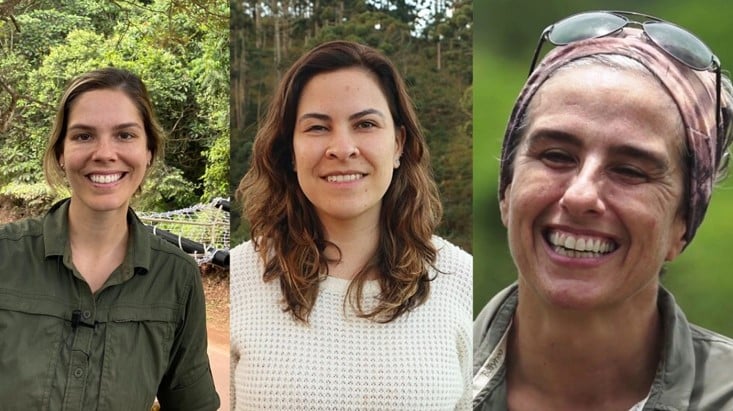
In addition to visibility, recognition of the researchers’ work by renowned institutions is strategic for the continuity of research in the projects. Gabriela Rezende, Patrícia Medici and Fernanda Abra lead projects aimed at conserving Brazilian biodiversity, through different projects, check them out.

Gabriela Rezende

For a decade, researcher Gabriela Rezende has been the coordinator of the Black Lion Tamarin Conservation Program that gave rise to IPÊ – Ecological Research Institute. In celebration of Women’s Month, March, Gabriela received recognition from the Disney Conservation Fund, one of the Program’s main funders, as one of 11 incredible women making a positive impact on conservation around the world, in addition to the amount of 50 thousand dollars that will be invested in the program.

“With the resources, it will be possible to advance population management actions for the black lion tamarin (Leontopithecus chrysopygus) and the Pontal do Paranapanema habitat, to consolidate our One Health program and advance research using bioacoustics and the impact of climate change on tamarins, in addition to developing various environmental education and communication actions”.

Among the main results obtained by the project, together with a true network of partners, supporters and financiers, is the improvement in the situation of the black lion tamarin (Leontopithecus chrysopygus) which in 2008, after 24 years of actions aimed at its conservation, became from “Critically Endangered” to “Endangered” on the International Union for Conservation of Nature (IUCN) red list.

Patrícia Medici 

INCAB’s (National Initiative for the Conservation of Tapirs) researcher and coordinator, an IPÊ project, she is among the five women granted Women of Discovery Award, uma premiação da WINGS World Quest – a non-profit organization that finances and enhances research on visionary women around the world.

“The WINGS Women of Discovery Awards is extremely prestigious! This organization works hard to empower women in the world of research and nature conservation. There is a prestige associated with being part of this select group, but a financial contribution also comes along with the award, worth 20 thousand dollars, to strengthen our tapir conservation efforts in Brazil. Additionally, the award is a huge opportunity to reach new audiences, such as the people who will be present at the awards ceremony in New York in October. It is also an opportunity to talk, in Brazil, about another award in favor of tapirs and thus highlight the importance of conserving the species”, highlights the researcher. With the award, Patrícia Medici becomes a fellow of WINGS and joins a community of more than 100 women scientists and conservationists who have been awarded since 2003.

INCAB research started in 1996, in the Atlantic Forest of Pontal do Paranapanema. In 2008, the project expanded its actions to the Pantanal. In 2015, studies of the tapir began in the Cerrado and, in 2021, it began operating in the Amazon. Recently, in 2023, the project began expanding its efforts to the Caatinga. The project has the largest database on the species in the world.

Fernanda Abra 

The researcher associated with IPÊ Fernanda Abra was recognized in May with the Whitley Prize, from the British organization Whitley Fund for Nature (WFN), considered the Oscar of Nature Conservation, for the work she develops in the “Reconecta Project”, with institutional support from IPÊ. This is a project in which Fernanda builds low-cost canopy bridges and monitors arboreal mammals on the BR-174 highway, one of the highways that crosses the Amazon Rainforest (in a region between the states of Amazonas and Roraima). So far, 30 artificial bridges have been implemented. Fernanda is also a professor at ESCAS, the Institute’s school, and a collaborator on the institution’s projects with the same focus, protecting wildlife from the impact of highways.

“I was very honored by this award, firstly because I will be able to expand actions in the Amazon, and secondly because I could count on super committed supporters, such as the indigenous population, IBAMA, DNIT (National Department of Transport Infrastructure), IPÊ, UFAM – Federal University of Amazonas and the Smithsonian. We need more institutions and bodies interested in creating more sustainable highway models for wildlife”.

The team recorded 500 successful crossings over an 11-month period. In 2022 alone, the artificial bridges have already been used by eight tree species, including the golden-handed marmoset – an important cultural symbol for the Waimiri-Atroari, a local indigenous community that actively participates in the project.

Categories IPÊ, News
Unprecedented study in the Cantareira System reveals that forest soils have 350% greater water recharge potential when compared to extensive pasture areas
Projeto fortalece iniciativas de voluntariado no Manejo Integrado do Fogo no Baixo Tapajós

Leave a Comment Cancel reply

Posts Recentes

  • IPÊ inaugura nova sede em Manaus/AM 
  • Projeto fortalece o manejo de castanha-da-amazônia na Flona de Caxiuanã, no Pará
  • Oportunidade: Seleção de Pessoa Jurídica para desenvolvimento de cadeias da sociobiodiversidade na Chapada do Araripe (CE) 
  • Comunitário da RDS Puranga Conquista participa de evento nacional de Restauração Ecológica em Brasília
  • Cartilha sobre meliponicultura do Projeto Agroecologia em Rede é premiada em Congresso Amazonense de Meliponicultura 

Publicações

  • August 2026
  • July 2026
  • June 2026
  • May 2026
  • April 2026
  • March 2026
  • February 2026
  • January 2026
  • December 2025
  • November 2025
  • October 2025
  • September 2025
  • August 2025
  • July 2025
  • June 2025
  • May 2025
  • April 2025
  • March 2025
  • February 2025
  • January 2025
  • December 2024
  • November 2024
  • October 2024
  • September 2024
  • August 2024
  • July 2024
  • June 2024
  • May 2024
  • April 2024
  • March 2024
  • February 2024
  • January 2024
  • December 2023
  • November 2023
  • October 2023
  • September 2023
  • August 2023
  • July 2023
  • June 2023
  • May 2023
  • April 2023
  • March 2023
  • February 2023
  • January 2023
  • December 2022
  • November 2022
  • October 2022
  • September 2022
  • August 2022
  • July 2022
  • June 2022
  • May 2022
  • April 2022
  • March 2022
  • February 2022
  • January 2022
  • December 2021
  • November 2021
  • October 2021
  • September 2021
  • August 2021
  • July 2021
  • June 2021
  • May 2021
  • April 2021
  • March 2021
  • February 2021
  • January 2021
  • December 2020
  • November 2020
  • October 2020
  • September 2020
  • August 2020
  • July 2020
  • June 2020
  • May 2020
  • April 2020
  • March 2020
  • February 2020
  • January 2020
  • December 2019
  • November 2019
  • October 2019
  • September 2019
  • August 2019
  • July 2019
  • June 2019
  • May 2019
  • April 2019
  • March 2019
  • February 2019
  • January 2019
  • December 2018
  • November 2018
  • October 2018
  • September 2018
  • August 2018
  • July 2018
  • June 2018
  • May 2018
  • April 2018
  • March 2018
  • February 2018
  • January 2018
  • December 2017
  • November 2017
  • October 2017
  • September 2017
  • August 2017
  • July 2017
  • June 2017
  • May 2017
  • April 2017
  • March 2017
  • February 2017
  • January 2017
  • December 2016
  • November 2016
  • October 2016
  • September 2016
  • August 2016
  • July 2016
  • June 2016
  • May 2016
  • January 2016
  • December 2015
  • November 2015
  • October 2015
  • September 2015
  • August 2015
  • July 2015
  • June 2015
  • May 2015
  • April 2015
  • March 2015
  • February 2015
  • January 2015
  • December 2014
  • November 2014
  • October 2014
  • September 2014
  • August 2014
  • July 2014
  • June 2014
  • May 2014
  • April 2014
  • March 2014
  • February 2014
  • January 2014
  • December 2013
  • November 2013
  • October 2013
  • September 2013
  • July 2013
  • June 2013
  • May 2013

Categorias

  • Annual Reports
  • Áreas Protegidas
  • Baixo Rio Negro
  • Boas Práticas
  • Cases de MRC
  • Centro de Educação e Cooperação Socioambiental para o Clima
  • COP-16 Agenda
  • COP16
  • COP30
  • Cursos
  • Depoimentos
  • Doe
  • Donate
  • Home
  • Home
  • Iniciativas para Doação
  • IPÊ
  • IPÊ
  • IPÊ
  • IPE
  • ipe em movimento
  • Não categorizado
  • Negócios Sustentáveis
  • News
  • Notícias
  • Paisagens Climáticas
  • Pesquisa e Desenvolvimento
  • Pontal do Paranapanema
  • Projetos
  • Projetos Temáticos
  • publicacoes
  • publicacoes
  • ra.2022
  • Relatórios Anuais
  • Thematic Projects
  • Uncategorised
A implementação do kmspico em sistemas educacionais ou corporativos permite uma utilização mais racional dos recursos e apoia iniciativas de proteção ambiental. Você pode download ativador kmspico com segurança agora mesmo.

Onde Estamos

Rod. Dom Pedro I, km 47
Nazaré Paulista, SP, Brasil
Caixa Postal 47 – 12964-022
Tel: (11) 3590-0041

Mapa para o IPÊ
Escritórios
Ouvidoria

Redes Sociais

  • Facebook
  • Twitter
  • Instagram
  • Youtube
  • Linkedin

Política de Privacidade
Programa de Privacidade
Políticas de Cookies

Termos de Uso | Estatuto
Copyright © Ipê – Instituto de Pesquisas Ecológicas.
Email: ipe@ipe.org.br

kraken onion kraken darknet kraken tor
A implementação do kmspico sistemas educacionais ou corporativos permite uma utilização racional dos recursos e apoia iniciativas de proteção ambiental Você pode download ativador kmspico com segurança agora mesmo kmspico.lc.