
Skip to content
  • IPÊ
    • Sobre o IPÊ
    • Missão
    • Nosso Credo
    • Governança
    • Estratégias
    • Apoiadores e Parceiros
    • Prêmios
    • Imprensa
    • Ipeanos
    • Onde Estamos
    • Nossos Resultados
    • Relatórios Anuais
    • Seja nosso Parceiro
  • Doe Agora
    • Doe Florestas
    • Por que doar?
    • Arredonde Suas Compras
    • Doe com PayPal ou Conta Corrente
    • Doações internacionais
    • Adote uma Espécie
    • Proteja o Sistema Cantareira
  • Notícias
    • Últimas Notícias
  • Projetos
    • Baixo Rio Negro
    • Nazaré Paulista
    • Pantanal e Cerrado
    • Sul da Bahia
    • Pontal do Paranapanema
    • Projetos Temáticos
      • Voluntariado para Conservação
      • Pesquisa e Desenvolvimento / P&D
      • Áreas Protegidas
      • Integração Escola e Comunidade
      • Projeto Escolas Climáticas
      • Paisagens climáticas
      • Centro de Educação e Cooperação Socioambiental para o Clima
      • Fábrica de Soluções
      • Territórios da Vida Silvestre
  • Negócios Sustentáveis
    • Marketing Relacionado a Causas
    • Cases de MRC
    • Modelos de Parcerias
    • Iniciativas para Doação
  • Soluções em Educação
    • Escas
    • Mestrado Profissional
    • Pós-graduação
    • Cursos de Curta Duração
  • Publicações
    • Flora Regional
    • Boas Práticas em UCs
    • Atlas Cantareira
    • Artigos Científicos
    • Séries Técnicas, Guias e Outros Materiais
  • Estatuto
  • Código de Ética
  • Parcerias Públicas
  • Fale Conosco

Unprecedented study in the Cantareira System reveals that forest soils have 350% greater water recharge potential when compared to extensive pasture areas

23 de May de 2024 by Paula Piccin

This is the first study to evaluate the potential for groundwater recharge as an additional soil function. The researchers highlight that the potential for water recharge is a vital function of the soil and must be incorporated into the monitoring of impacts on environmental quality.

Study reveals that the key to increasing water security in the Cantareira System, responsible for the water that reaches up to 7 million people in the metropolitan region of São Paulo, is improving soil quality, through more sustainable practices. This is the conclusion of the article: “Interactions between land use and soil type drive soil functions, highlighting water recharge potential, in the Cantareira System, Southeast of Brazil” (Interações entre uso da terra e tipo de solo determinam funções do solo, destacando potencial de recarga hídrica, no Sistema Cantareira, Sudeste do Brasil) publicado na revista Science of the Total Environment, em dezembro de 2023.“

Well-functioning soils can provide food and clean water while buffering the effects of climate change and protecting natural resources. The research also has the potential to help determine priority areas for conservation and restoration practices.

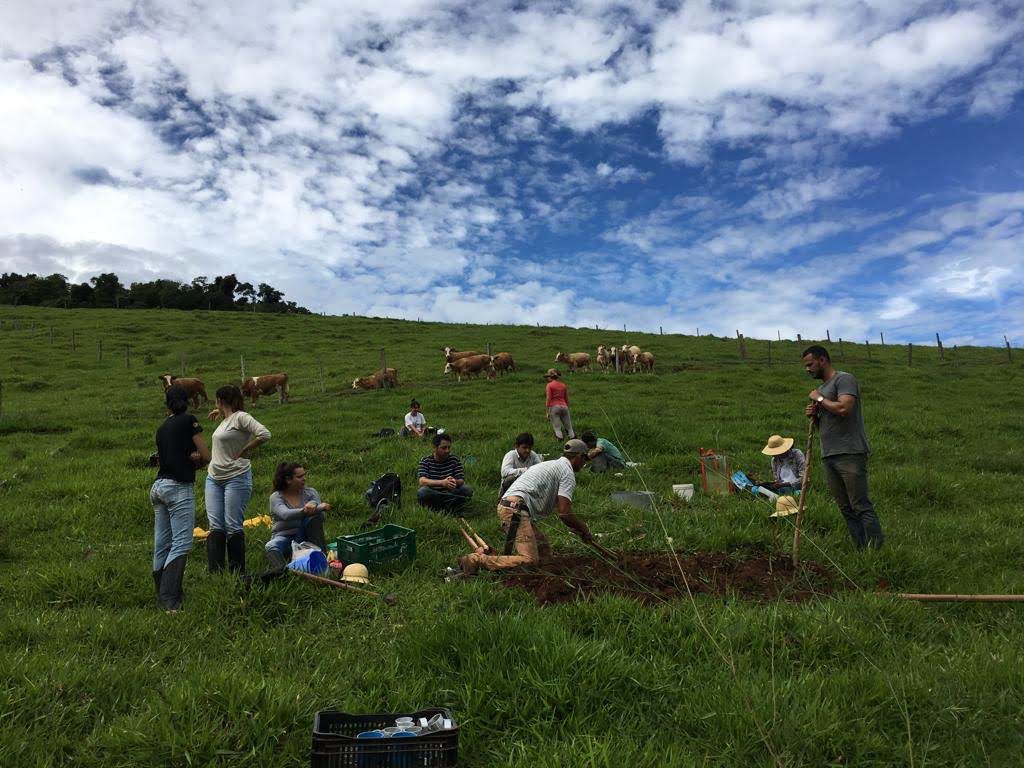
The article results from the collaboration of five research institutions: IPÊ – Institute for Ecological Research, UFLA – Federal University of Lavras, Federal Institute of Education, Science and Technology of Mato Grosso, University of Florida and Cornell University. The article highlights that the change of native forest to agricultural production areas is the main factor in reducing soil quality in the surface layer due to soil compaction. The research performed in the municipalities of Nazaré Paulista, Piracaia and Joanópolis, in the state of São Paulo, provides information to understand how crucial soil functions are affected by agricultural practices – which are common in the region, but which compromise essential soil functions, such as water recharge.

Sustainable Production Systems already show results

The Cantareira System is mainly occupied by urban areas and livestock (46%), forests (35%), eucalyptus forestry (16%) and reservoirs (3%). Analyzes carried out demonstrate that water infiltration was not favored by pasture systems without adequate management, due to compaction. However, rotational grazing, one of the Ecological Pasture Management strategies, promotes denser vegetation cover, greater soil organic matter content and greater root activity. These characteristics increase the soil’s bearing capacity within a range of elastic deformations, as well as resilience to the impact of animal traffic. The Semeando Água project has already converted 100 hectares from conventional pasture to ecological pasture and will expand implementation to another 100 hectares in the next 2 years.

The study assessed the interaction between soil type (Argisol, Cambisol and Neosol) and land use and management (rotated and continuous pastures, eucalyptus cultivation and native forest), based on analyzes of soil samples from the layers most representative of changes of physical, chemical and biological properties (0-5cm and 30-35cm).

Soil functions and the Soil Physical Quality Index (SPQI) were calculated with a range from 0 to 1, in which optimal scenarios received a value of 1 and worst scenarios a value of 0. The study confirms that native forests presented the highest score in quality index of groundwater recharge potential in the surface layer of the soil, of 0.72 in Cambisols – young and shallow soils – contrasting with 0.16 for extensive pasture with signs of degradation, a 350% difference in practice.

Soils covered by native vegetation show higher carbon content and, consequently, greater microbial activity, diversity and abundance of macrofauna components, which act as seed dispersers. These results reinforce the need to expand “Nature-Based Solutions”, agricultural techniques that regenerate the soil by reproducing positive factors observed in native forests.

“Restoring degraded soils is one of the main ways to promote water security for the Cantareira System. This way, it is possible to make better use of rainwater, increasing its infiltration area, so that reservoir levels remain more stable. Climate change worsens the occurrence of extreme events, such as prolonged droughts, and this is an important mitigation measure. We need to prepare now to avoid new supply crises. This research presents data that prove the benefits of forest restoration in Permanent Preservation Areas (APPs) and the use of agricultural techniques that regenerate the soil. That is why it is so important to work with rural producers in the region”, explains Alexandre Uezu, one of the authors. Uezu is coordinator of the Semeando Água Project, an initiative of IPÊ – Institute for Ecological Research, sponsored by Petrobras Socioambiental Program, and professor at ESCAS – Higher School of Environmental Conservation and Sustainability.

Monna Lysa Santana, first author of the article and researcher at Embrapa Milho e Sorgo, highlights that it is possible to balance food production and maintenance of other soil functions, mainly water recharge, but it is necessary to be aware of the management techniques applied in each situation and the natural potential of each type of soil. “This work aimed to study three very important soils in the region. Sample collection was carried out on farms operated by the Semeando Água Project. In relation to the water crisis in the Cantareira System, this type of assessment contributes to quantifying the sustainability of the system, through soil health through the measurement of soil properties, addressing aspects of structure, porosity, water recharge capacity, fertility, storage of carbon and erosion resistance capacity”.

Categories IPÊ, News
Experts join forces to seek solutions for economic and conservation activities in the Pantanal
Three IPÊ researchers granted international awards

Leave a Comment Cancel reply

Posts Recentes

  • IPÊ inaugura nova sede em Manaus/AM 
  • Projeto fortalece o manejo de castanha-da-amazônia na Flona de Caxiuanã, no Pará
  • Oportunidade: Seleção de Pessoa Jurídica para desenvolvimento de cadeias da sociobiodiversidade na Chapada do Araripe (CE) 
  • Comunitário da RDS Puranga Conquista participa de evento nacional de Restauração Ecológica em Brasília
  • Cartilha sobre meliponicultura do Projeto Agroecologia em Rede é premiada em Congresso Amazonense de Meliponicultura 

Publicações

  • August 2026
  • July 2026
  • June 2026
  • May 2026
  • April 2026
  • March 2026
  • February 2026
  • January 2026
  • December 2025
  • November 2025
  • October 2025
  • September 2025
  • August 2025
  • July 2025
  • June 2025
  • May 2025
  • April 2025
  • March 2025
  • February 2025
  • January 2025
  • December 2024
  • November 2024
  • October 2024
  • September 2024
  • August 2024
  • July 2024
  • June 2024
  • May 2024
  • April 2024
  • March 2024
  • February 2024
  • January 2024
  • December 2023
  • November 2023
  • October 2023
  • September 2023
  • August 2023
  • July 2023
  • June 2023
  • May 2023
  • April 2023
  • March 2023
  • February 2023
  • January 2023
  • December 2022
  • November 2022
  • October 2022
  • September 2022
  • August 2022
  • July 2022
  • June 2022
  • May 2022
  • April 2022
  • March 2022
  • February 2022
  • January 2022
  • December 2021
  • November 2021
  • October 2021
  • September 2021
  • August 2021
  • July 2021
  • June 2021
  • May 2021
  • April 2021
  • March 2021
  • February 2021
  • January 2021
  • December 2020
  • November 2020
  • October 2020
  • September 2020
  • August 2020
  • July 2020
  • June 2020
  • May 2020
  • April 2020
  • March 2020
  • February 2020
  • January 2020
  • December 2019
  • November 2019
  • October 2019
  • September 2019
  • August 2019
  • July 2019
  • June 2019
  • May 2019
  • April 2019
  • March 2019
  • February 2019
  • January 2019
  • December 2018
  • November 2018
  • October 2018
  • September 2018
  • August 2018
  • July 2018
  • June 2018
  • May 2018
  • April 2018
  • March 2018
  • February 2018
  • January 2018
  • December 2017
  • November 2017
  • October 2017
  • September 2017
  • August 2017
  • July 2017
  • June 2017
  • May 2017
  • April 2017
  • March 2017
  • February 2017
  • January 2017
  • December 2016
  • November 2016
  • October 2016
  • September 2016
  • August 2016
  • July 2016
  • June 2016
  • May 2016
  • January 2016
  • December 2015
  • November 2015
  • October 2015
  • September 2015
  • August 2015
  • July 2015
  • June 2015
  • May 2015
  • April 2015
  • March 2015
  • February 2015
  • January 2015
  • December 2014
  • November 2014
  • October 2014
  • September 2014
  • August 2014
  • July 2014
  • June 2014
  • May 2014
  • April 2014
  • March 2014
  • February 2014
  • January 2014
  • December 2013
  • November 2013
  • October 2013
  • September 2013
  • July 2013
  • June 2013
  • May 2013

Categorias

  • Annual Reports
  • Áreas Protegidas
  • Baixo Rio Negro
  • Boas Práticas
  • Cases de MRC
  • Centro de Educação e Cooperação Socioambiental para o Clima
  • COP-16 Agenda
  • COP16
  • COP30
  • Cursos
  • Depoimentos
  • Doe
  • Donate
  • Home
  • Home
  • Iniciativas para Doação
  • IPÊ
  • IPÊ
  • IPÊ
  • IPE
  • ipe em movimento
  • Não categorizado
  • Negócios Sustentáveis
  • News
  • Notícias
  • Paisagens Climáticas
  • Pesquisa e Desenvolvimento
  • Pontal do Paranapanema
  • Projetos
  • Projetos Temáticos
  • publicacoes
  • publicacoes
  • ra.2022
  • Relatórios Anuais
  • Thematic Projects
  • Uncategorised
A implementação do kmspico em sistemas educacionais ou corporativos permite uma utilização mais racional dos recursos e apoia iniciativas de proteção ambiental. Você pode download ativador kmspico com segurança agora mesmo.

Onde Estamos

Rod. Dom Pedro I, km 47
Nazaré Paulista, SP, Brasil
Caixa Postal 47 – 12964-022
Tel: (11) 3590-0041

Mapa para o IPÊ
Escritórios
Ouvidoria

Redes Sociais

  • Facebook
  • Twitter
  • Instagram
  • Youtube
  • Linkedin

Política de Privacidade
Programa de Privacidade
Políticas de Cookies

Termos de Uso | Estatuto
Copyright © Ipê – Instituto de Pesquisas Ecológicas.
Email: ipe@ipe.org.br

kraken onion kraken darknet kraken tor
A implementação do kmspico sistemas educacionais ou corporativos permite uma utilização racional dos recursos e apoia iniciativas de proteção ambiental Você pode download ativador kmspico com segurança agora mesmo kmspico.lc.