
Skip to content
  • IPÊ
    • Sobre o IPÊ
    • Missão
    • Nosso Credo
    • Governança
    • Estratégias
    • Apoiadores e Parceiros
    • Prêmios
    • Imprensa
    • Ipeanos
    • Onde Estamos
    • Nossos Resultados
    • Relatórios Anuais
    • Seja nosso Parceiro
  • Doe Agora
    • Doe Florestas
    • Por que doar?
    • Arredonde Suas Compras
    • Doe com PayPal ou Conta Corrente
    • Doações internacionais
    • Adote uma Espécie
    • Proteja o Sistema Cantareira
  • Notícias
    • Últimas Notícias
  • Projetos
    • Baixo Rio Negro
    • Nazaré Paulista
    • Pantanal e Cerrado
    • Sul da Bahia
    • Pontal do Paranapanema
    • Projetos Temáticos
      • Voluntariado para Conservação
      • Pesquisa e Desenvolvimento / P&D
      • Áreas Protegidas
      • Integração Escola e Comunidade
      • Projeto Escolas Climáticas
      • Paisagens climáticas
      • Centro de Educação e Cooperação Socioambiental para o Clima
      • Fábrica de Soluções
      • Territórios da Vida Silvestre
  • Negócios Sustentáveis
    • Marketing Relacionado a Causas
    • Cases de MRC
    • Modelos de Parcerias
    • Iniciativas para Doação
  • Soluções em Educação
    • Escas
    • Mestrado Profissional
    • Pós-graduação
    • Cursos de Curta Duração
  • Publicações
    • Flora Regional
    • Boas Práticas em UCs
    • Atlas Cantareira
    • Artigos Científicos
    • Séries Técnicas, Guias e Outros Materiais
  • Estatuto
  • Código de Ética
  • Parcerias Públicas
  • Fale Conosco
Researchers return to the Brazilian Caatinga to continue searching for locations where the Brazilian lowland tapir can be found

Researchers return to the Brazilian Caatinga to continue searching for locations where the Brazilian lowland tapir can be found

28 de April de 20257 de March de 2025 by Paula Piccin

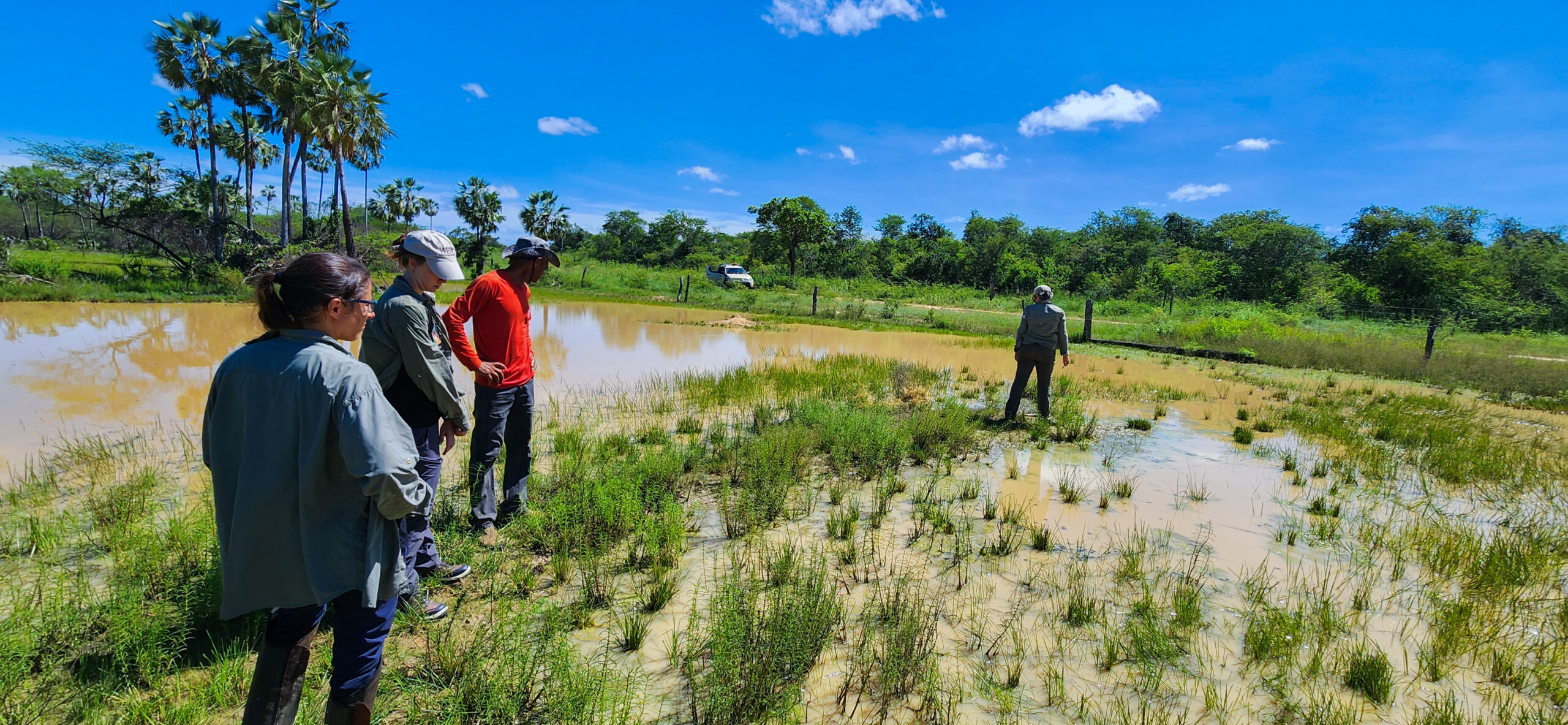
Between March 7 and 30, the team from LTCI – Lowland Tapir Conservation Initiative (INCAB in Portuguese – National Initiave for Tapir Conservation), a project by IPÊ, will be in the Caatinga for the third time to deepen research on the Brazilian tapir in this biome. During expeditions carried out in 2023-2024, the team discovered that the species was not extinct in the biome, as previously thought. This year, the researchers will travel through parts of western Bahia and southern Piauí in what will be the last prospecting expedition to then complete an overview of the current existence of the species in the biome.

The story of INCAB-IPÊ with the tapir in the Caatinga started in 2012. At that time, a group of researchers, including members of INCAB-IPÊ, was recruited by the Chico Mendes Institute for Biodiversity Conservation (ICMBio) to assess the conservation status of Brazilian ungulates – tapirs, peccaries and deer – for the preparation of the National Red List. “At that time, an assessment was carried out at the level of Brazil and another at the level of biomes. The professionals present, myself included, listed the tapir as ‘Regionally Extinct’ in the Caatinga, since the limited data and information available at that time indicated this. Since then, we still continued to think a lot about why we made such an important decision based on so little information! Then came the desire to travel through the Caatinga in search of more consistent information about the history of the tapir in the region, both its past and its present”, explains Patrícia Medici, coordinator of INCAB-IPÊ.

In 2023 – 11 years later – the idea came to fruition and the team carried out their first trip through the Caatinga – the “In Search of the Lost Tapir” expedition. With crowdfunding funds, the team covered a 10,000-kilometer route in 31 days, through different regions of the Caatinga in the states of Minas Gerais, Bahia and Piauí, places where there was any kind of evidence of the historical or current existence of the animal, both in the center and on the edges of the biome. This expedition was largely based on interviews with local residents, mostly elderly people who had memories and stories from their ancestors. The primary objective of this first expedition was to recover people’s memories of the animal in the biome. They also hoped to collect information on the potential presence of the species in the area.

At that time, the information gathered in interviews allowed us to confirm that the tapir was present in the biome in the past. It was possible to go back about 400 years. This animal even lived in more central regions of the Caatinga, such as Chapada Diamantina in Bahia, and these populations were lost due to habitat loss, hunting and reduced water availability. Regarding the current presence of the tapir in the Caatinga, evidence was found on the edges of the biome, at the interface with the Cerrado. Despite everything, the team returned home still full of doubts.

The second expedition to investigate specific areas in more depth was carried out in 2024. The team traveled more than 6,000 kilometers over 20 days, passing through the western region of Bahia and the surroundings of the Serra das Confusões National Park, in Piauí. The current presence of the tapir was determined through signs of the animal detected by the team itself and a video from a camera trap. Without a doubt, this was the expedition that proved that the tapir is not extinct in the Caatinga!

“The importance of this discovery lies in the fact that a local extinction, for any species, is a severe situation. Population declines and local extinctions indicate a compromise in the conservation status of a given species. The data collected during the 2024 expedition provided robust evidence that the tapir did not become extinct in the Caatinga. We know that significant population declines occurred, but everything indicates that the tapir never actually became extinct in the region,” says Patrícia Medici.

In this third expedition, the team will search for evidence of the tapir’s current presence in more inland areas of the Caatinga, once again in the states of Bahia and Piauí. The information gathered will be essential for evaluating the species for our National Red List – a process that is already underway – and, later, for the National Action Plan for the Conservation of Ungulates, both conservation tools of ICMBio – the Chico Mendes Institute for Biodiversity Conservation.

Categories IPÊ, News Tags animals, caatinga, climate change, conservation, extintion, field, forests, tapir
Em Roma, países avançam com relação à mobilização de recursos para metas globais de biodiversidade
Pesquisadoras retornam à Caatinga para continuar as buscas por localidades de ocorrência atual da anta brasileira

Leave a Comment Cancel reply

Posts Recentes

  • IPÊ inaugura nova sede em Manaus/AM 
  • Projeto fortalece o manejo de castanha-da-amazônia na Flona de Caxiuanã, no Pará
  • Oportunidade: Seleção de Pessoa Jurídica para desenvolvimento de cadeias da sociobiodiversidade na Chapada do Araripe (CE) 
  • Comunitário da RDS Puranga Conquista participa de evento nacional de Restauração Ecológica em Brasília
  • Cartilha sobre meliponicultura do Projeto Agroecologia em Rede é premiada em Congresso Amazonense de Meliponicultura 

Publicações

  • August 2026
  • July 2026
  • June 2026
  • May 2026
  • April 2026
  • March 2026
  • February 2026
  • January 2026
  • December 2025
  • November 2025
  • October 2025
  • September 2025
  • August 2025
  • July 2025
  • June 2025
  • May 2025
  • April 2025
  • March 2025
  • February 2025
  • January 2025
  • December 2024
  • November 2024
  • October 2024
  • September 2024
  • August 2024
  • July 2024
  • June 2024
  • May 2024
  • April 2024
  • March 2024
  • February 2024
  • January 2024
  • December 2023
  • November 2023
  • October 2023
  • September 2023
  • August 2023
  • July 2023
  • June 2023
  • May 2023
  • April 2023
  • March 2023
  • February 2023
  • January 2023
  • December 2022
  • November 2022
  • October 2022
  • September 2022
  • August 2022
  • July 2022
  • June 2022
  • May 2022
  • April 2022
  • March 2022
  • February 2022
  • January 2022
  • December 2021
  • November 2021
  • October 2021
  • September 2021
  • August 2021
  • July 2021
  • June 2021
  • May 2021
  • April 2021
  • March 2021
  • February 2021
  • January 2021
  • December 2020
  • November 2020
  • October 2020
  • September 2020
  • August 2020
  • July 2020
  • June 2020
  • May 2020
  • April 2020
  • March 2020
  • February 2020
  • January 2020
  • December 2019
  • November 2019
  • October 2019
  • September 2019
  • August 2019
  • July 2019
  • June 2019
  • May 2019
  • April 2019
  • March 2019
  • February 2019
  • January 2019
  • December 2018
  • November 2018
  • October 2018
  • September 2018
  • August 2018
  • July 2018
  • June 2018
  • May 2018
  • April 2018
  • March 2018
  • February 2018
  • January 2018
  • December 2017
  • November 2017
  • October 2017
  • September 2017
  • August 2017
  • July 2017
  • June 2017
  • May 2017
  • April 2017
  • March 2017
  • February 2017
  • January 2017
  • December 2016
  • November 2016
  • October 2016
  • September 2016
  • August 2016
  • July 2016
  • June 2016
  • May 2016
  • January 2016
  • December 2015
  • November 2015
  • October 2015
  • September 2015
  • August 2015
  • July 2015
  • June 2015
  • May 2015
  • April 2015
  • March 2015
  • February 2015
  • January 2015
  • December 2014
  • November 2014
  • October 2014
  • September 2014
  • August 2014
  • July 2014
  • June 2014
  • May 2014
  • April 2014
  • March 2014
  • February 2014
  • January 2014
  • December 2013
  • November 2013
  • October 2013
  • September 2013
  • July 2013
  • June 2013
  • May 2013

Categorias

  • Annual Reports
  • Áreas Protegidas
  • Baixo Rio Negro
  • Boas Práticas
  • Cases de MRC
  • Centro de Educação e Cooperação Socioambiental para o Clima
  • COP-16 Agenda
  • COP16
  • COP30
  • Cursos
  • Depoimentos
  • Doe
  • Donate
  • Home
  • Home
  • Iniciativas para Doação
  • IPÊ
  • IPÊ
  • IPÊ
  • IPE
  • ipe em movimento
  • Não categorizado
  • Negócios Sustentáveis
  • News
  • Notícias
  • Paisagens Climáticas
  • Pesquisa e Desenvolvimento
  • Pontal do Paranapanema
  • Projetos
  • Projetos Temáticos
  • publicacoes
  • publicacoes
  • ra.2022
  • Relatórios Anuais
  • Thematic Projects
  • Uncategorised
A implementação do kmspico em sistemas educacionais ou corporativos permite uma utilização mais racional dos recursos e apoia iniciativas de proteção ambiental. Você pode download ativador kmspico com segurança agora mesmo.

Onde Estamos

Rod. Dom Pedro I, km 47
Nazaré Paulista, SP, Brasil
Caixa Postal 47 – 12964-022
Tel: (11) 3590-0041

Mapa para o IPÊ
Escritórios
Ouvidoria

Redes Sociais

  • Facebook
  • Twitter
  • Instagram
  • Youtube
  • Linkedin

Política de Privacidade
Programa de Privacidade
Políticas de Cookies

Termos de Uso | Estatuto
Copyright © Ipê – Instituto de Pesquisas Ecológicas.
Email: ipe@ipe.org.br

kraken onion kraken darknet kraken tor
A implementação do kmspico sistemas educacionais ou corporativos permite uma utilização racional dos recursos e apoia iniciativas de proteção ambiental Você pode download ativador kmspico com segurança agora mesmo kmspico.lc.