Skip to content
  • IPÊ
    • Sobre o IPÊ
    • Missão
    • Nosso Credo
    • Governança
    • Estratégias
    • Apoiadores e Parceiros
    • Prêmios
    • Imprensa
    • Ipeanos
    • Onde Estamos
    • Nossos Resultados
    • Relatórios Anuais
    • Seja nosso Parceiro
  • Doe Agora
    • Doe Florestas
    • Por que doar?
    • Arredonde Suas Compras
    • Doe com PayPal ou Conta Corrente
    • Doações internacionais
    • Adote uma Espécie
    • Proteja o Sistema Cantareira
  • Notícias
    • Últimas Notícias
  • Projetos
    • Baixo Rio Negro
    • Nazaré Paulista
    • Pantanal e Cerrado
    • Sul da Bahia
    • Pontal do Paranapanema
    • Projetos Temáticos
      • Voluntariado para Conservação
      • Pesquisa e Desenvolvimento / P&D
      • Áreas Protegidas
      • Integração Escola e Comunidade
      • Projeto Escolas Climáticas
      • Paisagens climáticas
      • Centro de Educação e Cooperação Socioambiental para o Clima
      • Fábrica de Soluções
      • Territórios da Vida Silvestre
  • Negócios Sustentáveis
    • Marketing Relacionado a Causas
    • Cases de MRC
    • Modelos de Parcerias
    • Iniciativas para Doação
  • Soluções em Educação
    • Escas
    • Mestrado Profissional
    • Pós-graduação
    • Cursos de Curta Duração
  • Publicações
    • Flora Regional
    • Boas Práticas em UCs
    • Atlas Cantareira
    • Artigos Científicos
    • Séries Técnicas, Guias e Outros Materiais
  • Estatuto
  • Código de Ética
  • Parcerias Públicas
  • Fale Conosco

News

Brazilian IUCN Committee elects new presidency

5 de July de 2021 by Paula Piccin

::cck::805::/cck::
::introtext::

On a very special day for Brazil, which celebrates the National Caatinga Day (28/04), we had elections for the secretariat of the Brazilian committee of the International Union for Conservation of Nature(IUCN), the largest network  of organizations and entities for conservation in the world, which brings together governments, organized civil society, traditional peoples and communities.

          The Brazilian government is no longer a member of the IUCN since 2016. However, there are 26 Brazilian members affiliated with the IUCN who make up the Brazilian committee of this network of organizations.

          The coordinator elected by the Brazilian committee for the 2021-2024 triennium was Miguel Moraes, from Conservation International Brazil, Angela Pellin, from IPÊ – Institute for Ecological Research, assumed the vice-presidency and Roberto Palmieri, from IMAFLORA, became the executive secretary.

          The guidelines for this triennium are:

  • Extraordinary monthly meetings (in the afternoon of the last Wednesday of the month)
  • Working groups in: advocacy, communication and fundraising
  • Campaign Brazil Matters
  • Monitoring the implementation of the program in Brazil

This last topic is related to “the beginning of the organization and systematization of work data, information from Brazilian members in relation to global conservation goals”, explains André Siqueira, CEO of Ecoa.

::/introtext::
::fulltext::::/fulltext::

Categories News Leave a comment

Get to know the Dream Map that connects Conservation Units to rural properties

2 de July de 2021 by Paula Piccin

::cck::801::/cck::
::introtext::

mapa dos sonhos simplesThe “Dream Map” emerged from the IPÊ team’s desire to plant native trees of the Atlantic Forest in rural properties located in Pontal do Paranapanema, far west of São Paulo, so that the planted forests connect to the native fragments and form corridors of life. Such corridors are essential for the conservation of species such as the black lion tamarin (Lentopithecus chrysopygus), the jaguar (Panthera onca), the giant anteater (Myrmecophaga tridactyla), among others. The dream is that the corridors have 60,000 hectares of forests (the environmental liabilities of the region), and 3,000 hectares are already a reality. In the next 5 years, the proposal is to plant 5,000 hectares.

According to Laury Cullen, project coordinator and researcher at IPÊ, the Dream Map is the flagship of the projects carried out in Pontal do Paranapanema (SP). “The team of technicians breathes this map daily. It is even stamped on the wall of the meeting room, because it is our mission, ambition and long-term vision for the region”, he says.

The map is the rescue of the Atlantic Forest, the possibility of bringing the forest back, since the Atlantic Forest Act (2006) based on the New Forest Code (Federal Law N°.12,651/2012, BRASIL) requires that each rural property have 20% forest.

Among the results of the Dream Map is the largest restored forest corridor in the Atlantic Forest (with 12 km and 2.4 million trees), allowing for the flow of fauna from one fragment to another in the Atlantic Forest, contributing to the survival of vulnerable and endangered species.

In Pontal, these 20% of forest can be divided between the areas of Legal Reserve and riparian forest (protection of water resources) – in properties cut by rivers, streams and springs – as long as it adds up to the 20% required by law. “Many farms already have their forests conserved with the percentage established in the legislation,” Cullen says.

Given this panorama, the Dream Map aims exactly at the 400 rural properties that have not adapted to the New Forest Code so far. The proposal of the map is to allocate the 20% of forests of each rural property in the best possible way for the formation of life corridors. For example, by assuring that the reserve of “farm A”, connects to “farm B” which is linked to the settlements, consequently, this connectivity connects the corridors to the native forest of Morro do Diabo State Park, an area with about 34,000 hectares of native forest.

In Cullen’s assessment, these corridors of life are a way to ensure the long-term survival of various animals, including the endangered black lion tamarin. He explains that after a while, isolated animals in the forest of “farm A” begin to have serious demographic and genetic problems. Therefore, it is extremely important to move these animals, because the circulation allows the crossing of the animals of the “farm A” with the animals that inhabit morro do Diabo. “Not only the corridors offer this alternative to the animals, it is also fundamental for the dispersion of seeds. And we already have tangible results of this work, exemplified by the Brazilian tapirs (Tapirus terrestris). They use the corridors and are seed dispersers, and so plant species have been identified germinating in their fecal samples.”

According to Cullen, the map provides suggestions for the landowner to restore the forest in order to generate numerous benefits. “Among these consequences, we have the conservation of water resources (water quality, erosion and silting prevention), the connection of forest fragments, and protection of the fragments from the so-called edge effect, when the forests are exposed to wind, light, fire, and desiccation and, consequently, lose quality.”

::/introtext::
::fulltext::::/fulltext::

Categories News Leave a comment

IPÊ contributes to monitoring the impacts of forest fires in Sesc Pantanal

28 de June de 2021 by Paula Piccin

::cck::796::/cck::
::introtext::

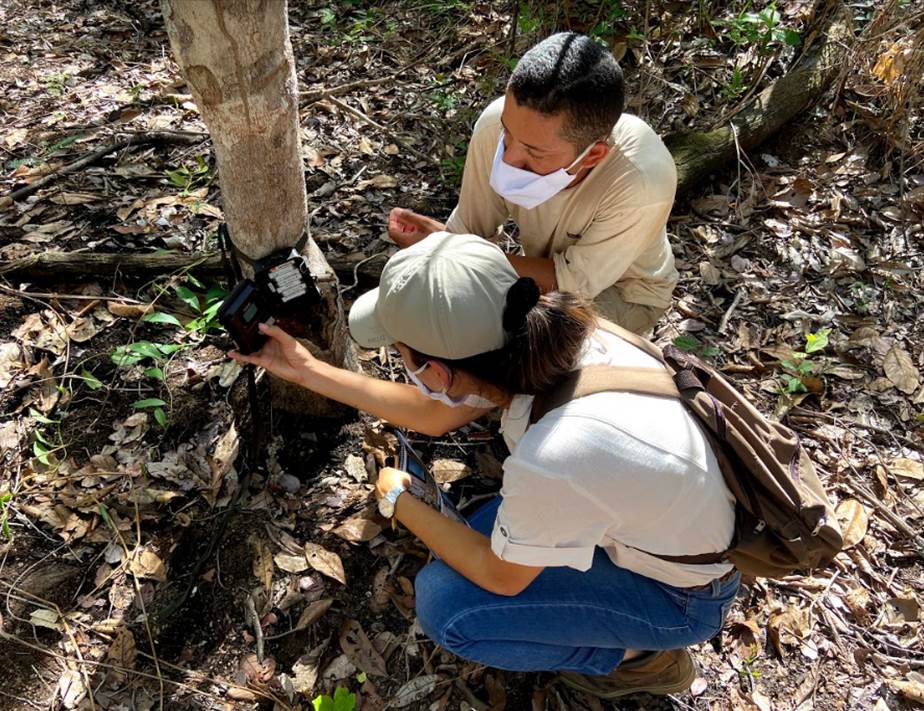
Through LTCI – Lowland Tapir Conservation Initiative, after the wildfires in Pantanal (MS) in 2020, IPÊ has contributed with surveying the impacts the fires had on the region’s fauna, including tapirs. Among the most affected areas is PRNH Sesc Pantanal (Private Reserve of Natural Heritage – RPPN in Portuguese), which today can count on INCAB for monitoring the animals with camera traps. To better understand the situation, we interviewed Sesc Pantanal’s socio-environmental Center superintendent, Christiane Caetano.

Has the impact of the 2020 wildfires in Sesc Pantanal already been evaluated? What is the extent of area lost?

Two units of Sesc Pantanal have been hit by the fires, one in Poconé, another in Barão do Melgaço. The country’s largest private reserve, the PRNH Sesc Pantanal, with 108,000 hectares, had 93% of its area affected by the fires, to varying degrees. This unit is located in Barão do Melgaço. Sesc Baía das Pedras Park, in Poconé, had 500 of its 5,000 hectares hit. 

How are you working today for the regeneration of the area?

Regeneration of the area will happen naturally, with monitoring from the institution. Three lines of research are underway at the RPNH at the moment: on fauna, flora, and water quality. The aim is to evaluate the impacts of the fires and, by coupling scientific data and local knowledge, contribute to decision-making throughout Pantanal.

The biome is a large region, encompassing urban, rural, and wild environments. It is inhabited by numerous traditional communities, indigenous villages, farms, touristic establishments, and conservation units. All of them have been impacted to some degree by the 2020 wildfires, and all, to some extent, have some protection but also face threats.

How are the donations made by INCAB-IPÊ being applied?

The donated trap cameras are integrated to fauna research and allow for the monitoring of the animals, after the worst wildfires in the history of RPNH Sesc Pantanal, which was also the worst fire season in Pantanal in the last decades.

Through the traps, about 300 fauna sightings were recorded each week, just after the fires, in September. Due to being weak, many animals walked kilometers looking for water and food, and at first concentrated close to the spots installed by Sesc Pantanal, where the cameras are located.

This significant concentration of animals hasn’t been seen in 2021 anymore. This shows the importance of monitoring, which allowed for the observation of this emergency support, essential for helping the surviving animals overcome the acute phase, moving towards a gradual return of regular life, among them the Tapir, also known as the “gardener of forests”.

The reduction in the number of sightings, which now hovers around 30 per week, the reduction in consumption of food offered by the institution, the identification of the reestablishment of natural sources of food and water, coming from the rain, contributed to the end of the emergency action, with the removal of the troughs and suspension of food distribution in February.

With the end of the emergency action, all cameras now contribute to the observation of the new routines and renewed takeover of the territory by the animals.

What is the role of Brazilian society in the protection of Pantanal? How can Brazilians contribute?

Pantanal is a common heritage of humankind and the largest continental wetland area in the planet, its role in the maintenance of biodiversity and ecological systems is undeniable, as is the value of resources and ecosystem services rendered by the biome that humanity receives and takes advantage of. Its protection is responsibility of all society, public and civil, which, in its different levels and in a shared manner, must promote actions to protect its ecosystems, the development of good productive practices and promote sustainable development in the communities in its territory, always taking the characteristics of the region into account.

We must consider that human life is intrinsically entwined to the ecological balance of the environment, and that this connection depends upon the quality of our existence. Therefore, it is everyone’s responsibility, as we can contribute even with small local actions, such as buying consciously and reducing residential waste, all the way to helping with the formulation and effectiveness of public policies for the conservation and sustainable development of Pantanal.

::/introtext::
::fulltext::::/fulltext::

Categories News Leave a comment

Female leaders emerge in the Pontal do Paranapanema nurseries

25 de June de 2021 by Paula Piccin

::cck::795::/cck::
::introtext::

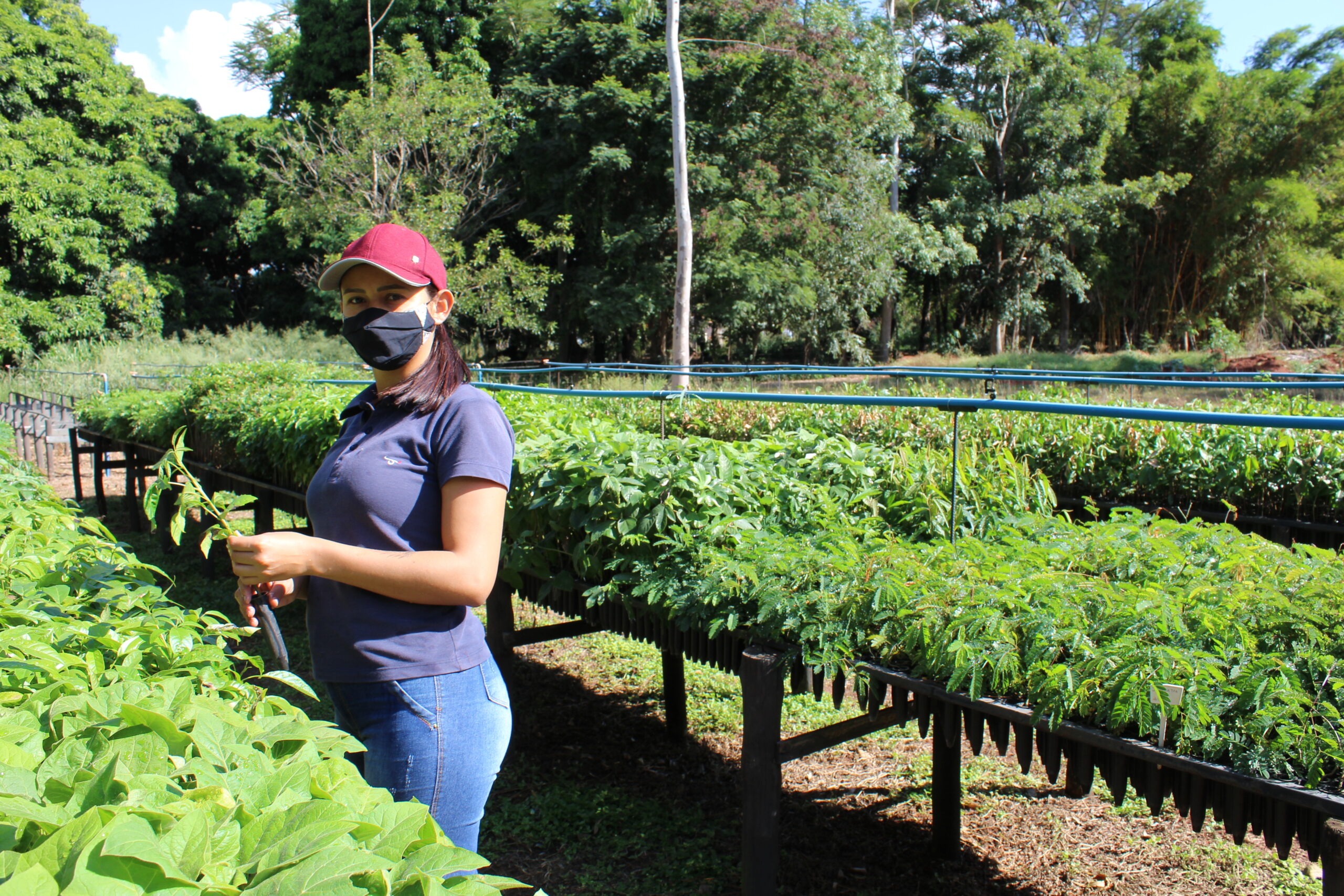
Five out of nine community nurseries located in the Pontal do Paranapanema region, closely tracked by IPÊ, are led by women. They are also the majority among workers. In total, among the 26 professionals in the nurseries, 15 are women. In 2020 these nurseries produced approximately 800,000 seedlings and 26 families benefited. The production potential, however, is almost double, and since the environmental liability in the west of São Paulo is 77,000 hectares, this can increase even more.

The female force is ahead from the collection of seeds to the moment of planting in the field. They are also responsible for sales. The production is sold to IPÊ, farmers, entrepreneurs, and city halls for reforestation.

Ivone Ribeiro Campos Félix, owner of Viveiro Floresta for 4 years, reveals the progress of the business and the next steps. “I started producing 17,600 seedlings per year. In 2020, the nursery produced 150,000 seedlings and the plan is to expand production. The goal for 2021 is to produce 300,000 seedlings and hire more professionals due to the booming market in the region”.

With the income from the nursery, she guarantees university education for her two daughters. “Peace, contribution to the environment, and my daughters’ graduation are the results I reap from my nursery”, she points out.

In her successful journey, she exalts two great teachers, her brother Valter Ribeiro Campos, pioneer in the area of nurseries in Teodoro Sampaio (SP) and the seedlings themselves. “With them I learned the germination time, which species like a lot or little water. Working with a nursery is a mix of work and rest because the plants give me so much peace. Besides, it’s exciting to see the seedling I planted turn into a tree in the restored areas”, she emphasizes.

Marcela dos Santos viveirista no Pontal do Paranapanema Ana Lilian Barbosa 2 minMaria Regina dos Santos (Photo) has also been standing out in the field. One and a half years ago, she set up the Mata Nativa nursery, where she employs an employee and produces 100,000 seedlings per year, from 85 species, including native and exotic (those that do not occur naturally in the area). At the moment, the nursery is under renovation to expand the planting area. Upon completion it will be possible to produce 250,000 seedlings per year.

“My husband and I share the job of selling the seedlings. Now, collecting the seeds, planting and dealing with the seedlings are my responsibilities and I have the support of an employee. There are periods when work demand increases and I, sporadically, hire day laborers”, she clarifies.

Maria sells native Atlantic Forest seedlings to IPÊ, farmers in the region and even to rural producers from other states such as Goiás. Exotic seedlings, on the other hand, are sold in general to allotment owners in the urban area in Teodoro Sampaio (SP) and neighboring cities.

For over more than 20 years, along with the development of forest corridors in the Pontal do Paranapanema region, IPÊ has encouraged the formation of 11 forest nurseries and has been closely monitoring nine of them to this day. With the Community Nurseries project, it is possible to positively relate important issues such as: environment restoration, income generation, quality of life and food security for the community”, says Nivaldo Ribeiro Campos, an IPÊ technician. Most of the nurseries are constituted in the form of associations or cooperatives, but there are still private initiatives of farmers who have undergone free training from IPÊ.

::/introtext::
::fulltext::::/fulltext::
Categories News Leave a comment

Scholarship has granted an indigenous participation in Master’s degree from ESCAS-IPÊ for the first time

25 de June de 2021 by Paula Piccin

::cck::794::/cck::
::introtext::

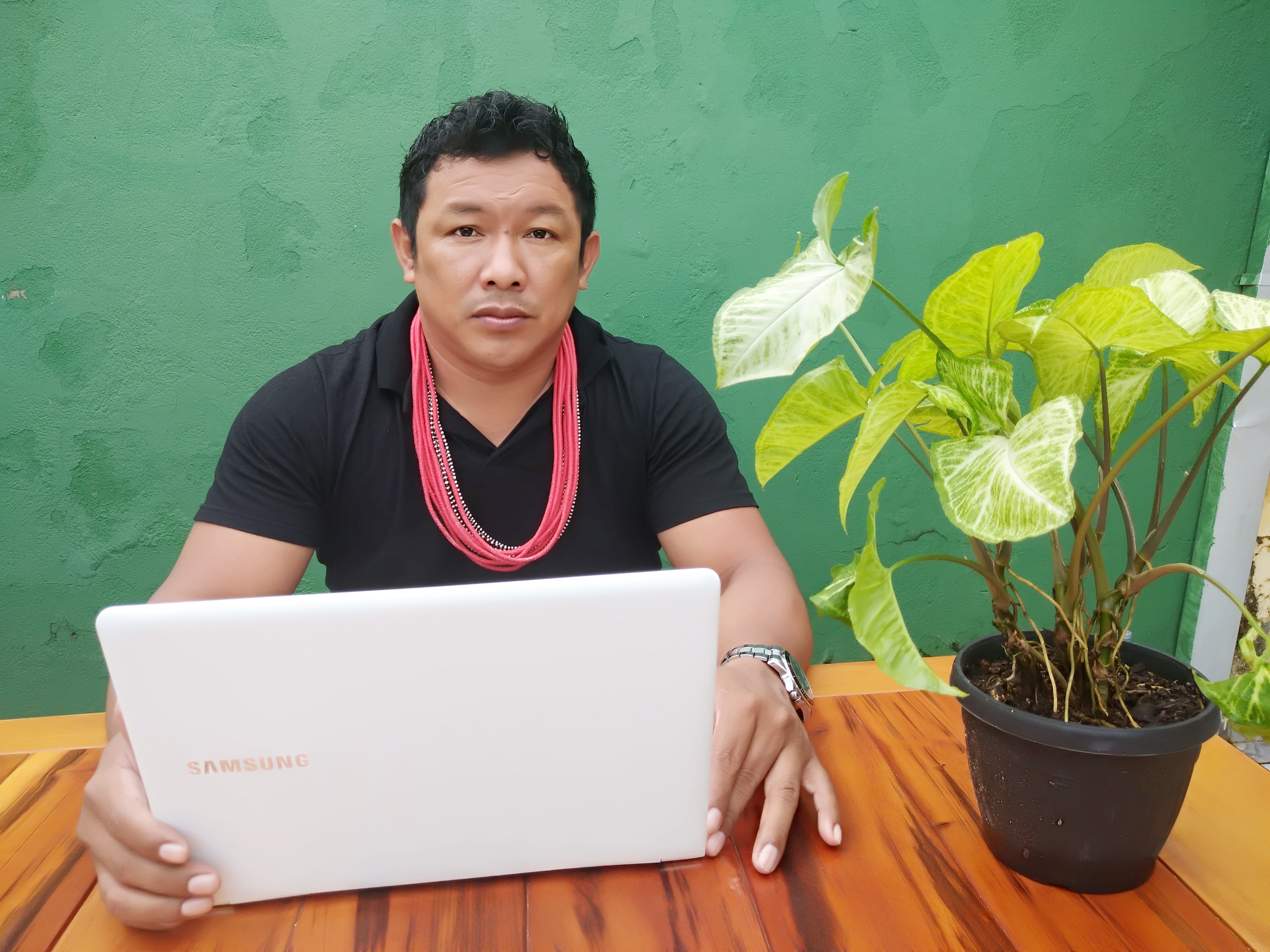
José Palahv Gavião is the first scholarship indigenous student of the Professional Master’s Degree at ESCAS from the WWF program (Education for Nature/EFN PROGRAM), offered by the course.

jose palahv1 Jos Palahv primeiro mestrando indgena da ESCAS Arquivo Pessoal“I looked for where I would best fit in a Masters program, that me and my culture could relate to. I learned about ESCAS and that the school had a scholarship. I decided it was time” he says.

“I think ESCAS is the place for the indian people, because we have a vision alligned with the school, which is protecting the nature, of people who preserve the environment. ESCAS is the place for us. I feel safe attending this college in the sense that it reflects my reality and, with my knowledge, I can contribute to my people. I hope I can open doors. May I be the first of many”, José Palahv Gavião.

Born in Ji-Paraná, Rondônia, of the Gavião ethnic group, Palahv learned from his grandfather about the Amazon, medicinal plants, fishing, hunting and its traditions. A Tupi-Mondé speaker, he became literate in Portuguese at the age of 13 and since then has not stopped seeking academic knowledge that was alligned with his culture and that could bring benefits to the Gavião people.

He studied Intercultural Education at the Federal University of Rondônia and specialized in medicinal plants. He became a teacher at the village school and, at 39, he decided it was time to deepen his knowledge and develop a project that would contribute to the development and conservation of biodiversity in the Gavião territory.

The Gavião people live in the Lourdes basin and other tributaries of the Machado (or Ji-Paraná) river, an important region of the Amazon biome, close to the border of Mato Grosso. There, in addition to açaí and copaiba, the extraction of Brazil nuts generates most of the population’s income.

“The project I am developing in the Master is precisely to create a value chain for the nuts collected in our territory. This way it can be sold by the indian people directly, without any middlemen, at a more suitable price. I have already helped build a cooperative and we are looking for improving the harvest, modernize what we have achieved. I want to learn more about how to do this and I am getting it with the support of the course and the people I am in contact with,” he says.

Started in 2020, the Vekala cooperative now has 44 members and continues to seek fairer trade for the product, improving the quality of the collection and working for a certification.

::/introtext::
::fulltext::::/fulltext::

Categories News Leave a comment

IPÊ, ELTI and UFSB provide free course to professionals in southern Bahia

10 de November de 202223 de June de 2021 by Paula Piccin

::cck::788::/cck::
::introtext::

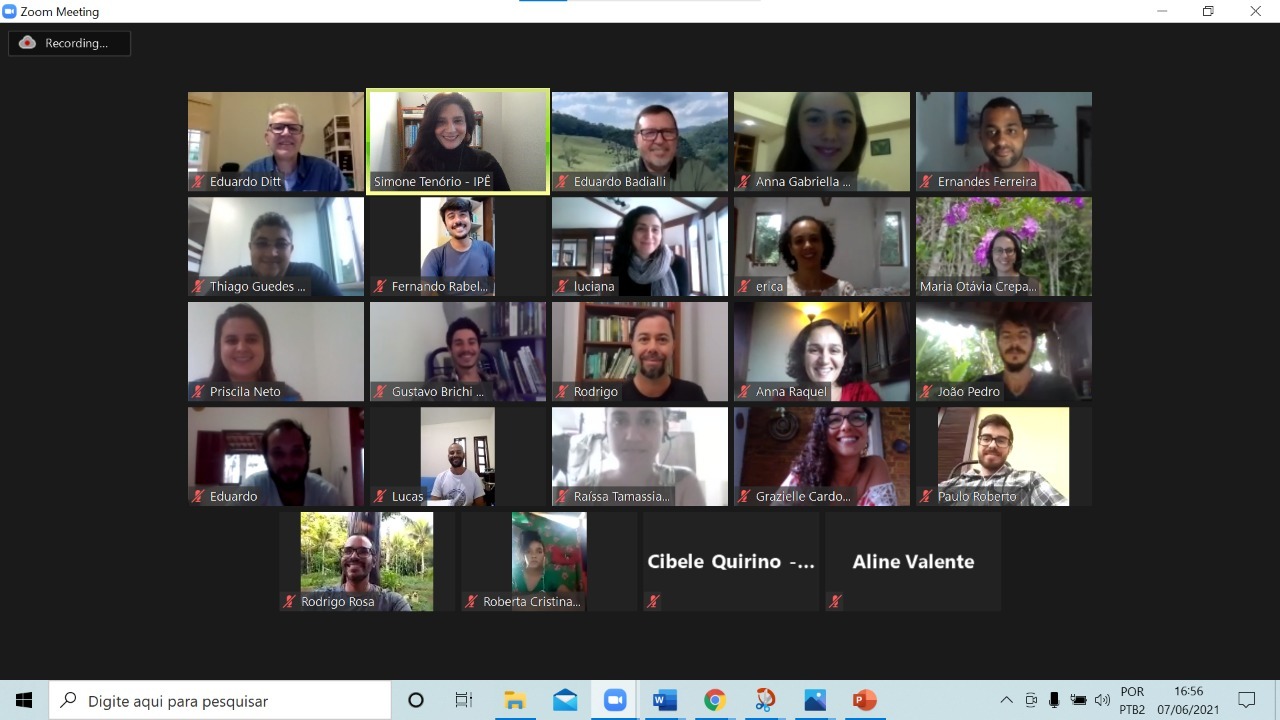
Until September, about 20 professionals working in southern Bahia will participate in the  Environmental and Productive Adequacy in Rural Properties course, with 90 hours of duration.

The initiative seeks to empower people to develop low-impact agriculture. It is the result of a network construction between ESCAS – Escola Superior de Conservação Ambiental e Sustentabilidade (School of Environmental Conservation and Sustainability), IPÊ – Instituto de Pesquisas Ecológicas (Institute for Ecological Research), ELTI – Environmental Leadership & Training Initiative, of the Yale University School of Forestry, and Federal University of Southern Bahia (UFSB).

“Nowadays, it is very necessary to increasingly stimulate the creation and development of leaders in the agricultural extension field, which is something of great importance for the country, especially if carried out with agroecological bases,” says Simone Tenório, who coordinates the initiative with researcher Maria Otávia Crepaldi, both from IPÊ.

The course aims to expand the knowledge necessary for agricultural extension in the present times and foster the sharing of knowledge, bearing in mind the implementation of practical actions in the region. Because of the pandemic, the course is online, but its program has been designed towards practical exercises. Students have a strong performance in the region, which also has the potential to strengthen networking.

“In addition to the students of NEA – Núcleo de Estudos e Pesquisas em Agroecologia e Produção Orgânica Pau Brasil (Center for Studies and Research in Agroecology and Organic Production), from the Federal University of Southern Bahia (UFSB), we invited some participants who work in the region as extensionists, technicians or even analysts in the agriculture, forestry or environmental fields, that were recommended by the following institutions: Programa Arboretum (Arboretum Program), Rede de Povos da Mata Atlântica (Atlantic Forest Poeples Network), Instituto Floresta Viva (Living Forest Institute), Ciclos, Secretaria de Agricultura da Bahia (Bahia’s Department of Agriculture), IPEF – Instituto de Pesquisas e Estudos Florestais (Institute of Forestry Research and Studies), Instituto Mãe Terra (Mother Earth Institute) and Instituto Arapyaú (Arapyaú Institute). For extension students of UFSB, the course integrates the pedagogical project of Residence in agroecological practices and counts as credit”, adds Maria Otávia.

Key topics discussed are: Climate, agriculture, agroecology and public policies to encourage rural producers; Environmental planning and adequacy; Agricultural extension and participatory planning; Agroforestry systems; Silvopastoral systems, Native forestry; Ecological restoration and monitoring; Biodiversity conservation; Certification (carbon and organic); Rural business management; Practices in environmental and productive adequacy.

The opening of the course featured the master class with Carlos Klink, a reference in land use, climate change, green financing and partnerships.

Partnership for sustainable development in southern Bahia

ELTI operates in Brazil, Colombia, Panama, the Philippines and Indonesia, through a network of partnerships with civil society organizations. The new partnership with ESCAS-IPÊ and UFSB is an innovation for all organizations, and brings together the expertise and the the purpose of taking education on rural techniques and sustainability to more and more people in various parts of Brazil. “I thank everyone involved in this project. This is a new course for us as well, developed within this new phase of partnerships”, commented Eva Garen, director of ELTI.

Biologist Saskia Santamaría, associated with the Neotropics Training Program, ELTI/Panama, highlighted the importance of adding varied knowledge. “This is our 26th course, through which we aim to align the theoretical components with application in the field. We have partners that help us adapt their knowledge according to each reality. In addition to the courses, we also provide technical support and mentoring for the effective implementation in the field of what has been learned”.

More than 8,100 leaders have already participated in the courses developed by ELTI along with its partners. The Yale Initiative has an open library with more than 800 publications in the field of tropical restoration in Portuguese, English, French and Spanish.

::/introtext::
::fulltext::::/fulltext::

Categories News Leave a comment

RESEARCH: Large canopy and animal-dispersed species facilitate natural regeneration in tropical forest restoration

8 de June de 2021 by Paula Piccin

::cck::778::/cck::
::introtext::

Laura Mendes, master at ESCAS, is the author of this article in partnership with researchers from IPÊ and ESALQ-USP.

Read all here

Realizing the benefits of forest restoration requires that these ecosystems be maintained after the senescence of planted trees through facilitation of natural regeneration. We analyzed the effect of tree canopy cover, dispersal syndrome, deciduousness, and taxon in facilitating natural regeneration in tropical forest restoration planting. Canopy cover had additive positive effect on natural regeneration when combined with animal dispersal or evergreen trees. Animal dispersal had a positive effect on facilitating natural regeneration abundance, while evergreen species had a positive effect on natural regeneration richness only. Although variation within and among species was high, restoration practitioners could consider using species with these traits to facilitate natural regeneration and hence development of restoration plantings.


::/introtext::
::fulltext::::/fulltext::

Categories News Leave a comment

RESEARCH: Resilience of social-ecological systems: drastic seasonal change is associated with economic but not social flexibility among fishers in the Brazilian Pantanal

7 de June de 2021 by Paula Piccin

::cck::774::/cck::
::introtext::

In attempting to predict the impact of major ecological or climatic change on livelihoods, insights can be gained by looking at communities who experience extreme seasonal or annual variation. Here, we compare the ecology, economy, and social network of a community of traditional fishers in the Brazilian Pantanal between the dry season and the flood season in which their wetland ecosystem is transformed. Using data derived from satellite imaging we show that during the flood season of 2019 the total amount of open water accessible to fishers more than doubled and led to drastic qualitative changes. We show that although fishers adapted to this extreme seasonality by changing where, how, and what they fish between seasons, the structure of the social network in our study community did not differ. We argue that strong networks are especially important in social-ecological systems with extreme seasonal changes. More generally, we suggest that case studies of seasonal adaptation such as ours can contribute to a broader understanding of how communities may be able to successfully adapt to novel social-ecological changes.

Read all article – Ecology and Society

::/introtext::
::fulltext::::/fulltext::

Categories News Leave a comment

Cantareira system gets 6,100 more tress with IPÊ and partners

25 de March de 2021 by Paula Piccin

::cck::740::/cck::
::introtext::

On January 30th, a planting ceremony with donors and company representatives marked the start of IPÊ’s work on the restauration of three hectares with more than 6,100 trees at the Cantareira System.

These trees are a result from donations and partnerships.

Collaborators in this planting act  maintained the designated social distancing measures, used masks and were always in open spaces, as a precaution to COVID-19. The planting took place at different times in order to avoid any kind of agglomeration.

Partnership to Restauration: Tourism

The Egencia Global Alliance (EGA) a company from Expedia Group, which has Tour House as their Brazilian partner, made a choice to join efforts with the challenge we have on planting 35 million trees at Cantareira System. They made a campaign during Tourism Fair in London, at 2020, where at each visit at Egencia stand, a tree would be planted by the company. And this result is 6.000 trees!

The president of Tour House comments: “We are very happy with the result, as well as to contribute with such important area for water protection. It is the second time we participate at an action like this, and, this year, we counted with the strength of our international group. I feel fulfilled being able to do this and be at a company that collaborates with environment”.

Andrea Peçanha, IPE’s Business Unity Coordinator, tells that planting are the highlight, but also a part of this medium/long term partnership. “Corporations has the opportunity to contribute, a lot, with the region. Just like business, to plant a tree also requires planning, since pre-planting until the two year period, in average, after performing and finish planting. The species’ and year season selection, and also the area monitoring are fundamental to the result of the forest restauration. Atlantic Forest seedlings planted by Tour House Group/Egencia Global Alliance (EGA) join efforts with more than 370 thousand seedlings already planted at Cantareira System by IPE, among a series of partnerships”.

Cause Marketing

Simone Nunes, fashion designer and partner of Serpentina Bikini’s brand, also planted a seedling, symbolizing the partnership with IPÊ. The swimwear brand returns 5% of value from each sold unit to IPE in to produce the seedlings at a hatchery located in Nazaré Paulista (Sao Paulo state), and now is also sold by IPÊ’ store.

“Our product has a direct relation with water, being that fresh or sea water, so I wanted to make a project out of it, where it supports initiatives of water conservation. Here in Brazil, we partnership with IPÊ and this will expand through the word, supporting similar projects”, tell Simone.

Individual Donors

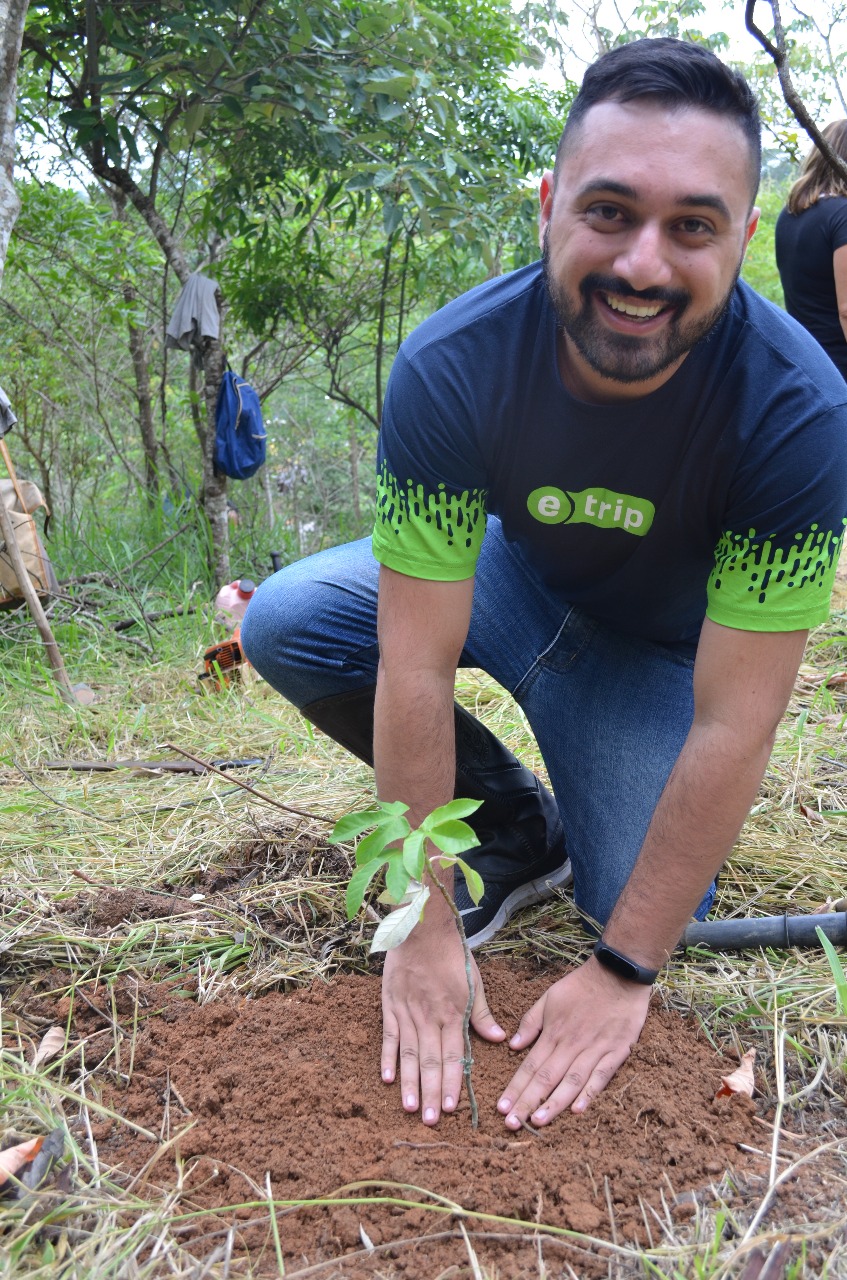
Plantio Silvio LuizWho also started the year making a dream come true was Silvio Luiz Tonietto (picture left). Silvio Luiz get to know IPE by a story exhibited in December at a national TV News about the biggest restored corridor in Brasil, at Pontal do Paranapanema (SP). Silvio made contact with the Institute and donated 100 trees.

“It is a retribution to all that nature gives, and we know how important this is to water conservation in a region as São Paulo. I am really glad to be able to plant with my bare hands”, Silvio commented.

The seedlings were planted at Atibainha reservoir surroundings, one out of five that constitute one of the biggest water supply systems in the world.

According to a study from Atlas of Cantareira System, an IPÊ publication, 21 thousands hectares need to be restored at the permanent preservation areas, at the river springs, rivers and streamlet vicinities. These are areas that should be covered by forests, but aren’t. This scenario harms Cantareira System’s resilience, one of the biggest water supply system in the world; responsible for the water going to 7,6 million people from metropolitan region of Sao Paulo, besides 5 million at Campinas and Piracicaba regions.

::/introtext::
::fulltext::::/fulltext::

Categories News Leave a comment

Support IPE walking, running or riding a bicycle at Solidarity kilometer!

25 de March de 2021 by Paula Piccin

::cck::739::/cck::
::introtext::

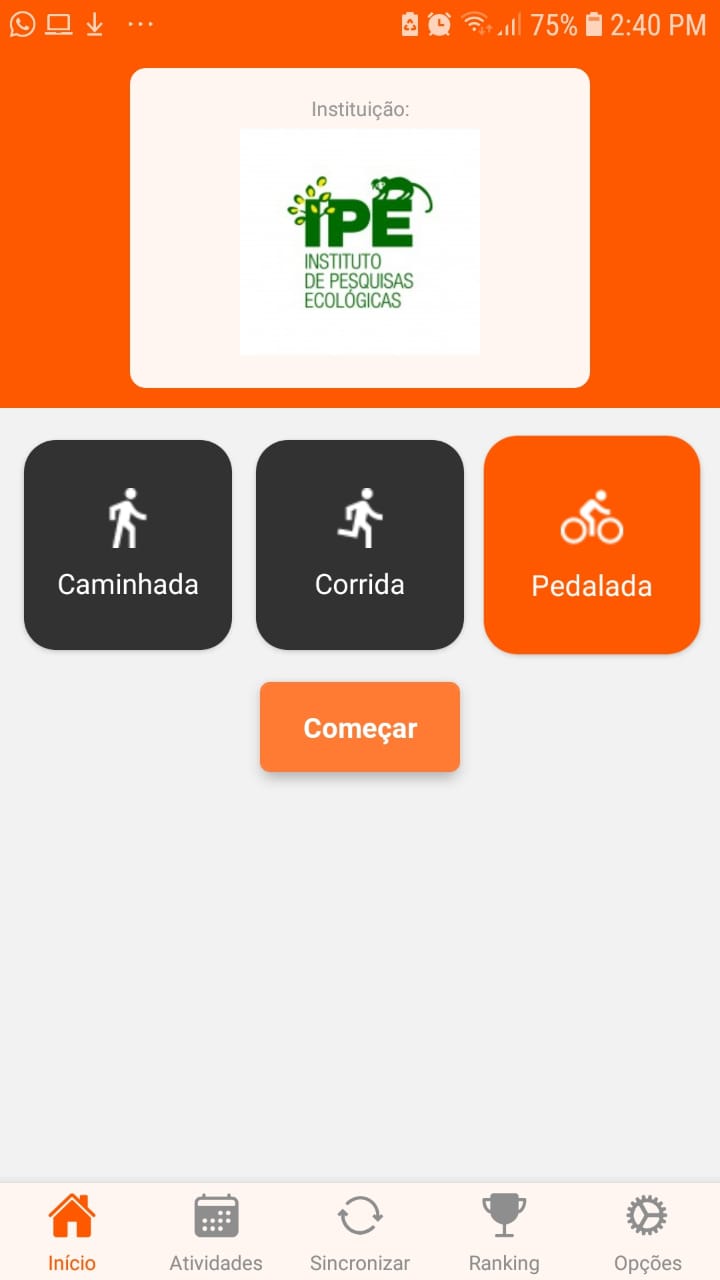
IPE is now being part of KM Solidário app. The more you use it, the more you can help our cause and our work regarding biodiversity conservation.

After all, it’s all about a balanced health and environment!

How can you support us:

  • Download the app at your cellphone (available at both Android and iOS);
  • Search IPE as an NGO to support (ONG, in Portuguese);
  • Start your activity: you can walk (CAMINHAR), run (CORRER) or use your bike (PEDALAR) – and click at Start (“Iniciar”).
  • Done! When finishing your activity, you have donated your kilometers to IPE.

At the end of each month, all kilometers will be converted into donations.

Get to know more about our initiative. This donation mechanism is available here at terms and conditions of use.

::/introtext::
::fulltext::::/fulltext::

Categories News Leave a comment
Older posts
Newer posts
← Previous Page1 … Page7 Page8 Page9 … Page12 Next →

Posts Recentes

  • IPÊ inaugura nova sede em Manaus/AM 
  • Projeto fortalece o manejo de castanha-da-amazônia na Flona de Caxiuanã, no Pará
  • Oportunidade: Seleção de Pessoa Jurídica para desenvolvimento de cadeias da sociobiodiversidade na Chapada do Araripe (CE) 
  • Comunitário da RDS Puranga Conquista participa de evento nacional de Restauração Ecológica em Brasília
  • Cartilha sobre meliponicultura do Projeto Agroecologia em Rede é premiada em Congresso Amazonense de Meliponicultura 

Publicações

  • August 2026
  • July 2026
  • June 2026
  • May 2026
  • April 2026
  • March 2026
  • February 2026
  • January 2026
  • December 2025
  • November 2025
  • October 2025
  • September 2025
  • August 2025
  • July 2025
  • June 2025
  • May 2025
  • April 2025
  • March 2025
  • February 2025
  • January 2025
  • December 2024
  • November 2024
  • October 2024
  • September 2024
  • August 2024
  • July 2024
  • June 2024
  • May 2024
  • April 2024
  • March 2024
  • February 2024
  • January 2024
  • December 2023
  • November 2023
  • October 2023
  • September 2023
  • August 2023
  • July 2023
  • June 2023
  • May 2023
  • April 2023
  • March 2023
  • February 2023
  • January 2023
  • December 2022
  • November 2022
  • October 2022
  • September 2022
  • August 2022
  • July 2022
  • June 2022
  • May 2022
  • April 2022
  • March 2022
  • February 2022
  • January 2022
  • December 2021
  • November 2021
  • October 2021
  • September 2021
  • August 2021
  • July 2021
  • June 2021
  • May 2021
  • April 2021
  • March 2021
  • February 2021
  • January 2021
  • December 2020
  • November 2020
  • October 2020
  • September 2020
  • August 2020
  • July 2020
  • June 2020
  • May 2020
  • April 2020
  • March 2020
  • February 2020
  • January 2020
  • December 2019
  • November 2019
  • October 2019
  • September 2019
  • August 2019
  • July 2019
  • June 2019
  • May 2019
  • April 2019
  • March 2019
  • February 2019
  • January 2019
  • December 2018
  • November 2018
  • October 2018
  • September 2018
  • August 2018
  • July 2018
  • June 2018
  • May 2018
  • April 2018
  • March 2018
  • February 2018
  • January 2018
  • December 2017
  • November 2017
  • October 2017
  • September 2017
  • August 2017
  • July 2017
  • June 2017
  • May 2017
  • April 2017
  • March 2017
  • February 2017
  • January 2017
  • December 2016
  • November 2016
  • October 2016
  • September 2016
  • August 2016
  • July 2016
  • June 2016
  • May 2016
  • January 2016
  • December 2015
  • November 2015
  • October 2015
  • September 2015
  • August 2015
  • July 2015
  • June 2015
  • May 2015
  • April 2015
  • March 2015
  • February 2015
  • January 2015
  • December 2014
  • November 2014
  • October 2014
  • September 2014
  • August 2014
  • July 2014
  • June 2014
  • May 2014
  • April 2014
  • March 2014
  • February 2014
  • January 2014
  • December 2013
  • November 2013
  • October 2013
  • September 2013
  • July 2013
  • June 2013
  • May 2013

Categorias

  • Annual Reports
  • Áreas Protegidas
  • Baixo Rio Negro
  • Boas Práticas
  • Cases de MRC
  • Centro de Educação e Cooperação Socioambiental para o Clima
  • COP-16 Agenda
  • COP16
  • COP30
  • Cursos
  • Depoimentos
  • Doe
  • Donate
  • Home
  • Home
  • Iniciativas para Doação
  • IPÊ
  • IPÊ
  • IPÊ
  • IPE
  • ipe em movimento
  • Não categorizado
  • Negócios Sustentáveis
  • News
  • Notícias
  • Paisagens Climáticas
  • Pesquisa e Desenvolvimento
  • Pontal do Paranapanema
  • Projetos
  • Projetos Temáticos
  • publicacoes
  • publicacoes
  • ra.2022
  • Relatórios Anuais
  • Thematic Projects
  • Uncategorised
A implementação do kmspico em sistemas educacionais ou corporativos permite uma utilização mais racional dos recursos e apoia iniciativas de proteção ambiental. Você pode download ativador kmspico com segurança agora mesmo.

Onde Estamos

Rod. Dom Pedro I, km 47
Nazaré Paulista, SP, Brasil
Caixa Postal 47 – 12964-022
Tel: (11) 3590-0041

Mapa para o IPÊ
Escritórios
Ouvidoria

Redes Sociais

  • Facebook
  • Twitter
  • Instagram
  • Youtube
  • Linkedin

Política de Privacidade
Programa de Privacidade
Políticas de Cookies

Termos de Uso | Estatuto
Copyright © Ipê – Instituto de Pesquisas Ecológicas.
Email: ipe@ipe.org.br

kraken onion kraken darknet kraken tor
A implementação do kmspico sistemas educacionais ou corporativos permite uma utilização racional dos recursos e apoia iniciativas de proteção ambiental Você pode download ativador kmspico com segurança agora mesmo kmspico.lc.