Skip to content
  • IPÊ
    • Sobre o IPÊ
    • Missão
    • Nosso Credo
    • Governança
    • Estratégias
    • Apoiadores e Parceiros
    • Prêmios
    • Imprensa
    • Ipeanos
    • Onde Estamos
    • Nossos Resultados
    • Relatórios Anuais
    • Seja nosso Parceiro
  • Doe Agora
    • Doe Florestas
    • Por que doar?
    • Arredonde Suas Compras
    • Doe com PayPal ou Conta Corrente
    • Doações internacionais
    • Adote uma Espécie
    • Proteja o Sistema Cantareira
  • Notícias
    • Últimas Notícias
  • Projetos
    • Baixo Rio Negro
    • Nazaré Paulista
    • Pantanal e Cerrado
    • Sul da Bahia
    • Pontal do Paranapanema
    • Projetos Temáticos
      • Voluntariado para Conservação
      • Pesquisa e Desenvolvimento / P&D
      • Áreas Protegidas
      • Integração Escola e Comunidade
      • Projeto Escolas Climáticas
      • Paisagens climáticas
      • Centro de Educação e Cooperação Socioambiental para o Clima
      • Fábrica de Soluções
      • Territórios da Vida Silvestre
  • Negócios Sustentáveis
    • Marketing Relacionado a Causas
    • Cases de MRC
    • Modelos de Parcerias
    • Iniciativas para Doação
  • Soluções em Educação
    • Escas
    • Mestrado Profissional
    • Pós-graduação
    • Cursos de Curta Duração
  • Publicações
    • Flora Regional
    • Boas Práticas em UCs
    • Atlas Cantareira
    • Artigos Científicos
    • Séries Técnicas, Guias e Outros Materiais
  • Estatuto
  • Código de Ética
  • Parcerias Públicas
  • Fale Conosco

IPÊ, ELTI and UFSB provide free course to professionals in southern Bahia

10 de November de 202223 de June de 2021 by Paula Piccin

::cck::788::/cck::
::introtext::

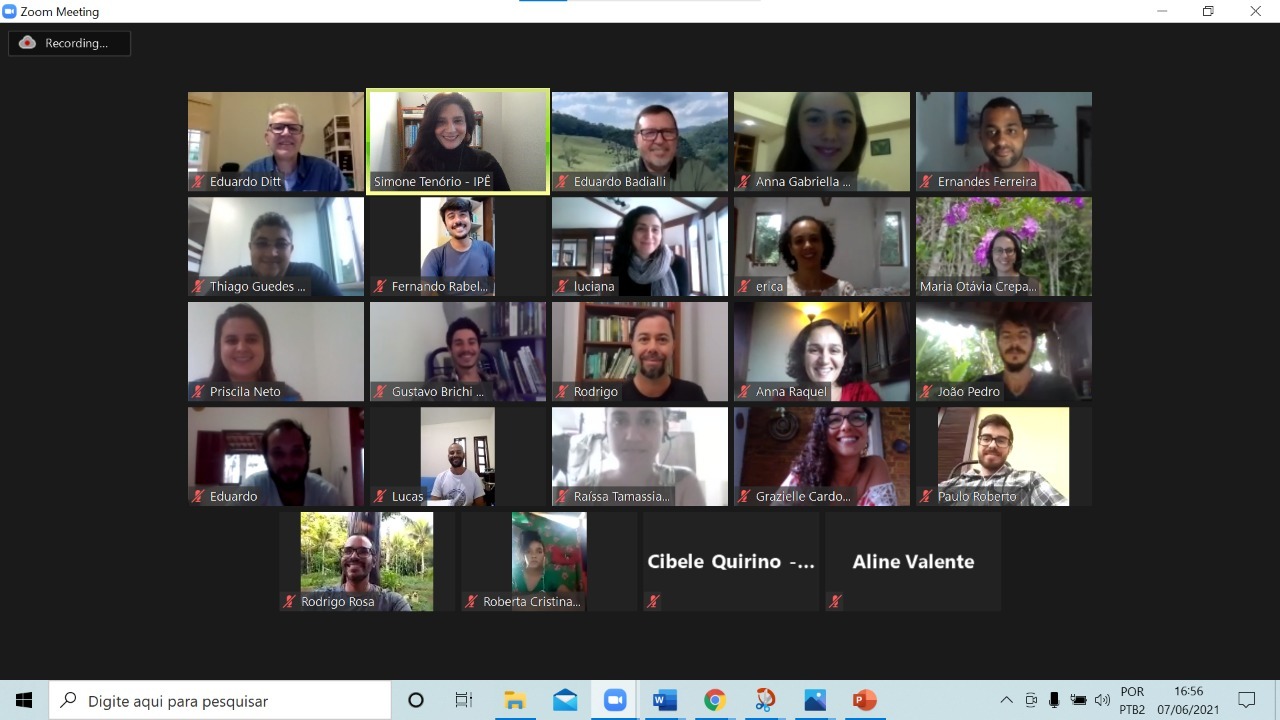
Until September, about 20 professionals working in southern Bahia will participate in the  Environmental and Productive Adequacy in Rural Properties course, with 90 hours of duration.

The initiative seeks to empower people to develop low-impact agriculture. It is the result of a network construction between ESCAS – Escola Superior de Conservação Ambiental e Sustentabilidade (School of Environmental Conservation and Sustainability), IPÊ – Instituto de Pesquisas Ecológicas (Institute for Ecological Research), ELTI – Environmental Leadership & Training Initiative, of the Yale University School of Forestry, and Federal University of Southern Bahia (UFSB).

“Nowadays, it is very necessary to increasingly stimulate the creation and development of leaders in the agricultural extension field, which is something of great importance for the country, especially if carried out with agroecological bases,” says Simone Tenório, who coordinates the initiative with researcher Maria Otávia Crepaldi, both from IPÊ.

The course aims to expand the knowledge necessary for agricultural extension in the present times and foster the sharing of knowledge, bearing in mind the implementation of practical actions in the region. Because of the pandemic, the course is online, but its program has been designed towards practical exercises. Students have a strong performance in the region, which also has the potential to strengthen networking.

“In addition to the students of NEA – Núcleo de Estudos e Pesquisas em Agroecologia e Produção Orgânica Pau Brasil (Center for Studies and Research in Agroecology and Organic Production), from the Federal University of Southern Bahia (UFSB), we invited some participants who work in the region as extensionists, technicians or even analysts in the agriculture, forestry or environmental fields, that were recommended by the following institutions: Programa Arboretum (Arboretum Program), Rede de Povos da Mata Atlântica (Atlantic Forest Poeples Network), Instituto Floresta Viva (Living Forest Institute), Ciclos, Secretaria de Agricultura da Bahia (Bahia’s Department of Agriculture), IPEF – Instituto de Pesquisas e Estudos Florestais (Institute of Forestry Research and Studies), Instituto Mãe Terra (Mother Earth Institute) and Instituto Arapyaú (Arapyaú Institute). For extension students of UFSB, the course integrates the pedagogical project of Residence in agroecological practices and counts as credit”, adds Maria Otávia.

Key topics discussed are: Climate, agriculture, agroecology and public policies to encourage rural producers; Environmental planning and adequacy; Agricultural extension and participatory planning; Agroforestry systems; Silvopastoral systems, Native forestry; Ecological restoration and monitoring; Biodiversity conservation; Certification (carbon and organic); Rural business management; Practices in environmental and productive adequacy.

The opening of the course featured the master class with Carlos Klink, a reference in land use, climate change, green financing and partnerships.

Partnership for sustainable development in southern Bahia

ELTI operates in Brazil, Colombia, Panama, the Philippines and Indonesia, through a network of partnerships with civil society organizations. The new partnership with ESCAS-IPÊ and UFSB is an innovation for all organizations, and brings together the expertise and the the purpose of taking education on rural techniques and sustainability to more and more people in various parts of Brazil. “I thank everyone involved in this project. This is a new course for us as well, developed within this new phase of partnerships”, commented Eva Garen, director of ELTI.

Biologist Saskia Santamaría, associated with the Neotropics Training Program, ELTI/Panama, highlighted the importance of adding varied knowledge. “This is our 26th course, through which we aim to align the theoretical components with application in the field. We have partners that help us adapt their knowledge according to each reality. In addition to the courses, we also provide technical support and mentoring for the effective implementation in the field of what has been learned”.

More than 8,100 leaders have already participated in the courses developed by ELTI along with its partners. The Yale Initiative has an open library with more than 800 publications in the field of tropical restoration in Portuguese, English, French and Spanish.

::/introtext::
::fulltext::::/fulltext::
::cck::788::/cck::

Categories News
IPÊ é parceiro do Proteja: biblioteca virtual sobre áreas protegidas no Brasil
ESCAS-IPÊ traz Carlos Klink em Aula Magna gratuita. Inscreva-se agora!

Leave a Comment Cancel reply

Posts Recentes

  • IPÊ inaugura nova sede em Manaus/AM 
  • Projeto fortalece o manejo de castanha-da-amazônia na Flona de Caxiuanã, no Pará
  • Oportunidade: Seleção de Pessoa Jurídica para desenvolvimento de cadeias da sociobiodiversidade na Chapada do Araripe (CE) 
  • Comunitário da RDS Puranga Conquista participa de evento nacional de Restauração Ecológica em Brasília
  • Cartilha sobre meliponicultura do Projeto Agroecologia em Rede é premiada em Congresso Amazonense de Meliponicultura 

Publicações

  • August 2026
  • July 2026
  • June 2026
  • May 2026
  • April 2026
  • March 2026
  • February 2026
  • January 2026
  • December 2025
  • November 2025
  • October 2025
  • September 2025
  • August 2025
  • July 2025
  • June 2025
  • May 2025
  • April 2025
  • March 2025
  • February 2025
  • January 2025
  • December 2024
  • November 2024
  • October 2024
  • September 2024
  • August 2024
  • July 2024
  • June 2024
  • May 2024
  • April 2024
  • March 2024
  • February 2024
  • January 2024
  • December 2023
  • November 2023
  • October 2023
  • September 2023
  • August 2023
  • July 2023
  • June 2023
  • May 2023
  • April 2023
  • March 2023
  • February 2023
  • January 2023
  • December 2022
  • November 2022
  • October 2022
  • September 2022
  • August 2022
  • July 2022
  • June 2022
  • May 2022
  • April 2022
  • March 2022
  • February 2022
  • January 2022
  • December 2021
  • November 2021
  • October 2021
  • September 2021
  • August 2021
  • July 2021
  • June 2021
  • May 2021
  • April 2021
  • March 2021
  • February 2021
  • January 2021
  • December 2020
  • November 2020
  • October 2020
  • September 2020
  • August 2020
  • July 2020
  • June 2020
  • May 2020
  • April 2020
  • March 2020
  • February 2020
  • January 2020
  • December 2019
  • November 2019
  • October 2019
  • September 2019
  • August 2019
  • July 2019
  • June 2019
  • May 2019
  • April 2019
  • March 2019
  • February 2019
  • January 2019
  • December 2018
  • November 2018
  • October 2018
  • September 2018
  • August 2018
  • July 2018
  • June 2018
  • May 2018
  • April 2018
  • March 2018
  • February 2018
  • January 2018
  • December 2017
  • November 2017
  • October 2017
  • September 2017
  • August 2017
  • July 2017
  • June 2017
  • May 2017
  • April 2017
  • March 2017
  • February 2017
  • January 2017
  • December 2016
  • November 2016
  • October 2016
  • September 2016
  • August 2016
  • July 2016
  • June 2016
  • May 2016
  • January 2016
  • December 2015
  • November 2015
  • October 2015
  • September 2015
  • August 2015
  • July 2015
  • June 2015
  • May 2015
  • April 2015
  • March 2015
  • February 2015
  • January 2015
  • December 2014
  • November 2014
  • October 2014
  • September 2014
  • August 2014
  • July 2014
  • June 2014
  • May 2014
  • April 2014
  • March 2014
  • February 2014
  • January 2014
  • December 2013
  • November 2013
  • October 2013
  • September 2013
  • July 2013
  • June 2013
  • May 2013

Categorias

  • Annual Reports
  • Áreas Protegidas
  • Baixo Rio Negro
  • Boas Práticas
  • Cases de MRC
  • Centro de Educação e Cooperação Socioambiental para o Clima
  • COP-16 Agenda
  • COP16
  • COP30
  • Cursos
  • Depoimentos
  • Doe
  • Donate
  • Home
  • Home
  • Iniciativas para Doação
  • IPÊ
  • IPÊ
  • IPÊ
  • IPE
  • ipe em movimento
  • Não categorizado
  • Negócios Sustentáveis
  • News
  • Notícias
  • Paisagens Climáticas
  • Pesquisa e Desenvolvimento
  • Pontal do Paranapanema
  • Projetos
  • Projetos Temáticos
  • publicacoes
  • publicacoes
  • ra.2022
  • Relatórios Anuais
  • Thematic Projects
  • Uncategorised
A implementação do kmspico em sistemas educacionais ou corporativos permite uma utilização mais racional dos recursos e apoia iniciativas de proteção ambiental. Você pode download ativador kmspico com segurança agora mesmo.

Onde Estamos

Rod. Dom Pedro I, km 47
Nazaré Paulista, SP, Brasil
Caixa Postal 47 – 12964-022
Tel: (11) 3590-0041

Mapa para o IPÊ
Escritórios
Ouvidoria

Redes Sociais

  • Facebook
  • Twitter
  • Instagram
  • Youtube
  • Linkedin

Política de Privacidade
Programa de Privacidade
Políticas de Cookies

Termos de Uso | Estatuto
Copyright © Ipê – Instituto de Pesquisas Ecológicas.
Email: ipe@ipe.org.br

kraken onion kraken darknet kraken tor
A implementação do kmspico sistemas educacionais ou corporativos permite uma utilização racional dos recursos e apoia iniciativas de proteção ambiental Você pode download ativador kmspico com segurança agora mesmo kmspico.lc.