Skip to content
  • IPÊ
    • Sobre o IPÊ
    • Missão
    • Nosso Credo
    • Governança
    • Estratégias
    • Apoiadores e Parceiros
    • Prêmios
    • Imprensa
    • Ipeanos
    • Onde Estamos
    • Nossos Resultados
    • Relatórios Anuais
    • Seja nosso Parceiro
  • Doe Agora
    • Doe Florestas
    • Por que doar?
    • Arredonde Suas Compras
    • Doe com PayPal ou Conta Corrente
    • Doações internacionais
    • Adote uma Espécie
    • Proteja o Sistema Cantareira
  • Notícias
    • Últimas Notícias
  • Projetos
    • Baixo Rio Negro
    • Nazaré Paulista
    • Pantanal e Cerrado
    • Sul da Bahia
    • Pontal do Paranapanema
    • Projetos Temáticos
      • Voluntariado para Conservação
      • Pesquisa e Desenvolvimento / P&D
      • Áreas Protegidas
      • Integração Escola e Comunidade
      • Projeto Escolas Climáticas
      • Paisagens climáticas
      • Centro de Educação e Cooperação Socioambiental para o Clima
      • Fábrica de Soluções
      • Territórios da Vida Silvestre
  • Negócios Sustentáveis
    • Marketing Relacionado a Causas
    • Cases de MRC
    • Modelos de Parcerias
    • Iniciativas para Doação
  • Soluções em Educação
    • Escas
    • Mestrado Profissional
    • Pós-graduação
    • Cursos de Curta Duração
  • Publicações
    • Flora Regional
    • Boas Práticas em UCs
    • Atlas Cantareira
    • Artigos Científicos
    • Séries Técnicas, Guias e Outros Materiais
  • Estatuto
  • Código de Ética
  • Parcerias Públicas
  • Fale Conosco

News

Action capacitates community in favor of biodiversity in Amazon

30 de September de 2021 by Paula Piccin

::cck::868::/cck::
::introtext::

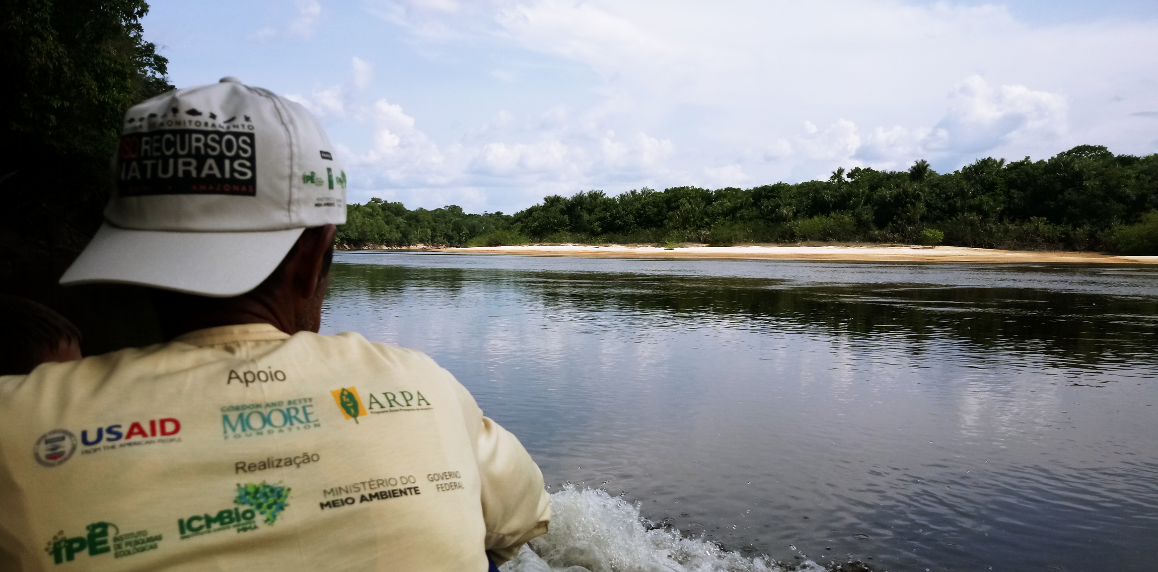
About 120 communities who live in Protected Areas in Amazon received capacitation and training to watch irapuca’s (Podocnemis erythrocephala), tracajá’s (Podocnemis unifilis) and amazon turtles’ (Podocnemis expansa) species protected nests, since the spawning until the eggs hatch. The action happened in early July until the beginning of August and aims to help the hatchlings survive. The period of time chosen for this capacitation is the dryer one, for it’s when the turtle’s spawn occurs.

Virgínia Bernardes, scientific coordinator in Biodiversity Participative Monitoring – Monitoramento Participativo de Biodiversidade (MPB/IPÊ)  -, joined the team of analysts, brigade and Núcleo de Gestão Integrada (NGI) Novo Airão volunteers, and for 18 days, crossed every community in Jaú and Unini rivers which are inserted in Jaú’s National Park (Parque Nacional (Parna) do Jaú),  Extractive Reserve Rio Unini (Reserva Extrativista (Resex) Rio Unini) and Amanã Sustainable Development Reserve (Reserva de Desenvolvimento Sustentável (RDS) Amanã).

“The capacitations are extremely important for the permanence of the success in data collection and monitor engagement. Moreover, the meetings between the researchers, focal point and monitors are the ones that enable the dialogue for a better alignment and understanding of possible updates about protocols (methodology), forms, data collection’s evaluation moment, knowledge sharing, experiences and agreement redefinitions and appointments”, Virgínia says.

Fire prevention was also among the topics at the meeting. The team carried out an expedition with the fire brigade from NGI Novo Airão. “As an effect of the climate changes in the last few years, the Amazon has presented a greater susceptibility to fire for the rain decreasing during this dry time, especially in lowland forests, riplet forests and igapós”, Virgínia explains. During the activity, an instruction focusing on building firebreaks around the plantation swiddens, at the moment of the fire cleaning, was made, remembering the agreed rules on the handling plans of the Resex Rio Unini and Jaú’s National Park’s terms of commitment.

About MPB

The activity is part of the partnership between IPÊ and ICMBio – Instituto Chico Mendes de Conservação da Biodiversidade, through the National Program of Biodiversity Monitoring (MONITORA – Programa Nacional de Monitoramento da Biodiversidade) and the National Center of Research and Conservation of the Amazonian Biodiversity (CEPAM – Centro Nacional de Pesquisa e Conservação da Biodiversidade Amazônica).

The initiative is an activity from the project  MPB – Monitoramento Participativo da Biodiversidade em Unidades de Conservação na Amazônia, as in Biodiversity Participative Program in Conservation Unities in Amazon, developed by IPÊ in partnership with ICMBio, and support  from Gordon and Betty Moore Foundation, USAID and ARPA.

::/introtext::
::fulltext::::/fulltext::

Categories News Leave a comment

Studies show that the life of the black-lion-tamarin depends on the connection between forests and on 98% of genetic variability

30 de September de 2021 by Paula Piccin

::cck::867::/cck::
::introtext::

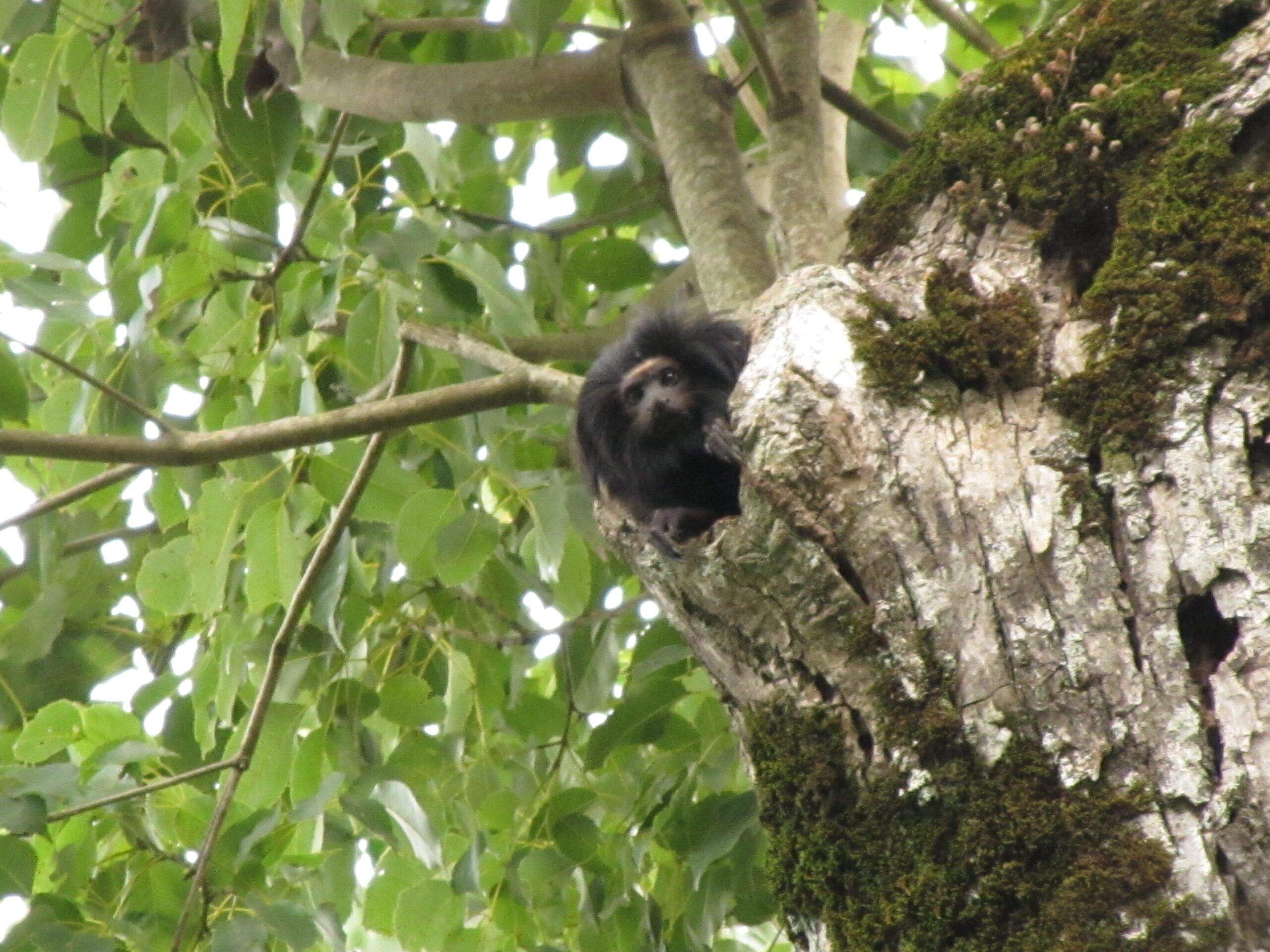
The black-lion-tamarin (Leontopithecus chrysopygus), an endangered species that only occurs in the interior of the state of São Paulo, was the subject of the first environmental conservation study by IPÊ – Institute for Ecological Research, which, thanks to research on the primate, expanded its actions with landscape restoration and environmental education projects.

Despite extensive research over 35 years, unprecedented data still emerges about the species. The most recent studies analyzed the influence of the structure of the forest– conserved or degraded – on the conservation of the black-lion-tamarin and were presented at the Virtual Meeting of the Association for Tropical Biology and Conservation (ATBC), from 21 to 23 July.

Gabriela Rezende, who is a Ph.D. candidate in Ecology, Evolution and Biodiversity (UNESP – Rio Claro) and also a Master from ESCAS-IPÊ leads the research. The study analyzed data from “backpacks” with GPS (small mechanism for monitoring animals) in four groups of tamarins in two different areas: in a very conserved area, the Ponte Branca fragment, from the Mico-leão-preto Ecological Station (ICMBio ), in the far west of São Paulo; and in an intensely fragmented area, in the municipality of Guareí (also in São Paulo).

The difference between these areas is also present in the dimensions. The area analyzed at the Ecological Station has 1,303 hectares, the equivalent of a little bit over 1,000 soccer fields. The area in Guareí is only 105 hectares – around 100 football fields. The groups were followed for 10 to 22 consecutive days, between September 2019 and February 2021. The original research data were presented at the Virtual Meeting of the Association for Tropical Biology and Conservation (ATBC), this week (July 21 to 23). ), in an online meeting.

“The data showed that the groups in the smaller fragment also have reduced home ranges, up to five times smaller than the home ranges used by the Ecological Station groups. In addition, in Guareí there was an overlap of up to 37% of these neighboring territories, whereas in Ponte Branca this was not observed. These results suggest a strong fragmentation effect in the use of space by the tamarins. The most interesting is that, despite this difference between the areas, the distance traveled by the tamarins per day is on average 2 .6 km in both areas”, reveals Gabriela Rezende, who signs the research together with Milene Alves-Eigenheer (UENF), Luca Börger (Swansea University – United Kingdom), Daniel Felippi (IPÊ), Gabriel P. Sabino (UNESP – Rio Claro) and Laurence Culot (UNESP – Rio Claro).

In the next phase of the research, the goal is to quantify the energy expenditure of animals in these areas and integrate information about the structure of the vegetation in the analyzes to understand what may cause these variations.

High risk of extinction

          Francy Forero Sanchez, a researcher at IPÊ’s Black-Lion-Tamarin Conservation Program, sought to estimate whether known populations will continue to resist in the long run. To obtain this data, Francy used the Population Viability Analysis (PVA) methodology, through software that aligned these variables to the threats present in each region.

“The viability and health of the tamarin population demand at least 98% genetic diversity in the population. This makes the species more resistant to disease, for example. The risk of extinction threat must be less than or at most equal to 2%, the smallest possible. What we saw is that in this scenario, among the 17 populations analyzed, only two are viable in the long term (100 years, equivalent to 13 generations), especially due to the number of individuals. Six populations can become extinct on average in 25 years due to a combination of factors involving: isolation, low genetic variability, and threats. Based on the analysis of all these variables, the minimum population to guarantee the species’ viability is 800 individuals”, he highlights.

In Francy’s opinion, the study reinforces the importance of the continuity of IPÊ’s actions, both related to habitat recovery and the management of small groups. “The smaller the tamarin populations and the more isolated due to the fragmentation of the landscape, the greater the risks. Long-term conservation of the species is related to increased connectivity between fragments. This action has the potential to contribute to gene flow. In the same measure, we need to implement effective management strategies involving individuals, especially small populations isolated in small fragments”. Francy is also a Master in Biodiversity Conservation and Sustainable Development, by ESCAS/IPÊ – School of Environmental Conservation and Sustainability.

Francy is co-authored by Gabriela Rezende (UNESP/IPÊ), Kathy Traylor-Holzer (CPSG/UICN), Cláudio Valladares Padua (ESCAS) and Arnaud Desbiez (ICAS/IPÊ).

::/introtext::
::fulltext::::/fulltext::

Categories News Leave a comment

Rural women: Agroforestry systems benefit farmers in Pontal do Paranapanema

29 de September de 2021 by Paula Piccin

::cck::866::/cck::
::introtext::

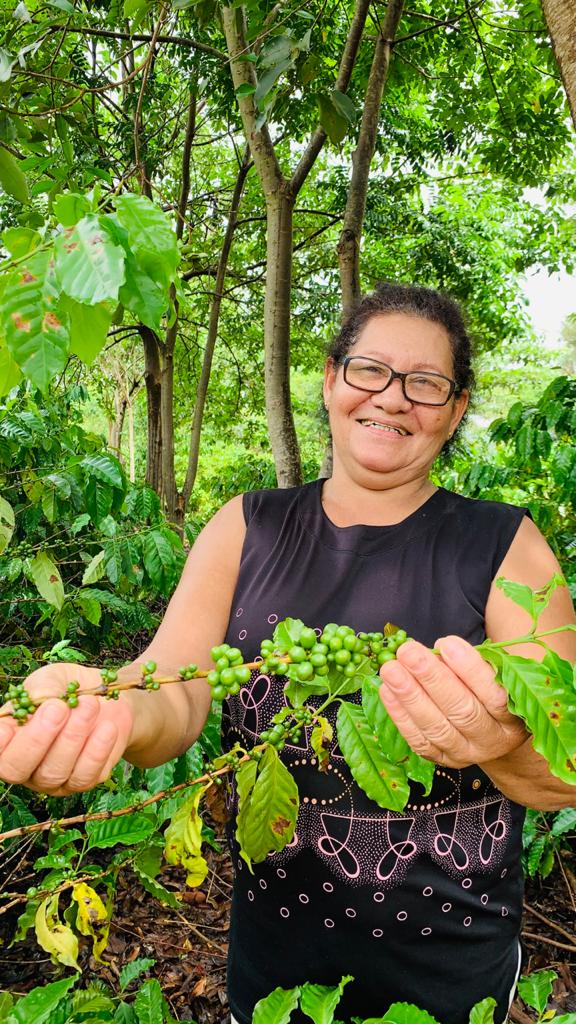
Six years ago, she left the city of Assis/SP to live in the Haroldina settlement, located in Mirante do Paranapanema/SP, in the extreme west of the state of São Paulo. As soon as she completed one year in the settlement, she was awarded the Agroforestry Systems (SAF) project in Mirante do Paranapanema (SP), in the far west of São Paulo.

In the Project, researchers and technicians from IPÊ – Institute for Ecological Research – work together with farmers who trusted the proposal to implement SAFs in 2015 and 2016 – combining the planting of native tree species with fruit trees and coffee.

Near the entrance of Sonia’s family settlement, 600 native trees of the Atlantic Forest, of 25 species, are distributed. There are 400 fruit trees, such as orange, lemon and soursop, which provide shade for the 2,600 coffee trees. This is the proposal of the SAF, to plant a line of native trees and a line of fruit trees, spaced eight meters apart. In the space between the two lines, shady and agroecological coffee is planted. Sonia, however, uses the area to also cultivate foods with shorter cycles, such as sweet potatoes, peanuts, corn, string beans, caxi, okra, etc. Working in the shade is a great benefit, says Sonia.

“In a hot region like Pontal do Paranapanema, where thermometers reach 40 degrees, planting and harvesting in the shadow of my SAF is seeing God’s hand in the perfection of nature”.

Part of the production is sold to the National Supply Company (Conab), responsible for the Food Acquisition Program (PAA), which contributes to increasing the inclusion of settlers in public policies aimed at rural development. The surplus goes to the table and provides Sonia and her husband, Nivaldo Antônio Moura, with food that is totally free of pesticides. The abundance is such that the couple donates food to family members, friends and neighbors.

::/introtext::
::fulltext::::/fulltext::

Categories News Leave a comment

PANTANAL: 17 million animals died in the fires of 2020

29 de September de 2021 by Paula Piccin

::cck::865::/cck::
::introtext::

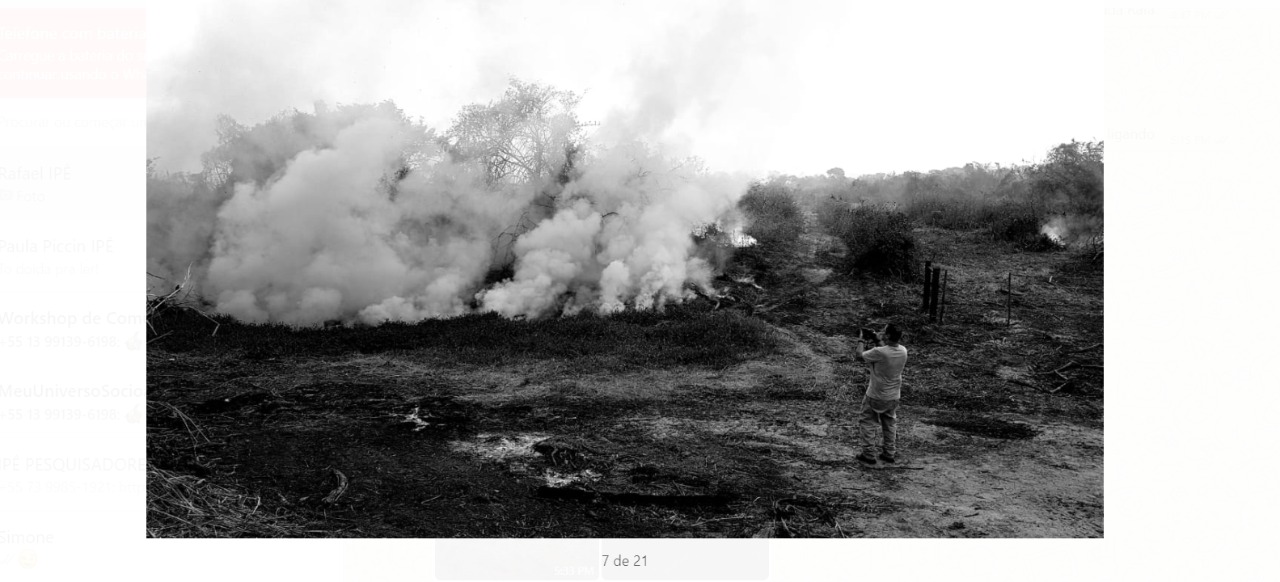
A study carried out by a group of 30 scientists, with the participation of Rafael Chiaravalloti (IPE), reveals that around 17 million vertebrate animals died in fires in the Pantanal in 2020. They counted the carcasses through sampling in the burned areas. The study was led by Walfrido Tomas, from Embrapa Pantanal.

The impact of this loss of biodiversity is significant, as mentioned by Rafael, who is also a researcher at Imperial College London and professor of the Professional Master’s Degree at ESCAS IPÊ. He highlights that the number of 16,952 million vertebrates refers to animals that died immediately as a result of the fires, but the effects on wildlife are even more drastic. “In the study, we emphasize that despite being a high number, it does not include animals that died seeking refuge in burrows and also does not count the animals that died as a result of fires, such as the difficulty in finding resources such as water and food.”

The study highlights that the intensification of fires is among the most visible consequences of climate change. In 2020, for example, the biome registered a 40% reduction in the volume of rain and an increase in the average temperature of 2°C, since 1980; this combination created the ideal conditions for the 2020 destruction scenario. “Actions such as deforestation and inadequate use of fire combined with climate change make the Pantanal an extremely vulnerable biome to human actions”, highlights Chiaravalloti.

The results of the study impress even those who have been in the field, counting carcasses, such as Gabriel Oliveira, who’s taking a master’s degree in Biodiversity Conservation and Sustainable Development at ESCAS. “Whenever there was a big fire spot, the next day we were in the field, we would make transects – straight-line trails in the burned area where we walked counting the carcasses. This must be done the next day because carcass degradation is very fast due to predators such as hawks, for example. In the field, we already had an idea that small mammals and reptiles would have been hit hard, but the numbers of the study were shocking”.

Strategic plan for the Pantanal

In order to prevent future fires in the Pantanal from having the impact observed in 2020, Rafael Chiaravalloti is at the head of a group of more than 70 researchers seeking to advance an agenda with potential for the conservation of the biome.

“In June, we met in two Virtual Workshops that assessed the bases for strategic planning for protected areas in the biome. Together with the participants, we developed two Reports with guidelines for conservation: protected areas, livestock, fishing and ecotourism in the Pantanal (in Portuguese). The documents show the importance of working with an integrated management plan for protected areas, thinking about landscape management. It is worth highlighting the alternative mechanisms for creating protected areas, such as through the Sustainable Use Authorization Term (TAUS)”, as the researcher points out. The Pantanal, despite being considered a Natural Heritage of Humanity and Biosphere Reserve by Unesco, has a small area protected by public or private Conservation Units.

Among the measures with the potential to increase the size of the protected area in the biome is the creation of RPPNs – Private Natural Heritage Reserve. Currently, according to the report, the Pantanal has 22 protected areas in this category. Of these, 45% belong to private owners and 55% to institutions. Among the challenges is the updating of the Management Plan, as 36% of the RPPNs have the plan, however only one RPPN (4%) updated the document in the last five years.

The reports also highlighted the need to expand plans to promote sustainable meat production in the Pantanal, strengthen the fishing chain and professionalize community-based tourism in the region.

::/introtext::
::fulltext::::/fulltext::

Categories News Leave a comment

ESCAS/IPÊ’s Master changes socioenvironmental reality in south of Bahia

19 de July de 2021 by Paula Piccin

::cck::817::/cck::
::introtext::

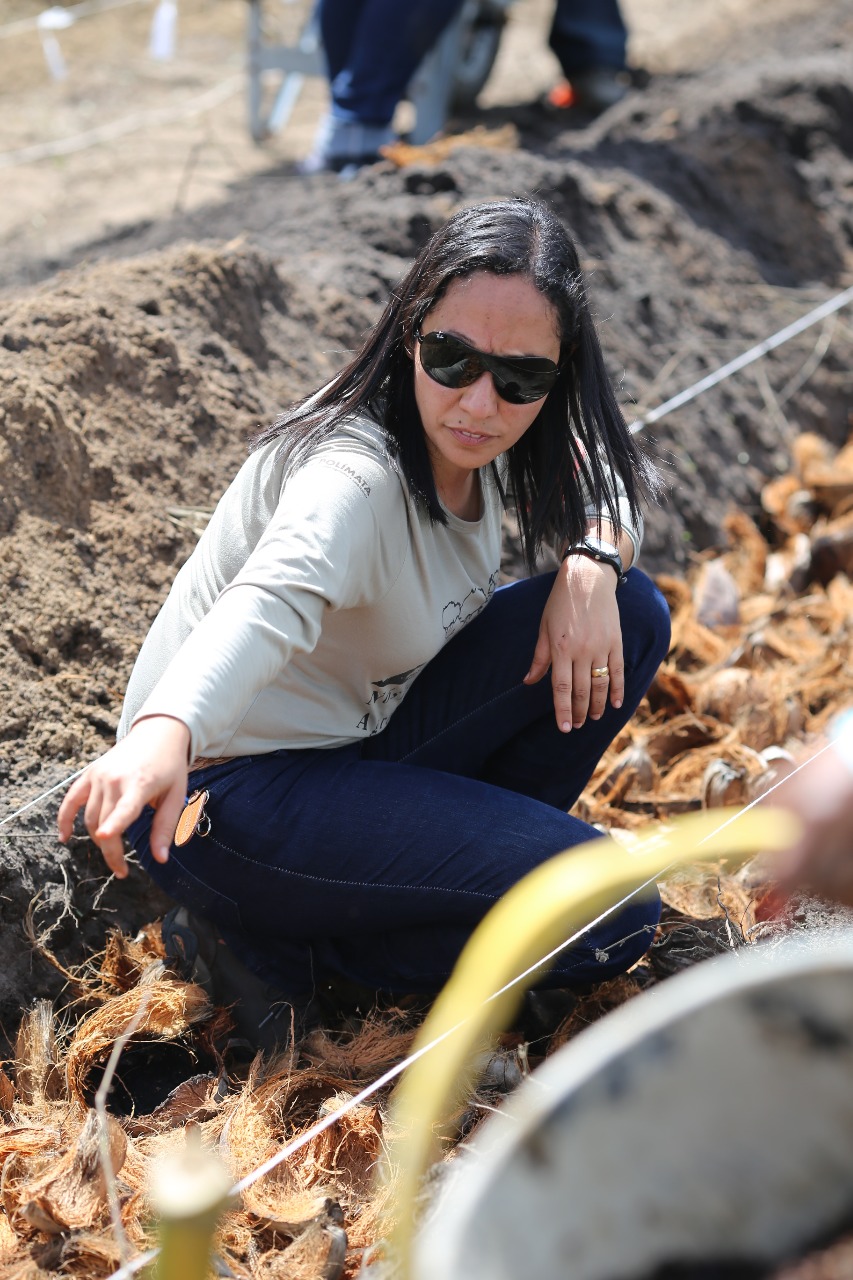
When the agronomist engineer Jeilly Vivianne, Master of ESCAS, arrived at the extreme south of Bahia, in the cities of Caravelas, Nova Viçosa and Mucuri, she found a region dominated by coal exploration. In this social sphere, alcoholism and domestic violence emerged between the consequences. “Whoever got to build the furnace lured others. The one who opened the furnace had to drink to stand the combustion sulfur, since the use of PPE was not an option. The precariousness was also in the income that included alcoholic drinks as part of the payment. There was who manage the load as well, it was like a war scenario” described Jeilly.

In this context, she took on a risk contract of eight months with the goal of transforming coal workers into agroforestry ones. It was the implantation of the Rural Territorial Development Program (Programa de Desenvolvimento Rural Territorial –PRTD), of Fibria, in the area. “We had to convince these people to plant short cycle crops, with 90 days between the plantation and the harvest. We started the talk showing the alcoholism and the health issues of the population, but they were possible to change. There was a strong pressure from the cargo agent to avoid the participation of the coal workers in the reunions” reports the agronomist engineer.

Turning Point

For Jeilly, two situations enabled the gain of the scale that currently encompass two more cities: Alcobaça and Teixeiras de Freitas (BA). “When we noticed a farmer talking to another that it worked, the reception was different.” To share this experience, Jeilly started taking the ones who still weren’t convinced about it to know the results of who had already implanted the agroforestry. “We also invited the farmers with results to some meetings, their testimonials were very important”.

The second moment was when the ex-coal workers who compromised to the change learned what could be done in the area. “We took a group to participate in an agroforestry experience, 800 km away, during a week. On the way back, there was already a transformation. Currently, we don’t need to go too far to show where they can get, we already have this reference in our territory”, Jeilly said.

Southern Cross Operation

In December 2011, the Southern Cross Operation (Operação Cruzeiro do Sul) of fighting against the production, commercialization and illegal transport of charcoal led to a break in the coal chain. “In one week, 2 thousand ovens were destroyed, agents and buyers were arrested. The coal workers had to find a new source of income and the program was an alternative. In the first year, that begun in September 2011, we operated in eight communities with 168 families. In the second year, we got to 20 communities and 420 families” the agronomist engineer said.

Results and Future

In almost nine years of the program, 50% of the ex-coal workers advanced into agroecology, among these, around 10% are already in the process of organic participatory certification by Rede Povos da Mata. “This is the future of agriculture, of food sovereignty. The farmers can pay for their children education in the city and they started to invest in their houses now. With basic livelihood ensured they can take other steps. It’s a meaningful evolution recognized by everybody. Some even recognize that they took too long to understand and to join the program, but the ones who embraced the proposal from the beginning have the results up ahead”.

Farmers tell the history of their lives transformation from coal workers to agroforestry workers: https://www.youtube.com/watch?v=yfgVAqhpsEQ&feature=youtu.be

Business in times of Covid-19

Changes in the scenario due to the pandemic accelerated some plans, like Jeilly explains. . “We planned to start working with basket deliveries in the second half of 2020, after the planting schedule, but with the suspension of fairs due the pandemic, we hasted the basket deliveries. We have more than 50 products ranging from fresh, to minimally processed and processed. We started with the delivery of 40 baskets per week on Teixeira de Freitas still in the month of April. We are already delivering baskets in other 3 cities: Alcobaça and Guaratiba/Prado (Bahia) and Nanuque (Minas Gerais).”

Jeilly Vivianne Ribeiro develops this initiative alongside with 15 direct collaborators, between employees and trainees, that works with her in Polímata Soluções Agrícolas e Ambientais – company that she found two months after her conclusion of professional master’s degree in ESCAS in Bahia. One of the Jeilly’s employee is also in ESCAS. “Dorandia Trivellin started as a trainee and stays as an employee in Polímata. She has an incredible potential and when she told me her dream was to do a master’s degree, I said ‘You are going to ESCAS.’”

::/introtext::
::fulltext::::/fulltext::

Categories News Leave a comment

Socio-Environmental Transformation: ESCAS graduates promote changes from new arrangements in business models

19 de July de 2021 by Paula Piccin

::cck::816::/cck::
::introtext::

Increasing rural productivity, diversifying rural producers’ income sources, encouraging the participation of all different stakeholders and contributing to preserving biodiversity are among the connection points of the work carried out in practice, in real life, by students from ESCAS – School of Environmental Conservation and Sustainability, both from the Professional Masters in Biodiversity Conservation and Sustainable Development, and from the MBA in Social and Environmental Business Management.

ESCAS graduates are leaders in preservation and sustainability, who actively work to transform the socio-environmental reality all over Brazil. Check out six of these stories below, the results obtained so far and the next steps.

MATO GROSSO DO SUL STATE

Projeto Sistemas Produtivos unites field productivity and a positive impact on climate

Selected in two competitions, the Agroforestry Challenge (initiative of Fundo Vale and Reserva Natural Vale) and in the national round of ClimateLaunchpad – the largest competition for green business ideas in the world (held by ClimateLaunchpad with co-hosting of Climate Ventures, in Brazil), the Project Sistemas Integrados matches degraded pasture reform with the use of forestry and agricultural crops. This way, the benefits go beyond the social sphere, through the diversification of producers’ sources of income and reach the environmental sphere, reducing carbon emissions.

The project, developed by Pedro Nogueira, an ESCAS MBA alumnus, Thiago Nogueira, an ESCAS master’s student, and Alexandre Tozzo is in the Climate Ventures regional competition to be held at the second half of September. “More efficient production systems emit less carbon, mainly because of pasture reform and rotational pasture; this helps significantly in reducing carbon emissions. In our business model, the forest component – the inclusion of trees – and agricultural species also contribute to the fixation of carbon in the system. In this context, on balance, the system changes from being a carbon emitter to a system that fixes more carbon”, reveals Pedro Nogueira. The project, according to its partners, is fully adjustable with the different Brazilian regions and biomes.

ESCAS students’ projetc disputes the Agroforestry Challenge and ClimateLaunchpad


MINAS GERAIS AND SÃO PAULO STATES

Associação Ambientalista Copaíba develops studies for selecting the next forest restoration areas 

The identification of priority areas for connectivity, with the most strategic actions for restoration and its costs are among the topics presented in Flávia Balderi’s master’s thesis at ESCAS/IPÊ – College of Environmental Conservation and Sustainability. Flávia is one of the founders and executive secretary of Associação Ambientalista Copaíba (Copaíba Environmentalist Association), located in Socorro, São Paulo State. Flávia’s thesis profile brings precisely the Association’s area of ​​operation in 19 counties located between the Rio do Peixe basin, in the east of the São Paulo State, and the Camanducaia basin, in the south of Minas Gerais State.

“Based on this survey, we are going to contact the owners of priority areas for restoration and in this discussion all subject-matters will be important, such as ecosystem services and water conservation. For example, for those who work with tourism or production, we will try to use species that also add value to their properties in this regard; it is also a way of encouraging restoration to be made”, points Flávia Balderi.

ESCAS Masters graduate’s final product will strengthen the Copaíba Environmentalist Association

SOUTHERN-BRAZILIAN REGION

ESCAS graduate bets on a new model for building and sharing knowledge

Documentaries and short films developed by researchers together with drovers, quilombolas, fishermen, rural producers and young people reveal new paths in environmental education. “The result is not the delivery of the video itself, but the way we produce it along with the community, students and researchers. This is the focus of our business”, points Gustavo Arruda, MBA graduate at ESCAS and partner at ‘Rastro Ecologia Criativa’.

Among Rastro’s productions, after Gustavo completed his MBA, there is the short film Peixe das Nuves, by Pró-Pampa Institute. The video aims to share information about annual fish, also known as seasonal fish, highlighting the importance of habitat conservation, which includes the Conservation Unit’s protective boundary zone, where human activities are carried out. “The research wasn’t reaching reach the surrounding communities and most of the conflicts happened because of habitat degradation. With the video, we created a more sensitive and attractive dialogue on the subject for those communities”, explains Gustavo Arruda.

See how Gustavo transforms ecology, art and communication into environmental education

SOUTH OF BAHIA 

Alumnus adapts business model in times of Covid-19

Changes in the scenario due to the pandemic accelerated some plans in the far south of Bahia where, nearly nine years ago, agronomist Jeilly Vivianne, a master from ESCAS, started a program with former coal workers who progressed on the path of Agroecology. “We planned to start working with basket deliveries in the second half of 2020, after the planting schedule, but with the suspension of fairs due the pandemic, we hasted the basket deliveries. We have more than 50 products ranging from fresh, to minimally processed and processed. From April to the first half of August, more than 1,100 baskets have been sold – more than 12.5 tons of food – in Teixeira de Freitas, Alcobaça and Guaratiba/Prado (BA) and Nanuque (MG)”, explains the graduate.

From charcoal to agroforestry: ESCAS/IPÊ master transforms social-environmental reality in southern Bahia

Program for farmers in southern Bahia contributes to the use of 100% of produced manioc

The masters graduate from ESCAS Jeilly Vivianne also works in the far south of Bahia in the implementation of “Farinheira Sustentável”, program which integrates the PAT (Territorial Action Plan) of manioc production, an initiative funded by resources from paper company Suzano’s PDRT (Rural Territory Development Plan) and support from PRODETER – Territorial Development Program from state-owned bank Banco do Nordeste.

Actions began with the need to adapt the flour companies. “In 2017, the Public Ministry received a complaint about the inadequate disposal of manipueira – liquid residue from pressing the cassava mass – which 25 times more pollutant than domestic sewage”, recalls Jeilly Viviane. 709 families are served directly by Jeilly’s team in the PDRT, and more than 3,000 have access to the content through PAT, with Mandiocast, the number of people impacted already exceeds the limits of local actions.

Master from ESCAS implements program that expands manioc use from 40% to 100%

PONTAL DO PARANAPANEMA

Master from ESCAS wins the Whitley Awards, the Green Oscar.

Gabriela Cabral Rezende, a master from ESCAS, is on the list of researchers recognized with the Whitley Award for their efforts in the conservation of the black lion tamarin species. The biologist is among the six winners of the Whitley Award 2020, from the Whitley Fund for Nature (United Kingdom). The Whitley is considered the world’s highest environmental conservation award, thus being called the Green Oscar. Master by ESCAS, the researcher competed with more than 100 other applicants for the award in a single category. In addition to the recognition, all six winners will receive a prize of £40,000 each to invest in their projects.

::/introtext::
::fulltext::::/fulltext::

Categories News Leave a comment

Communication & Sustainability: ESCAS student expands professional perspectives with alliance between communication and conservation

19 de July de 2021 by Paula Piccin

::cck::815::/cck::
::introtext::

Letícia Laet, MBA student at social and environmental business management and designer at ESCAS (School of Environmental Conservation and Sustainability), is among the professionals that enhance how working to conservation and sustainability is stronger when it involves professionals from different areas.

“The communication, for an example, is primordial to achieve a more sustainable world. Through my work I look for sharing, briefing, unifying and engaging people. I’ve begun as a photographer; photography has helped me in projects, and I’ve always loved capturing moments and expressions. The most important thing is the production of an assertive (graphic and textual) communication, that explains its concepts, contributes with the project management, thinking about circular economy and the sense about using sustainable tools, besides promoting sustainable practices at work and out of it”, she said.

Letícia works as a designer at a company (Ana Laet Comunicação) and she also signs the graphic design of Activity Report at IPÊ (2018 to 2019) and other papers. “With the MBA I’m more prepared to graphic and communication productions about sustainability, entrepreneurship, marketing and accessibility, for example”.

New Perspectives

The way that took Letícia to MBA involved the seek for practical knowledge. “I’ve missed learning about business and sustainability at college. After all, design is also a business. I take sustainability seriously and I’d like to go deeper. I believe that any business needs to consider the socio-environmental impact. I’ve taken a look at MBA in Rio de Janeiro (where she lives) and I didn’t identify myself at it. I’ve followed IPÊ for so long and I saw a post about MBA in socio-environmental business management, from ESCAS, and I thought it was the perfect opportunity”.

Besides the knowledge she has been looking for, the MBA enables Letícia to know new possibilities, and better, new opportunities. “In addition to design I also create content and I want to work with education as well. Actually, I’ve always done, I just didn’t know that, and the MBA helped me to be sure. I’m going to implement social and environmental projects, including environmental education (graphic and non-graphic) projects that I’ve been thinking during the course”.

Plurality in Conservation

The final thesis, that Letícia Laet will sign up soon, with Camila Momesse (environmental engineer) and Fabio Accunzo (economist), is another evidence of multidisciplinary work’s potential in conservation and sustainability areas. “We are working on this thesis about entrepreneurship on public schools in different areas from Brazil. We understand education, represented by Sustainable Development Goal 4: Quality Education, from ONU, as the most powerful strength we can use to change Brazil and the world. The learning of entrepreneurship is an opportunity to children and teenagers to get a better world, better society and better environment”.

At this moment, Letícia explains the group is at the step of good practices recognition. “We are searching projects and entities with educational initiatives who stand out on how to prepare the youngers, focused on entrepreneurship, mainly on middle and high public schools, looking for identifying the good practices, the opportunities and the challenges. We want to inspire and support other schools to include entrepreneurship among the knowledges taught to students”.

Projects

For 2021, Letícia will be involved with the production of at least four publications. “Soon I’ll work on three books, one of them about animals, another one about Brazilian recipes, and the last one is a secret so far”.

Also, for the next year is foreseen the publishment of “Relatos vivos e a beleza da singularidade” (“Alive reports and the beauty of singularity”), it’s a literary, photographic and accessible project developed as the final graduation product in graphic design of Letícia Laet, in PUC (Pontifícia Universidade Católica), in two versions: one with colourful pictures and the other one in braille, with pictures in high relief followed by its descriptions. “It is a photography book which depicts people with disability with the goal of showing we are all the same, we are all different, our limitations don’t matter. Many people underestimate people with disabilities as they were unable just based only on their disfunctions. I’m deaf and I have Usher Syndrome. For 2021, the idea is to compound the book with pictures and high relief images interspersed. I’m going to come back to “Relatos Vivos” project as soon as MBA ends”, she said.

Fridays for Future

In March 2019, Letícia were between the thousand youngers, from more than 120 countries, that joined to the movement Fridays for Future, led by Greta Thunberg. “That Friday was historic, I saw on social media the protest place and time in downtown Rio de Janeiro. I took a cardboard and wrote Greta’s words ‘I don’t want your hope, I want you to panic’ I saw myself in her words and I drew the world melting as an ice cream. I went to the riot even it was raining. The press photographed me with my poster and Marina Silva reposted my post, I thanked her for the message, and she congratulated me, she said it is very important that young people have their own voice for our future”.

Be an ESCAS student too: Short courses or specialization: cursos@ipe.org.br / WhatsApp (11) 99981-2601

www.escas.org.br

Translated by: Brenda Braz Alves

::/introtext::
::fulltext::::/fulltext::
Categories News Leave a comment

WeForest visits areas planted by IPÊ in Pontal do Paranapanema

10 de November de 20225 de July de 2021 by Paula Piccin

::cck::808::/cck::
::introtext::

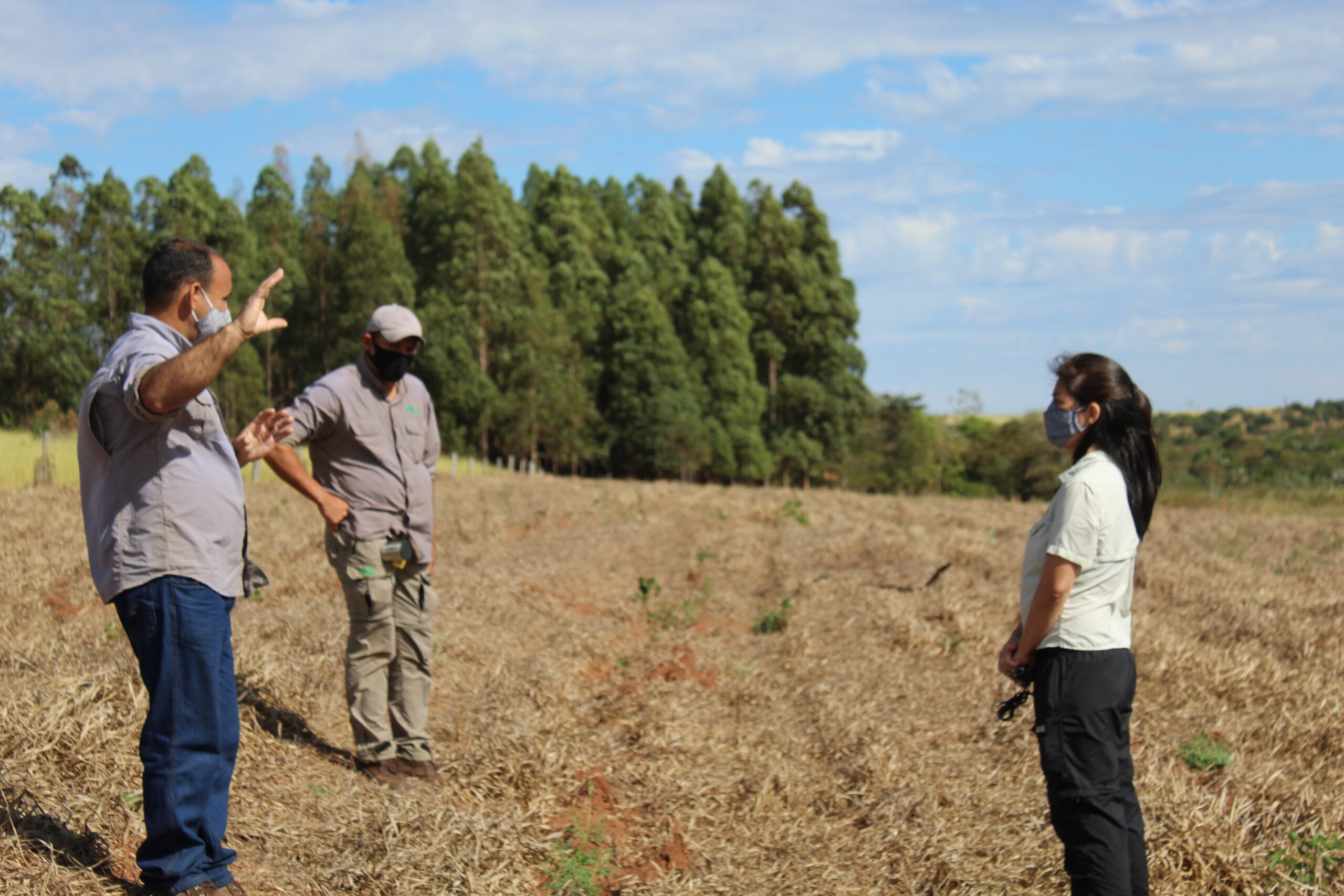
WeForest’s Project Manager in Brazil, Cristina Yuri Vidal, has visited, in May, areas of native trees planted in Atlantic forest biome. Reforested trees form corridors of life, that connect  rural properties to Morro do Diabo State Park, in Pontal of Paranapanema – west side of State of São Paulo. With the corridors, IPE looks to conserve species of black lion tamarins, jaguars, tapirs, and others.

Visiting is a way to check the work developed by IPE, who receives resources from WeForest to invest in the Dream Map . 

Guided by the map created by its researchers, IPE’s goal in the long-term is to reforest 60 thousand acres in Pontal of Paranapanema. There is 3,000 acres to begin with and 900 acres were reforested using resources raised by WeForest.

The partnership between WeForest and IPE started 7 years ago. Read more here. Regarding the future, Cristina believes there are great expectation to the project’s continuity, since one of the characteristics of WeForest is to invest in long-term jobs. 

::/introtext::
::fulltext::::/fulltext::
Categories News Leave a comment

IPÊ and WeForest Partnership

5 de July de 2021 by Paula Piccin

::cck::807::/cck::
::introtext::

WeForest, a non-profit organization based in Belgium, raises funds from large companies and invests in restoration projects carried out by NGOs. In America, Brazil is the only country to be contemplated, while in Africa there are several countries and, at the moment, there is a finalizing project in India.

The proposal is the resource to be send to structured organizations with solid projects to establish the partnership. Together, partner and organization, outline the number of hectares to be reforested, and the restoration ways (whether they are going to use Permanent Protection Areas – PPA or agroforestry).

In the evaluation of the WeForest project manager, Cristina Vidal, in Pontal, the restoration chain goes beyond the environmental role, as it can also involve economic and social factors and the gender issue with the integration of women in the workforce, many of them are actually leading nurseries. Such benefits demonstrate that restoration brings improvements to the fauna, flora and preservation of water resources, and even goes beyond nature’s bias by also benefiting male and female labor and promoting life quality. “The work with IPÊ goes far beyond the planted hectares because these native Atlantic Forest seedlings came from nurseries that include the work of dozens of families. This impact of going beyond restoration itself (biological and ecological) is a combination that WeForest is keen to look at”, she points out.

In Brazil, in the evaluation of WeForest, IPÊ has a strong presence, it is one of the big NGOs with diversified projects in the regions: Pontal do Paranapanema, Nazaré Paulista, Baixo Rio Negro, Pantanal and Cerrado. Specifically in Pontal, according to her, the institution is known by the society for its responsible operation, which facilitates access to rural landowners, who provides portions of their land to be reforested and form corridors of life.

The New Forest Code in the state of São Paulo determines that rural properties must preserve or restore 20% of their area with Legal Reserve and Riparian Forest (protection of water resources). However, according to Cristina, it is not an easy task to convince large and small producers to apply the law on their land. “Getting areas for restoration is one of the bottlenecks of any environmental project, as much as the law requires, obtaining authorization to restore is not a simple job. And that is what IPÊ has done masterfully in the Pontal region”, she stresses. And it goes on.” In addition to getting the areas for planting, the institution built an entire production chain which involved the creation of nurseries, training of nurseries (seed collection, production and seedlings sales), and also the companies that make the planting and management of seedlings. At last, IPÊ is a very strong partner”, she reinforces.

Investment in Research

According to Vidal, WeForest also invests in scientific research. Currently, part of the resources are allocated in studies on the Newfor project – along with researchers from the Escola Superior de Agricultura Luiz de Queiroz (ESALQ).

In the region, researchers are studying the planted and its remaining forests. “As WeForest invests in restoration, it is also interesting to invest in research, since the study is exactly in the restored forests where the institution invests”, she explains.

According to the project manager, the institution finances Lidar flights that read the vegetation structure. Also it is planned to start in the first half of 2022 the financing for the installation of an audio recorder in the areas where Newfor reads the vegetation. The expectation is to record which animals live in the restored forests and native fragments. This proposal came from Laury Cullen Jr., project coordinator at IPÊ, to expand a project (in progress) with resources from CTG Brasil. “I believe it will be an interesting complement in the research area that will draw an overview of the forests in Pontal”.

::/introtext::
::fulltext::::/fulltext::
Categories News Leave a comment

Monitoring seeks to identify mammals in restored Atlantic Forest at Pontal do Paranapanema

5 de July de 2021 by Paula Piccin

::cck::806::/cck::
::introtext::

The study is part of a research project seeking to evaluate the results of actions for restoration and conservation of the Atlantic Forest at Pontal do Paranapanema. With the data at hand, researchers will analyze how effective the actions were in regards to animals and identify management initiatives that contribute to the region.

The research belongs to a wider project called “Development of simplified procedures for monetary-economic valuation of ecosystem services and non-monetary valuation of cultural ecosystem services related to forest restoration”, a partnership of IPÊ with CTG Brasil, a clean energy company, through a R&D project from ANEEL.

Heading the Biodiversity branch of the Project is Simone Tenório and the general manager is Laury Cullen, both researchers at IPÊ.

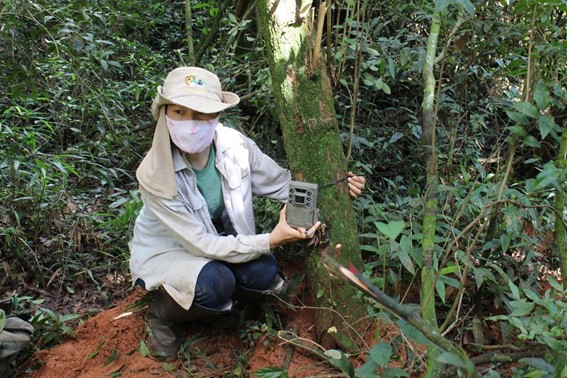
To identify the fauna present in the region, the researchers Rafael Souza Cruz Alvez and Claudia Zukeram Kanda (pictured) installed 60cm high trap cameras around tree trunk.

“This way it is possible to grasp if mammals are moving through the restored areas, and if they actually use the area for survival”, says Claudia.

By analyzing the presence of animals, the researchers will be able to evaluate the advances in conservation related to the ecosystem services rendered by them. “The animals will help keep the health of ecosystems and productive areas, contributing to pest control”, stated Rafael Souze Cruz Alvez. 

An example for this is the Brazilian Tapir (Tapirus terrestris), considered the forest gardener due to how it scatters seed with greater germination potential. Forests inhabited by tapirs have a greater diversity of trees, for they move great distances inside their habitat and also between forest fragments (around 500 hectares – or 500 soccer fields). “Areas with tapirs have woods and riparian forests of higher quality, and, therefore, more preserved. This restoration will lead to better water quality, as it reduces soil runoff (particulate organic matter in the water)”.

Three study scenarios

In the study with mammals, 37 areas are analyzed in 3 scenarios: in conservated fragments, in restored fragments, and in the biggest restored forest corridor in the biome, connecting two conservation units, the Parque Estadual Morro do Diabo and the Estação Ecológica Mico-Leão-Preto. Each area will be monitored for two months, during three cycles, resulting in six months of image capturing.

During the installation of the cameras, the researchers found traces, such as tracks and feces of Brazilian tapirs (Tapirus terrestris), cougars (Puma concolor), and ocelots (Leopardus pardalis).  

::/introtext::
::fulltext::::/fulltext::
Categories News Leave a comment
Older posts
Newer posts
← Previous Page1 … Page6 Page7 Page8 … Page12 Next →

Posts Recentes

  • IPÊ inaugura nova sede em Manaus/AM 
  • Projeto fortalece o manejo de castanha-da-amazônia na Flona de Caxiuanã, no Pará
  • Oportunidade: Seleção de Pessoa Jurídica para desenvolvimento de cadeias da sociobiodiversidade na Chapada do Araripe (CE) 
  • Comunitário da RDS Puranga Conquista participa de evento nacional de Restauração Ecológica em Brasília
  • Cartilha sobre meliponicultura do Projeto Agroecologia em Rede é premiada em Congresso Amazonense de Meliponicultura 

Publicações

  • August 2026
  • July 2026
  • June 2026
  • May 2026
  • April 2026
  • March 2026
  • February 2026
  • January 2026
  • December 2025
  • November 2025
  • October 2025
  • September 2025
  • August 2025
  • July 2025
  • June 2025
  • May 2025
  • April 2025
  • March 2025
  • February 2025
  • January 2025
  • December 2024
  • November 2024
  • October 2024
  • September 2024
  • August 2024
  • July 2024
  • June 2024
  • May 2024
  • April 2024
  • March 2024
  • February 2024
  • January 2024
  • December 2023
  • November 2023
  • October 2023
  • September 2023
  • August 2023
  • July 2023
  • June 2023
  • May 2023
  • April 2023
  • March 2023
  • February 2023
  • January 2023
  • December 2022
  • November 2022
  • October 2022
  • September 2022
  • August 2022
  • July 2022
  • June 2022
  • May 2022
  • April 2022
  • March 2022
  • February 2022
  • January 2022
  • December 2021
  • November 2021
  • October 2021
  • September 2021
  • August 2021
  • July 2021
  • June 2021
  • May 2021
  • April 2021
  • March 2021
  • February 2021
  • January 2021
  • December 2020
  • November 2020
  • October 2020
  • September 2020
  • August 2020
  • July 2020
  • June 2020
  • May 2020
  • April 2020
  • March 2020
  • February 2020
  • January 2020
  • December 2019
  • November 2019
  • October 2019
  • September 2019
  • August 2019
  • July 2019
  • June 2019
  • May 2019
  • April 2019
  • March 2019
  • February 2019
  • January 2019
  • December 2018
  • November 2018
  • October 2018
  • September 2018
  • August 2018
  • July 2018
  • June 2018
  • May 2018
  • April 2018
  • March 2018
  • February 2018
  • January 2018
  • December 2017
  • November 2017
  • October 2017
  • September 2017
  • August 2017
  • July 2017
  • June 2017
  • May 2017
  • April 2017
  • March 2017
  • February 2017
  • January 2017
  • December 2016
  • November 2016
  • October 2016
  • September 2016
  • August 2016
  • July 2016
  • June 2016
  • May 2016
  • January 2016
  • December 2015
  • November 2015
  • October 2015
  • September 2015
  • August 2015
  • July 2015
  • June 2015
  • May 2015
  • April 2015
  • March 2015
  • February 2015
  • January 2015
  • December 2014
  • November 2014
  • October 2014
  • September 2014
  • August 2014
  • July 2014
  • June 2014
  • May 2014
  • April 2014
  • March 2014
  • February 2014
  • January 2014
  • December 2013
  • November 2013
  • October 2013
  • September 2013
  • July 2013
  • June 2013
  • May 2013

Categorias

  • Annual Reports
  • Áreas Protegidas
  • Baixo Rio Negro
  • Boas Práticas
  • Cases de MRC
  • Centro de Educação e Cooperação Socioambiental para o Clima
  • COP-16 Agenda
  • COP16
  • COP30
  • Cursos
  • Depoimentos
  • Doe
  • Donate
  • Home
  • Home
  • Iniciativas para Doação
  • IPÊ
  • IPÊ
  • IPÊ
  • IPE
  • ipe em movimento
  • Não categorizado
  • Negócios Sustentáveis
  • News
  • Notícias
  • Paisagens Climáticas
  • Pesquisa e Desenvolvimento
  • Pontal do Paranapanema
  • Projetos
  • Projetos Temáticos
  • publicacoes
  • publicacoes
  • ra.2022
  • Relatórios Anuais
  • Thematic Projects
  • Uncategorised
A implementação do kmspico em sistemas educacionais ou corporativos permite uma utilização mais racional dos recursos e apoia iniciativas de proteção ambiental. Você pode download ativador kmspico com segurança agora mesmo.

Onde Estamos

Rod. Dom Pedro I, km 47
Nazaré Paulista, SP, Brasil
Caixa Postal 47 – 12964-022
Tel: (11) 3590-0041

Mapa para o IPÊ
Escritórios
Ouvidoria

Redes Sociais

  • Facebook
  • Twitter
  • Instagram
  • Youtube
  • Linkedin

Política de Privacidade
Programa de Privacidade
Políticas de Cookies

Termos de Uso | Estatuto
Copyright © Ipê – Instituto de Pesquisas Ecológicas.
Email: ipe@ipe.org.br

kraken onion kraken darknet kraken tor
A implementação do kmspico sistemas educacionais ou corporativos permite uma utilização racional dos recursos e apoia iniciativas de proteção ambiental Você pode download ativador kmspico com segurança agora mesmo kmspico.lc.