Skip to content
  • IPÊ
    • Sobre o IPÊ
    • Missão
    • Nosso Credo
    • Governança
    • Estratégias
    • Apoiadores e Parceiros
    • Prêmios
    • Imprensa
    • Ipeanos
    • Onde Estamos
    • Nossos Resultados
    • Relatórios Anuais
    • Seja nosso Parceiro
  • Doe Agora
    • Doe Florestas
    • Por que doar?
    • Arredonde Suas Compras
    • Doe com PayPal ou Conta Corrente
    • Doações internacionais
    • Adote uma Espécie
    • Proteja o Sistema Cantareira
  • Notícias
    • Últimas Notícias
  • Projetos
    • Baixo Rio Negro
    • Nazaré Paulista
    • Pantanal e Cerrado
    • Sul da Bahia
    • Pontal do Paranapanema
    • Projetos Temáticos
      • Voluntariado para Conservação
      • Pesquisa e Desenvolvimento / P&D
      • Áreas Protegidas
      • Integração Escola e Comunidade
      • Projeto Escolas Climáticas
      • Paisagens climáticas
      • Centro de Educação e Cooperação Socioambiental para o Clima
      • Fábrica de Soluções
      • Territórios da Vida Silvestre
  • Negócios Sustentáveis
    • Marketing Relacionado a Causas
    • Cases de MRC
    • Modelos de Parcerias
    • Iniciativas para Doação
  • Soluções em Educação
    • Escas
    • Mestrado Profissional
    • Pós-graduação
    • Cursos de Curta Duração
  • Publicações
    • Flora Regional
    • Boas Práticas em UCs
    • Atlas Cantareira
    • Artigos Científicos
    • Séries Técnicas, Guias e Outros Materiais
  • Estatuto
  • Código de Ética
  • Parcerias Públicas
  • Fale Conosco

News

Green Marathon: Help Oliver to plant 3,000 trees with us!

10 de November de 202230 de November de 2020 by Paula Piccin

::cck::691::/cck::
::introtext::

Hey Guys! My name is Oliver Mahoney.

Two of my favorite things are athletics and the environment!
In 2021, I am going to take part in the Lisbon Marathon, I’ll run 42 kilometers, for which I am already well on my way training hard.

In 2018, I got to know about IPÊ, an organization which conducts important wildlife-saving research, and in the past few years, I’ve thought a lot about how to support the organization and get people involved from Wales, where I live.

The logical step was to combine the two things I love most; athletics and the environment.
I created the Instagram account @oligreenmarathonipe to share my training and progress with you all and also talk some more about the work being done by IPÊ!

Of course, I’ll be relying on any support which you guys can give, using it to help the institute plant trees for the conservation of one of the world’s most important resources, water!

My objective is to run the Marathon in May having raised enough money to plant a minimum of 3000 trees! I mean, who knows? Maybe together we can do even more than that!

The trees will be planted throughout the Atlantic Forest, a protected reserve area for both endangered species and for water resources.

Follow everything on Instagram, myself (@oligreenmarathonipe) and, of course, IPÊ (@institutoipe).

You’ll see all sorts of information about the environment, be entertained by some sports and help support conservation of Brazil’s forests which are key to the global climate! 

DONATE NOW!

::/introtext::
::fulltext::::/fulltext::

Categories News Leave a comment

Research Article: Integrating climate and landscape models to prioritize areas and conservation strategies for an endangered arboreal primate

22 de October de 2020 by Paula Piccin

::cck::669::/cck::
::introtext::

Gabriela Cabral Rezende 
Thadeu Sobral‐Souza 
Laurence Culot
 

Abstract

Species distributions are influenced by both climate conditions and landscape structure. Here we propose an integrated analysis of climatic and landscape niche‐based models for a forest‐dependent primate, the endangered black lion tamarin (Leontopithecus chrysopygus). We applied both climate and landscape variables to predict the distribution of this tamarin and used this information to prioritize strategic areas more accurately. We anticipated that this approach would be beneficial for the selection of pertinent conservation strategies for this flagship species. First, we built climate and landscape niche‐based models separately, combining seven algorithms, to infer processes acting on the species distribution at different scales. Subsequently, we combined climate and landscape models using the EcoLand Analysis. Our results suggest that historic and current landscape fragmentation and modification had profoundly adverse effects on the distribution of the black lion tamarins. The models indicated just 2096 km2 (out of an original distribution of 92,239 km2) of suitable areas for both climate and landscape. Of this suitable area, the species is currently present in less than 40%, which represents less than 1% of its original distribution. Based on the combined map, we determined the western and southeast regions of the species range to be priority areas for its conservation. We identified areas with high climatic and high landscape suitability, which overlap with the remaining forest fragments in both regions, for habitat conservation and population management. We suggest that areas with high climatic but low landscape suitability should be prioritized for habitat management and restoration. Areas with high landscape suitability and low climatic suitability, such as the Paranapiacaba mountain range should be considered in light of projected climate change scenarios. Our case study illustrates that a combined approach of climatic and landscape niche‐based modeling can be useful for establishing focused conservation measures that may increase the likelihood of success.

Research Highlights

  • Two percent of the black lion tamarin’s original distribution is suitable in terms of both climate and landscape.

  • Niche‐based models that combine broad and narrow‐scaled processes are useful for practical conservation prioritization.

 
READ MORE

::/introtext::
::fulltext::::/fulltext::

Categories News Leave a comment

Annual Report IPÊ 2019

24 de August de 2020 by Paula Piccin

::cck::637::/cck::
::introtext::

To conserve Brazilian biodiversity – our mission – we carried out a series of actions on different fronts. Research, environmental education, forest restoration, participatory monitoring of biodiversity, implementation of sustainable and efficient production systems with sustainable business partnerships are among the examples of initiatives that you have the opportunity to check in detail in the IPÊ Annual Report (2019).


This is one of the ways we find to show society the impact of our work, through data and stories told by those who participate in our projects. They are rural producers, residents of traditional communities, teachers, ESCAS students, researchers, institutional partners. All of them reveal how IPÊ works in practice – in the Pantanal, in the Amazon, in the Pontal do Paranapanema and in the Cantareira System – to make the difference in the lives of these people and contribute to the conservation of biodiversity.

The report also includes our financial data, with all the relevant information about the use of funds raised for the development of works that, in 2019, reached more than 14,500 people. You can also check out all supporters, companies, national and international institutes, civil society organizations, individuals that are partners who trust in our potential and expertise for more than 28 years, understanding the importance of investing in socio-environmental conservation to guarantee a quality life for all.

Access here https://ipe.org.br/ra2019/english/


::/introtext::
::fulltext::::/fulltext::

Categories News Leave a comment

You can help us to plant 40,000 trees! Donate now

17 de August de 2020 by Paula Piccin
AGUA NAZARE

::cck::633::/cck::
::introtext::


People from all over the World are supporting IPÊ in water conservation in Brazil, planting trees in the Cantareira System, by Tree Nation website. The international platform hosts 243 projects from 33 countries that aim to plant forests to tackle climate change. Donations help them to do it!

IPÊ’s Sowing Water Project is among the three active Brazilian initiatives registered on the platform. Click and make your donation to the project!

On the Tree Nation website, is possible to choose a project to donate. Donations become trees to forest restoration. On the platform there is the option of giving gifts to family and friends by planting trees as well.

The Sowing Water project has 1,000 trees financed. But our goal is to reach 40,000. We can do it with your help!

Why plant trees in the Cantareira System?

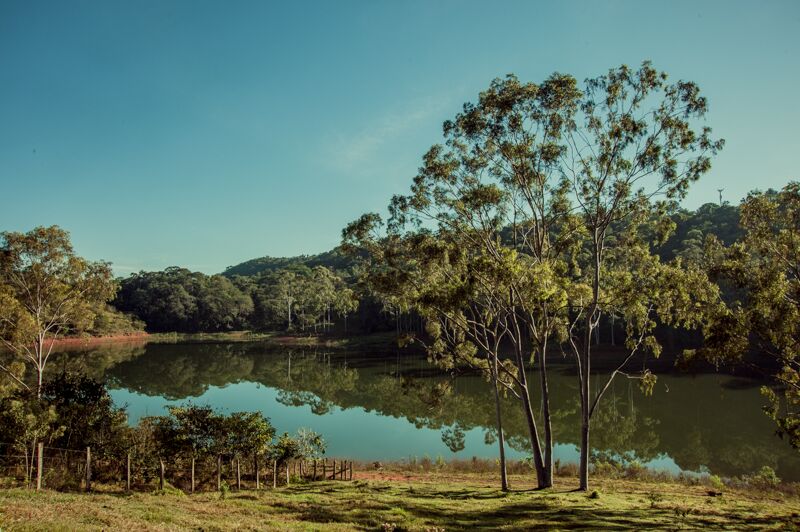
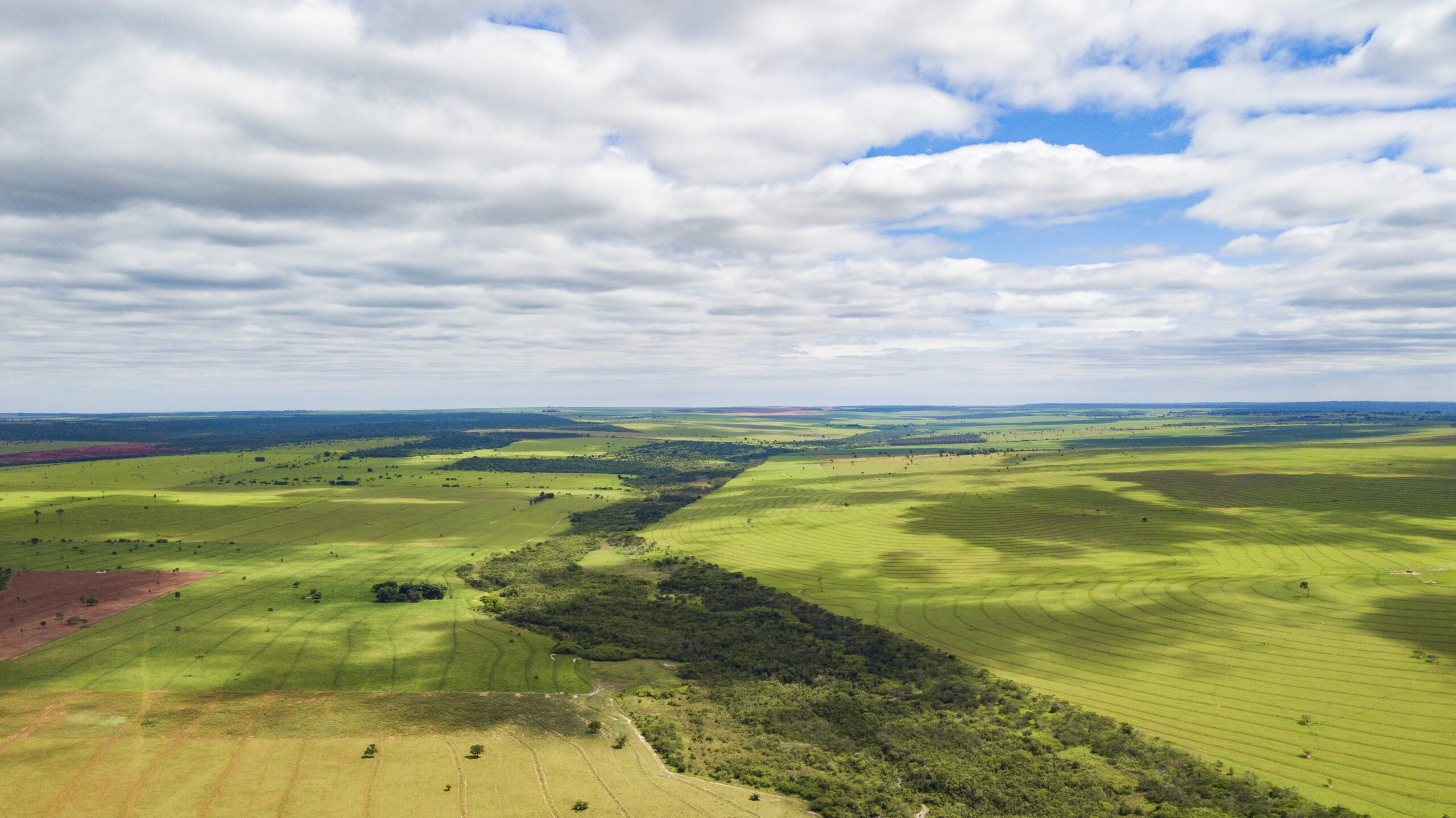
Tree planting is strategic for the Cantareira System, one of the largest water supply systems in the world, located in São Paulo State (Atlantic Forest).

“We have already planted 50,000 seedlings in the Cantareira System (Atlantic Forest). We know that the challenge is huge, but we recognize that this is the safest way, planting trees in the Permanent Preservation Areas, which are those areas close to the springs and water courses. With the increase in areas covered by forests, rainwater finds better conditions to infiltrate the soil, so the water is released little by little, especially during periods of drought. The best place to store rainwater is on the ground. In the current scenario, with such a deficit of trees, we are practically hostage to the rain on the basins and waste the rainwater on the compacted soil that cannot infiltrate ”, explains Alexandre Uezu, IPÊ´s researcher. 


::/introtext::
::fulltext::::/fulltext::

Categories News Leave a comment

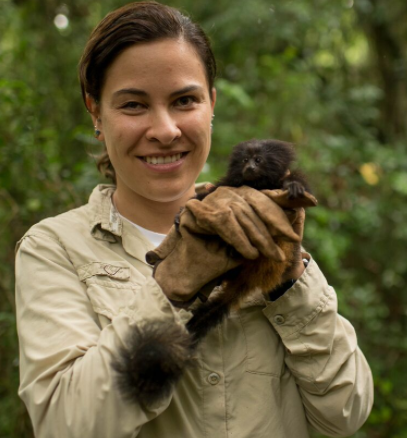
Gabriela Cabral Rezende wins the Whitley Award for her efforts in the conservation of the black lion tamarin

29 de April de 2020 by Paula Piccin

::cck::609::/cck::
::introtext::


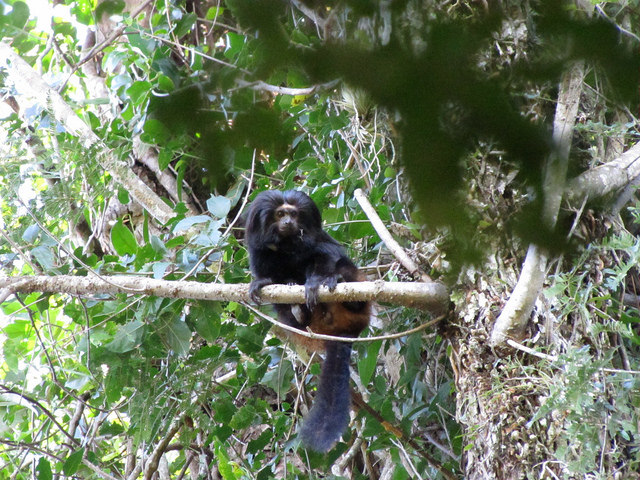
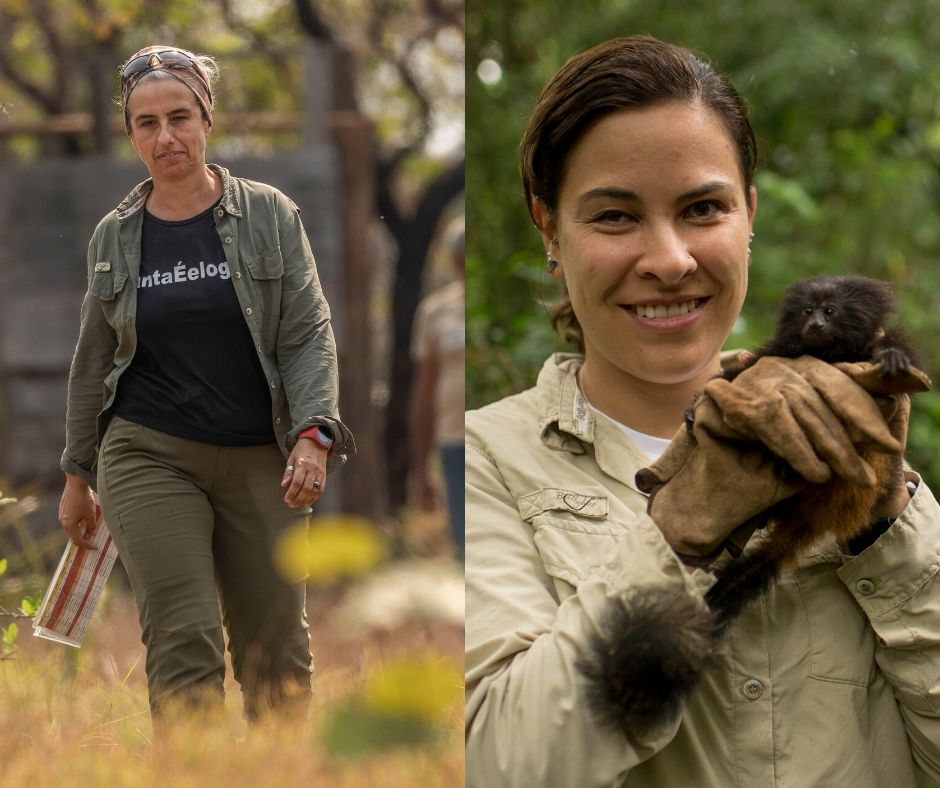
Biologist Gabriela Cabral Rezende coordinates the Black Lion Tamarin Conservation Program of IPE, one of the longest-living conservation programs in Brazil, and that recently completed 35 years of uninterrupted activities. Among more than 100 applications, the researcher and other five scientists from different countries won the 2020 Whitley Awards. Each prize is worth £40,000, which will be used in the respective projects.

Nine years ago, Gabriela inherited the program coordination from primatologist Claudio Padua, one of the founders of IPE and the first Brazilian to win the Whitey Award, in 1999. In the extreme west of São Paulo state, the main headquarters of the program is in the Pontal do Paranapanema region, where is located the largest forest remnant of Atlantic Forest in the interior of São Paulo state – one of the last hotspots of global biodiversity.

With an original area of 1.3 million square kilometers, only 14% of the Atlantic Forest remains, as much of it was cut for sugarcane plantation and cattle ranching. With only 1,800 black lion tamarins in the wild, its remaining habitat is highly fragmented, with small and isolated populations.

“The black lion tamarin exists only in the state of São Paulo. For this reason, it is the official state mammal symbol. We are responsible for guaranteeing its existence. I am extremely grateful for the award, that will help us to continue a conservation work that needs to be carried out for the long term, in order for us to see its results” stated Gabriela.

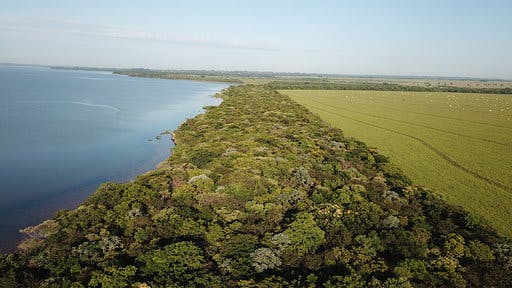
Gabriela and her team work to protect the black lion tamarins by carrying out scientific research, environmental education, and forest restoration. With the collaboration with local communities, IPE restores forest corridors that connect several native forest fragments. The action generates capacity building and improves the income of the population: nine community nurseries and agroforestry plantations help to implement the corridors. The largest of them is also the largest in Brazil, with more than 20 kilometers long and 2.5 million of trees planted.

To know more: https://www.youtube.com/watch?v=wGnWKzzYVD4&t=

Funding from the Whitley Award will enable the plantation of more corridors by Gabriela and her team. The goal is to connect every population of black lion tamarin in the region, with the establishment of a continuous forest area of approximately 45,000 hectares (45,000 soccer fields). Besides reforestation, the research plans to transfer groups of black lion tamarins to forest patches currently uninhabited by the species, to guarantee their presence in a wide forested area. This is part of a plan to avoid genetic consanguinity and to assure that these small monkeys have enough resources to survive. The environmental education activities promoted by IPE will also continue in the region.


::/introtext::
::fulltext::::/fulltext::

Categories News Leave a comment

Patrícia Medici, IPE researcher, wins the main Environmental Conservation Award

29 de April de 2020 by Paula Piccin
PatiJoaoRosa

::cck::608::/cck::
::introtext::


The main Whitley Fund for Nature (WFN) award – the Whitley Gold Award – was given to Patrícia Medici, coordinator of LTCI – Lowland Tapir Conservation Initiative, a project from IPE, the institute that she co-founded. Leading conservation actions for the lowland tapir and its habitat for 24 years, Patricia’s work resulted in the creation of the world’s largest dataset about the species. Her contributions for the knowledge about the species and for the progress of science have inspired students and researchers from several countries.

Patricia’s actions combined field research, conservation practices, environmental education, communication, training, and capacity buildings. Added to these actions, there is planning for the reduction of threats and establishment of public policies that benefit the species and its habitat. The outcomes of her work have impacted not only the lives of the tapirs but also of other animals, plants, and humans living in several biomes: the Atlantic Forest, Pantanal, Cerrado, and now with the prize, the Amazon.

The lowland tapir is the largest terrestrial mammal in South America, and it is considered a living fossil as its lineage has survived through several extinction events along millions of years of evolution. However, the species currently faces several threats caused by humans, including the destruction and fragmentation of its habitat due to the expansion of large-scale agriculture, cattle ranching, roadkill, hunting, mining, among others.

“When we support the cause for the conservation of the lowland tapir, we are also defending our own lives, our natural resources and our health. Considered to be the gardener of the forests, the tapir promotes forest renewal and restoration though seed dispersal. Several plant species exist only because their seeds pass through the guts of tapirs. The tapir “plays” with the plant composition and diversity of the forest and is largely responsible for maintaining the integrity of these environments”, explains Patricia.

Patricia Medici anta

Despite being very important for the ecosystems it occurs, in Brazil the Portuguese
word for tapir, “anta”, is a pejorative slang for a person that is not intelligent. To solve this problem and to spread more information about tapirs, Patricia, her team, and supporters of the cause have created the hashtag in the social media: #antaÉelogio.
For the researcher, communicating with the large audience is essential for the
academic developments to reach more people and for a better comprehension about the importance of biodiversity, not only for wildlife but also for humans, that are part of biodiversity.

To illustrate this, Patricia mentions the study of LTCI in the Cerrado of Mato Grosso do Sul state, that found that pesticides and roadkill have contributed to the reduction of the tapir population in the region.

“We need to consider that both pesticides and roadkill impact the wildlife and also us humans. Many people are affected by the excessive use of pesticides. Our studies also show that many people are killed in vehicle crashes with tapirs, mainly due to the lack of safety measures that avoid road crossing by these animals, and also lack of adequate signs. Together with the state and federal public departments, we are using our database to request the implementation of mitigation measures in the roads where tapirs are frequently killed. For obtaining this kind of information we need science and scientists, that also help to apply this knowledge for the good of both humans and wildlife”, defends the forestry engineer.

Whitley Fund for Nature (WFN) has supported Patricia’s work in the last 12 years, greatly contributing for the expansion of the LTCI actions all over Brazil. Patricia began her field studies in the Atlantic Forest in 1996, and with WFN help, have expanded her efforts to the Pantantal (2008) and the Cerrado (2015).

The Whitley Gold Award won today will be used for bolstering LTCI’s actions all over the country. In the Atlantic Forest, part of the resources will be used for a reevaluation of the tapir population in the Morro do Diabo State Park. In the Pantanal, tapirs will continue to be monitored using radio telemetry and camera traps. In the Cerrado, the work will be focused in avoiding roadkill and also solving the pesticide contamination issues and hunting, in a landscape that is rapidly changing due to the agricultural developments in Brazil. The new work in the Amazon will be aimed at mitigating the threats to tapirs in the southern part of the deforestation arch, in Mato Grosso and Pará states.

Edward Whitley, founder of WFN, said: “Patricia’s work is vital to fight deforestation in Brazil and to protect this amazing species that is the tapir. Her dedication to research, education, and capacity building are a brilliant example of an effective work. Patricia Medici is a strong voice in conservation in Brazil and in the world. We are privileged to still be able to support this cause”


::/introtext::
::fulltext::::/fulltext::

Categories News Leave a comment

IPE scientists win the most important award in environmental conservation

10 de November de 202229 de April de 2020 by Paula Piccin

::cck::607::/cck::
::introtext::


Regarded as the most prestigious award in the field of Environmental Conservation and often described as the Green Oscar, the Whitley Awards, granted by the Whitley Fund for Nature (United Kingdom), has announced the 2020 winners in April 29th.

Two Brazilian won the prize in different categories: Patricia Medici (with the Gold Award, the top award), and Gabriela Cabral Rezende (with the Whitley Award, granted to other five conservationists from around the world). Both Brazilian winners are researchers from IPE and have dedicated their lives to the conservation of the lowland tapir and the black lion tamarin, respectively. These two species are threatened by human activities.

PatiJoaoRosa

The prize is awarded annually, and the ceremonies take place in London, when each winner receive the prize from the hand of Her Royal Highness Princess Anne. This year, due to the COVID-19 pandemics, the ceremony was postponed, but the winners will still receive their prizes, which consist of worldwide recognition of their conservation efforts and a sum of money that will be used in their projects.

“This award is extremely important, particularly considering the moment that we are passing through. More than never, we need to highlight the importance of keep the balance of our ecosystems. The current pandemic crisis is intrinsically connected with the destruction of our ecosystems and with the way that we treat nature. Never in history we have seen the current impacts caused by human beings in nature. Acting now is extremely important to revert the impacts of climate emergencies and prevent future wildlife extinctions. Conservationists like me must help set the tone and agenda for environmental conservation strategies in the decade ahead”, says Patrícia Medici.

Know the history of the researcher and how will IPE use the resources of the Whitley Gold Award

Gabi WFN


“Inspiration from pioneering researchers is the energy that moves me toward my dreams. As a conservationist, my dream is to save species from extinction. Making a difference for a species and its habitat is the way that I found for leaving a better planet for future generations and inspire them to get involved with conservation,     be it professionally or in their daily actions. With the award, I hope to stimulate other women scientists to act for environmental conservation”, says Gabriela. 

Know how the Whitley Award will help the Black Lion Tamarin Conservation Program


::/introtext::
::fulltext::::/fulltext::

Categories News Leave a comment

Tackling your carbon footprint with WFN and IPÊ

15 de February de 2020 by Paula Piccin

::cck::584::/cck::
::introtext::


Text From WFN

For many people, a love of nature and a passion for its conservation has been inspired by visiting a wild place. However, those of us with the capacity to travel, at an individual or corporate level, are under increasing pressure to consider our carbon footprint.

In the past few years the concept of ‘carbon-offsetting’ has evolved, and there are now a broad spectrum of ways to counteract the environmental impact of the decisions we make.

Following encouragement from our partners and donors, we have developed an tree planting scheme with Brazilian NGO, IPÊ (the Institute of Ecological Research), the organizational backbone of 3 Whitley Award winners.

Whilst this is an informal scheme, it offers an opportunity to directly funnel your donations into a Whitley Award winning reforestation project which is growing a carbon store and building local livelihood capacity.

We will be working specifically with Laury Cullen, Research Coordinator for IPÊ, who is championing a reforestation initiative in the Brazilian Atlantic forest.


Supported by his 2002 Whitley Award, Laury project-managed Brazil’s largest reforested corridor (1,800 ha), connecting two protected primary forest habitats, bringing the black lion tamarin back from the brink of extinction. This most charismatic little monkey has suffered greatly from habitat fragmentation, leading to in-breeding and genetic weakening of the species. Laury is now scaling up his approach, developing more forest corridors, connecting vital Atlantic forest fragments for the black lion tamarin and other threatened animals including jaguars and tapirs.

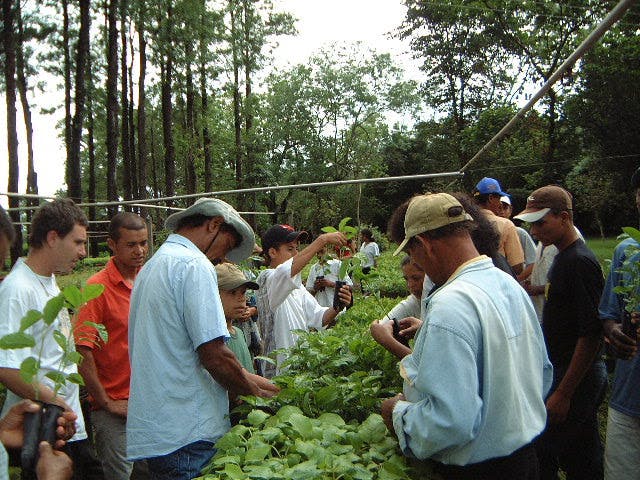
Laury works with local landowners who grow and sell seedlings, while trained local forestry teams plant and manage the reforested areas. His project is creating significant livelihood opportunities among landowners and in local communities.

By supporting tree planting with WFN and IPÊ you are supporting proven grassroots conservation; driving resilience and bringing about positive change for people and wildlife.

INTERESTED?

  • Drop us an email at info@whitleyaward.org with the flight miles for your trip.
  • We’ll calculate the number of trees required using this calculator platform, and let you know the cost.
  • If you decide to go ahead, we’ll send you a donation link.
  • On receipt of the donation we’ll write to you personally, detailing the number of trees you’ve planted with some more information about the project you’ve supported.

WFN RETAIN 15% OF ALL DONATIONS TO SUPPORT THE CHARITY’S NON-GRANT EXPENDITURE.


::/introtext::
::fulltext::::/fulltext::

Categories News Leave a comment

IPÊ researcher is at the shortlist of Whitley Awards, the Green Oscar

14 de February de 2020 by Paula Piccin

::cck::583::/cck::
::introtext::

Gabriela Cabral Rezende, coordinator of the Black Lion Tamarin Conservation Program, from IPÊ (Institute for Ecological Research), is part of a shortlist of top conservationists that compete for the Whitley Awards 2020, considered the Green Oscar.

Each year, the Whitley Awards recognize the work of six conservationists with projects in Africa, Asia, and Latin America. For this year, 112 researchers competed. The list of six winners will come out in April.

Gabriela competes for conservation work with the black lion tamarin, the animal that is the symbol of São Paulo State. For nine years, she has continued the project that began 35 years ago, in Pontal do Paranapanema, with primatologist Claudio Padua, which is the first Brazilian to win the Whitley Award in 1999. The project grew, using tamarin protection strategies that have already produced results, such as the reforested corridor that connects the Protected Areas of the region, guaranteeing more area available for the circulation of the species. In addition, black lion tamarin conservation is supported by environmental education and sustainable income generation actions. As examples, agroecology and community nurseries both help to strengthen the population’s relationship with the local fauna.

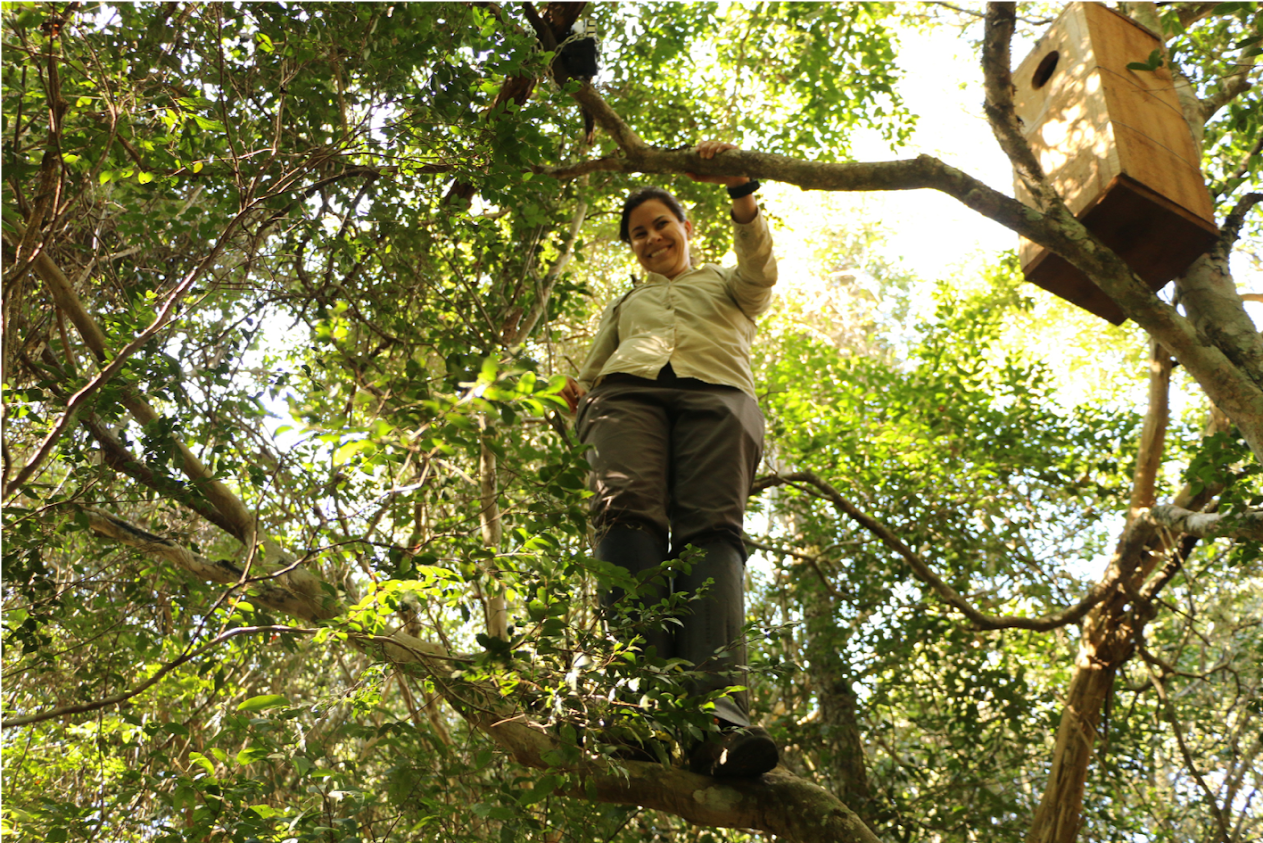
Currently, the researcher is engaged in studies for the management of the species and developing innovative experiments that can contribute to the collection of more accurate data on tamarins, such as the installation of nest boxes in areas of young forests where there are no trees holes to be used by the tamarin yet. Under the leadership of Gabriela, the project also brought the first monitoring collars with GPS to be used on small animals in Brazil.

“Me and the entire IPÊ team are very happy with the nomination. This is an integrated work, where everyone’s action is fundamental, not only for research itself, but for environmental education, landscape restoration, and community involvement. It is this integration and collaboration that makes conservation work happen. The scientific research on the black lion tamarin can gain even more if we win this award, so it means a lot to us to be in this shortlist”, she comments.

::/introtext::
::fulltext::::/fulltext::

Categories News Leave a comment

The community is the protagonist in IPÊ’s projects in the biome

21 de December de 20234 de September de 2019 by Paula Piccin

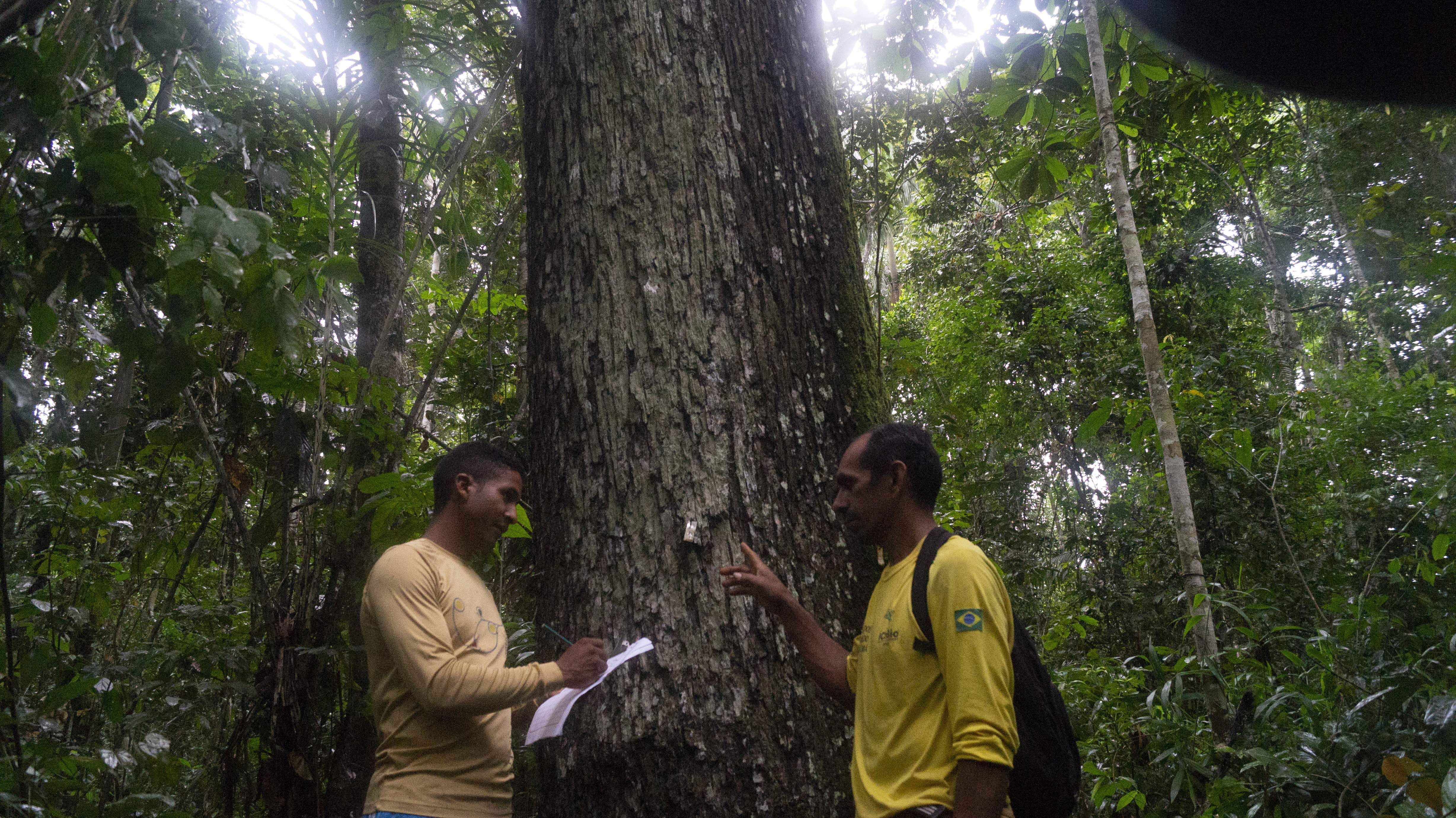
Training for sustainable income-generating activities, training people in agro-ecological production, activities to strengthen the management of protected areas, the development of production chains, research into species of fauna, among others, are all activities carried out by IPÊ in its almost 20 years of presence in the Amazon. IPÊ’s efforts in the Amazon have benefited more than 5,000 people, with projects that prioritize social participation and respect for local traditions.

The Institute began its work to protect the biome in the lower Rio Negro region, in the state of Amazonas, with the challenge of implementing territorial management models that would contribute to improving quality of life and conserving biodiversity. There, in the first few years, it promoted partnerships with various sectors, implemented educational work through the Maíra I boat, and developed actions that benefited more than a thousand people in 29 communities, creating income alternatives for families in rural Manaus, with a focus on developing production chains (with sustainable agriculture), community-based tourism and handicrafts. IPÊ supported the formalization and strengthening of local organizations, with documentation for access to public policies aimed at family farmers and artisans, and contributed to business infrastructure, such as the restaurant in the Nova Esperança community and the processing structure of a women’s group and a network of farmers. It also supported the formation of an agroecology network in Amazonas, made up of representatives from various institutions and farmers’ groups in the state (Maniva Agroecology Network).

Celio Arago (photo), a craftsman from the lower Rio Negro, was one of those who benefited from the Institute’s projects. Workshops, courses and exchanges have enabled him to further develop his skills as a craftsman, a trade he learned from his father. From the Nova Esperança community, Celio’s pieces have taken the world by storm and been nominated for awards. After the project, Celio now teaches young people what he has learned. “The experience I’ve had with IPÊ has opened many doors for me. Now I teach young people in my community so that they can have the same chance as me.”

In the region, IPÊ has also worked for the conservation of the Amazonian manatee and the collared saium, with scientific field research and social integration and educational activities. The results of the work are shared with organizations to support the construction of public policies for wildlife.

Evolution towards Integrated Conservation Solutions for the biome

Over the years, the challenges have grown, as have the possibilities for positive transformation in the biome, through Conservation Units (CUs). In partnership with the Chico Mendes Institute for Biodiversity Conservation (ICMBio), since 2012 IPÊ has been developing two projects of great importance in federal PAs: Motivation and Success in Conservation of PAs – MOSUC (with support from the Gordon and Betty Moore Foundation), and Participatory Monitoring of Biodiversity – MPB, (with support from USAID, the Gordon and Betty Moore Foundation and the ARPA Program). They are looking for innovative and integrated solutions  between various sectors to support the consolidation of 42 PAs, a territory of approximately 35 million hectares – an area larger than the states of São Paulo, Rio de Janeiro and Espírito Santo combined.

The MOSUC project was born to increase community participation in management, overcome the difficulties of financial resources and act to transform the Amazon’s PAs into regional development hubs. The work benefits 30 PAs in 6 states, involving managers, organizations and communities to work together to protect national parks, extractive reserves, national forests and other protected areas. This pioneering action by IPÊ and ICMBio helped and promoted partnerships with 12 local institutions that hired 54 employees to work in the PAs of  Acre, Roraima, Rondônia, Pará, Amapá and Mato Grosso.

The support of these professionals has brought benefits to the PAs, as Aldeci Cerqueira (Nenzinho), from the association of the Cazumbá-Iracema Extractive Reserve (Resex) (Acre), reports. “The project has given us the opportunity to get closer to ICMBio, the unit’s managing body, by working in an integrated way. It’s been very important for me. The Association was already working with ICMBio, but with a reduced team, we found it difficult to reach the communities. This integrated management (with the arrival of hired technicians) provides better service to the communities,” he says. The work with local institutions has generated employment and income in the communities involved with the PAs, and has contributed to increasing the community’s ties with the units and strengthening the organizational structure of local institutions that already have some relationship with the PA. Today, for example, the newest ICMBio manager for the Resex Cazumbá Iracema is a resident trained by MOSUC.

Find out more about MOSUC: https://www.ipe.org.br/ra2019/projetos/mosuc.html

In Participatory Biodiversity Monitoring in Amazon Conservation Units (MPB), the community is the main agent of transformation. The aim is to gather information together and exchange knowledge between researchers, managers and residents of the PAs and their surroundings about the importance of local biodiversity and how they themselves can contribute to protecting it through monitoring. The project is part of ICMBio’s Monitora Program, which seeks to strengthen the dialogue around environmental issues, based on sharing information and formulating questions, jointly creating protocols for biodiversity surveys.
 
The MPB project has already gathered a lot of information in the areas monitored from 2014 to 2018. The data is used for scientific research into species, improving knowledge of biodiversity and sustainable management of forest assets. These surveys, in turn, contribute to planning and improving the management of these protected areas and to combating climate change, species extinction, deforestation and poverty. 

“The surveys are very important, but the work goes far beyond the knowledge gathered, as it also involves the participation of local populations in the management of protected areas. Therefore, the project is fundamental to achieving Brazil’s targets for the Convention on Biological Diversity and the Aichi Biodiversity Targets,” says Cristina Tófoli, MPB coordinator.

Find out more about the latest results: https://www.ipe.org.br/ra2019/projetos/mpb.html

A multi-handed legacy for the Amazon

As of 2019, IPÊ’s networking efforts on behalf of the Amazon have taken a leap forward in territorial terms, with the start of the LIRA project – Legado Integrado da Região Amazônica (Integrated Legacy of the Amazon Region). By making it possible for local organizations working in the biome to carry out projects, the project will promote socio-environmental transformations in 80 million hectares of the Amazon (43 indigenous lands and 43 conservation units in five states). An area three times the size of the state of São Paulo, it groups together six regional blocks in the states of Amazonas, Pará, Rondônia, Acre and Mato Grosso. The organizations will receive funding from the Amazon Fund/BNDES and the Gordon and Betty Moore Foundation to work on strengthening and implementing conservation efforts in the Amazon until 2022. The aim is to increase the effectiveness of the management of the areas covered by the project, the maintenance of the landscape and climate functions and the socio-environmental and cultural development of traditional peoples and communities, benefiting more than 20,000 people. 

The selected projects will promote the following actions in the territory: Management Plans or Territorial and Environmental Management Plans (PGTA); Governance Mechanisms; Sustainable Use of Natural Resources; Monitoring and Protection Systems; Integration with Regional Development; Public Policies.


 
 
IPE in AMAZON NUMBERS
Categories News Leave a comment
Older posts
Newer posts
← Previous Page1 … Page9 Page10 Page11 Page12 Next →

Posts Recentes

  • IPÊ inaugura nova sede em Manaus/AM 
  • Projeto fortalece o manejo de castanha-da-amazônia na Flona de Caxiuanã, no Pará
  • Oportunidade: Seleção de Pessoa Jurídica para desenvolvimento de cadeias da sociobiodiversidade na Chapada do Araripe (CE) 
  • Comunitário da RDS Puranga Conquista participa de evento nacional de Restauração Ecológica em Brasília
  • Cartilha sobre meliponicultura do Projeto Agroecologia em Rede é premiada em Congresso Amazonense de Meliponicultura 

Publicações

  • August 2026
  • July 2026
  • June 2026
  • May 2026
  • April 2026
  • March 2026
  • February 2026
  • January 2026
  • December 2025
  • November 2025
  • October 2025
  • September 2025
  • August 2025
  • July 2025
  • June 2025
  • May 2025
  • April 2025
  • March 2025
  • February 2025
  • January 2025
  • December 2024
  • November 2024
  • October 2024
  • September 2024
  • August 2024
  • July 2024
  • June 2024
  • May 2024
  • April 2024
  • March 2024
  • February 2024
  • January 2024
  • December 2023
  • November 2023
  • October 2023
  • September 2023
  • August 2023
  • July 2023
  • June 2023
  • May 2023
  • April 2023
  • March 2023
  • February 2023
  • January 2023
  • December 2022
  • November 2022
  • October 2022
  • September 2022
  • August 2022
  • July 2022
  • June 2022
  • May 2022
  • April 2022
  • March 2022
  • February 2022
  • January 2022
  • December 2021
  • November 2021
  • October 2021
  • September 2021
  • August 2021
  • July 2021
  • June 2021
  • May 2021
  • April 2021
  • March 2021
  • February 2021
  • January 2021
  • December 2020
  • November 2020
  • October 2020
  • September 2020
  • August 2020
  • July 2020
  • June 2020
  • May 2020
  • April 2020
  • March 2020
  • February 2020
  • January 2020
  • December 2019
  • November 2019
  • October 2019
  • September 2019
  • August 2019
  • July 2019
  • June 2019
  • May 2019
  • April 2019
  • March 2019
  • February 2019
  • January 2019
  • December 2018
  • November 2018
  • October 2018
  • September 2018
  • August 2018
  • July 2018
  • June 2018
  • May 2018
  • April 2018
  • March 2018
  • February 2018
  • January 2018
  • December 2017
  • November 2017
  • October 2017
  • September 2017
  • August 2017
  • July 2017
  • June 2017
  • May 2017
  • April 2017
  • March 2017
  • February 2017
  • January 2017
  • December 2016
  • November 2016
  • October 2016
  • September 2016
  • August 2016
  • July 2016
  • June 2016
  • May 2016
  • January 2016
  • December 2015
  • November 2015
  • October 2015
  • September 2015
  • August 2015
  • July 2015
  • June 2015
  • May 2015
  • April 2015
  • March 2015
  • February 2015
  • January 2015
  • December 2014
  • November 2014
  • October 2014
  • September 2014
  • August 2014
  • July 2014
  • June 2014
  • May 2014
  • April 2014
  • March 2014
  • February 2014
  • January 2014
  • December 2013
  • November 2013
  • October 2013
  • September 2013
  • July 2013
  • June 2013
  • May 2013

Categorias

  • Annual Reports
  • Áreas Protegidas
  • Baixo Rio Negro
  • Boas Práticas
  • Cases de MRC
  • Centro de Educação e Cooperação Socioambiental para o Clima
  • COP-16 Agenda
  • COP16
  • COP30
  • Cursos
  • Depoimentos
  • Doe
  • Donate
  • Home
  • Home
  • Iniciativas para Doação
  • IPÊ
  • IPÊ
  • IPÊ
  • IPE
  • ipe em movimento
  • Não categorizado
  • Negócios Sustentáveis
  • News
  • Notícias
  • Paisagens Climáticas
  • Pesquisa e Desenvolvimento
  • Pontal do Paranapanema
  • Projetos
  • Projetos Temáticos
  • publicacoes
  • publicacoes
  • ra.2022
  • Relatórios Anuais
  • Thematic Projects
  • Uncategorised
A implementação do kmspico em sistemas educacionais ou corporativos permite uma utilização mais racional dos recursos e apoia iniciativas de proteção ambiental. Você pode download ativador kmspico com segurança agora mesmo.

Onde Estamos

Rod. Dom Pedro I, km 47
Nazaré Paulista, SP, Brasil
Caixa Postal 47 – 12964-022
Tel: (11) 3590-0041

Mapa para o IPÊ
Escritórios
Ouvidoria

Redes Sociais

  • Facebook
  • Twitter
  • Instagram
  • Youtube
  • Linkedin

Política de Privacidade
Programa de Privacidade
Políticas de Cookies

Termos de Uso | Estatuto
Copyright © Ipê – Instituto de Pesquisas Ecológicas.
Email: ipe@ipe.org.br

kraken onion kraken darknet kraken tor
A implementação do kmspico sistemas educacionais ou corporativos permite uma utilização racional dos recursos e apoia iniciativas de proteção ambiental Você pode download ativador kmspico com segurança agora mesmo kmspico.lc.