Skip to content
  • IPÊ
    • Sobre o IPÊ
    • Missão
    • Nosso Credo
    • Governança
    • Estratégias
    • Apoiadores e Parceiros
    • Prêmios
    • Imprensa
    • Ipeanos
    • Onde Estamos
    • Nossos Resultados
    • Relatórios Anuais
    • Seja nosso Parceiro
  • Doe Agora
    • Doe Florestas
    • Por que doar?
    • Arredonde Suas Compras
    • Doe com PayPal ou Conta Corrente
    • Doações internacionais
    • Adote uma Espécie
    • Proteja o Sistema Cantareira
  • Notícias
    • Últimas Notícias
  • Projetos
    • Baixo Rio Negro
    • Nazaré Paulista
    • Pantanal e Cerrado
    • Sul da Bahia
    • Pontal do Paranapanema
    • Projetos Temáticos
      • Voluntariado para Conservação
      • Pesquisa e Desenvolvimento / P&D
      • Áreas Protegidas
      • Integração Escola e Comunidade
      • Projeto Escolas Climáticas
      • Paisagens climáticas
      • Centro de Educação e Cooperação Socioambiental para o Clima
      • Fábrica de Soluções
      • Territórios da Vida Silvestre
  • Negócios Sustentáveis
    • Marketing Relacionado a Causas
    • Cases de MRC
    • Modelos de Parcerias
    • Iniciativas para Doação
  • Soluções em Educação
    • Escas
    • Mestrado Profissional
    • Pós-graduação
    • Cursos de Curta Duração
  • Publicações
    • Flora Regional
    • Boas Práticas em UCs
    • Atlas Cantareira
    • Artigos Científicos
    • Séries Técnicas, Guias e Outros Materiais
  • Estatuto
  • Código de Ética
  • Parcerias Públicas
  • Fale Conosco

News

Nature Articles: Distance to range edge determines sensitivity to deforestation

7 de May de 2019 by Paula Piccin

::cck::496::/cck::
::introtext::

Distance to range edge determines sensitivity to deforestation

It is generally assumed that deforestation affects a species consistently across space, however populations near their geographic range edge may exist at their niche limits and therefore be more sensitive to disturbance. We found that both within and across Atlantic Forest bird species, populations are more sensitive to deforestation when near their range edge. In fact, the negative effects of deforestation on bird occurrences switched to positive in the range core (>829 km), in line with Ellenberg’s rule. We show that the proportion of populations at their range core and edge varies across Brazil, suggesting deforestation effects on communities, and hence the most appropriate conservation action, also vary geographically.

Article with the participation of Alexandre Uezu, IPÊ researcher.

https://www.nature.com/articles/s41559-019-0889-z

::/introtext::
::fulltext::::/fulltext::

Categories News Leave a comment

In honor of Don Melnick

24 de April de 2019 by Paula Piccin

::cck::492::/cck::
::introtext::


Screen Shot 2019 04 24 at 18.55.02

 In honor of Don Melnick

Rare are the occasions, unfortunately, that we can say we have lost a human jewel when someone leaves. This is the sentiment we have with the passing of Don Melnick. Don was a friend of IPÊ since he met us in 1993, through his wife, Mary Pearl, a conservationist, partner and friend, today an institutional board member.

Professor at Columbia University, a renowned researcher in genetics and evolution, Don spent his life spreading knowledge linked to conservation and sustainability, bringing people together and opening doors so those good things could happen across the planet. He contributed significantly to IPÊ’s history, annually bringing students from his distinguished University for courses and internships at our headquarters or field projects. He produced documents, published in diverse media, and gave lectures that shifted the track of history.


DON MELNICK AMAZONConfidence was one of his qualities, which in fact were countless. He detected the qualities of people or institutions and fertilized the soil with knowledge and interconnections so that promising projects could germinate and flourish. Integrity was another quality that marked his personal and professional life. In addition, he inspired audacity and innovation, always with discretion, not calling attention to himself, but to the causes he defended. A true leader – one to be followed.

Happy are those who had the luck of crossing his paths. IPÊ had more than that.  The institution was privileged to have walked close to him for so many years, making dreams become reality. We will miss you, Don Melnick. The planet too! May you find another spot where you can propagate good things as you did in your short stay here with us. Our warm and sincere hug with great tenderness and gratitude. Please be assured, wherever you may be, that Mary and your kids, Memy and Seth, will always be welcomed at IPÊ with immense love. 

Photos

1 – Claudio Padua and Don Melnick in the first class of the IPÊ Professional Master in Conservation and Sustainability

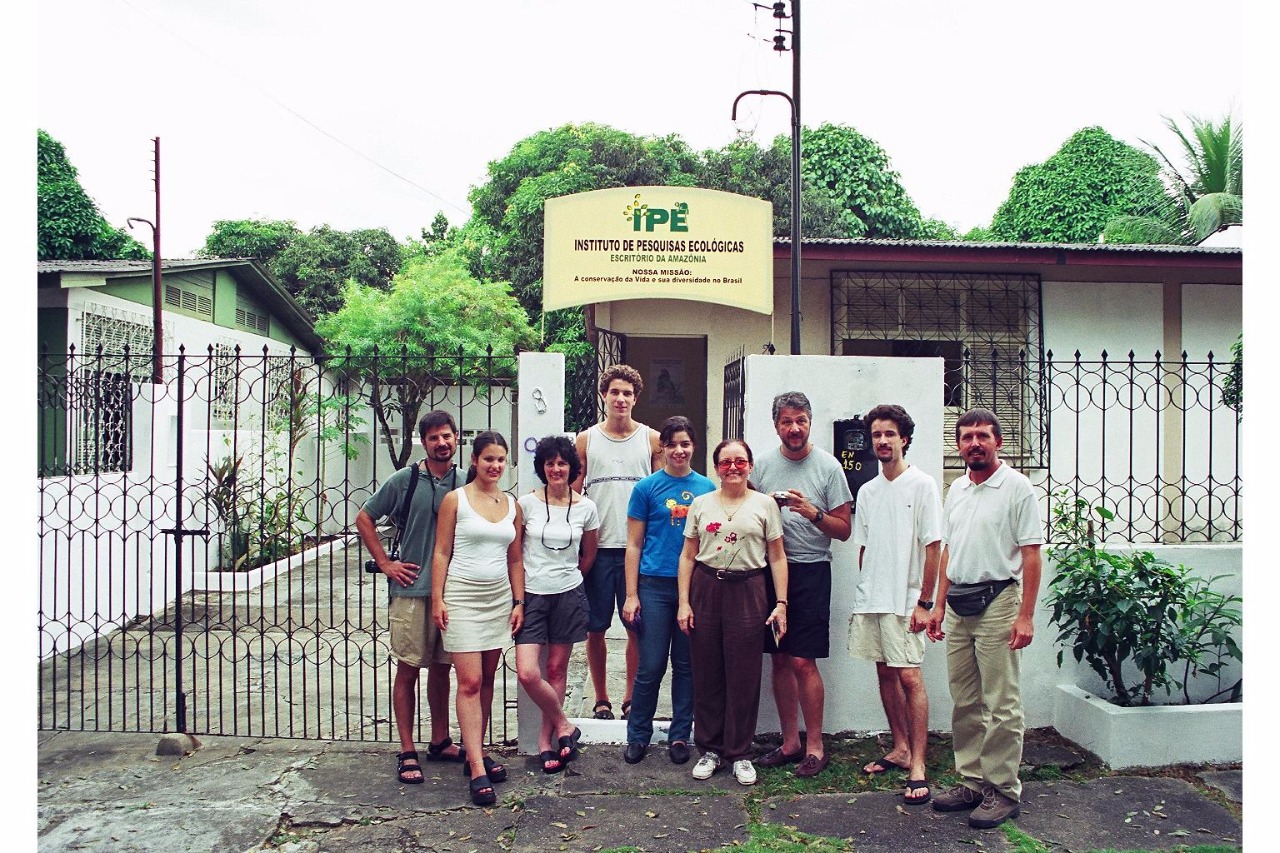
2 – Don Melnick (first / left) visit the first office of the IPÊ in Manaus (Amazon) 


::/introtext::
::fulltext::::/fulltext::

Categories News Leave a comment

IPÊ increases the Atlantic Forest Corridors in Pontal do Paranapanema

2 de April de 2019 by Paula Piccin

::cck::487::/cck::
::introtext::

Planting started in March will form the new 500-hectare north corridor

One of IPE’s most significant results in its 27-year existence is the Atlantic Forest Corridor in the Pontal do Paranapanema. It is the largest ecologic corridor formed by restored forest in Brazil and it connects two protected areas: the Black Lion Tamarin Ecological Station and the Morro do Diabo State Park, helping to mitigate the negative effects of deforestation in the region. With a length of 20 km and containing more than 2.7 million trees, the corridor helps to protect not only the forests but also the endangered species of the region, such as the black lion tamarin and the jaguar. With this initiative, these species can now roam safely between the two large protected areas, increasing their chance to find food and reproductive partners.

The effectiveness of this large corridor will be augmented by another corridor that is being planted. This new corridor, called the “North Corridor” (called so because it is located near the northern tip of the Morro do Diabo State Park), will comprise 500 hectares and more than 1 million trees along 3 kilometers of Atlantic forest corridor.

The first trees of the North Corridor are being planted in the Legal Reserve area of Estrela Farm, a cattle ranch with an area of roughly 2,400 ha of which approximately 800 ha are legally designated to preserve the native vegetation. Part of this area of 800 ha that needs to be preserved by the owner is located between the Black Lion Tamarin Ecological Station (Agua Sumida fragment) and the Santa Maria I forest fragment, both of which are within a 13 km radius of the Morro do Diabo State Park. To choose which areas will be restored, IPE has created a map that points out the sites with the highest potential for increased habitat connectivity interspersed with the areas that need to be restored by law. The financial resources are provided by Atvos, a sugarcane mill company, via the Nascentes Program, a São Paulo State Program for the conservation of water springs, with international support from WeForest, the Durrell Wildlife Conservation Trust, the Sustainable Lush Fund and the Disney Conservation Fund. 

Capacity building and income generation

Besides the forest restoration, the North Corridor project has other important activities, such as capacity building in agroecology and environmental education for 300 farmers and students. Allied to this, there is income generation for the involved communities, as native species seedlings are produced in community nurseries and sold to the market.

“Due to an uncontrolled occupation, the Pontal do Paranapanema has suffered a significant reduction of its forest cover, with only 1.85% of the original forest remaining. The occupation dynamics has resulted in a regional landscape where several water bodies and forest fragments are being surrounded and encroached by rural settlements and other properties. This occupation, if it does not take into account the environment, risks losing everything that remains in the land, the forests and the water. That is why it is necessary to establish a sustainable rural development based on agroecology that encourages alternative income generation processes, as is the case of the community nurseries”, contends Laury Cullen Jr., coordinator of the project.

Community nurseries are social undertakings that aim to improve the social, economic and environmental development of the families living in the land reform settlements in the region. Such undertakings help to diversify the traditional agriculture by producing and selling seedlings of native and exotic species for reforestation, while IPE’s team simultaneously develops environmental education activities and capacity building of the farmers, teaching them the principles of associativism and agroecology.

Currently, there are 8 community nurseries in settlements of the region. Most of them are the result of cooperation among several families, but there are also private nurseries created by farmers that were trained in the free-of-charge courses given by IPE. In total, the nurseries can produce ca. 800 thousand seedlings per year.

“We always assume in our projects that the local community will be involved, be it through environmental education or through the development of alternative income generation. For example, when we began to plant the first corridor, we helped to implement the first community nurseries of the region. Today, the seedling producers are independent, and they sell their seedlings to other projects like ours”, explains Laury.

The North Corridor Project also aims to influence public policies by acting with the Nascentes Program of the São Paulo State government to preserve endangered species and restore fragmented landscapes in the Atlantic Forest biome.

::/introtext::
::fulltext::::/fulltext::

Categories News Leave a comment

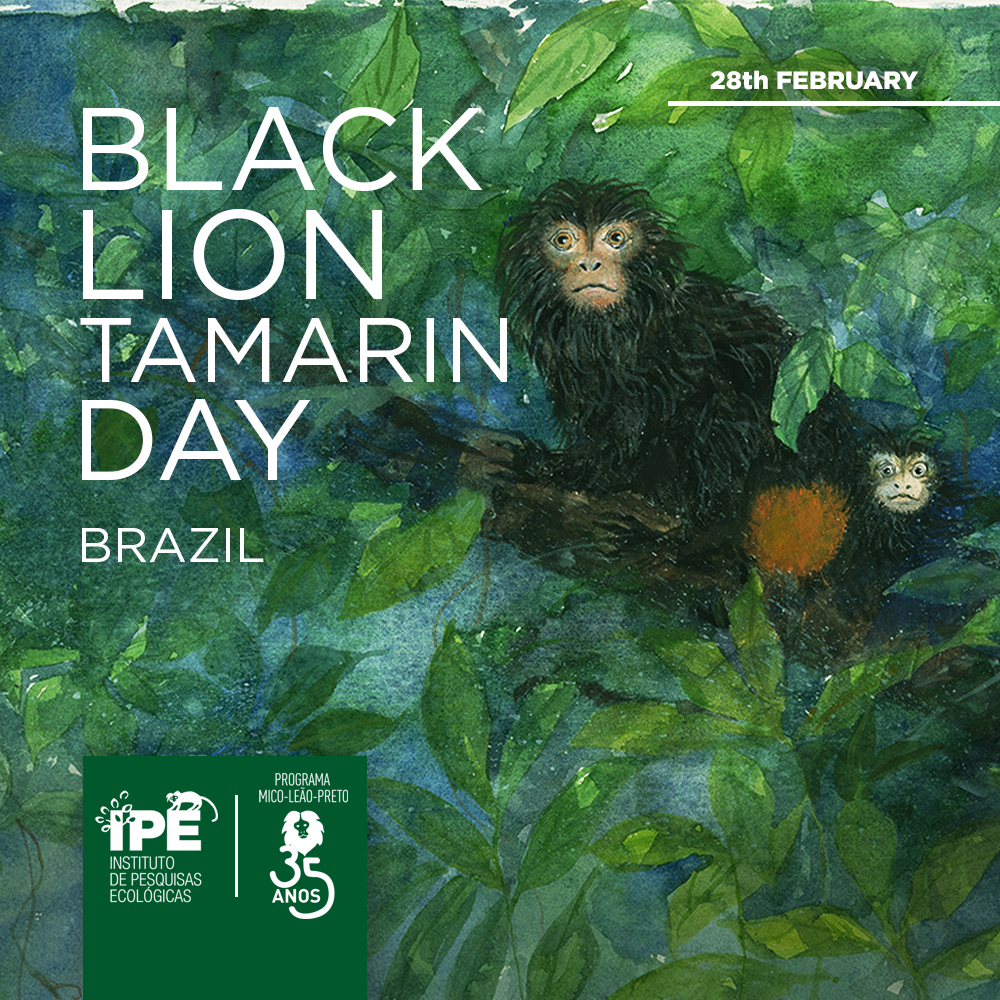
28th February: Black Lion Tamarin Day – Brazil

27 de February de 2019 by Paula Piccin

::cck::481::/cck::
::introtext::

The Black Lion Tamarin Day will be celebrated in Brazil on February 28, for the first time. This small primate, whose scientific name is Leontopithecus chyrsopygus, is classified as “Endangered” in the international and Brazilian Red Lists of threatened species. Currently, it occurs only in Atlantic forest fragments in the western and southern portion of the Brazilian state of São Paulo, where it has an important ecological role.

Due to intense deforestation and fragmentation of its habitat, the population of the species has been reduced to about 1500 individuals. In fact, the black lion tamarin is so rare that it was not recorded for 65 years until its rediscovery in 1970. Fortunately, thanks to the conservation efforts of the socio-environmental and government agencies, today the black lion tamarin has a more promising future.

Like other primates, black lion tamarins act as sentinels (for example, their mortalities caused by yellow fever warn human populations of the presence of the virus), and they are also good seed dispersers, helping in the maintenance and regeneration of the forests where they live.

Because of these qualities and also due to the fact that it is restricted to a small area in the state of São Paulo, the black lion tamarin was designated the official mammal of the state in 2014.

Research for the conservation of the Black Lion Tamarin

IPE (Institute for Ecological Research) celebrates, in 2019, 35 years of service for the conservation of the black lion tamarin. The efforts have been concentrated in the Pontal do Paranapanema region, the westernmost tip of São Paulo state, and are carried out by members of the Black Lion Tamarin Conservation Program. In this region, field research on the behavior and health of the species are complemented by activities involving the community, environmental education and forest restoration, which guarantee the long-term survival of the species. IPE is responsible for obtaining scientific data that are used in public policies for the protection of this small monkey, such as the information used to create the Black Lion Tamarin Ecological Station, a federally protected area managed by the Brazilian government.

Another action important for the conservation of the black lion tamarin was the establishment of the largest reforested corridor of Brazil. As the Atlantic Forest in western São Paulo is extremely fragmented, the forest-dependent animals struggle to survive in small patches of suitable habitat, and virtually every subpopulation faces local extinction risk. One of the efforts led by IPE was to plant a native forest corridor that connects two large forested areas in Pontal do Paranapanema: the Black Lion Tamarin Ecological Station and the Morro do Diabo State Park. With 2.7 million trees, the corridor is approximately 20 kilometers long and helps the native animals to find shelter, food and reproductive partners.

The Atlantic Forest corridor, as it is called, is already sheltering several species of animals, including large mammals such as tapirs and jaguars, as attested by studies using camera traps. Use of the corridors by the black lion tamarins is being studied, but as the species uses hollows in old large trees as sleeping sites, which are not present in the young planted corridor yet, researchers from IPE are testing, in some areas adjacent to the corridors, if the tamarins would sleep inside artificial shelters. Monitoring of these artificial shelters is yielding promising results, as two groups of tamarins have been observed using the shelters. These results suggest that implementing artificial nest boxes in the planted corridors will ease the establishment of black lion tamarin populations there.

To celebrate the black lion tamarin day, IPE will promote several activities involving the local populace of Pontal do Paranapanema and also partners such as the Morro do Diabo State Park staff. The complete schedule will be available in the social media of @institutoipe.

Curiosities

There are four species of lion tamarins and they are only found in the Atlantic Forest of Brazil. The Golden Lion Tamarin (more popular, from the forest of Rio de Janeiro), the Golden-headed Lion Tamarin (from the state of Bahia), the Black-faced Lion Tamarin (occurring in a very small area in the states of São Paulo and Paraná), and the Black Lion Tamarin (from the interior Atlantic Forest of São Paulo state, especially in the western area).

Adult black lion tamarins weigh about 600 grams. Their body is covered by a long fur, predominantly black, except for the rump, which has an orangish color. They are called “lion tamarins” because of the little mane around the face.

They live in family groups containing from 2 to 8 individuals. Each group is composed of a dominant female, one or two reproductive males and the juvenile offspring, which remain in the group until they reach sexual maturity and disperse to form their own family groups. The female normally gives birth to twins once a year after a gestation period of approximately 4 months. The other members of the group help in raising the babies, until the juvenile can move by itself. Communication between the members is frequent and made through high-pitched whistles and chirps.

As they are territorial animals, each group uses an area, which can vary in size between 40 to 400 hectares. They are diurnal animals and during the night they sleep in tree hollows. When researchers study the behavior of the lion tamarins, they must locate the hollows used by the tamarins the day before so they can follow the group early on the next day.

Most of the diet of the black lion tamarin is composed chiefly of fruits, but they also eat tree sap, flowers, invertebrates and small vertebrates, such as frogs and nestlings. The main predators are birds of prey, boas, tayras and small cats.

::/introtext::
::fulltext::::/fulltext::

Categories News Leave a comment

Suzana Padua receives the 2018 Lifetime Achievement Award

17 de October de 2018 by Paula Piccin

::cck::441::/cck::
::introtext::

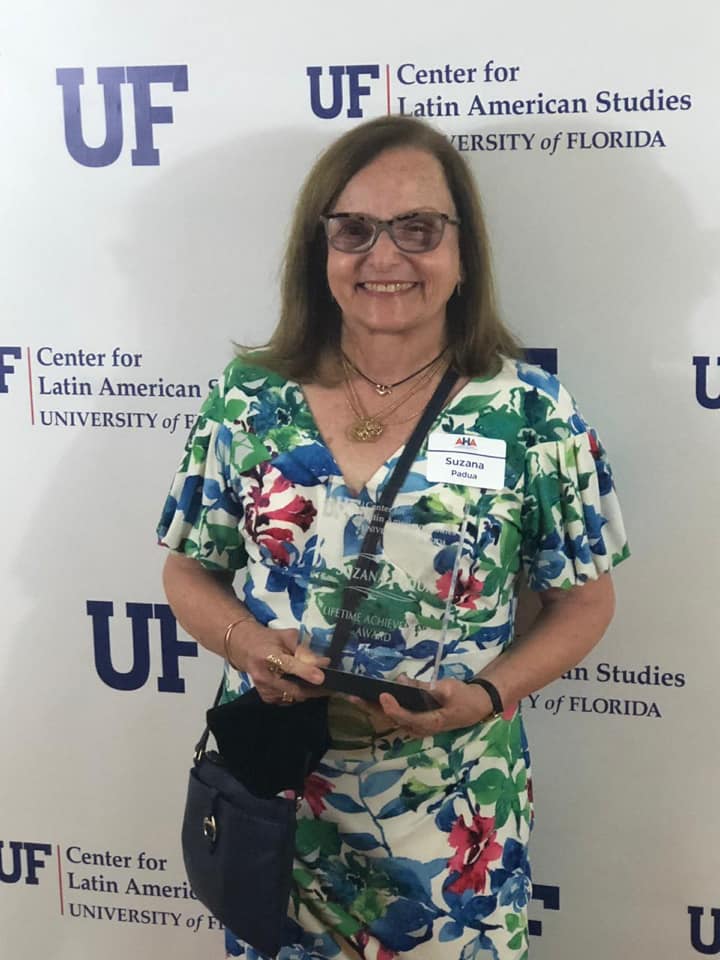
On October 6th, Suzana Padua received the 2018 Lifetime Achievement Award during an event at the University of Florida (UF), United States. The president of IPÊ was honored by the Council of Former Students of the Center for Latin American Studies (LAS) of the University, which recognizes former university students whose achievements over the years have had a significant impact in their field in a regional, state or national.

The award recognized the leadership role and service to the community and society of Suzana, as well as the significant achievements in his career, his history in training for conservation and environmental education through the foundation of IPÊ, the environmental education program and the ESCAS – School of Environmental Conservation and Sustainability.

With a master’s degree from the University of Florida (UF) in 1991, focusing on environmental education and, later, a Ph.D. from the University of Brasília (UnB), in 2004, Suzana published more than 50 articles and guided 30 Master’s his career to date. Because of actions that influenced the socio-environmental transformation and the lives of many students, professionals and members of the rural community, especially women, was recognized by 17 national and international awards. The work with her husband, Claudio Padua, developing pioneering graduate programs was inspired by the interdisciplinary training they received at the UF Latin American Studies Center and the Center’s Conservation and Tropical Development (TCD) program.

“I am extremely happy for this award, which I share with the entire IPÊ team and our partners because we do nothing alone. The Center for Latin American Studies and TCD influenced Claudio and I tremendously. When we were setting up the short-term curriculum for IPÊ, Masters and even the MBA, we used our interdisciplinary experience at UF as the basis for what we wanted to offer. This is how social and environmental issues become inseparable, giving life more meaning and value”, said Suzana.

::/introtext::
::fulltext::::/fulltext::
Categories News Leave a comment

Resex Cazumbá-Iracema families monitor chestnut trees for conservation

15 de October de 2018 by Paula Piccin

::cck::439::/cck::
::introtext::

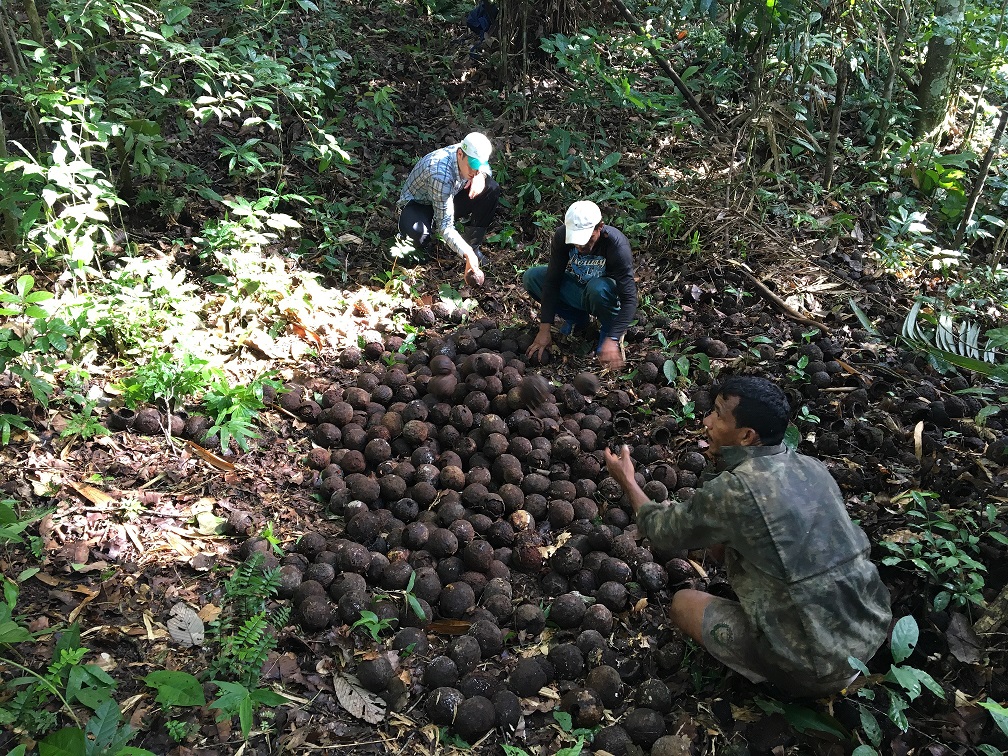
Created in 2002 in Acre, the Extractive Reserve (Resex) of Cazumbá-Iracema occupies almost 40% of the territory of Sena Madureira. The area is home to 350 families who have fought and are struggling to conserve the forest and their chestnut trees, from which they derive their livelihood.

Four years ago, through the project Participatory Biodiversity Monitoring, carried out in partnership with the ICMBio (Chico Mendes Institute of Biodiversity Conservation), IPÊ came to further support the on-site conservation process. To this end, it develops training of monitors and workshops for the implementation and improvement of protocols for monitoring chestnuts. Check out VIDEO

With the project, the communities are the protagonist of your lives and create their own futures. The residents and extractivists collect data and know the time and the right way to collect the nuts, so that extractivism is carried out in a sustainable way.

This practice was the result of an integration between the traditional knowledge of the populations living in Resex and the learning with the courses of the project. Young people and adults are engaged to maintain the forest and chestnut trees.

“Our greatest legacy for Resex was to provide the exchange of knowledge and to bring even more information. The courses on chestnut tree management and how to apply the protocol to carry out monitoring were very important for the process of engaging people in the conservation of chestnuts. With information, they have greater care, they know the right time to cut and what to cut in the chestnuts, ensuring that the resource stays in this protcted area for longer”, says Ilnaiara Gonçalves de Sousa, IPÊ’s field researcher. The Participatory Biodiversity Monitoring is supported by USAID, Gordon and Betty Moore Foundation and ARPA.

::/introtext::
::fulltext::::/fulltext::

Categories News Leave a comment

Donate now: Scholarships for 20 sustainability young leaders

10 de September de 2018 by Paula Piccin

::cck::427::/cck::
::introtext::

The campaign for the Scholarship Fund of ESCAS/IPÊ (School of Environmental Conservation and Sustainability) begins today, September 10th. The proposal is to raise funds to enable new students interested in training conservation and sustainability the chance to study in one of the reference schools in the theme. Donate now!

The world face many socio and environmental challenges like loss of biodiversity and forests, high pollution and diseases. Young students in Brazil have transformative ideas for these challenges, but many don’t have opportunity to develop it due to lack of resources to seek more knowledge and guidance. ESCAS – School of Environmental Conservation and Sustainability, is a place to them. With a Scholarship Fund, we will benefit students with education for sustainability to them change the world.

Challenge

Hundreds of young students in Brazil have transformative ideas for the socio-environmental challenges in the world and many talented students have a great potential to pursue sustainability inside the world work. However, many of them do not have the opportunity to develop these ideas due to lack of resources to seek more knowledge and guidance. This project will offer 20 scholarships in ESCAS – School of Conservation and Sustainability, a place where the science is for and with the society.

Solution

ESCAS promotes socio-environmental and sustainability knowledge in Brazil through short courses, Professional Master in Conservation and Sustainability and MBA in Social and Environmental Business. It trained more than 6.4 thousand people since 1996 – more than 300 with scholarships. With a Scholarship Fund, we will promote this knowledge to more students, transforming them into professionals which promote innovative solutions that contribute to a fair, caring and sustainable Brazilian Society.

Long-Term Impact

With this campaign, we will start the ESCAS Scholarship Fund, which will be continuous from now. With it, we will amplify school capacity to give socio-environmental knowledge to more students in a long term. We aim to benefit 20 with scholarships. And this is only the beginning, a seed that can grow to benefit more. The proposal is empower a mass of highly qualified professionals in the socio-environmental field to revert the negative impact and socio-environmental losses for the past decades.

https://www.globalgiving.org/projects/build-a-fund-for-20-young-sustainability-students/

::/introtext::
::fulltext::::/fulltext::

Categories News Leave a comment

Report IPÊ 2017

14 de June de 2018 by Paula Piccin

::cck::375::/cck::
::introtext::


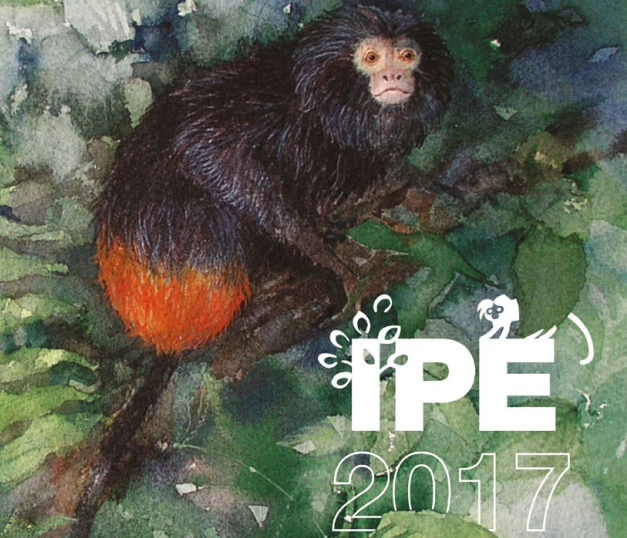
IPÊ annual report 2017. Bilingual edition (Portuguese / English), with projects, testimonials of beneficiaries and partners and what we have developed in favor of Brazilian biodiversity together with supporters, communities, donors, students and teachers from ESCAS, researchers and all those who help transform the socio-environmental reality in Brazil.

Click here


::/introtext::
::fulltext::::/fulltext::

Categories News Leave a comment

Latin America is squandering its most valuable resource. Here’s what we need to do

13 de March de 2018 by Paula Piccin

::cck::342::/cck::
::introtext::

*From World Economic Forum on Latin America website

Suzana Padua
Claudio Valladares Padua

One of the greatest riches of Latin American countries is their biodiversity. Nevertheless, it rarely contributes to the economic development of the nations that make up the region. 

In Brazil, according to official statistics, not one of the 10 main exports in 2016 had its origin in the country’s biodiversity. Instead, the emphasis has been on products that require transformation or even, and this is the worst scenario, the destruction of biodiversity itself. The result is of low cost products with little added value, such as monocultures, extensive cattle raising, and mining.

While we insist on this economic formula, the world marches on towards the Fourth Industrial Revolution, with its incredible developments in genetics and biology. Despite holding outstanding genetic materials, our countries are losing momentum and failing to capitalise on our natural riches. This is down to a lack of understanding that there is a need beyond saving those materials, which is not even being done effectively. We must use our biodiversity innovatively and sustainably. What is even better, we can do so by conserving our biodiversity and maintaining our ecosystems.

MORE


::/introtext::
::fulltext::::/fulltext::

Categories News Leave a comment

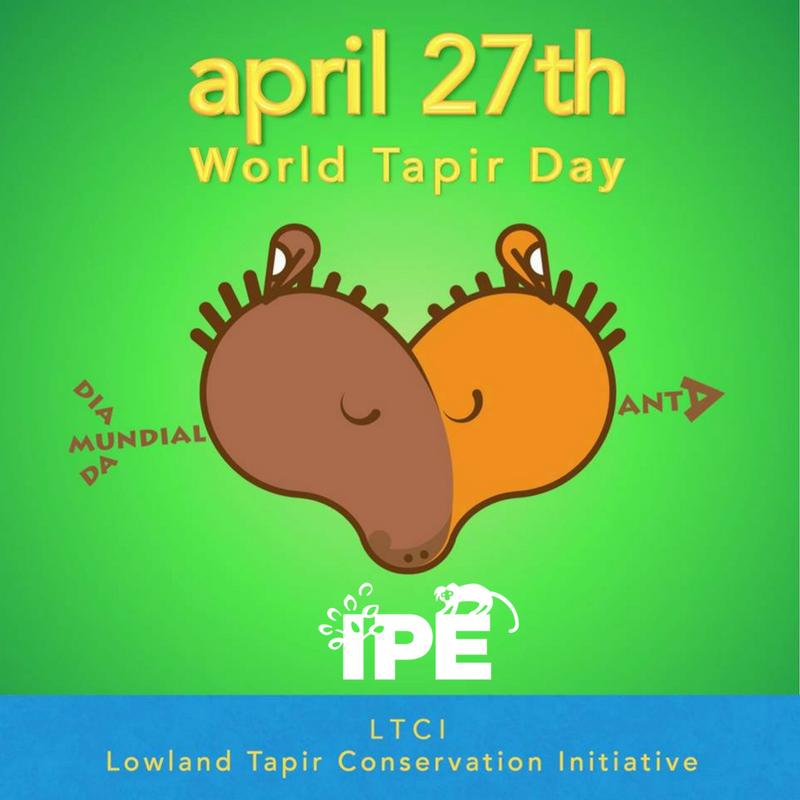
World Tapir Day!

27 de April de 2017 by Paula Piccin

::cck::237::/cck::
::introtext::

::/introtext::
::fulltext::::/fulltext::

Categories News Leave a comment
Older posts
Newer posts
← Previous Page1 … Page10 Page11 Page12 Next →

Posts Recentes

  • IPÊ inaugura nova sede em Manaus/AM 
  • Projeto fortalece o manejo de castanha-da-amazônia na Flona de Caxiuanã, no Pará
  • Oportunidade: Seleção de Pessoa Jurídica para desenvolvimento de cadeias da sociobiodiversidade na Chapada do Araripe (CE) 
  • Comunitário da RDS Puranga Conquista participa de evento nacional de Restauração Ecológica em Brasília
  • Cartilha sobre meliponicultura do Projeto Agroecologia em Rede é premiada em Congresso Amazonense de Meliponicultura 

Publicações

  • August 2026
  • July 2026
  • June 2026
  • May 2026
  • April 2026
  • March 2026
  • February 2026
  • January 2026
  • December 2025
  • November 2025
  • October 2025
  • September 2025
  • August 2025
  • July 2025
  • June 2025
  • May 2025
  • April 2025
  • March 2025
  • February 2025
  • January 2025
  • December 2024
  • November 2024
  • October 2024
  • September 2024
  • August 2024
  • July 2024
  • June 2024
  • May 2024
  • April 2024
  • March 2024
  • February 2024
  • January 2024
  • December 2023
  • November 2023
  • October 2023
  • September 2023
  • August 2023
  • July 2023
  • June 2023
  • May 2023
  • April 2023
  • March 2023
  • February 2023
  • January 2023
  • December 2022
  • November 2022
  • October 2022
  • September 2022
  • August 2022
  • July 2022
  • June 2022
  • May 2022
  • April 2022
  • March 2022
  • February 2022
  • January 2022
  • December 2021
  • November 2021
  • October 2021
  • September 2021
  • August 2021
  • July 2021
  • June 2021
  • May 2021
  • April 2021
  • March 2021
  • February 2021
  • January 2021
  • December 2020
  • November 2020
  • October 2020
  • September 2020
  • August 2020
  • July 2020
  • June 2020
  • May 2020
  • April 2020
  • March 2020
  • February 2020
  • January 2020
  • December 2019
  • November 2019
  • October 2019
  • September 2019
  • August 2019
  • July 2019
  • June 2019
  • May 2019
  • April 2019
  • March 2019
  • February 2019
  • January 2019
  • December 2018
  • November 2018
  • October 2018
  • September 2018
  • August 2018
  • July 2018
  • June 2018
  • May 2018
  • April 2018
  • March 2018
  • February 2018
  • January 2018
  • December 2017
  • November 2017
  • October 2017
  • September 2017
  • August 2017
  • July 2017
  • June 2017
  • May 2017
  • April 2017
  • March 2017
  • February 2017
  • January 2017
  • December 2016
  • November 2016
  • October 2016
  • September 2016
  • August 2016
  • July 2016
  • June 2016
  • May 2016
  • January 2016
  • December 2015
  • November 2015
  • October 2015
  • September 2015
  • August 2015
  • July 2015
  • June 2015
  • May 2015
  • April 2015
  • March 2015
  • February 2015
  • January 2015
  • December 2014
  • November 2014
  • October 2014
  • September 2014
  • August 2014
  • July 2014
  • June 2014
  • May 2014
  • April 2014
  • March 2014
  • February 2014
  • January 2014
  • December 2013
  • November 2013
  • October 2013
  • September 2013
  • July 2013
  • June 2013
  • May 2013

Categorias

  • Annual Reports
  • Áreas Protegidas
  • Baixo Rio Negro
  • Boas Práticas
  • Cases de MRC
  • Centro de Educação e Cooperação Socioambiental para o Clima
  • COP-16 Agenda
  • COP16
  • COP30
  • Cursos
  • Depoimentos
  • Doe
  • Donate
  • Home
  • Home
  • Iniciativas para Doação
  • IPÊ
  • IPÊ
  • IPÊ
  • IPE
  • ipe em movimento
  • Não categorizado
  • Negócios Sustentáveis
  • News
  • Notícias
  • Paisagens Climáticas
  • Pesquisa e Desenvolvimento
  • Pontal do Paranapanema
  • Projetos
  • Projetos Temáticos
  • publicacoes
  • publicacoes
  • ra.2022
  • Relatórios Anuais
  • Thematic Projects
  • Uncategorised
A implementação do kmspico em sistemas educacionais ou corporativos permite uma utilização mais racional dos recursos e apoia iniciativas de proteção ambiental. Você pode download ativador kmspico com segurança agora mesmo.

Onde Estamos

Rod. Dom Pedro I, km 47
Nazaré Paulista, SP, Brasil
Caixa Postal 47 – 12964-022
Tel: (11) 3590-0041

Mapa para o IPÊ
Escritórios
Ouvidoria

Redes Sociais

  • Facebook
  • Twitter
  • Instagram
  • Youtube
  • Linkedin

Política de Privacidade
Programa de Privacidade
Políticas de Cookies

Termos de Uso | Estatuto
Copyright © Ipê – Instituto de Pesquisas Ecológicas.
Email: ipe@ipe.org.br

kraken onion kraken darknet kraken tor
A implementação do kmspico sistemas educacionais ou corporativos permite uma utilização racional dos recursos e apoia iniciativas de proteção ambiental Você pode download ativador kmspico com segurança agora mesmo kmspico.lc.