
 ::cck::172::/cck::
::introtext::
This project works directly with questions of agriculture, food security and cultural valuation through innovative fronts in conservation and sustainable use of biodiversity. This initiative began in 2005 with support from the National Fund for the Environment. We have undertaken ethno-botanical and agro-forestry management and proposed participative diagnoses, ethno-botanical and agro-ecological research such as melipo-culture and agro-forestry systems.
::/introtext::
::fulltext::
Socio-biodiversity consolidates biological diversity, traditional agricultural systems (agro-biodiversity) and the use and management of resources linked to traditional populations and family agriculture. It is predicated upon the notion that resources, services, products and the knowhow developed by these populations has received too little attention in the realm of conservation strategies. The history of exploitation in the Rio Negro has contributed to this because of the specialization in production activities, primarily logging, which provokes abandonment of traditional agricultural and extractivist practices. The erosion of agricultural diversity takes on added importance in Amazonia because this region is an important focus for diversity of cultivars.
The development of socio-biodiversity products*, including the material and immaterial heritage of traditional peoples inhabiting the lower Rio Negro mosaic, can be a viable strategy for ethno-development and conservation. This project seeks to consolidate these products using agro-ecological educational, local cultural valuation (knowhow, practices and region) and strengthening of social organization.
* “Goods and services (final products, primary materials or benefits) generated from biodiversity resources, used in the creation of production chains of interest to traditional peoples and communities and family farmers, which promote the maintenance and valuing of their practices and knowhow, and safeguard the rights coming thereof, generating income and improving quality-of-life and of the environment in which they reside” (National Plan for the Promotion of Production Chains for Socio-Biodiversity Products – MDA/MMA/MDS):
::/fulltext::
::ac_acordeon::4::/ac_acordeon::
::cck_ac_acordeon::acordeon::/cck_ac_acordeon::
::ac_titulo_acordeon|0|ac_acordeon::Objectives::/ac_titulo_acordeon|0|ac_acordeon::
::ac_texto_acordeon|0|ac_acordeon::
Develop and consolidate agro-ecological production systems and socio-biodiversity products through ethno-botanical and ethno-ecological research, adding value to local knowledge, training agro-ecological educators, promoting entrepreneurship and strengthening local organizations. To this end, the project seeks participation from the population and the exchange of local knowhow and technical knowledge and regional identity.
::/ac_texto_acordeon|0|ac_acordeon::
::cckend_ac_acordeon::::/cckend_ac_acordeon::
::cck_ac_acordeon::acordeon::/cck_ac_acordeon::
::ac_titulo_acordeon|1|ac_acordeon::Development::/ac_titulo_acordeon|1|ac_acordeon::
::ac_texto_acordeon|1|ac_acordeon::
Primary actions:
RESEARCH
Use and development of natural resources
We seek to understand the use and management processes of the principal production systems in riverine communities. This work is based on participative research. Currently, studies are being undertaken in the region to characterize the extraction of wood and quantify the production/effort of agricultural systems. In the former, we ask: what are the extraction methods, what types of trees and areas are used, and evaluate the criteria used for selection and negotiation of these. Agricultural systems are evaluated by the production volume and the effort used in production sub-systems, plantations and family gardens along the Cuieiras River. This work informs the determining factors for decision making in managing the balance between internal consumption and commercialization from these sub-systems.
Ethno-ecology
This research seeks to understand the definitions and classifications of agro-biodiversity. We integrate ethno-botanical knowledge in the conservation of phytogenic resources and the valuing and protection of associated traditional knowledge, as well as contributing to agro-ecological knowledge.
Ethno-zoology and hunting/fishing systems
The goal of this initiative is the characterization of knowledge from communities along the Cuieiras River. Specifically, we seek information on the fauna and fish exploited through hunting/fishing and on how this knowledge is reflected in practices and strategies in these systems. This initiative is undertaken in partnership with LETEP (Laboratory of Indigenous Ethno-Epidemiology and Ethno-Ecology, INPA) and with the Center for Indigenous Amazon Studies – NEAI, of the UFAM.
EDUCATION AND SOCIO-ENVIRONMENTAL TECHNOLOGIES
Participative methodology and agro-ecological extension
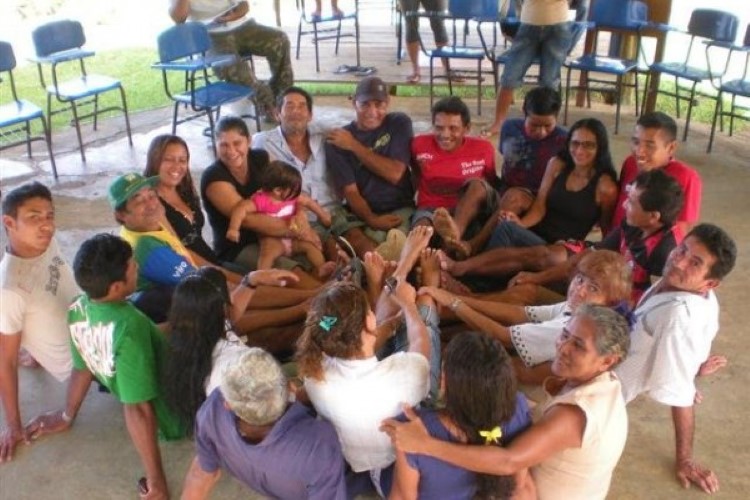
Education, agro-ecological extension and social organization initiatives are carried out through a participative and constructive method. Here, dialog between traditional and technical/scientific knowledge is encouraged, as is the valuing of local knowledge and empowerment of groups. Technicians facilitate this process and the organization of knowledge. The techniques used focus on valuing, mobilizing, integrating and organizing groups during informal talks, meetings, diagnoses and participative planning, workshops, activities, entertainment activities and other exchanges.
Strengthening community organizations
Forming associations and entrepreneurial partnerships with local communities and organizations. These include women’s groups and a mothers’ club that deal with topics of autonomy, rights and public policies.
Development of socio-biodiversity products
Support for the valuing, production, dissemination and commercialization (within the principles of solidarity economy and fair trade) of socio-biodiversity products of populations in the lower Rio Negro, where the following are emphasized: folk-art, agricultural products (cassava flour and their derivatives) and sweets made from regional fruit. The project develops training in agro-ecology directed toward production. It promotes and contributes to the participation of production groups of artisans and women in regional and national markets on family agriculture and valuing products of socio-biodiversity.
The folk-art consists of pieces made with seeds (necklaces, wristbands, earrings, and handbags), wood art (miniature animals) and woven textiles made from natural fibers (arumã, tucum, lianas). All primary material is extracted and/or cultivated based on traditional knowledge and sustainable use of resources.
The sweets (jams, biscuits and candy) are produced from locally grown fruit such as pineapple, nuts, coconut, cupuaçu, cubiu, passionfruit and tucumã. These are grown in the fields and gardens of families in the region. The development of these products has stimulated the valuing and diversification of agricultural spaces such as agro-ecological systems.
Agro-forestry
Agro-ecological activities combine ways to stimulate and involve communities in the identification and development of potentially sustainable practices. In accordance with the principles and ethics of permaculture land, we seek to stimulate social and ecological solutions generated within communities. Agro-forestry systems were identified as sustainable agricultural systems of high productivity and adapted to the local context. For the educational and practical consolidation of this model, species identified by farmers (with subsequent increase in ethno-botanical studies) are joined/cataloged with technical experiments of management and plant nurseries.
Meliponiculture
This is the practice of ‘rationally’ rearing stingless bees. It consists primarily in the re-management of wild hives in wooden boxes (an attempt to imitate a natural nest). There are many benefits to stingless bees, such as products appreciated by humans: honey, pollen, wax and resins. These are often used in homemade medicines to supplement nutrition, in art and/or as a source of income. The bees also carry out an important role within the trophic chain, being one of the primary pollinators in most systems. We sought to train a group in the management of stingless bees to benefit conservation and management of agro-biodiversity.
Exchange of experiences in Amazonia
Promote exchanges of experiences in social organization, agro-ecological systems and socio-biodiversity products among communities, producer groups and farmers.
Community participation
Participation and articulation in Statewide Forums of Agro-Ecology, Environmental Education and Economic Solidarity.
::/ac_texto_acordeon|1|ac_acordeon::
::cckend_ac_acordeon::::/cckend_ac_acordeon::
::cck_ac_acordeon::acordeon::/cck_ac_acordeon::
::ac_titulo_acordeon|2|ac_acordeon::Team::/ac_titulo_acordeon|2|ac_acordeon::
::ac_texto_acordeon|2|ac_acordeon::
Mariana Gama Semeghini ( mari_anavilhanas@ipe.org..br )
Leonardo Pereira Kurihara ( leonardo@ipe.org.br )
Thiago Mota Cardoso ( thiago@ipe.org.br )
Maria do Carmo Gomes Pereira
Marilena Campos –associate researcher
Marcelino Dantas – associate researcher
::/ac_texto_acordeon|2|ac_acordeon::
::cckend_ac_acordeon::::/cckend_ac_acordeon::
::cck_ac_acordeon::acordeon::/cck_ac_acordeon::
::ac_titulo_acordeon|3|ac_acordeon::Support::/ac_titulo_acordeon|3|ac_acordeon::
::ac_texto_acordeon|3|ac_acordeon::
- Communities of São Sebastião, Nova Canaã do Cuieiras, Nova Esperança, Boa Esperança, Barreirinhas, Três Unidos, Nova Canaã do Aruaú, Bela Vista do Jaraqui and Vila Nova de Chita.
- FNMA – National Fund for the Environment/ MMA – Ministry of the Environment
- PCE – Ecological Corridors Project / MMA
- SEBRAE – Brazilian Service to Support Micro and Small Companies
- PDPI – Demonstrative Project for Indigenous Peoples/ MMA
- AEGRE – Special Working Group for Race and Ethnicity/ MDA – Ministry of Agricultural Development
- Citizenship Territories Program / MDA Amazonas
- PACTA – Local Populations, Agro-Biodiversity and Traditional Knowledge in the Brazilian Amazon
- GPA –INPA Bee Research Group
- LETEP – Laboratory of Indigenous Ethno-Epidemiology and Ethno-Ecology, INPA
::/ac_texto_acordeon|3|ac_acordeon::
::cckend_ac_acordeon::::/cckend_ac_acordeon::
::ac_arquivos::1::/ac_arquivos::
::cck_ac_arquivos::arquivo::/cck_ac_arquivos::
::ac_titulo_arquivo|0|ac_arquivos::::/ac_titulo_arquivo|0|ac_arquivos::
::ac_arquivo|0|ac_arquivos::::/ac_arquivo|0|ac_arquivos::
::cckend_ac_arquivos::::/cckend_ac_arquivos::
::ac_galeria::15::/ac_galeria::
::cck_ac_galeria::galeria::/cck_ac_galeria::
::ac_foto_descricao|0|ac_galeria::::/ac_foto_descricao|0|ac_galeria::
::ac_foto|0|ac_galeria::images/artigo_completo/galeria/1289/dsc01376small-5b05763f36.JPG::/ac_foto|0|ac_galeria::
::cckend_ac_galeria::::/cckend_ac_galeria::
::cck_ac_galeria::galeria::/cck_ac_galeria::
::ac_foto_descricao|1|ac_galeria::::/ac_foto_descricao|1|ac_galeria::
::ac_foto|1|ac_galeria::images/artigo_completo/galeria/1289/dsc03556small-eac135869f.JPG::/ac_foto|1|ac_galeria::
::cckend_ac_galeria::::/cckend_ac_galeria::
::cck_ac_galeria::galeria::/cck_ac_galeria::
::ac_foto_descricao|2|ac_galeria::::/ac_foto_descricao|2|ac_galeria::
::ac_foto|2|ac_galeria::images/artigo_completo/galeria/1289/dsc07446small-12cb3440ef.JPG::/ac_foto|2|ac_galeria::
::cckend_ac_galeria::::/cckend_ac_galeria::
::cck_ac_galeria::galeria::/cck_ac_galeria::
::ac_foto_descricao|3|ac_galeria::::/ac_foto_descricao|3|ac_galeria::
::ac_foto|3|ac_galeria::images/artigo_completo/galeria/1289/dsc08492small-d40267dd8f.JPG::/ac_foto|3|ac_galeria::
::cckend_ac_galeria::::/cckend_ac_galeria::
::cck_ac_galeria::galeria::/cck_ac_galeria::
::ac_foto_descricao|4|ac_galeria::::/ac_foto_descricao|4|ac_galeria::
::ac_foto|4|ac_galeria::images/artigo_completo/galeria/1289/dsc08543small-0a91b1185f.JPG::/ac_foto|4|ac_galeria::
::cckend_ac_galeria::::/cckend_ac_galeria::
::cck_ac_galeria::galeria::/cck_ac_galeria::
::ac_foto_descricao|5|ac_galeria::::/ac_foto_descricao|5|ac_galeria::
::ac_foto|5|ac_galeria::images/artigo_completo/galeria/1289/dsc08762small-02b10d7626.JPG::/ac_foto|5|ac_galeria::
::cckend_ac_galeria::::/cckend_ac_galeria::
::cck_ac_galeria::galeria::/cck_ac_galeria::
::ac_foto_descricao|6|ac_galeria::::/ac_foto_descricao|6|ac_galeria::
::ac_foto|6|ac_galeria::images/artigo_completo/galeria/1289/dscn6609small-4ad45b3390.JPG::/ac_foto|6|ac_galeria::
::cckend_ac_galeria::::/cckend_ac_galeria::
::cck_ac_galeria::galeria::/cck_ac_galeria::
::ac_foto_descricao|7|ac_galeria::::/ac_foto_descricao|7|ac_galeria::
::ac_foto|7|ac_galeria::images/artigo_completo/galeria/1289/dscn7016small-da9f003a58.jpg::/ac_foto|7|ac_galeria::
::cckend_ac_galeria::::/cckend_ac_galeria::
::cck_ac_galeria::galeria::/cck_ac_galeria::
::ac_foto_descricao|8|ac_galeria::::/ac_foto_descricao|8|ac_galeria::
::ac_foto|8|ac_galeria::images/artigo_completo/galeria/1289/dscn7065small-6586a37a0a.JPG::/ac_foto|8|ac_galeria::
::cckend_ac_galeria::::/cckend_ac_galeria::
::cck_ac_galeria::galeria::/cck_ac_galeria::
::ac_foto_descricao|9|ac_galeria::::/ac_foto_descricao|9|ac_galeria::
::ac_foto|9|ac_galeria::images/artigo_completo/galeria/1289/imagem031small-ae45f03078.jpg::/ac_foto|9|ac_galeria::
::cckend_ac_galeria::::/cckend_ac_galeria::
::cck_ac_galeria::galeria::/cck_ac_galeria::
::ac_foto_descricao|10|ac_galeria::::/ac_foto_descricao|10|ac_galeria::
::ac_foto|10|ac_galeria::images/artigo_completo/galeria/1289/imagem129small-f21549daa8.jpg::/ac_foto|10|ac_galeria::
::cckend_ac_galeria::::/cckend_ac_galeria::
::cck_ac_galeria::galeria::/cck_ac_galeria::
::ac_foto_descricao|11|ac_galeria::::/ac_foto_descricao|11|ac_galeria::
::ac_foto|11|ac_galeria::images/artigo_completo/galeria/1289/imagem166small-a73fe11150.jpg::/ac_foto|11|ac_galeria::
::cckend_ac_galeria::::/cckend_ac_galeria::
::cck_ac_galeria::galeria::/cck_ac_galeria::
::ac_foto_descricao|12|ac_galeria::::/ac_foto_descricao|12|ac_galeria::
::ac_foto|12|ac_galeria::images/artigo_completo/galeria/1289/imagem4228small-38ca4c5a51.jpg::/ac_foto|12|ac_galeria::
::cckend_ac_galeria::::/cckend_ac_galeria::
::cck_ac_galeria::galeria::/cck_ac_galeria::
::ac_foto_descricao|13|ac_galeria::::/ac_foto_descricao|13|ac_galeria::
::ac_foto|13|ac_galeria::images/artigo_completo/galeria/1289/p1000142small-db4ef5562a.JPG::/ac_foto|13|ac_galeria::
::cckend_ac_galeria::::/cckend_ac_galeria::
::cck_ac_galeria::galeria::/cck_ac_galeria::
::ac_foto_descricao|14|ac_galeria::::/ac_foto_descricao|14|ac_galeria::
::ac_foto|14|ac_galeria::images/artigo_completo/galeria/1289/s7303173small-172146dbb1.JPG::/ac_foto|14|ac_galeria::
::cckend_ac_galeria::::/cckend_ac_galeria::