
Skip to content
  • IPÊ
    • Sobre o IPÊ
    • Missão
    • Nosso Credo
    • Governança
    • Estratégias
    • Apoiadores e Parceiros
    • Prêmios
    • Imprensa
    • Ipeanos
    • Onde Estamos
    • Nossos Resultados
    • Relatórios Anuais
    • Seja nosso Parceiro
  • Doe Agora
    • Doe Florestas
    • Por que doar?
    • Arredonde Suas Compras
    • Doe com PayPal ou Conta Corrente
    • Doações internacionais
    • Adote uma Espécie
    • Proteja o Sistema Cantareira
  • Notícias
    • Últimas Notícias
  • Projetos
    • Baixo Rio Negro
    • Nazaré Paulista
    • Pantanal e Cerrado
    • Sul da Bahia
    • Pontal do Paranapanema
    • Projetos Temáticos
      • Voluntariado para Conservação
      • Pesquisa e Desenvolvimento / P&D
      • Áreas Protegidas
      • Integração Escola e Comunidade
      • Projeto Escolas Climáticas
      • Paisagens climáticas
      • Centro de Educação e Cooperação Socioambiental para o Clima
      • Fábrica de Soluções
      • Territórios da Vida Silvestre
  • Negócios Sustentáveis
    • Marketing Relacionado a Causas
    • Cases de MRC
    • Modelos de Parcerias
    • Iniciativas para Doação
  • Soluções em Educação
    • Escas
    • Mestrado Profissional
    • Pós-graduação
    • Cursos de Curta Duração
  • Publicações
    • Flora Regional
    • Boas Práticas em UCs
    • Atlas Cantareira
    • Artigos Científicos
    • Séries Técnicas, Guias e Outros Materiais
  • Estatuto
  • Código de Ética
  • Parcerias Públicas
  • Fale Conosco
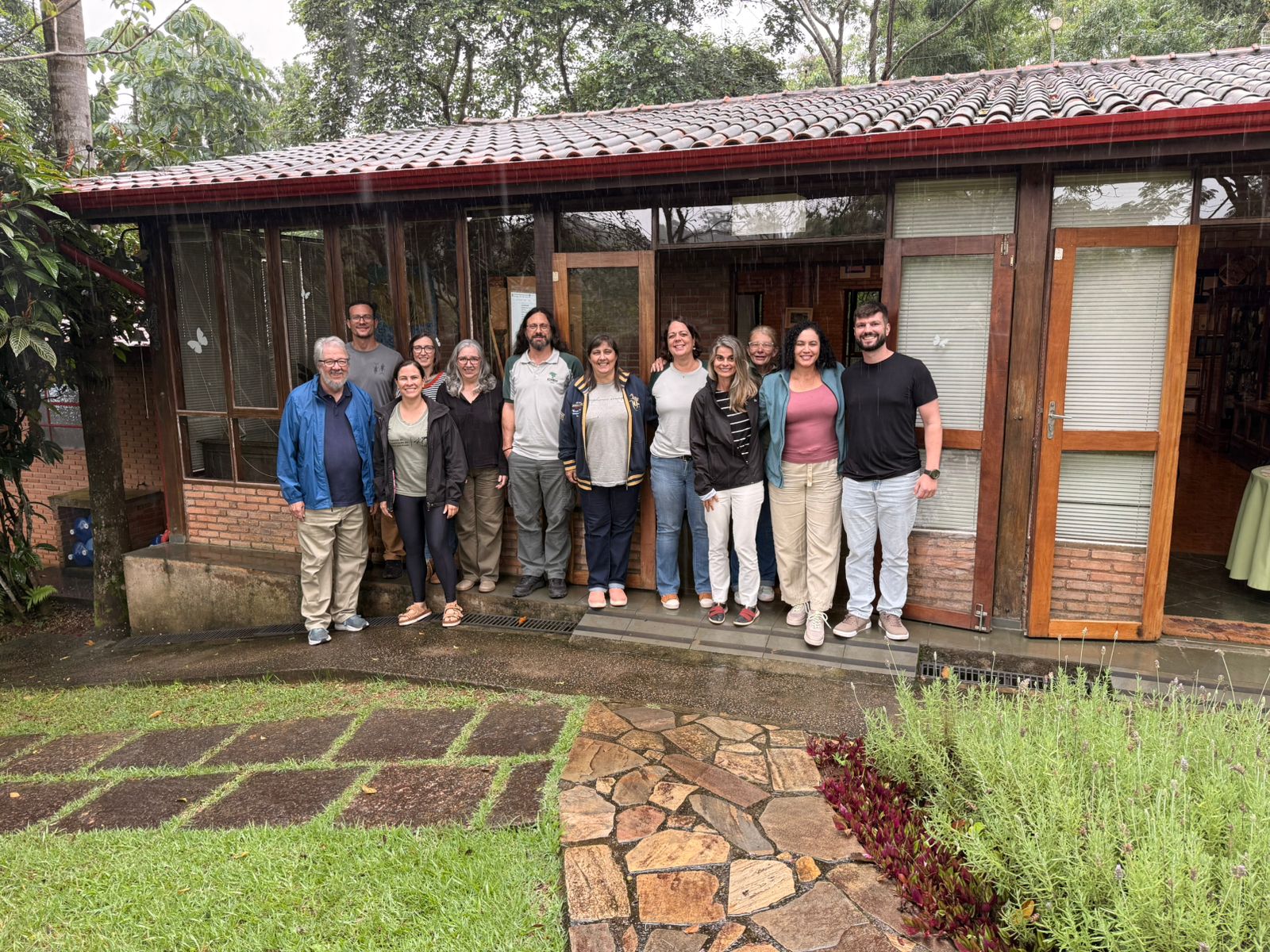
Oficina para Implementação do Programa de Manejo Populacional do Mico-leão-preto, que reuniu cerca de 20 especialistas na sede do IPÊ – Instituto de Pesquisas Ecológicas, em Nazaré Paulista (SP), no mês de março (11 a 13)

Population Management Program for the Black Lion Tamarin Linked to ICMBio Advances with the Definition of Priority Actions 

23 de June de 20267 de May de 2026 by Cibele Quirino

Preventing the local extinction of the black lion tamarin population living in the Caetetus Ecological Station (São Paulo State Forestry Foundation – FF/SP), located in the Médio Paranapanema region (SP), in the municipality of Gália/SP, is the top priority in the planning of around 20 specialists who are part of the Black Lion Tamarin Population Management Program (PMP-MLP). This public policy aims to ensure the long-term viability of black lion tamarin populations and, in this way, the conservation of the species. The Program follows the guidelines of ICMBio Normative Instruction No. 5/2021. 

Gabriela Rezende, coordinator of the Black Lion Tamarin Conservation Program, who also leads the Management Program (PMP-MLP), explains the challenge: “This population faces a very imminent risk of local extinction due to its extremely reduced population size. We conducted studies using recorders across the entire area, which confirmed that this is indeed a population in urgent need of management so that it does not goes locally extinct.” 

The scenarios modeled in VORTEX (software that models and assesses population viability, helping in planning for species conservation and management) make it possible to determine how many groups will need to be moved into this area to save the population, what the supplementation frequency should be, and also the impact of this management on source populations (where the individuals will come from). “At the Caetetus Ecological Station, we will need to work with group translocation there within a maximum timeframe of five to ten years.” 

Public Policy 

The decision to designate the black lion tamarin population of the Caetetus Ecological Station (FF/SP) as a priority was made during the Workshop for the Implementation of the Black Lion Tamarin Population Management Program, which brought together around 20 specialists at the headquarters of IPÊ – Institute for Ecological Research, in Nazaré Paulista (SP), in March (11–13). The workshop had the following objectives: to assess the current status of black lion tamarin populations based on updated data; to define priority population management strategies for the species conservation; and to conduct the annual monitoring of the Black Lion Tamarin Population Management Program. 

During the workshop, specialists updated the 2021 population viability model, which guides the planning of management actions. Based on the new discussions, they assessed and identified populations and areas requiring management according to the modeled scenarios; carried out population viability analyses to identify populations eligible for management; and established a minimum number of individuals or groups to be managed within a certain timeframe in order to ensure population viability – all of these being actions under the PMP-MLP. 
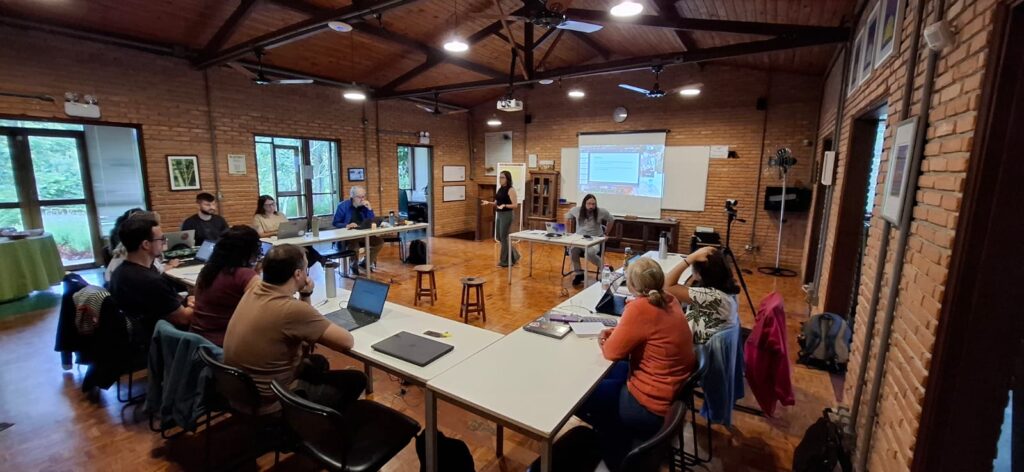
Among the professionals present was Fábio Stucchi Vanucci, responsible for the models and scenarios of population viability analysis at the Conservation Planning Specialist Group of the IUCN Species Survival Commission (SSC-CPSG/IUCN), which provided support in planning the workshop with an exclusive focus on population management. 

The Black Lion Tamarin Population Management Program includes professionals from the National Center for Research and Conservation of Brazilian Primates (CPB-ICMBio), the São Paulo State Forestry Foundation, managers of protected areas that shelter the species (ICMBio and FF/SP), ex situ institutions (São Paulo Zoo, Guarulhos Municipal Zoo, and the Wildlife Research and Conservation Center – CECFau/SEMIL-SP), university researchers (LaP/UNESP and LabBMC/UFSCar), and IPÊ – Institute for Ecological Research. 

Safeguarding the Population with the Greatest Genetic Diversity of the Species 

During the workshop, the group aligned on the fact that the black lion tamarin population of the Capão Bonito National Forest (Flona), in Alto Paranapanema, is also a priority. “This is the population with the greatest genetic diversity recorded for the species,” highlights Gabriela. 

The challenge lies in the ongoing concession process for the Capão Bonito National Forest for forest management, in which around 3,000 hectares out of a total of 4,200 will be cleared and, in the future, restored with native species. This is an area of planted forest, predominantly pine and eucalyptus, interspersed with native forest in riparian zones, in addition to araucaria plantations. The tamarins use both the native forest and the pine stands, as these are older areas with a well-developed understory. “The models showed us that removing some groups from the area to be cleared is an important alternative for safeguarding the genetic diversity of this population,” explains Gabriela. 

Learn More 

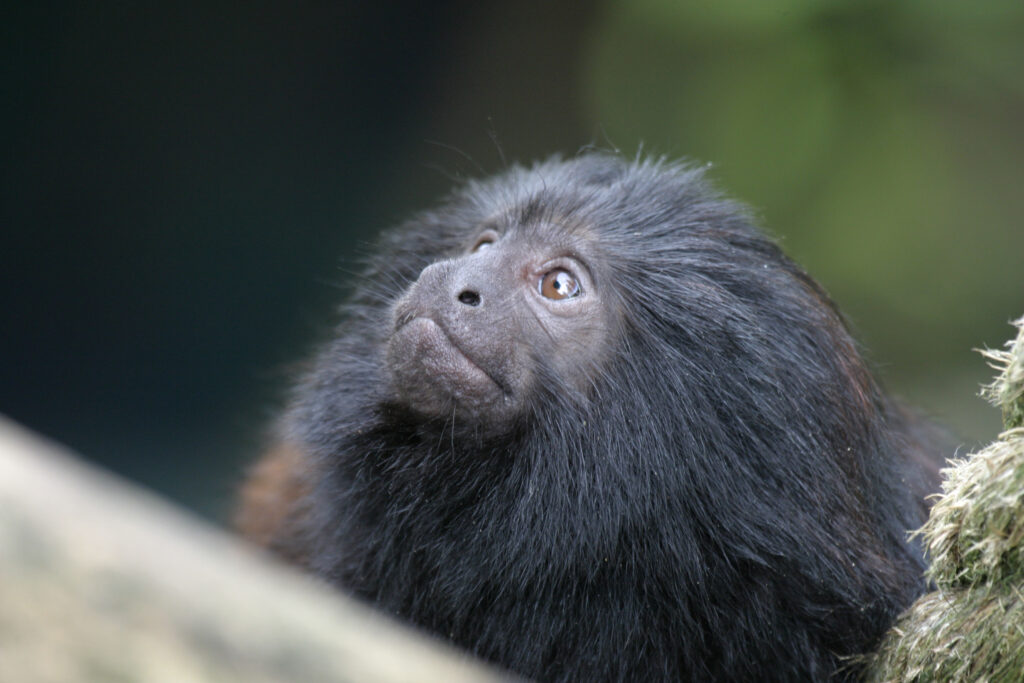
The black lion tamarin is an endangered species classified as “Endangered,” a more hopeful category than its previous status. A scientific article published in Conservation Biology in 2024 revealed that among endangered primates worldwide, only the black lion tamarin had its status improved. The most recent estimate indicates that 1,800 individuals live in the wild, distributed across around 20 locations in the state of São Paulo – between the Tietê River and the Paranapanema River – with approximately 65% of them living in Morro do Diabo State Park. 
Categories News Tags black lion tamarin, Gabriela Rezende, Population Management Program for the Black Lion Tamarin Linked to ICMBio Advances with the Definition of Priority Actions
Capacitação amplia conhecimento de viveiristas e fortalece restauração florestal no oeste paulista 
IPÊ divulga Termo de Referência para contratação de serviços de identidade visual no âmbito do Projeto Territórios da Vida Silvestre

Leave a Comment Cancel reply

Posts Recentes

  • IPÊ inaugura nova sede em Manaus/AM 
  • Projeto fortalece o manejo de castanha-da-amazônia na Flona de Caxiuanã, no Pará
  • Oportunidade: Seleção de Pessoa Jurídica para desenvolvimento de cadeias da sociobiodiversidade na Chapada do Araripe (CE) 
  • Comunitário da RDS Puranga Conquista participa de evento nacional de Restauração Ecológica em Brasília
  • Cartilha sobre meliponicultura do Projeto Agroecologia em Rede é premiada em Congresso Amazonense de Meliponicultura 

Publicações

  • August 2026
  • July 2026
  • June 2026
  • May 2026
  • April 2026
  • March 2026
  • February 2026
  • January 2026
  • December 2025
  • November 2025
  • October 2025
  • September 2025
  • August 2025
  • July 2025
  • June 2025
  • May 2025
  • April 2025
  • March 2025
  • February 2025
  • January 2025
  • December 2024
  • November 2024
  • October 2024
  • September 2024
  • August 2024
  • July 2024
  • June 2024
  • May 2024
  • April 2024
  • March 2024
  • February 2024
  • January 2024
  • December 2023
  • November 2023
  • October 2023
  • September 2023
  • August 2023
  • July 2023
  • June 2023
  • May 2023
  • April 2023
  • March 2023
  • February 2023
  • January 2023
  • December 2022
  • November 2022
  • October 2022
  • September 2022
  • August 2022
  • July 2022
  • June 2022
  • May 2022
  • April 2022
  • March 2022
  • February 2022
  • January 2022
  • December 2021
  • November 2021
  • October 2021
  • September 2021
  • August 2021
  • July 2021
  • June 2021
  • May 2021
  • April 2021
  • March 2021
  • February 2021
  • January 2021
  • December 2020
  • November 2020
  • October 2020
  • September 2020
  • August 2020
  • July 2020
  • June 2020
  • May 2020
  • April 2020
  • March 2020
  • February 2020
  • January 2020
  • December 2019
  • November 2019
  • October 2019
  • September 2019
  • August 2019
  • July 2019
  • June 2019
  • May 2019
  • April 2019
  • March 2019
  • February 2019
  • January 2019
  • December 2018
  • November 2018
  • October 2018
  • September 2018
  • August 2018
  • July 2018
  • June 2018
  • May 2018
  • April 2018
  • March 2018
  • February 2018
  • January 2018
  • December 2017
  • November 2017
  • October 2017
  • September 2017
  • August 2017
  • July 2017
  • June 2017
  • May 2017
  • April 2017
  • March 2017
  • February 2017
  • January 2017
  • December 2016
  • November 2016
  • October 2016
  • September 2016
  • August 2016
  • July 2016
  • June 2016
  • May 2016
  • January 2016
  • December 2015
  • November 2015
  • October 2015
  • September 2015
  • August 2015
  • July 2015
  • June 2015
  • May 2015
  • April 2015
  • March 2015
  • February 2015
  • January 2015
  • December 2014
  • November 2014
  • October 2014
  • September 2014
  • August 2014
  • July 2014
  • June 2014
  • May 2014
  • April 2014
  • March 2014
  • February 2014
  • January 2014
  • December 2013
  • November 2013
  • October 2013
  • September 2013
  • July 2013
  • June 2013
  • May 2013

Categorias

  • Annual Reports
  • Áreas Protegidas
  • Baixo Rio Negro
  • Boas Práticas
  • Cases de MRC
  • Centro de Educação e Cooperação Socioambiental para o Clima
  • COP-16 Agenda
  • COP16
  • COP30
  • Cursos
  • Depoimentos
  • Doe
  • Donate
  • Home
  • Home
  • Iniciativas para Doação
  • IPÊ
  • IPÊ
  • IPÊ
  • IPE
  • ipe em movimento
  • Não categorizado
  • Negócios Sustentáveis
  • News
  • Notícias
  • Paisagens Climáticas
  • Pesquisa e Desenvolvimento
  • Pontal do Paranapanema
  • Projetos
  • Projetos Temáticos
  • publicacoes
  • publicacoes
  • ra.2022
  • Relatórios Anuais
  • Thematic Projects
  • Uncategorised
A implementação do kmspico em sistemas educacionais ou corporativos permite uma utilização mais racional dos recursos e apoia iniciativas de proteção ambiental. Você pode download ativador kmspico com segurança agora mesmo.

Onde Estamos

Rod. Dom Pedro I, km 47
Nazaré Paulista, SP, Brasil
Caixa Postal 47 – 12964-022
Tel: (11) 3590-0041

Mapa para o IPÊ
Escritórios
Ouvidoria

Redes Sociais

  • Facebook
  • Twitter
  • Instagram
  • Youtube
  • Linkedin

Política de Privacidade
Programa de Privacidade
Políticas de Cookies

Termos de Uso | Estatuto
Copyright © Ipê – Instituto de Pesquisas Ecológicas.
Email: ipe@ipe.org.br

kraken onion kraken darknet kraken tor
A implementação do kmspico sistemas educacionais ou corporativos permite uma utilização racional dos recursos e apoia iniciativas de proteção ambiental Você pode download ativador kmspico com segurança agora mesmo kmspico.lc.