
Skip to content
  • IPÊ
    • Sobre o IPÊ
    • Missão
    • Nosso Credo
    • Governança
    • Estratégias
    • Apoiadores e Parceiros
    • Prêmios
    • Imprensa
    • Ipeanos
    • Onde Estamos
    • Nossos Resultados
    • Relatórios Anuais
    • Seja nosso Parceiro
  • Doe Agora
    • Doe Florestas
    • Por que doar?
    • Arredonde Suas Compras
    • Doe com PayPal ou Conta Corrente
    • Doações internacionais
    • Adote uma Espécie
    • Proteja o Sistema Cantareira
  • Notícias
    • Últimas Notícias
  • Projetos
    • Baixo Rio Negro
    • Nazaré Paulista
    • Pantanal e Cerrado
    • Sul da Bahia
    • Pontal do Paranapanema
    • Projetos Temáticos
      • Voluntariado para Conservação
      • Pesquisa e Desenvolvimento / P&D
      • Áreas Protegidas
      • Integração Escola e Comunidade
      • Projeto Escolas Climáticas
      • Paisagens climáticas
      • Centro de Educação e Cooperação Socioambiental para o Clima
      • Fábrica de Soluções
      • Territórios da Vida Silvestre
  • Negócios Sustentáveis
    • Marketing Relacionado a Causas
    • Cases de MRC
    • Modelos de Parcerias
    • Iniciativas para Doação
  • Soluções em Educação
    • Escas
    • Mestrado Profissional
    • Pós-graduação
    • Cursos de Curta Duração
  • Publicações
    • Flora Regional
    • Boas Práticas em UCs
    • Atlas Cantareira
    • Artigos Científicos
    • Séries Técnicas, Guias e Outros Materiais
  • Estatuto
  • Código de Ética
  • Parcerias Públicas
  • Fale Conosco

Find out why conserving remnants is strategic for collecting native seeds from the Atlantic Forest

1 de March de 2024 by Paula Piccin

Bringing forests back is a global priority activity to reduce the impacts of Climate Change. The United Nations (UN) established that we live in the Decade of Ecosystem Restoration (2021 – 2030). We aim to halt and reverse the degradation of ecosystems across all continents and oceans. And we will achieve this through ecological restoration, that is, plantings that help the return of complex ecosystems, aligned with the biome in which they are located.

Planted trees, as well as other types of vegetation present in biodiverse forests, absorb carbon as they grow, contributing to the reduction of Greenhouse Gases (GHG) in the atmosphere. The soil in these places also stores carbon, stored in its leaf litter – the covering of leaves and organic matter that fall from trees.

Ecological restoration is an activity that depends on several factors. For this to happen, the following are necessary: financing, management, ecosystem assessment, labor availability, obtaining seeds, seedling production, monitoring and community engagement. All these aspects are links in the restoration chain. The remaining forests play a fundamental role. In these places, information can be obtained about the local vegetation, such as the species that occur in that region. Each forest area has specificities and the closer the original vegetation to each microregion is, the greater the chance of successful restorations.

Several non-timber forest products can be obtained through sustainable forest management, that is, the care necessary for their conservation and longevity. One of these products is seeds – a key input for the ecological restoration chain. The production of seedlings in nurseries begins through seeds. To produce good seedlings, they must have broad genetic diversity, which can be understood as the sum of genetic variations observed in a population or species.

Even though they may look the same, each tree has unique genetics. This difference is essential to recover biodiversity. This ensures that the seedlings used in planting are not sterile, that is, they are capable of generating healthy offspring. In the event of adversity, each individual will react differently, which increases the forest’s ability to recover and propagate. For this reason, there are collection methodologies developed based on technical criteria that aim to guarantee the quality of the seeds and their genetic variability.

Parent trees: the origin of seeds

One of the first steps in seed collection is species identification. Knowing the flowering and/or fruiting times can help the identification process. It is also necessary to know when the tree usually produces seeds, and if there are small regional differences, which can be improved through observation.

Location is another point of attention. Seedlings from seeds collected in forest remnants close to the new forest to be formed have a greater chance of survival, as they originate from a similar location, with the same environmental characteristics (such as temperature, light, altitude and soil). Collection performed in urban areas or places with few trees of the same species will not guarantee the necessary genetic diversity, generating “related” seedlings.

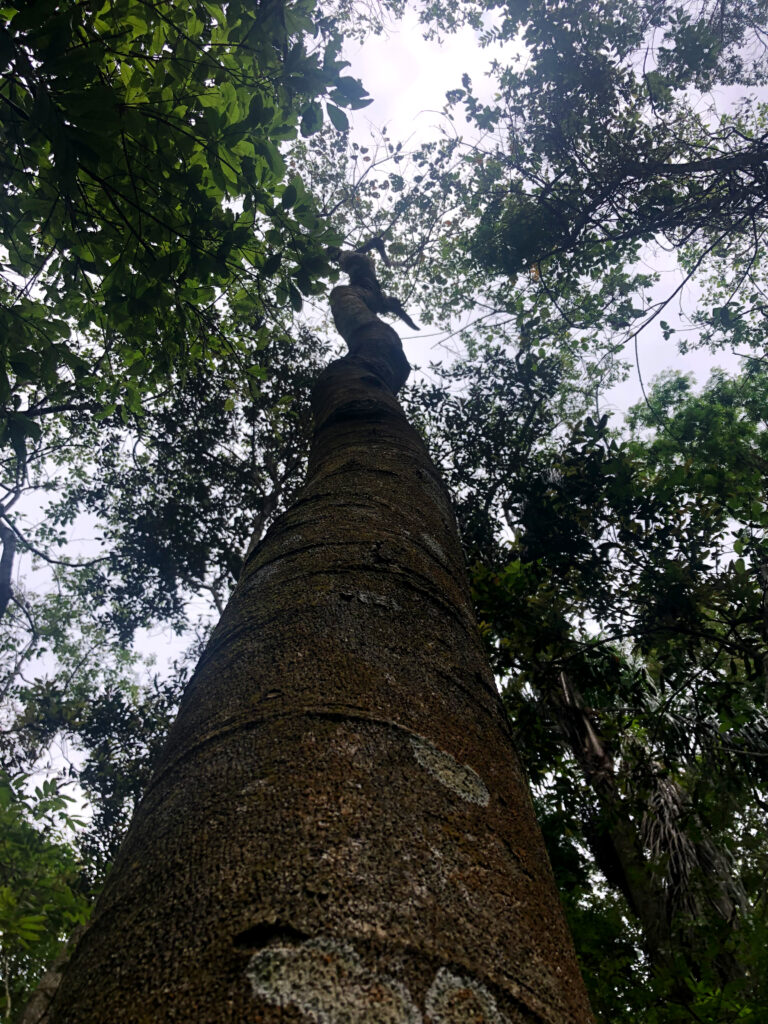
One of the ways to avoid seed lots with related individuals is to delimit a collection area. The seed collection area can be natural or planted, as long as it contains one or more forest species of interest in significant quantities. This is a quality and origin guarantee mechanism, making it possible to identify the origin of seed lots. Furthermore, a consolidated seed collection area allows planning and monitoring of parent trees to ensure constant seed production. Parent trees are the trees selected for seed collection.

Pilot Project in Nazaré Paulista

Sítio Córrego Verde is a rural property partner of the Semeando Água Project, an initiative of IPÊ – Instituto de Pesquisas Ecológicas sponsored by Petrobras, through the Petrobras Socioambiental program. In Nazaré Paulista, with a forest remnant of 18.6 hectares of native forest, a pilot Seed Collection Area project was carried out on site. 61 parent trees of 10 forest species were identified, marked and georeferenced, with the aim of obtaining seeds with diversity and local genetic material.

Of the 61 marked matrices, 23 individuals are of the species Croton floribundus Spreng., or Capinxigui. This collection presented a good number of individuals, as it does not compromise the dispersion of seeds of this species in the fragment in the future, guarantees genetic diversity and avoids crossing between related individuals.

Two endangered species were also found: the Cedar (Cedrela fissilis Vell.) and the Juçara (Euterpe edulis Mart.). These species are a priority for establishing new populations, in order to reduce the risk of extinction. Establishing more Seed Collection Areas in the region is a necessary step towards promoting the ecological restoration chain, through increasing the local production of quality seeds and creating a large genetic stock from parent trees.

Categories IPÊ, News
IPÊ participates in debate on the Plan for Ecological Transformation
Monitoramento é estratégico para restauração ecológica 

Leave a Comment Cancel reply

Posts Recentes

  • IPÊ inaugura nova sede em Manaus/AM 
  • Projeto fortalece o manejo de castanha-da-amazônia na Flona de Caxiuanã, no Pará
  • Oportunidade: Seleção de Pessoa Jurídica para desenvolvimento de cadeias da sociobiodiversidade na Chapada do Araripe (CE) 
  • Comunitário da RDS Puranga Conquista participa de evento nacional de Restauração Ecológica em Brasília
  • Cartilha sobre meliponicultura do Projeto Agroecologia em Rede é premiada em Congresso Amazonense de Meliponicultura 

Publicações

  • August 2026
  • July 2026
  • June 2026
  • May 2026
  • April 2026
  • March 2026
  • February 2026
  • January 2026
  • December 2025
  • November 2025
  • October 2025
  • September 2025
  • August 2025
  • July 2025
  • June 2025
  • May 2025
  • April 2025
  • March 2025
  • February 2025
  • January 2025
  • December 2024
  • November 2024
  • October 2024
  • September 2024
  • August 2024
  • July 2024
  • June 2024
  • May 2024
  • April 2024
  • March 2024
  • February 2024
  • January 2024
  • December 2023
  • November 2023
  • October 2023
  • September 2023
  • August 2023
  • July 2023
  • June 2023
  • May 2023
  • April 2023
  • March 2023
  • February 2023
  • January 2023
  • December 2022
  • November 2022
  • October 2022
  • September 2022
  • August 2022
  • July 2022
  • June 2022
  • May 2022
  • April 2022
  • March 2022
  • February 2022
  • January 2022
  • December 2021
  • November 2021
  • October 2021
  • September 2021
  • August 2021
  • July 2021
  • June 2021
  • May 2021
  • April 2021
  • March 2021
  • February 2021
  • January 2021
  • December 2020
  • November 2020
  • October 2020
  • September 2020
  • August 2020
  • July 2020
  • June 2020
  • May 2020
  • April 2020
  • March 2020
  • February 2020
  • January 2020
  • December 2019
  • November 2019
  • October 2019
  • September 2019
  • August 2019
  • July 2019
  • June 2019
  • May 2019
  • April 2019
  • March 2019
  • February 2019
  • January 2019
  • December 2018
  • November 2018
  • October 2018
  • September 2018
  • August 2018
  • July 2018
  • June 2018
  • May 2018
  • April 2018
  • March 2018
  • February 2018
  • January 2018
  • December 2017
  • November 2017
  • October 2017
  • September 2017
  • August 2017
  • July 2017
  • June 2017
  • May 2017
  • April 2017
  • March 2017
  • February 2017
  • January 2017
  • December 2016
  • November 2016
  • October 2016
  • September 2016
  • August 2016
  • July 2016
  • June 2016
  • May 2016
  • January 2016
  • December 2015
  • November 2015
  • October 2015
  • September 2015
  • August 2015
  • July 2015
  • June 2015
  • May 2015
  • April 2015
  • March 2015
  • February 2015
  • January 2015
  • December 2014
  • November 2014
  • October 2014
  • September 2014
  • August 2014
  • July 2014
  • June 2014
  • May 2014
  • April 2014
  • March 2014
  • February 2014
  • January 2014
  • December 2013
  • November 2013
  • October 2013
  • September 2013
  • July 2013
  • June 2013
  • May 2013

Categorias

  • Annual Reports
  • Áreas Protegidas
  • Baixo Rio Negro
  • Boas Práticas
  • Cases de MRC
  • Centro de Educação e Cooperação Socioambiental para o Clima
  • COP-16 Agenda
  • COP16
  • COP30
  • Cursos
  • Depoimentos
  • Doe
  • Donate
  • Home
  • Home
  • Iniciativas para Doação
  • IPÊ
  • IPÊ
  • IPÊ
  • IPE
  • ipe em movimento
  • Não categorizado
  • Negócios Sustentáveis
  • News
  • Notícias
  • Paisagens Climáticas
  • Pesquisa e Desenvolvimento
  • Pontal do Paranapanema
  • Projetos
  • Projetos Temáticos
  • publicacoes
  • publicacoes
  • ra.2022
  • Relatórios Anuais
  • Thematic Projects
  • Uncategorised
A implementação do kmspico em sistemas educacionais ou corporativos permite uma utilização mais racional dos recursos e apoia iniciativas de proteção ambiental. Você pode download ativador kmspico com segurança agora mesmo.

Onde Estamos

Rod. Dom Pedro I, km 47
Nazaré Paulista, SP, Brasil
Caixa Postal 47 – 12964-022
Tel: (11) 3590-0041

Mapa para o IPÊ
Escritórios
Ouvidoria

Redes Sociais

  • Facebook
  • Twitter
  • Instagram
  • Youtube
  • Linkedin

Política de Privacidade
Programa de Privacidade
Políticas de Cookies

Termos de Uso | Estatuto
Copyright © Ipê – Instituto de Pesquisas Ecológicas.
Email: ipe@ipe.org.br

kraken onion kraken darknet kraken tor
A implementação do kmspico sistemas educacionais ou corporativos permite uma utilização racional dos recursos e apoia iniciativas de proteção ambiental Você pode download ativador kmspico com segurança agora mesmo kmspico.lc.