
Skip to content
  • IPÊ
    • Sobre o IPÊ
    • Missão
    • Nosso Credo
    • Governança
    • Estratégias
    • Apoiadores e Parceiros
    • Prêmios
    • Imprensa
    • Ipeanos
    • Onde Estamos
    • Nossos Resultados
    • Relatórios Anuais
    • Seja nosso Parceiro
  • Doe Agora
    • Doe Florestas
    • Por que doar?
    • Arredonde Suas Compras
    • Doe com PayPal ou Conta Corrente
    • Doações internacionais
    • Adote uma Espécie
    • Proteja o Sistema Cantareira
  • Notícias
    • Últimas Notícias
  • Projetos
    • Baixo Rio Negro
    • Nazaré Paulista
    • Pantanal e Cerrado
    • Sul da Bahia
    • Pontal do Paranapanema
    • Projetos Temáticos
      • Voluntariado para Conservação
      • Pesquisa e Desenvolvimento / P&D
      • Áreas Protegidas
      • Integração Escola e Comunidade
      • Projeto Escolas Climáticas
      • Paisagens climáticas
      • Centro de Educação e Cooperação Socioambiental para o Clima
      • Fábrica de Soluções
      • Territórios da Vida Silvestre
  • Negócios Sustentáveis
    • Marketing Relacionado a Causas
    • Cases de MRC
    • Modelos de Parcerias
    • Iniciativas para Doação
  • Soluções em Educação
    • Escas
    • Mestrado Profissional
    • Pós-graduação
    • Cursos de Curta Duração
  • Publicações
    • Flora Regional
    • Boas Práticas em UCs
    • Atlas Cantareira
    • Artigos Científicos
    • Séries Técnicas, Guias e Outros Materiais
  • Estatuto
  • Código de Ética
  • Parcerias Públicas
  • Fale Conosco

Pantanal: Damage caused by the wildfires and deforestation can reach at least 40% of the biome

3 de December de 2020 by Paula Piccin

::cck::692::/cck::
::introtext::

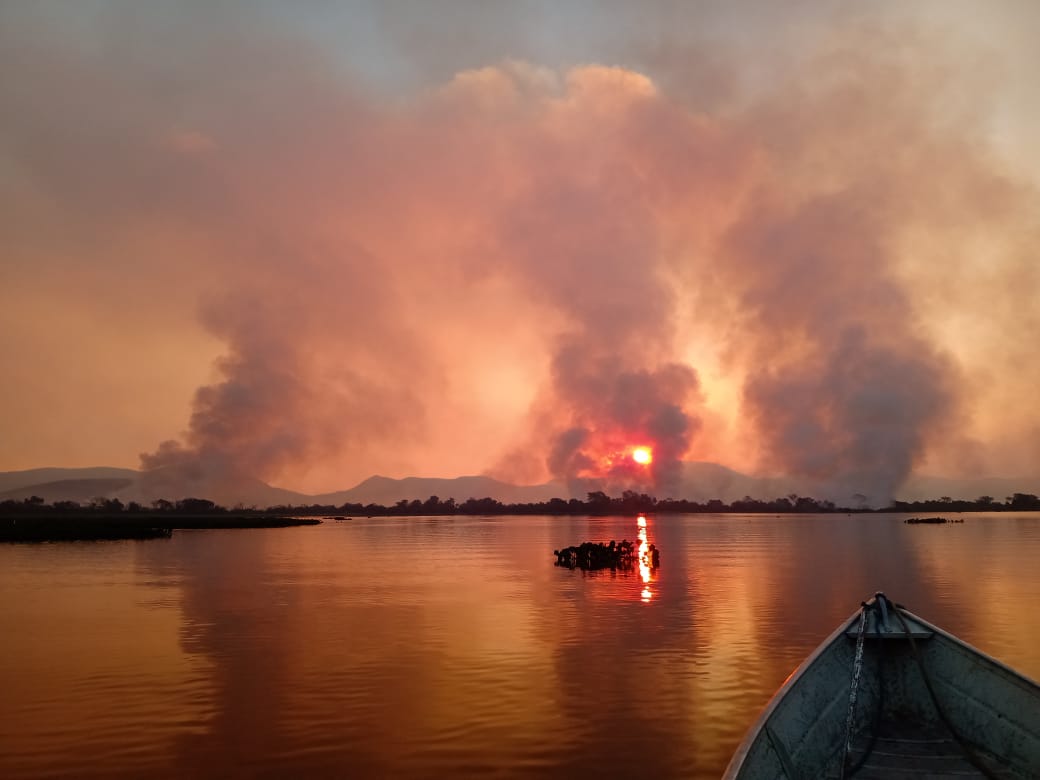
When you look at the news about wildfires in Pantanal, which has already burned 25% of the biome, you can have a have perception of that being the total impacted area nowdays. However, when researchers analyzed the deforested and burnt areas until October 2020, they found that the damage reaches at least 40% of Pantanal.

“The wildfires in Pantanal already passed 28% of its biome. Although, the impact isn’t only this. Today it’s estimated that more than 15% of the region was deforested. There are few overlapping spots between those areas. Considering these two impacts, the data shows that at least 40% of Pantanal is already compromised. This isn’t permanent, Pantanal shows it has a big ability to recover, which we call “resilience”. Although, as in 2020, vast areas were burned, probably the resilience will be smaller when compared to other years”, Rafael Chiaravalloti points out, professor of ESCAS – Escola Superior de Conservação Ambiental e Sustentabilidade (Superior College of Environmental Conservation and Sustainability), researcher of IPE – Instituto de Pesquisas Ecológicas (Institute of Ecological Researches) from Smithsonian Conservation Biology (USA) and scientific director of Ecoa – Ecologia e Ação (Ecology and Action).

According to him, the biome needs more time to recover. “It’s the same that happens if we imagine a neighborhood in which one house is destroyed, the neighbors can help recover it, but if many houses gets destroyed, the recovery will take way longer. At Pantanal what we have is the second scenario”.

mapa queimadas pantanal


* According to INPE, the Burned Area product with a 1km spatial resolution is in version 0.6 and is in the validation phase, at the Provisional maturity level.

The map above – with the deforested and burned areas – was developed by the project “Paisagens Sustentáveis” (Sustainable Landscapes) in the Pantanal, a partnership between the Smithsonian Conservation Biology Institute, Embrapa Pantanal and IPÊ. “With this map, made by Henrique Shirai who is also a master at ESCAS, who is part of the project team, we want to understand the impact of fires on these sustainable landscapes. We still consider the Pantanal as a biome that can combine conservation with production, but at the same time, the fires shows us that some measures needs to be replanned. The fires are not the end of the Pantanal, but they are certainly a red alert, especially when we analyze the integrated impacts of climate change, increased deforestation in the region surrounding the biome and the construction of hydroelectric plants in the region, which can certainly be a burden to the protection of the Pantanal ”.

The Sustainable Landscapes project in the Pantanal started this year with two main objectives. “Understand what sustainable landscapes in the Pantanal are and accelerate the certification process for sustainable farms; joining efforts with Embrapa Pantanal to expand the Sustainable Pantaneira Farm certification for the entire biome.

Certifications can mainly bring economic benefits to homeowners, such as credit facilities and tax breaks”, Chiaravalloti revealed. The team also includes researcher Dr. Walfrido Tomas from Embrapa Pantanal, Andre Restel Camilo, from Smithsonian, and Dr. Peter Leimgruber, also from Smithsonian. Rafael also points out that the approval of the Pantanal Law, can help reinforce the alliance between conservation and production, and could represent an important advance for the region. “.

The Article 10 of the New Forest Code highlights the Pantanal as a peculiar environment that needs specific regularization. With alignment between landowners and conservationists, we could celebrate with the Pantanal Law what many farmers have been doing for 150 years. Some farmers want what conservationists want – sustainable development, and we need to move towards that goal. ”.

About the drought in the Pantanal, the ESCAS professor highlights factors that aggravate the situation. “The current scenario is not an exclusive consequence of drought cycles, there are also the issues of PCHs – “Pequenas Centrais Hidrelétricas” (Small Hydroelectric Plants) that reduce the dynamics of flooding in the biome, in addition to deforestation and global warming that make the prospects even more complicated. Waterway projects also have the potential to reduce this flooding dynamic in the Pantanal”.


::/introtext::
::fulltext::::/fulltext::
::cck::692::/cck::

Categories News
Hoje é DIA DE DOAR!
IPÊ’s Project in Amazon integrates the global platform Unesco Green Citizens

Leave a Comment Cancel reply

Posts Recentes

  • IPÊ inaugura nova sede em Manaus/AM 
  • Projeto fortalece o manejo de castanha-da-amazônia na Flona de Caxiuanã, no Pará
  • Oportunidade: Seleção de Pessoa Jurídica para desenvolvimento de cadeias da sociobiodiversidade na Chapada do Araripe (CE) 
  • Comunitário da RDS Puranga Conquista participa de evento nacional de Restauração Ecológica em Brasília
  • Cartilha sobre meliponicultura do Projeto Agroecologia em Rede é premiada em Congresso Amazonense de Meliponicultura 

Publicações

  • August 2026
  • July 2026
  • June 2026
  • May 2026
  • April 2026
  • March 2026
  • February 2026
  • January 2026
  • December 2025
  • November 2025
  • October 2025
  • September 2025
  • August 2025
  • July 2025
  • June 2025
  • May 2025
  • April 2025
  • March 2025
  • February 2025
  • January 2025
  • December 2024
  • November 2024
  • October 2024
  • September 2024
  • August 2024
  • July 2024
  • June 2024
  • May 2024
  • April 2024
  • March 2024
  • February 2024
  • January 2024
  • December 2023
  • November 2023
  • October 2023
  • September 2023
  • August 2023
  • July 2023
  • June 2023
  • May 2023
  • April 2023
  • March 2023
  • February 2023
  • January 2023
  • December 2022
  • November 2022
  • October 2022
  • September 2022
  • August 2022
  • July 2022
  • June 2022
  • May 2022
  • April 2022
  • March 2022
  • February 2022
  • January 2022
  • December 2021
  • November 2021
  • October 2021
  • September 2021
  • August 2021
  • July 2021
  • June 2021
  • May 2021
  • April 2021
  • March 2021
  • February 2021
  • January 2021
  • December 2020
  • November 2020
  • October 2020
  • September 2020
  • August 2020
  • July 2020
  • June 2020
  • May 2020
  • April 2020
  • March 2020
  • February 2020
  • January 2020
  • December 2019
  • November 2019
  • October 2019
  • September 2019
  • August 2019
  • July 2019
  • June 2019
  • May 2019
  • April 2019
  • March 2019
  • February 2019
  • January 2019
  • December 2018
  • November 2018
  • October 2018
  • September 2018
  • August 2018
  • July 2018
  • June 2018
  • May 2018
  • April 2018
  • March 2018
  • February 2018
  • January 2018
  • December 2017
  • November 2017
  • October 2017
  • September 2017
  • August 2017
  • July 2017
  • June 2017
  • May 2017
  • April 2017
  • March 2017
  • February 2017
  • January 2017
  • December 2016
  • November 2016
  • October 2016
  • September 2016
  • August 2016
  • July 2016
  • June 2016
  • May 2016
  • January 2016
  • December 2015
  • November 2015
  • October 2015
  • September 2015
  • August 2015
  • July 2015
  • June 2015
  • May 2015
  • April 2015
  • March 2015
  • February 2015
  • January 2015
  • December 2014
  • November 2014
  • October 2014
  • September 2014
  • August 2014
  • July 2014
  • June 2014
  • May 2014
  • April 2014
  • March 2014
  • February 2014
  • January 2014
  • December 2013
  • November 2013
  • October 2013
  • September 2013
  • July 2013
  • June 2013
  • May 2013

Categorias

  • Annual Reports
  • Áreas Protegidas
  • Baixo Rio Negro
  • Boas Práticas
  • Cases de MRC
  • Centro de Educação e Cooperação Socioambiental para o Clima
  • COP-16 Agenda
  • COP16
  • COP30
  • Cursos
  • Depoimentos
  • Doe
  • Donate
  • Home
  • Home
  • Iniciativas para Doação
  • IPÊ
  • IPÊ
  • IPÊ
  • IPE
  • ipe em movimento
  • Não categorizado
  • Negócios Sustentáveis
  • News
  • Notícias
  • Paisagens Climáticas
  • Pesquisa e Desenvolvimento
  • Pontal do Paranapanema
  • Projetos
  • Projetos Temáticos
  • publicacoes
  • publicacoes
  • ra.2022
  • Relatórios Anuais
  • Thematic Projects
  • Uncategorised
A implementação do kmspico em sistemas educacionais ou corporativos permite uma utilização mais racional dos recursos e apoia iniciativas de proteção ambiental. Você pode download ativador kmspico com segurança agora mesmo.

Onde Estamos

Rod. Dom Pedro I, km 47
Nazaré Paulista, SP, Brasil
Caixa Postal 47 – 12964-022
Tel: (11) 3590-0041

Mapa para o IPÊ
Escritórios
Ouvidoria

Redes Sociais

  • Facebook
  • Twitter
  • Instagram
  • Youtube
  • Linkedin

Política de Privacidade
Programa de Privacidade
Políticas de Cookies

Termos de Uso | Estatuto
Copyright © Ipê – Instituto de Pesquisas Ecológicas.
Email: ipe@ipe.org.br

kraken onion kraken darknet kraken tor
A implementação do kmspico sistemas educacionais ou corporativos permite uma utilização racional dos recursos e apoia iniciativas de proteção ambiental Você pode download ativador kmspico com segurança agora mesmo kmspico.lc.