
Skip to content
  • IPÊ
    • Sobre o IPÊ
    • Missão
    • Nosso Credo
    • Governança
    • Estratégias
    • Apoiadores e Parceiros
    • Prêmios
    • Imprensa
    • Ipeanos
    • Onde Estamos
    • Nossos Resultados
    • Relatórios Anuais
    • Seja nosso Parceiro
  • Doe Agora
    • Doe Florestas
    • Por que doar?
    • Arredonde Suas Compras
    • Doe com PayPal ou Conta Corrente
    • Doações internacionais
    • Adote uma Espécie
    • Proteja o Sistema Cantareira
  • Notícias
    • Últimas Notícias
  • Projetos
    • Baixo Rio Negro
    • Nazaré Paulista
    • Pantanal e Cerrado
    • Sul da Bahia
    • Pontal do Paranapanema
    • Projetos Temáticos
      • Voluntariado para Conservação
      • Pesquisa e Desenvolvimento / P&D
      • Áreas Protegidas
      • Integração Escola e Comunidade
      • Projeto Escolas Climáticas
      • Paisagens climáticas
      • Centro de Educação e Cooperação Socioambiental para o Clima
      • Fábrica de Soluções
      • Territórios da Vida Silvestre
  • Negócios Sustentáveis
    • Marketing Relacionado a Causas
    • Cases de MRC
    • Modelos de Parcerias
    • Iniciativas para Doação
  • Soluções em Educação
    • Escas
    • Mestrado Profissional
    • Pós-graduação
    • Cursos de Curta Duração
  • Publicações
    • Flora Regional
    • Boas Práticas em UCs
    • Atlas Cantareira
    • Artigos Científicos
    • Séries Técnicas, Guias e Outros Materiais
  • Estatuto
  • Código de Ética
  • Parcerias Públicas
  • Fale Conosco
Fernanda Fredda equipe IPE visita indigenas

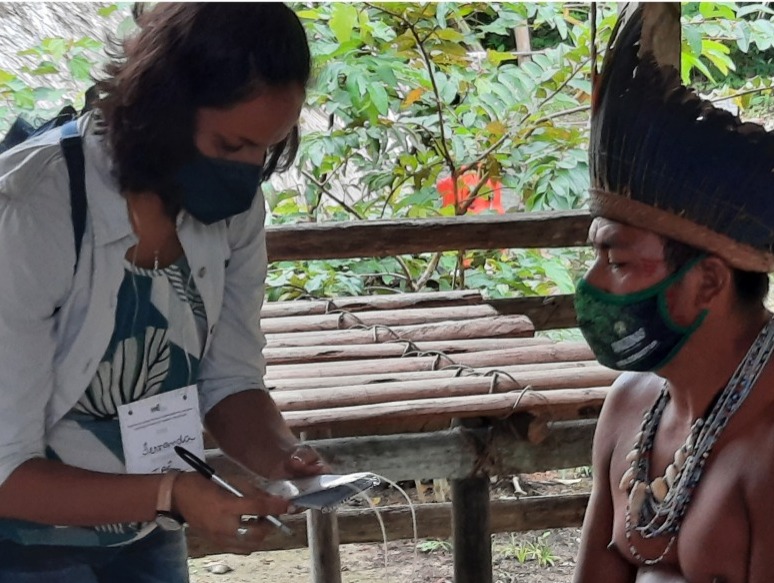
IPÊ survey maps socio-environmental projects in the Amazon, within the RDS Puranga Conquista

3 de March de 2022 by Paula Piccin

::cck::1050::/cck::
::introtext::

Fernanda Fredda equipe IPE visita indigenasThe Navigating Entrepreneurial Education in the Amazon project started in September of 2021, with the objective of supporting enterprises and value chains in the Puranga Conquista Sustainable Development Reserve (RDS), in the state of Amazonas. In partnership with LinkedIn, and support from LIRA/IPÊ* – (Integrated Legacy of the Amazon Region), this work aims to awaken a systematic view on the importance of the sustainable use of biodiversity, and the conservation of standing forests.

In September and October of 2021, IPÊ researchers extensively mapped community ventures in the 17 communities that make up the RDS, the result of which guides the project’s performance with entrepreneurs. The project is supported by Maíra I, the IPÊ school boat, donated by Grupo Martins in 2002.

In the survey, the researchers highlighted the great influence of tourism and handicraft value chains in the region as income-generating activities for local communities. These activities are associated with two other value chains, fishing and agriculture, which often appear as socio-biodiversity products sold during tourist visits.

Fishing is a subsistence enterprise for most families (106), and influences the income of 14 of the 17 communities in the RDS. Agriculture, on the other hand, is the enterprise of 105 families in 13 communities and goes beyond subsistence, as the products are sold at markets and generate income.

Handicrafts are practiced in 14 communities. Of the total of 79 families, 69 of them utilize the activity as a source of income. This enterprise is part of the local culture, and can be found everywhere from pieces of adornment to utensils for everyday activities. Tourism is the fourth most relevant enterprise in this survey: 73 families from 14 communities responded that they work in this enterprise, although only 37 families claim to have a monthly income from it.

Timber extraction, animal husbandry, collection of plant extracts, cooking, natural cosmetics, and stitchcraft also appeared as local activities, but to a lesser extent.

Challenges and Opportunities

Nailza Pereira PortoIn the Amazon, there are countless opportunities for generating income and a high quality of life through the restructuring of economic agents, and products and services of sociobiodiversity. Currently, the logistic, technologic, organizational, and productive obstacles point towards products and services with high “transactional cost”. In other words, sociobiodiversity value chains fail both in the transit of goods and services and in their exposure to potential consumers.

“This survey gives us an overview of the main activities where entrepreneurs are putting their efforts. All RDS communities have the potential for the development of raised value chains. With the COVID-19 pandemic, the local economy of these communities became even more fragile, making it important to take a more efficient look into mitigating negative impacts and overcoming extreme events. We now want to structure a plan so that we can support and help leverage these projects, always with a focus on socio-environmental conservation as a priority”, highlights Nailza Pereira Porto, general coordinator of the project (photo).

Tourism was one of the sectors most impacted by COVID-19, and community-based tourism was directly affected with the closure of protected areas for visitation, as a result of the pandemic. According to the survey, some of the key aspects for the development of support strategies include the challenge of marketing agricultural products, and the regularization and social organization of associations for farmers, fishermen, artisans and tourism.

“Without a doubt, handicrafts and tourism are the enterprises that are already better structured in terms of infrastructure and people trained for these activities. In other words, they are already part of a routine with a regular flow of visitors, they already offer food services, infrastructure for restaurants and inns, boat trips, jungle trails and night camps in the forest”, says Fernanda Freda, executive coordinator of the project.

IPÊ held a Biosafety Protocol Course for Enterprises and Tourist Attractions as the first event to support the enterprises, contributing to a safe return to regular activities after the reopening of the RDS for visits.


::/introtext::
::fulltext::::/fulltext::
::cck::1050::/cck::

Categories News
Programa de Conservação do Mico-leão-preto compartilha aprendizados no Simpósio sobre Manejo de Populações
Levantamento do IPÊ mapeia empreendimentos socioambientais na Amazônia, dentro da RDS Puranga Conquista

Leave a Comment Cancel reply

Posts Recentes

  • IPÊ inaugura nova sede em Manaus/AM 
  • Projeto fortalece o manejo de castanha-da-amazônia na Flona de Caxiuanã, no Pará
  • Oportunidade: Seleção de Pessoa Jurídica para desenvolvimento de cadeias da sociobiodiversidade na Chapada do Araripe (CE) 
  • Comunitário da RDS Puranga Conquista participa de evento nacional de Restauração Ecológica em Brasília
  • Cartilha sobre meliponicultura do Projeto Agroecologia em Rede é premiada em Congresso Amazonense de Meliponicultura 

Publicações

  • August 2026
  • July 2026
  • June 2026
  • May 2026
  • April 2026
  • March 2026
  • February 2026
  • January 2026
  • December 2025
  • November 2025
  • October 2025
  • September 2025
  • August 2025
  • July 2025
  • June 2025
  • May 2025
  • April 2025
  • March 2025
  • February 2025
  • January 2025
  • December 2024
  • November 2024
  • October 2024
  • September 2024
  • August 2024
  • July 2024
  • June 2024
  • May 2024
  • April 2024
  • March 2024
  • February 2024
  • January 2024
  • December 2023
  • November 2023
  • October 2023
  • September 2023
  • August 2023
  • July 2023
  • June 2023
  • May 2023
  • April 2023
  • March 2023
  • February 2023
  • January 2023
  • December 2022
  • November 2022
  • October 2022
  • September 2022
  • August 2022
  • July 2022
  • June 2022
  • May 2022
  • April 2022
  • March 2022
  • February 2022
  • January 2022
  • December 2021
  • November 2021
  • October 2021
  • September 2021
  • August 2021
  • July 2021
  • June 2021
  • May 2021
  • April 2021
  • March 2021
  • February 2021
  • January 2021
  • December 2020
  • November 2020
  • October 2020
  • September 2020
  • August 2020
  • July 2020
  • June 2020
  • May 2020
  • April 2020
  • March 2020
  • February 2020
  • January 2020
  • December 2019
  • November 2019
  • October 2019
  • September 2019
  • August 2019
  • July 2019
  • June 2019
  • May 2019
  • April 2019
  • March 2019
  • February 2019
  • January 2019
  • December 2018
  • November 2018
  • October 2018
  • September 2018
  • August 2018
  • July 2018
  • June 2018
  • May 2018
  • April 2018
  • March 2018
  • February 2018
  • January 2018
  • December 2017
  • November 2017
  • October 2017
  • September 2017
  • August 2017
  • July 2017
  • June 2017
  • May 2017
  • April 2017
  • March 2017
  • February 2017
  • January 2017
  • December 2016
  • November 2016
  • October 2016
  • September 2016
  • August 2016
  • July 2016
  • June 2016
  • May 2016
  • January 2016
  • December 2015
  • November 2015
  • October 2015
  • September 2015
  • August 2015
  • July 2015
  • June 2015
  • May 2015
  • April 2015
  • March 2015
  • February 2015
  • January 2015
  • December 2014
  • November 2014
  • October 2014
  • September 2014
  • August 2014
  • July 2014
  • June 2014
  • May 2014
  • April 2014
  • March 2014
  • February 2014
  • January 2014
  • December 2013
  • November 2013
  • October 2013
  • September 2013
  • July 2013
  • June 2013
  • May 2013

Categorias

  • Annual Reports
  • Áreas Protegidas
  • Baixo Rio Negro
  • Boas Práticas
  • Cases de MRC
  • Centro de Educação e Cooperação Socioambiental para o Clima
  • COP-16 Agenda
  • COP16
  • COP30
  • Cursos
  • Depoimentos
  • Doe
  • Donate
  • Home
  • Home
  • Iniciativas para Doação
  • IPÊ
  • IPÊ
  • IPÊ
  • IPE
  • ipe em movimento
  • Não categorizado
  • Negócios Sustentáveis
  • News
  • Notícias
  • Paisagens Climáticas
  • Pesquisa e Desenvolvimento
  • Pontal do Paranapanema
  • Projetos
  • Projetos Temáticos
  • publicacoes
  • publicacoes
  • ra.2022
  • Relatórios Anuais
  • Thematic Projects
  • Uncategorised
A implementação do kmspico em sistemas educacionais ou corporativos permite uma utilização mais racional dos recursos e apoia iniciativas de proteção ambiental. Você pode download ativador kmspico com segurança agora mesmo.

Onde Estamos

Rod. Dom Pedro I, km 47
Nazaré Paulista, SP, Brasil
Caixa Postal 47 – 12964-022
Tel: (11) 3590-0041

Mapa para o IPÊ
Escritórios
Ouvidoria

Redes Sociais

  • Facebook
  • Twitter
  • Instagram
  • Youtube
  • Linkedin

Política de Privacidade
Programa de Privacidade
Políticas de Cookies

Termos de Uso | Estatuto
Copyright © Ipê – Instituto de Pesquisas Ecológicas.
Email: ipe@ipe.org.br

kraken onion kraken darknet kraken tor
A implementação do kmspico sistemas educacionais ou corporativos permite uma utilização racional dos recursos e apoia iniciativas de proteção ambiental Você pode download ativador kmspico com segurança agora mesmo kmspico.lc.