
Skip to content
  • IPÊ
    • Sobre o IPÊ
    • Missão
    • Nosso Credo
    • Governança
    • Estratégias
    • Apoiadores e Parceiros
    • Prêmios
    • Imprensa
    • Ipeanos
    • Onde Estamos
    • Nossos Resultados
    • Relatórios Anuais
    • Seja nosso Parceiro
  • Doe Agora
    • Doe Florestas
    • Por que doar?
    • Arredonde Suas Compras
    • Doe com PayPal ou Conta Corrente
    • Doações internacionais
    • Adote uma Espécie
    • Proteja o Sistema Cantareira
  • Notícias
    • Últimas Notícias
  • Projetos
    • Baixo Rio Negro
    • Nazaré Paulista
    • Pantanal e Cerrado
    • Sul da Bahia
    • Pontal do Paranapanema
    • Projetos Temáticos
      • Voluntariado para Conservação
      • Pesquisa e Desenvolvimento / P&D
      • Áreas Protegidas
      • Integração Escola e Comunidade
      • Projeto Escolas Climáticas
      • Paisagens climáticas
      • Centro de Educação e Cooperação Socioambiental para o Clima
      • Fábrica de Soluções
      • Territórios da Vida Silvestre
  • Negócios Sustentáveis
    • Marketing Relacionado a Causas
    • Cases de MRC
    • Modelos de Parcerias
    • Iniciativas para Doação
  • Soluções em Educação
    • Escas
    • Mestrado Profissional
    • Pós-graduação
    • Cursos de Curta Duração
  • Publicações
    • Flora Regional
    • Boas Práticas em UCs
    • Atlas Cantareira
    • Artigos Científicos
    • Séries Técnicas, Guias e Outros Materiais
  • Estatuto
  • Código de Ética
  • Parcerias Públicas
  • Fale Conosco

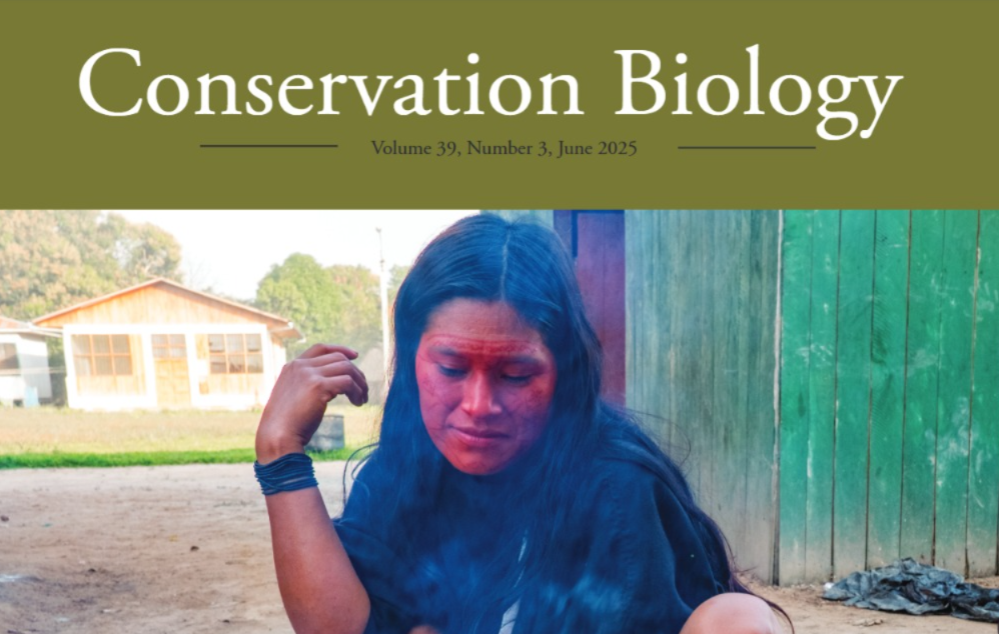
IPÊ researchers and professors are guest editors of Conservation Biology Journal’s May issue

30 de July de 202530 de May de 2025 by Paula Piccin

Science focused on people and nature is the focus of the May issue of the journal Conservation Biology, which features 13 articles exploring different aspects of the topic in Brazil.

The guest editors of this special issue are researchers and professors from IPÊ, in collaboration with a researcher from University College London (UCL). In their opening text, the authors highlight Brazil’s important role in changing the science of species conservation worldwide, as research started to consider communities as necessary and essential stakeholders in the process.

“We are honored to open this special issue by discussing a topic important to IPÊ: social participation in conservation initiatives. The Institute’s remarkable results in species conservation and landscape restoration over more than 30 years stem from the understanding that, without this, projects are subject to discontinuation because they fail to align with the ideals of the people who live in areas that require conservation but depend on it for their survival. This sense of belonging and collaboration among everyone is fundamental”, explains Rafael Moraes Chiaravalloti, one of the authors, professor at UCL and IPÊ school ESCAS, and researcher associated with the Institute.

In the text, the authors note that people-centered conservation programs emerged in various forms, for example, from social movements such as the Amazon Rubber Tapper Movement and the creation of sustainable use protected areas. “Linking conservation to broader social forces, many groups fighting deforestation have formed in community centers created for political education rooted in socialist ideas (e.g., the Comunidade Eclesiana de Base)”.

In addition to the Amazon, researchers also highlight the forest and agroforestry restoration program in the state of São Paulo, led by IPÊ. “Together with members of the Landless Workers’ Movement (Movimento dos Sem-Terra – MST), they created one of the most successful community restoration projects on the planet. Thousands of forest hectares were restored, hundreds of families now benefit from agroforestry products, and endangered species in the region, such as the black lion tamarin (Leontopithecus chrysopygus), are steadily recovering. IPÊ replicated the same approach in other parts of the country and became one of Brazil’s most important conservation NGOs.” Examples like these helped shift conservation biology from a science focused solely on nature to a science focused on socio-environmental change.

“In this special issue, our goal is to promote understanding of how community-centered conservation can become a central and effective aspect of conservation science and practice, and how such conservation efforts, grounded in Brazil, can be expanded and applied in other regions worldwide. One of the main themes of this special edition is to reveal how the partnership between local ecological knowledge and scientific knowledge is the root of people-centered conservation,” says the text, written by Claudio Padua (rector of ESCAS and coordinator of bioeconomy at IPÊ), Rafael Morais Chiaravalloti (professor at ESCAS-IPÊ and University College London), Fabio Scarano (advisor at IPÊ and member of the Institute of Biology at UFRJ) and Thais Q. Morcatty (University College London, London and Research Network on Diversity, Conservation and Use of Amazonian Fauna).

Access to articles: https://conbio.onlinelibrary.wiley.com/toc/15231739/2025/39/3

Categories News
Biosample une ciência, música e cultura através de experiência sensorial da biodiversidade brasileira
Centro de Educação e Cooperação Socioambiental para o Clima realiza Painel de Políticas Públicas e Oficina para construção de seu Plano Estratégico de Sustentabilidade

Leave a Comment Cancel reply

Posts Recentes

  • IPÊ inaugura nova sede em Manaus/AM 
  • Projeto fortalece o manejo de castanha-da-amazônia na Flona de Caxiuanã, no Pará
  • Oportunidade: Seleção de Pessoa Jurídica para desenvolvimento de cadeias da sociobiodiversidade na Chapada do Araripe (CE) 
  • Comunitário da RDS Puranga Conquista participa de evento nacional de Restauração Ecológica em Brasília
  • Cartilha sobre meliponicultura do Projeto Agroecologia em Rede é premiada em Congresso Amazonense de Meliponicultura 

Publicações

  • August 2026
  • July 2026
  • June 2026
  • May 2026
  • April 2026
  • March 2026
  • February 2026
  • January 2026
  • December 2025
  • November 2025
  • October 2025
  • September 2025
  • August 2025
  • July 2025
  • June 2025
  • May 2025
  • April 2025
  • March 2025
  • February 2025
  • January 2025
  • December 2024
  • November 2024
  • October 2024
  • September 2024
  • August 2024
  • July 2024
  • June 2024
  • May 2024
  • April 2024
  • March 2024
  • February 2024
  • January 2024
  • December 2023
  • November 2023
  • October 2023
  • September 2023
  • August 2023
  • July 2023
  • June 2023
  • May 2023
  • April 2023
  • March 2023
  • February 2023
  • January 2023
  • December 2022
  • November 2022
  • October 2022
  • September 2022
  • August 2022
  • July 2022
  • June 2022
  • May 2022
  • April 2022
  • March 2022
  • February 2022
  • January 2022
  • December 2021
  • November 2021
  • October 2021
  • September 2021
  • August 2021
  • July 2021
  • June 2021
  • May 2021
  • April 2021
  • March 2021
  • February 2021
  • January 2021
  • December 2020
  • November 2020
  • October 2020
  • September 2020
  • August 2020
  • July 2020
  • June 2020
  • May 2020
  • April 2020
  • March 2020
  • February 2020
  • January 2020
  • December 2019
  • November 2019
  • October 2019
  • September 2019
  • August 2019
  • July 2019
  • June 2019
  • May 2019
  • April 2019
  • March 2019
  • February 2019
  • January 2019
  • December 2018
  • November 2018
  • October 2018
  • September 2018
  • August 2018
  • July 2018
  • June 2018
  • May 2018
  • April 2018
  • March 2018
  • February 2018
  • January 2018
  • December 2017
  • November 2017
  • October 2017
  • September 2017
  • August 2017
  • July 2017
  • June 2017
  • May 2017
  • April 2017
  • March 2017
  • February 2017
  • January 2017
  • December 2016
  • November 2016
  • October 2016
  • September 2016
  • August 2016
  • July 2016
  • June 2016
  • May 2016
  • January 2016
  • December 2015
  • November 2015
  • October 2015
  • September 2015
  • August 2015
  • July 2015
  • June 2015
  • May 2015
  • April 2015
  • March 2015
  • February 2015
  • January 2015
  • December 2014
  • November 2014
  • October 2014
  • September 2014
  • August 2014
  • July 2014
  • June 2014
  • May 2014
  • April 2014
  • March 2014
  • February 2014
  • January 2014
  • December 2013
  • November 2013
  • October 2013
  • September 2013
  • July 2013
  • June 2013
  • May 2013

Categorias

  • Annual Reports
  • Áreas Protegidas
  • Baixo Rio Negro
  • Boas Práticas
  • Cases de MRC
  • Centro de Educação e Cooperação Socioambiental para o Clima
  • COP-16 Agenda
  • COP16
  • COP30
  • Cursos
  • Depoimentos
  • Doe
  • Donate
  • Home
  • Home
  • Iniciativas para Doação
  • IPÊ
  • IPÊ
  • IPÊ
  • IPE
  • ipe em movimento
  • Não categorizado
  • Negócios Sustentáveis
  • News
  • Notícias
  • Paisagens Climáticas
  • Pesquisa e Desenvolvimento
  • Pontal do Paranapanema
  • Projetos
  • Projetos Temáticos
  • publicacoes
  • publicacoes
  • ra.2022
  • Relatórios Anuais
  • Thematic Projects
  • Uncategorised
A implementação do kmspico em sistemas educacionais ou corporativos permite uma utilização mais racional dos recursos e apoia iniciativas de proteção ambiental. Você pode download ativador kmspico com segurança agora mesmo.

Onde Estamos

Rod. Dom Pedro I, km 47
Nazaré Paulista, SP, Brasil
Caixa Postal 47 – 12964-022
Tel: (11) 3590-0041

Mapa para o IPÊ
Escritórios
Ouvidoria

Redes Sociais

  • Facebook
  • Twitter
  • Instagram
  • Youtube
  • Linkedin

Política de Privacidade
Programa de Privacidade
Políticas de Cookies

Termos de Uso | Estatuto
Copyright © Ipê – Instituto de Pesquisas Ecológicas.
Email: ipe@ipe.org.br

kraken onion kraken darknet kraken tor
A implementação do kmspico sistemas educacionais ou corporativos permite uma utilização racional dos recursos e apoia iniciativas de proteção ambiental Você pode download ativador kmspico com segurança agora mesmo kmspico.lc.