
Skip to content
  • IPÊ
    • Sobre o IPÊ
    • Missão
    • Nosso Credo
    • Governança
    • Estratégias
    • Apoiadores e Parceiros
    • Prêmios
    • Imprensa
    • Ipeanos
    • Onde Estamos
    • Nossos Resultados
    • Relatórios Anuais
    • Seja nosso Parceiro
  • Doe Agora
    • Doe Florestas
    • Por que doar?
    • Arredonde Suas Compras
    • Doe com PayPal ou Conta Corrente
    • Doações internacionais
    • Adote uma Espécie
    • Proteja o Sistema Cantareira
  • Notícias
    • Últimas Notícias
  • Projetos
    • Baixo Rio Negro
    • Nazaré Paulista
    • Pantanal e Cerrado
    • Sul da Bahia
    • Pontal do Paranapanema
    • Projetos Temáticos
      • Voluntariado para Conservação
      • Pesquisa e Desenvolvimento / P&D
      • Áreas Protegidas
      • Integração Escola e Comunidade
      • Projeto Escolas Climáticas
      • Paisagens climáticas
      • Centro de Educação e Cooperação Socioambiental para o Clima
      • Fábrica de Soluções
      • Territórios da Vida Silvestre
  • Negócios Sustentáveis
    • Marketing Relacionado a Causas
    • Cases de MRC
    • Modelos de Parcerias
    • Iniciativas para Doação
  • Soluções em Educação
    • Escas
    • Mestrado Profissional
    • Pós-graduação
    • Cursos de Curta Duração
  • Publicações
    • Flora Regional
    • Boas Práticas em UCs
    • Atlas Cantareira
    • Artigos Científicos
    • Séries Técnicas, Guias e Outros Materiais
  • Estatuto
  • Código de Ética
  • Parcerias Públicas
  • Fale Conosco
corredores pontal 1

IPE completes the largest reforestation corridor in Brazil

17 de November de 2016 by IPE

1.4 million trees now connect the principal protected areas of Atlantic Forest
in the Pontal doParanapanema. They will be essential for the
conservation of endangered species

corredores pontal 1

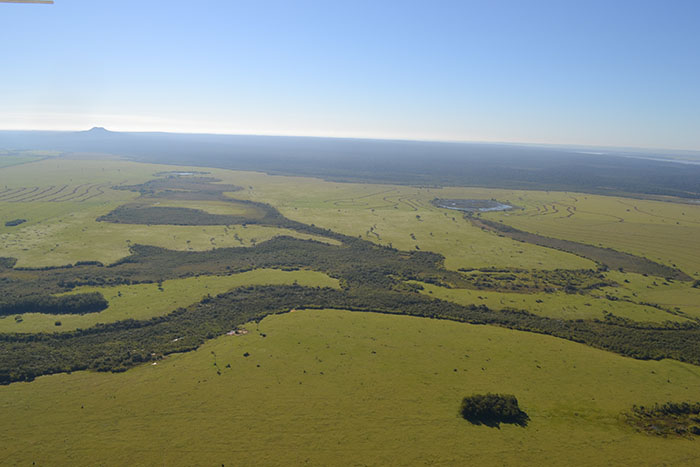
After 10 years of effort, the Atlantic Forest Corridors project commemorates the creation of a 700-hectare link between the two main remnants of Atlantic Forest in the Pontal do Paranapanema (western São Paulo State): the Black-lion Tamarin Ecological Station (BLTES) and the Morro do Diabo State Park (MDSP).

This first phase of the project – begun in 2002 by the IPE-Institute for Ecological Research and coordinated by Dr. Laury Cullen Jr. – preserves Atlantic Forest biodiversity through the restoration of Permanent Preservation Areas (PPA) and Legal Reserves (LR) on rural properties. IPE researchers seek to reconstruct the original landscape in a region well known for agrarian conflict and ecological degradation, and which today is represented by a few forest patches that harbor endangered species, including black lion tamarins, jaguars and ocelots.

Dr. Cullen affirms that, “One of the problems for the survival of these species is habitat loss and the corridor is an important means that facilitates animals dispersion between protected areas, both for food and breeding”. In total, 1.4 million trees were planted to reconnect the southern portion of MDSP (37,000 hectares) to one of the four fragments comprising the BLTES (7,000 hectares). The last 93 hectares were planted during

December 2011 and are now monitored by IPE until they become an established forest.
Notably, the corridor runs through Rosanela farm, which is located between the two protected areas. Here, the reforested area was part of the property’s environmental compensation requirement under the current forest code.

The areas chosen for reforestation were defined by IPE’s strategic Map of Dreams, the result of a research study that identified priority biodiversity areas for forest restoration. Future challenges include the creation of another corridor on the north side of MDSP that will total 5,000 hectares of forest within the PPAs and LRs of 11 large properties.

Dr. Cullen adds: “We need the landowners’ support for this to happen. The initiative benefits everyone involved: large landowners meet their legal environmental responsibilities, which is attractive to them financially. Local communities also benefit financially from the sale of nursery seedlings to the reforestation program. Importantly, these efforts also restore the environmental services that all humans need”.

Before

The decade-long restoration was completed with support from Petrobras and BNDES, as well as partnerships with national and international companies such as Natura, CESP and Duke Energy. The project in Brazil also had the support of international organizations: Whitley Fund for Nature, Liz Clairborne Art Ortenberg Foundation, Conservation Food and Health Foundation, Durrell Wildlife Conservation Trust and BBC Wildlife Fund.

before

Before

after

After restoration

The restoration effort had important input from local communities: medium and small landowners were trained in sustainable agriculture, environmental education and establishing community plant nurseries (many of these today supply seedlings to reforestation).

About Laury Cullen Jr.
Research at the Institute for Ecological Research (IPÊ-Instituto de Pesquisas Ecológicas), in Brazil. Post doc fellow in Columbia University, USA; Ph.D. from the University of Kent in England, Laury holds a Masters in Conservation Biology from the University of Florida (USA) and a degree in Forestry from the University of São Paulo (BRA). He is currently a professor at School of Conservation and Sustainability, Conservation and Biology Instructor in the Smithsonian Institution. Besides that, is advisor linked to the University of São Paulo (USP) and associate researcher at Wildlife Trust (USA), and fellow of the Ashoka Foundation for social entrepreneurs. Has experience in ecology, with emphasis on Restoration of Fragmented Landscapes, acting on the following themes: conservation biology, endangered species, communities and development, agroforestry, restoration of landscapes and land reform. Laury has published two books and over 45 papers in national and international. Among the awards received are the Whitley Gold Award received from the hands of Princess Anne in England in 2002 and most recently the 2005 Rolex Award in Conservation and Fiona Alexander Prize in 2007, as the best student of his year at the University of Kent in England.

Categories News
Dominic Wormell, Chefe do Departamento de Mamíferos da Durrell Wildlife Conservation Trust
Projeto Desenvolvimento de Tecnologias para Valoração de Serviços Ecossistêmicos e do Capital Natural em Programas de Meio Ambiente

Leave a Comment Cancel reply

Posts Recentes

  • IPÊ inaugura nova sede em Manaus/AM 
  • Projeto fortalece o manejo de castanha-da-amazônia na Flona de Caxiuanã, no Pará
  • Oportunidade: Seleção de Pessoa Jurídica para desenvolvimento de cadeias da sociobiodiversidade na Chapada do Araripe (CE) 
  • Comunitário da RDS Puranga Conquista participa de evento nacional de Restauração Ecológica em Brasília
  • Cartilha sobre meliponicultura do Projeto Agroecologia em Rede é premiada em Congresso Amazonense de Meliponicultura 

Publicações

  • August 2026
  • July 2026
  • June 2026
  • May 2026
  • April 2026
  • March 2026
  • February 2026
  • January 2026
  • December 2025
  • November 2025
  • October 2025
  • September 2025
  • August 2025
  • July 2025
  • June 2025
  • May 2025
  • April 2025
  • March 2025
  • February 2025
  • January 2025
  • December 2024
  • November 2024
  • October 2024
  • September 2024
  • August 2024
  • July 2024
  • June 2024
  • May 2024
  • April 2024
  • March 2024
  • February 2024
  • January 2024
  • December 2023
  • November 2023
  • October 2023
  • September 2023
  • August 2023
  • July 2023
  • June 2023
  • May 2023
  • April 2023
  • March 2023
  • February 2023
  • January 2023
  • December 2022
  • November 2022
  • October 2022
  • September 2022
  • August 2022
  • July 2022
  • June 2022
  • May 2022
  • April 2022
  • March 2022
  • February 2022
  • January 2022
  • December 2021
  • November 2021
  • October 2021
  • September 2021
  • August 2021
  • July 2021
  • June 2021
  • May 2021
  • April 2021
  • March 2021
  • February 2021
  • January 2021
  • December 2020
  • November 2020
  • October 2020
  • September 2020
  • August 2020
  • July 2020
  • June 2020
  • May 2020
  • April 2020
  • March 2020
  • February 2020
  • January 2020
  • December 2019
  • November 2019
  • October 2019
  • September 2019
  • August 2019
  • July 2019
  • June 2019
  • May 2019
  • April 2019
  • March 2019
  • February 2019
  • January 2019
  • December 2018
  • November 2018
  • October 2018
  • September 2018
  • August 2018
  • July 2018
  • June 2018
  • May 2018
  • April 2018
  • March 2018
  • February 2018
  • January 2018
  • December 2017
  • November 2017
  • October 2017
  • September 2017
  • August 2017
  • July 2017
  • June 2017
  • May 2017
  • April 2017
  • March 2017
  • February 2017
  • January 2017
  • December 2016
  • November 2016
  • October 2016
  • September 2016
  • August 2016
  • July 2016
  • June 2016
  • May 2016
  • January 2016
  • December 2015
  • November 2015
  • October 2015
  • September 2015
  • August 2015
  • July 2015
  • June 2015
  • May 2015
  • April 2015
  • March 2015
  • February 2015
  • January 2015
  • December 2014
  • November 2014
  • October 2014
  • September 2014
  • August 2014
  • July 2014
  • June 2014
  • May 2014
  • April 2014
  • March 2014
  • February 2014
  • January 2014
  • December 2013
  • November 2013
  • October 2013
  • September 2013
  • July 2013
  • June 2013
  • May 2013

Categorias

  • Annual Reports
  • Áreas Protegidas
  • Baixo Rio Negro
  • Boas Práticas
  • Cases de MRC
  • Centro de Educação e Cooperação Socioambiental para o Clima
  • COP-16 Agenda
  • COP16
  • COP30
  • Cursos
  • Depoimentos
  • Doe
  • Donate
  • Home
  • Home
  • Iniciativas para Doação
  • IPÊ
  • IPÊ
  • IPÊ
  • IPE
  • ipe em movimento
  • Não categorizado
  • Negócios Sustentáveis
  • News
  • Notícias
  • Paisagens Climáticas
  • Pesquisa e Desenvolvimento
  • Pontal do Paranapanema
  • Projetos
  • Projetos Temáticos
  • publicacoes
  • publicacoes
  • ra.2022
  • Relatórios Anuais
  • Thematic Projects
  • Uncategorised
A implementação do kmspico em sistemas educacionais ou corporativos permite uma utilização mais racional dos recursos e apoia iniciativas de proteção ambiental. Você pode download ativador kmspico com segurança agora mesmo.

Onde Estamos

Rod. Dom Pedro I, km 47
Nazaré Paulista, SP, Brasil
Caixa Postal 47 – 12964-022
Tel: (11) 3590-0041

Mapa para o IPÊ
Escritórios
Ouvidoria

Redes Sociais

  • Facebook
  • Twitter
  • Instagram
  • Youtube
  • Linkedin

Política de Privacidade
Programa de Privacidade
Políticas de Cookies

Termos de Uso | Estatuto
Copyright © Ipê – Instituto de Pesquisas Ecológicas.
Email: ipe@ipe.org.br

kraken onion kraken darknet kraken tor
A implementação do kmspico sistemas educacionais ou corporativos permite uma utilização racional dos recursos e apoia iniciativas de proteção ambiental Você pode download ativador kmspico com segurança agora mesmo kmspico.lc.