
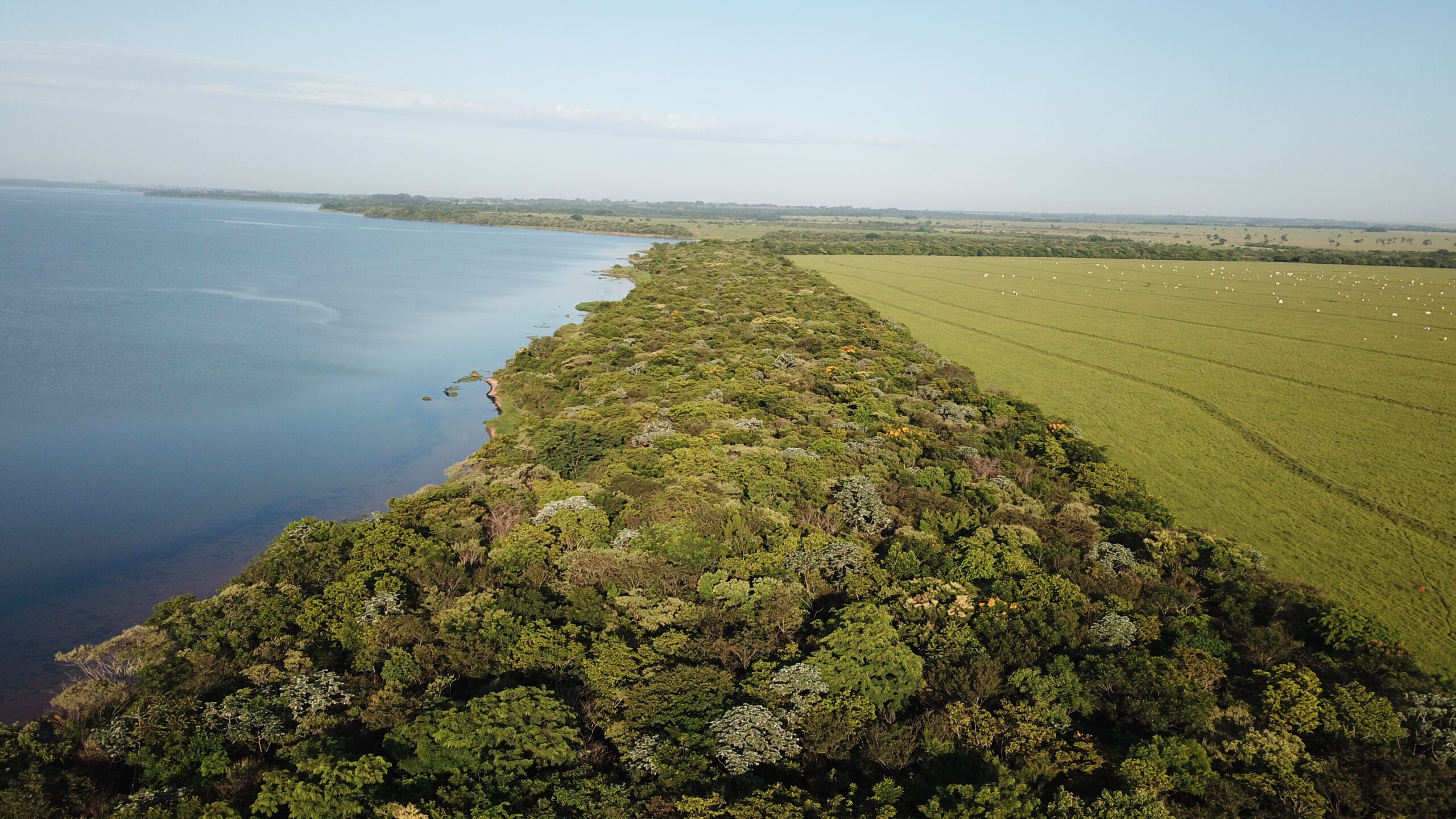
The effects of climate change on nature increasingly affect our routine and the lives of thousands of people around the world. According to the European Copernicus Climate Change Monitoring Service, 2023 was the hottest year on record, with temperatures 1.48º Celsius above the pre-industrial period. The unprecedented temperature rise has been marked by a series of extreme weather events, from devastating droughts and wildfires to marine heatwaves, signaling an urgent call for action.
What has been done to reduce the effects of climate change, which could become even more intense if the planet’s temperature continues to rise? In addition to advances at the international level, through the commitment of many countries, much can be done at regional and local scales.
IPÊ, like other civil society organizations, also develops actions that support the reduction of the effects of climate change. The private sector also has the potential to implement more sustainable practices in production chains and support organizations that work to conserve ecosystems.
Find out how over 10 IPÊ projects act to combat climate change:
AMAZON
Integrated Legacy of the Amazon Region: Strengthening production chains for the socio-biodiversity of the Amazon – valuing the way of life of traditional and indigenous communities – can contribute to increasing the income of these populations and thus, joining the conservation of the most biodiverse forest on the planet, contributing to the balance climate change on the planet and move towards a more just and egalitarian society. LIRA supports mitigation and adaptation to climate change and performs actions with joint efforts to reduce deforestation and the consequent carbon storage in the atmosphere, encourage sustainable forest management and strengthen links in Amazonian production chains.
Navigating Entrepreneurial Education: Encouraging entrepreneurship in traditional communities that value the forest and generate income. Communities are true guardians of biodiversity, as they are able to live off the forest without putting it at risk. Encouraging the development of sustainable businesses is premised on forest conservation, ensuring that the biome continues to offer ecosystem services, such as water, climate regulation, and carbon absorption for all biodiversity, like us, human beings.
Participatory Biodiversity Monitoring: The project performed from 2013 to 2022 in 18 Protected Areas (PAs) in the Amazon supported strengthening the National Climate Change Policy through the consolidation of protected areas and the conservation of natural resources as a way to reduce climate change. MPB, as it is called, also reinforced the actions of the National Plan for Adaptation to Climate Change, identifying and proposing measures to promote adaptation and reduce climate risk.
In addition to the 18 PAs directly impacted by the project, MPB also monitors the follow-up implemented in 50 federal conservation units, as a way of evaluating and identifying in situ the impacts of current and future climate change on biodiversity.
ATLANTIC FOREST
Corridors for Life: The project is based on a Climate, Community and Biodiversity tripod. All restoration actions performed involve community participation and have also contributed to the conservation of water resources, fauna and flora. During development, tree seedlings capture carbon, thus reducing the effects of climate change.
Community Nurseries: Every restoration action has essential partners in the nurseries. Before sending the seedlings to the planting area, a long path is covered, from collecting the seeds, germinating and growing the seedlings. The medium and long-term results of this restoration, such as the return of biodiversity to the area, the protection of watercourses, the absorption of tCO2eq and the provision of ecosystem services are only possible because many people took care of the seeds until they became seedlings able to face the adversities of deforested areas.
Agroforestry Systems: Reduced temperatures are a characteristic of SAFs that contribute to the well-being of rural producers, but also to biodiversity, which starts to use these areas for safer crossings. Due to the proximity of forest restoration areas, SAFS also favor the dispersal of seeds, the consequent densification of areas and the provision of nature’s services, such as improving water and air quality and climate regulation, for example.
Flora: Accelerating the Adoption of Sustainable Livestock Farming with Specialized Training in Brazil: With the implementation of the silvopastoral system where cattle share space with tree cultivation, the volume of grass, also known as biomass, increases. This change, in addition to improving animal nutrition, also restores the soil. By planting fruit trees especially for wildlife, the property gains biodiversity, which also brings benefits, such as increased nature services, including seed dispersal. Together, these measures, aligned with animal management, also protect springs and water courses.
Network connection: agroecology and ecological restoration on small rural properties in the Central Atlantic Forest Corridor: The training performed for extension workers and producers combines strategies to increase productivity, conserve biodiversity and reduce the effects of climate change. Actions such as best practices in the field have the potential to contribute to increasing income and the supply of nature services, known as ecosystem services, such as water quantity and quality and carbon sequestration from the atmosphere, thus favoring the reduction of the effects of changes climate.
National Initiative for Lowland Tapir Conservation: For 10 years, researchers compared in the Atlantic Forest forest areas used by herbivorous mammals, including the Brazilian tapir (Tapirus terrestris) and the peccary (Tayassu pecari), and areas to which the access of these animals was blocked by exclusion plots. The main result is that the areas used by these animals showed less loss of diversity than the fenced areas, that is, large herbivores play an essential role in slowing down the loss of forest diversity due to their important role as seed dispersers. In this way, they also contribute to climate balance.
Sowing Water: Forest restoration and the implementation of sustainable production systems, such as forestry, increase landscape connectivity, benefiting the genetic exchange of fauna and flora species and, thus, biodiversity conservation. As these areas are restored, they also begin to capture carbon from the atmosphere. With more sustainable field practices, one of the consequences in the Cantareira System region is the increase in the resilience of its water security, fundamental in the face of the effects of climate change.
Use of Priority Areas as Subsidy for the Implementation of Local Public Actions and Policies related to the Environment: The project subsidizes conservation actions in strategic territories, aimed at creating Conservation Units, research, restoration, protection and inspection, in addition to the sustainable use of natural resources. Expanding the use of this tool and its database at different scales of territorial planning (federal, state and municipal) contributes to the conservation of biodiversity and the maintenance of ecosystem services throughout the Brazilian territory.
Sustainable Business Unit: The private sector can and should be an agent of change that moves, together with civil society and the government, towards a more sustainable path. Expanding the base of business partners increases our impact and promotes transformative actions for the world we want. We need to engage society in a process of change capable of blocking environmental degradation and restoring areas that need to be recovered.