Skip to content
  • IPÊ
    • Sobre o IPÊ
    • Missão
    • Nosso Credo
    • Governança
    • Estratégias
    • Apoiadores e Parceiros
    • Prêmios
    • Imprensa
    • Ipeanos
    • Onde Estamos
    • Nossos Resultados
    • Relatórios Anuais
    • Seja nosso Parceiro
  • Doe Agora
    • Doe Florestas
    • Por que doar?
    • Arredonde Suas Compras
    • Doe com PayPal ou Conta Corrente
    • Doações internacionais
    • Adote uma Espécie
    • Proteja o Sistema Cantareira
  • Notícias
    • Últimas Notícias
  • Projetos
    • Baixo Rio Negro
    • Nazaré Paulista
    • Pantanal e Cerrado
    • Sul da Bahia
    • Pontal do Paranapanema
    • Projetos Temáticos
      • Voluntariado para Conservação
      • Pesquisa e Desenvolvimento / P&D
      • Áreas Protegidas
      • Integração Escola e Comunidade
      • Projeto Escolas Climáticas
      • Paisagens climáticas
      • Centro de Educação e Cooperação Socioambiental para o Clima
      • Fábrica de Soluções
      • Territórios da Vida Silvestre
  • Negócios Sustentáveis
    • Marketing Relacionado a Causas
    • Cases de MRC
    • Modelos de Parcerias
    • Iniciativas para Doação
  • Soluções em Educação
    • Escas
    • Mestrado Profissional
    • Pós-graduação
    • Cursos de Curta Duração
  • Publicações
    • Flora Regional
    • Boas Práticas em UCs
    • Atlas Cantareira
    • Artigos Científicos
    • Séries Técnicas, Guias e Outros Materiais
  • Estatuto
  • Código de Ética
  • Parcerias Públicas
  • Fale Conosco

News

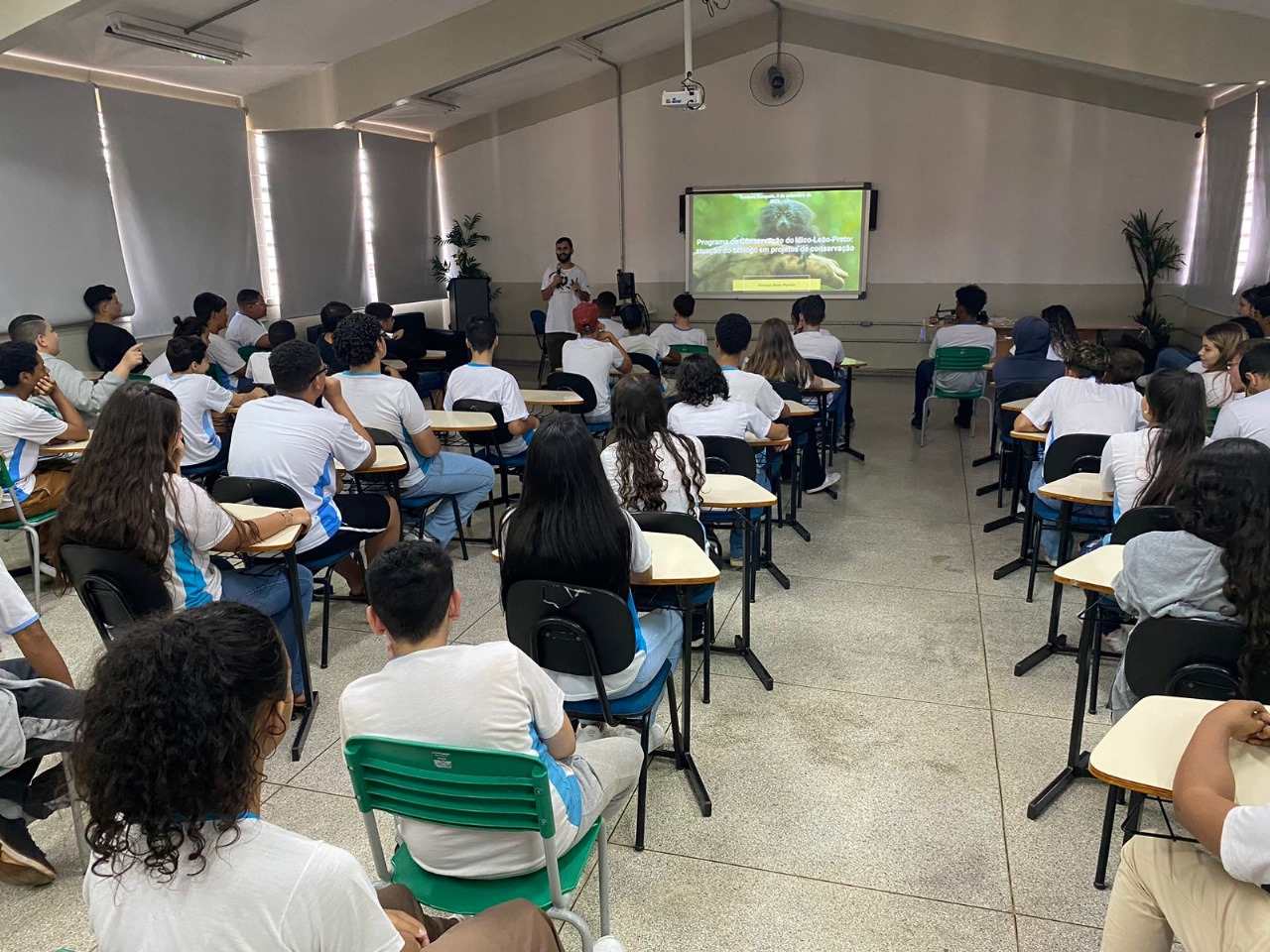
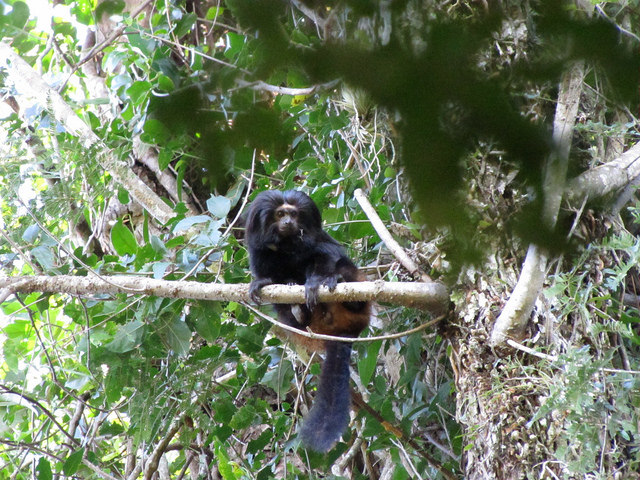
Educator of the Black Lion Tamarin Conservation Program holds a series of lectures in public schools of Teodoro Sampaio 

23 de October de 2023 by Paula Piccin

In September, over 250 high and elementary school students from state schools Arthur Ribeiro, Salvador Moreno Munhoz and João da Cruz Melão, on the  municipality of Teodoro Sampaio, far west of São Paulo, had the opportunity to learn about the Mico Conservation Program -black lion with a visit from Vinícius Alves, the Program’s environmental educator. … Read more

Categories IPÊ, News Leave a comment

Our Numbers

23 de October de 2023 by Paula Piccin

In 2022, IPÊ completed 30 years dedicated to the conservation of Brazilian biodiversity, central to socioeconomic transformation and facing critical challenges such as the one we are currently experiencing with the climate crisis. With our work – which mobilizes our teams, partnerships with companies and articulations with public authorities – we seek to carry out … Read more

Categories IPÊ, News Leave a comment

What we want and how we act

19 de October de 20225 de September de 2022 by IPE

::cck::1108::/cck::::introtext:: WHAT WE WANT AND HOW WE ACT   We establish strategic objectives that reflect the transformations we intend to generate, related to the organization’s mission. Here, some results that we have already achieved over the years of work, according to each objective.   1. Conserve Biodiversity Sustainable businesses implemented or strengthened: 09 community nurseries … Read more

Categories IPÊ Leave a comment

IPÊ mobilizes Alpargatas/Havaianas employees to volunteer for conservation in the Jaraguá State Park

1 de July de 2022 by Paula Piccin

::cck::1051::/cck::
::introtext::

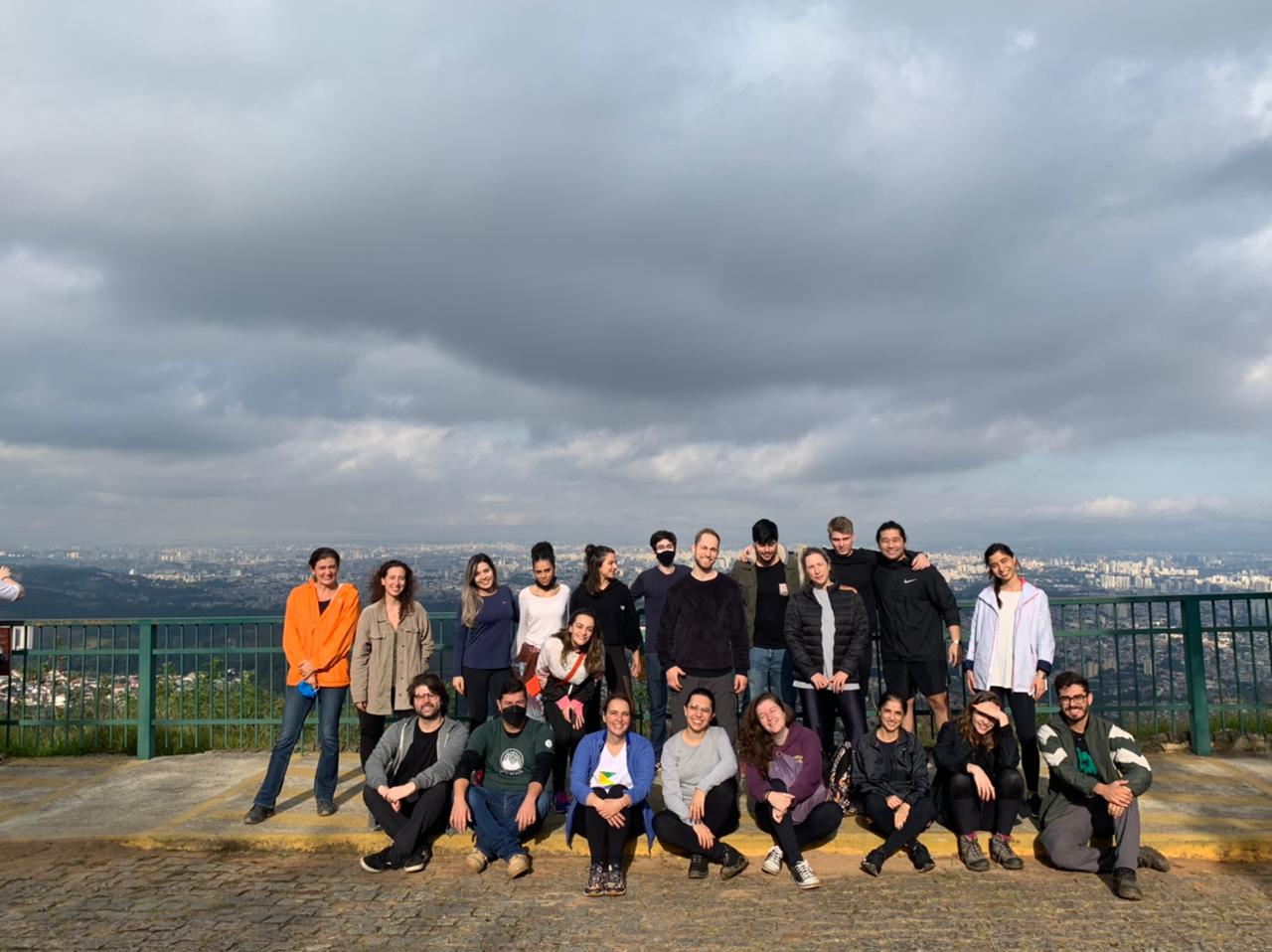
WhatsApp Image 2022 06 28 at 15.28.23Volunteering is one the most relevant instruments of mobilization for the conservation of biodiversity. IPÊ has been encouraging these actions in partnerships with NGOs and the corporate world. In the month of the environment, 22 employees from Alpargatas/Havaianas (an IPÊ partner for 18 years) participated in a volunteer action at the Jaraguá State Park, in the city of São Paulo. The activity involves a lot of hands-on work, with the identification and division of 28 species from seedlings and seed collection, organization of the nursery, transplantation of 550 seedlings of Juçara-palm, an endangered species, and planting of tree seedlings.

The program began early in the morning with a presentation by Gustavo Lopes do Espírito Santo, manager of the Jaraguá State Park, about the Conservation Unit (UC) considered a World Heritage Site by Unesco. The park is home of one of the last remnants of Atlantic Forest in the São Paulo Metropolitan Region and is part of São Paulo Green Belt Biosphere Reserve.

Next, Andrea Peçanha, coordinator of the IPÊ Business Unit, highlighted corporate volunteering as strategic for the conservation of biodiversity.” The potential for companies to involve employees in an initiative like this reinforces corporate values and a sense of collectivity and belonging. After all, we can all contribute to the conservation of protected areas and biodiversity. Bringing employees together at the UC reinforces the maturity of this relationship between IPÊ and Alpargatas/Havaianas, which can inspire other companies to follow this path, with a position that mobilizes employees to act for the conservation of our parks and protected areas”, she says.

Maria José de Martini, head of Sustainability and Reputation at Alpargatas/Havaianas, explains how volunteering is applied within the company. “In the area of social responsibility, we promote inclusion through education, social entrepreneurship and volunteering, one of the main pillars of the global strategy”, comments.

Most of the volunteers from Alpargatas/Havaianas participated for the first time in an action like this. “This was our first major delivery within the new global strategy, the first of many. And there is nothing better than starting with a partner (IPÊ) with whom we have worked for 18 years. Many employees had never done a voluntary action. Some were already volunteers and loved the new initiative with nature, it was an incredible day. We already have collaborators interested in the next editions, wanting to participate, asking when the next action will be”.

The actions at the nursery were guide by professionals from the Park and two technicians from the IPÊ, Gustavo Brichi and Paulo Roberto Ferro. The team also planted seedlings and hiked to Pico of Jaraguá, which gives its name to the unit, with an altitude of 1135 meters. The word Jaraguá, Tupi origin, means “Lord of the Valleys”.

For Gustavo Lopes do Espírito Santo, manager of State Park of Jaraguá, initiatives like this reinforce volunteering as a strategy to engage society through nature. “It was an enriching activity, without a doubt the opportunity to expose the importance of protected areas to engaged and committed groups, it contributed to improving the services offered to the public and awake a feeling of affection and belonging to the space. No doubt serving as inspiration for new actions”. On the day, the 22 volunteers totaled 130 hours of volunteering dedicated to the conservation unit, 6 hours of each participant.

Andrea Peçanha emphasizes that the initiative exceeded the expectations of the collaborators. “Everyone was positively impressed with the receptivity of the Florestal Foundation team that works in the Park and with the management in the Unit. The interest was so much that the participants were already planning the next opportunity to visit the place.” 

Collective good, in the end we are all biodiversity.       

The action of volunteers contributed to the revitalization of the nursery that produces native of Atlantic Forest seedlings for the restauration of degraded areas within the UC, which is essential to help protection of this important remnant and its biodiversity, as explained Angela Pellin, researched which coordinates Volunteering front for Conservation, at IPÊ. “It’s the type of initiative where everyone wins: The Park, which received support from volunteers and materials donated to revitalize part of the nursery, the volunteers who have a different day, in contact with nature and a lot of learning, and Alpargatas, which has the opportunity to carry out an integrative action with its employees, which reflects the company’s commitment to the environment”, emphasizes.

::/introtext::
::fulltext::::/fulltext::

Categories News Leave a comment

In the Amazon, volunteers support sustainable businesses in communities in the Puranga Conquista reserve (AM)

10 de November de 202229 de June de 2022 by Paula Piccin

::cck::1049::/cck::
::introtext::

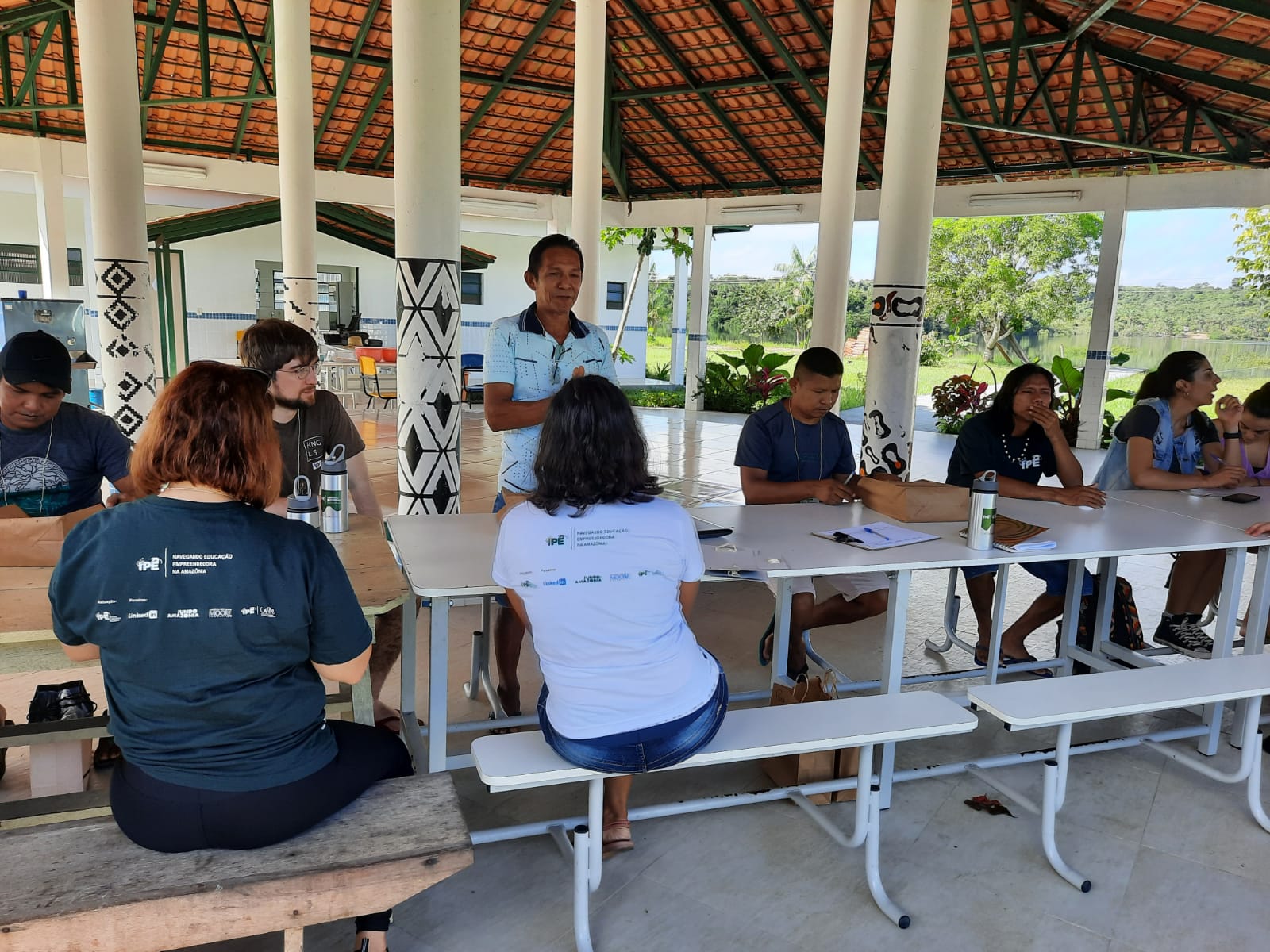
WhatsApp Image 2022 06 22 at 19.06.32 1Ten volunteers from different cities in Brazil and with different professional experiences participated on the last holiday (June 15th to 19th/22) in a different action: supporting entrepreneurs in the Amazon to improve the results of their businesses through the exchange of ideas and clarification of questions related to the topic. The activity is part of the “Project Navigating Entrepreneurial Education in the Amazon”, carried out by IPÊ – Instituto de Pesquisas Ecológicas, in partnership with LinkedIn, the biggest professional social media in the world.

After a research during 2021, IPÊ found that the Puranga Conquista Sustainable Development Reserve (SDR), located in Manaus’ rural areas (Amazonas) and which protects almost 100 thousand hectares of the Amazon, has about 147 entrepreneurs, who work in more than 330 small business in the territory. This is the largest study on the topic about the region. Besides fishing and agriculture, which are subsistence activities, most of the 17 studied communities have tourism as a source of income, along with activities that are part of this entire chain, such as handicrafts, accommodation, food, hiking services and cultural experiences. All these activities were severely impacted by the Covid-19 pandemic and, consequently, so the income of several families. The state of Amazonas, the epicenter of the pandemic in Brazil, recorded a 66% drop in revenue from this sector, directly reflecting tourism within protected areas, compromising this socioeconomic activity and other chains associated with tourism indirectly.

Based on this diagnosis, the Institute and its partner LinkedIn selected 47 projects with growth and development potential, which underwent a new screening. Now, 21 businesses are guided by volunteer professionals who are supporting entrepreneurs in challenges related to logistics, communication, marketing, infrastructure and accounting.

“Economic activities that generate income within the Amazon territory are important for socio-environmental conservation, as they can be allies for residents to settle in their territories, developing sustainable practices that conserve biodiversity, and reducing the need to look for work in Manaus – which is generally risky and can lead to conditions of social and economic vulnerability”, says Nailza Porto, the project coordinator.

It is important to mention that riverside communities are not fully covered by socioeconomic and environmental policies. In addition to the current Brazilian scenario, aggravated by the dismantling of environmental policies, it is necessary to promote mechanisms and strategies aimed at community-based conservation, particularly seeking to overcome extreme events due to the climate crisis. Therefore, it is necessary to create innovative and more circular arrangements in face of the current moment, adopting strategies to awaken a systemic view of the importance of a healthy environment as a natural barrier to environmental and climate crisis events.

Volunteers in action

gabriel leal barrosOne of the volunteers was Gabriel Leal de Barros (photo), chief economist at Ryo Asset, an investment company in Rio de Janeiro. The opportunity to get to know the project and the lower Rio Negro brought new perspectives to the professional, who was able to help entrepreneurs in essential topics such as accounting, pricing and the legal and bureaucratic issues involved in the development of a business. “Entrepreneurship in Brazil always has its challenges, they can be bureaucratic, capital, etc. In the Amazon, even with all the challenges – energy, logistics, seasonality – this is already happening and I could see it here, talking to these entrepreneurs. But I believe that the main point for us to achieve efficiency for the business is in the coordination of all this, so that the entrepreneur can have his business in a profitable way, that the product can reach the final consumer in a viable and, of course, in a sustainable way.”, said Gabriel.

Over the course of the four-day activity, the volunteers went from being teachers to mentors. Each one of them will closely monitor, over the course of a month, the businesses supported by the project, acting as sponsors of the initiatives. The goal is to assist in the business plan and action proposal for each project for the coming months. There are those who want to expand their ventures, others need financial adequacy, or even purchase instruments and equipment, in addition to facing issues of logistics and supply of energy and internet, major bottlenecks in the region.

To reach the communities, IPÊ uses its School Boat, the Maíra I, where the volunteers spent every day during the meeting days. The institute has owned the boat since 2003, it was a donation from the Martins Group, and it was renovated in August 2021 after the approval of the new project.

The experience gave the volunteers a new look at nature, helping professionals to get to know a region of Brazil that is often not included in tourist itineraries, although it is extremely rich in biodiversity, culture, and natural attractions.

The “Project Navigating Entrepreneurial Education in the Amazon” also has support from the LIRA/IPÊ project – Integrated Legacy of the Amazon Region.

::/introtext::
::fulltext::::/fulltext::

Categories News Leave a comment

IPÊ completes 30 years dedicated to Brazilian biodiversity and sustainable development

29 de March de 2022 by Paula Piccin

::cck::983::/cck::
::introtext::

Claudio e Suzna na porta do Morro006The history of IPÊ is closely linked to the history of conservation of the black-lion-tamarin (Leontopithecus chrysopygus), a species that is a symbol of the state of São Paulo and that only exists in its west. It was there that the institute began its first scientific research project to save the species form extinction, still in the late 1980s, and expanded its complementary studies for the sustainable development of the region, with reforestation, environmental education and income for the population. Leading this movement were Claudio and Suzana Padua (pictured), who together with students and young professionals, officially founded the institute in 1992.

The institute, which started with less than 10 researchers, currently has 30 projects/year carried out by around 100 professionals in four biomes. As a Brazilian non-governmental organization to complete three decades is full of meanings, and, even in the face of many challenges, the IPÊ reinforces the principles and values that guide all actions since the beginning. All IPÊ studies are carried out in the field, in search of solutions to the challenges of society, especially rural producers, traditional and indigenous communities, with benefits that go beyond the limits of the territories in which we operate.

For the institute, form the beginning, it was evident that, in order to preserve biodiversity it was necessary to mobilize communities, students, local leaders, public authorities and arouse the interest of potential supporters and founders. In this direction, IPÊ established a model that has in Environmental Education and in the formation of partnerships, allies of scientific research of practical application. Every year, IPÊ benefits 12,000 people directly with our actions in the Atlantic Forest, at the Cerrado, Pantanal and the Amazon.

We work in a network

We are very proud of our network, after all we do nothing alone. Donors, funders, supporters, advisors, peer institutions and communities have always been and are fundamental in this process that involves growth, evolution and results. The partnership in the history of IPÊ – with public agencies, universities, the third sector and the private sector – is a central issue for gaining scale with results that benefit everyone, after all, we share only one planet with biodiversity.

With the private initiative, we have around 20 partnerships. In 18 years, we launched together with Havaianas, seventeen collections for adults and four for children, which value Brazilian biodiversity. So far, 57 species of Brazilian fauna have been collected. Initiatives like this reinforce our actions and take the message of how strategic it is to conserve our biodiversity to an ever-widening audience.

Our trajectory and next steps

As a way of contributing to the gain in scale that actions in the sustainable area in Brazil and abroad, IPÊ created ESCAS – School of Environmental Conservation and Sustainability with short courses, of postgraduate and professional master’s degrees (concept 4, CAPES, 4-5). It was the first NGO to have a master’s degree in the biodiversity conservation area, in 2008. More than 7,000 professionals have already graduated from ESCAS courses.

The 50 national and international awards won by the researchers and the institute – among them the Whitley Gold Award (2020,2015,2008), Social Entrepreneur Folha SP and Schwab Foundation (2009), UBS Visionaris Global (2019), Ford Awards (2009), Best NGOs to Donate to (2017) – reinforce that we are on the way.

Next steps

In view of the results obtained so far, we have expanded our goal, check out the results we hope to achieve in 5 years: 20 thousand people directly benefited/year, reach 9 thousand professionals trained by ESCAS, benefit 380 families/year, train 300 masters.

Our main goals are also to remove all the species with which we work directly from the red list of endangered species or improve their classification on this list. Furthermore, in 30 years, we want to reach the mark of 150 million trees planted.

Restoration of forests, protection of water courses, conservation of species and sustainable development are all measures that add to efforts to combat climate changes and contribute to the balance of the planet, which became even more evident in the context of the Covid-19 pandemic.

::/introtext::
::fulltext::::/fulltext::

Categories News Leave a comment

IPÊ 30 years: our impact on the Atlantic Forest

29 de March de 2022 by Paula Piccin

::cck::981::/cck::
::introtext::

IPÊ has worked in the Atlantic Forest since its creation. Check out the main results for biodiversity conservation and sustainable development.

Atlantic Forest in Western São Paulo:

  • 5.4 million trees planted in the Atlantic Forest, including the largest green corridor ever restored in the biome.
  • The change in the black-faced lion tamarin category from “critically endangered” to “endangered” at Red List.
  • The largest lowland tapir database (Tapirus terrestris), which is a sentinel for the health of forests.
  • Jobs to generate income for the population, which benefit more than 200 families.
  • Adoption of the environmental education program by schools in the city of Teodoro Sampaio (SP), with courses for teachers and students from the public network.

In Pontal of Paranapanema, the Dream Map prepared jointly by rural producers, public agencies, other institutions that also work in the region and IPÊ researchers identified the priority areas for restoration. As a way of reconciling biodiversity conservation with food diversity and income generation for rural producers, the Map included among the strategies the implementation of SAFs – Agroforestry Systems in small properties and the creation of community nurseries.

Today there are nine community nurseries located in the Pontal do Paranapanema region, closely monitored by IPÊ, five of which are led by women. They highlight the potential for sustainable development. In 2020, these nurseries produced approximately 800,000 seedlings and benefited 26 families. The production potential, however, is almost doubled and, since the environmental liabilities of Western São Paulo is 77 thousand hectares, the tendency is for growth in the production of the nurseries.

Ivone Ribeiro Campos Félix, owner of Viveiro Floresta for 4 years, reveals the progress of the business and the next steps. “I started producing 17,600 seedlings a year. In 2020, the nursery produced 150,000 seedlings and the plan is to expand production”.

With the income from the nursery, Ivone guarantees the university education of her two daughters. “Peace, contribution to the environment, completing their daughters’ graduation are the results I take with my nursery”, she highlights.

Atlantic forest on Cantareira System

Among the actions carried out by IPÊ in the region, which has one of the largest water supply systems in the world, is forest restoration with almost 400,000 Atlantic forest seedlings already planted, especially near the water courses of the supply, which provide 7,6 million people in the metropolitan region of São Paulo. Encouraging the implementation of sustainable production systems on rural properties is also a strategy with the potential to contribute to increasing the resilience of the Cantareira System.

In the Cantareira System region, prioritizing changes which a view to better use of the land guarantees benefits not only for those who live in rural areas, as is the case with rural products, but also for the population that receives the water and that often about 100km away. “The best use of land and forest restoration are the regulators of water quantity and quality, but also of rural productivity and biodiversity”, explains Alexandre Uezu, researcher and coordinator of the project Sowing Water, carried out by IPÊ – Ecological research Institute, sponsored by Petrobras, through the Petrobras Social-Environmental Program and the Federal Government.

::/introtext::
::fulltext::::/fulltext::

Categories News Leave a comment

IPÊ 30 years: our performance in the Pantanal and Cerrado

29 de March de 2022 by Paula Piccin

::cck::980::/cck::
::introtext::

IPÊ arrived in the Pantanal to research for conservation of Brazilian tapirs, through LCTI – Lowland Conservation Tapir Initiative. In the biome, we have also advanced with research to conservation the life of the giant armadillo.

In addition to research on species, we are working on the issue of sustainable livestock in the Pantanal and we are active in fire brigades with farmers and communities.         

With the advances of researches, we expanded our actions to the Cerrado, involving, besides tapirs and armadillos, studies for the survival of the giant anteater. Over the time, we managed to organize the world’s largest database on the lowland tapir, in addition to unpublished data on the giant armadillo, which even support public policy actions in favor of wildlife and human beings.

The LCTI – Lowland Conservation Tapir Initiative seeks to influence the decision-making process with the government to combat current threats and prevent the extinction of the tapir and its remaining habitats.

“It is already clear that large-scale agriculture in the Brazilian Cerrado is resulting in pesticide and metal exposure in concentrations that exceed environmental safety and may have adverse health effects on tapirs and, perhaps, other animals. We need to look more seriously at this issue that affects wild animals and human lives. It is inadmissible to use pesticides without criteria and without supervision”, emphasizes Patrícia Médici, researcher and coordinator of LCTI/IPÊ. The project also has fronts of action in the Atlantic Forest and in the Amazon.

The Giant Armadillo Project (Periodontes maximus), a partnership between the IPÊ and the ICAS – Institute for the Conservation of Wild Animals of the Pantanal, carried out in the Atlantic Forest and Cerrado, for over 10 years it has been developing actions to conserve the largest of the 20 armadillo species, also called ecosystem engineers. “With climate changes and the trend of rising temperatures, giant armadillo burrows can help the species survive these changes and extreme temperatures”, explain Arnaud Desbiez, coordinator of Giant Armadillo Project. Among the results obtained by the project is the fact that the species integrates the list of mammals used to guide the creation of protected areas and conservation corridors in South Mato Grosso.

With the project Flags and Highways, the IPÊ and partners evaluate, monitoring and indicate solutions to the problem of being run over and accidents with the giant anteater on the roads of the State of South Mato Grosso. The roads present alarming rates of death of wild animals by hit. Advances in this direction will make roads safer for people and anteaters and have the potential to benefit other species as well.

::/introtext::
::fulltext::::/fulltext::

Categories News Leave a comment

IPÊ 30 years: Our actions in the Amazon

29 de March de 2022 by Paula Piccin

::cck::979::/cck::
::introtext::

IPÊ will be 30 years old in 2022. More than 20 of them dedicated to the conservation of biodiversity in the amazon territory. All projects carried out in the region are part of the solutions for amazon which brings together initiatives aimed at strengthening communities and protected areas in the biome. Work on the biome began on the lower Negro river and later expanded into a major initiative called Integrative Solutions for Amazon Conservation.

Currently, in the lower Negro river, is realized the Navegando Educação Empreendedora na Amazônia. The team travels through the communities carrying out surveys on businesses and their entrepreneurs to devise strategies that can give impetus to these works. Everything happens with the support of the Maria I school boat, which navigates the waters of the rivers to reach the residents of the Reserva de Desenvolvimento Sustentável (RDS) Puranga-Conquista. The project has the support of the LIRA/IPÊ project – Legado Integrado da Região Amazônica and a partnership with Linkedin, the largest professional social network in the world.

          In the 2010s, IPÊ supported the formalization and strengthening of local organizations, with documentation for access to public policies aimed at family farmers and artisans, contributing to the business infrastructure.

CELIO ARAGOCraftsman Célio Arago (pictured left), for example, is among those benefited by IPÊ. Workshops, the courses and exchanges contributed to the further development of his skills as an artisan, a craft he learned from his father. From the Nova Esperança community, Célio’s pieces won the world and were nominated for awards. After the project, Célio today shares what he learned with the young people.

“The learning I had with IPÊ opened many doors for me. Now I teach young people in my community so that they have the same chance as me”.

Within the Soluções Integradas, IPÊ develops the following actions:

MOSUC – Motivação e Sucesso na Gestão de Unidades de Conservação held since 2012, in partnership with ICMBio and support from the Gordon and Betty Moore Foundation. A key action front is the national restructuring of the ICMBio Volunteering Program, which was supported by IPÊ in various ways, from visual communication to the digital restructuring of the volunteer register.

Since 2012, IPÊ has supported the strengthening of the National System of Conversation Units, encouraging the sharing of good management practices, fostering arrangements that expand human capital to support management, and building platforms that disseminate information and knowledge about the UCs.


MPB – Monitoramento participativo da biodiversidade, which, since 2013, has been monitoring biodiversity in 18 Conservation Units (12 million hectares) in the Amazônia with the contribution of local communities. This process is essential to understand and moderate the extent of changes that may lead to the loss of local biodiversity, support the proper management of natural resources, and promote the maintenance of the way of life of local communities. The MPB project is part of the initiative to implement the Programa de Monitoramento da Biodiversidade – Monitora of ICMBio (Chico Mendes Institute for Biodiversity Conservation), USAID, Gordon and Betty Moore Foundation and ARPA Program are MPB partners.

LIRA – Integrated legacy of the Amazon region, as of 2019, the actions were expanded with the project that focuses on increasing the effectiveness in the management of 86 protected areas (Conversation Units of Indigenous Lands), with integrated and networked work in the Amazônia. The project covers 34% of the protected areas in the Amazônia, considering 20 Federal UCs, 23 State UCs and 43 Indigenous Lands, in the regions of High Negro River, Low Negro River, North of Pará, Xingú, Madeira-Purus and Rondônia-Acre. LIRA is an initiative conceived by IPÊ – Instituto de Pesquisas Ecológicas, the Amazônia Fund and the Gordon and Betty Moore Foundation, the project’s financing partners.

Check out the main highlights of IPÊ in the Amazon:

  • 320 families benefited from the Low Negro River project
  • More than 4000 people benefited from Participatory Biodiversity Monitoring
  • More than 30 thousand people registered in the ICMBio national volunteer register.

::/introtext::
::fulltext::::/fulltext::

Categories News Leave a comment

Our 30 Years in a Flash

15 de March de 2022 by Paula Piccin

::cck::1114::/cck::
::introtext::

Of our many achievements in our 30 years of history, I am very proud to have helped form our team. Some of the members who founded the organization were young interns working on the conservation project for the black lion tamarin (Leontopithecus chrysopygus), Claudio Padua’s doctoral subject in Morro do Diabo State Park (PEMD), extreme west of the state of São Paulo, known as Pontal do Paranapanema. They were attracted by the chance to go out into the field and put into practice what they theoretically learned in the classroom. With them, we founded IPÊ in 1992, a remarkable year for nature conservation in Brazil and in the world, especially on account of Rio-92, the United Nations Conference on Environment and Development. Conservation was on the rise at that time! We wanted to save the world!

Claudio’s doctorate showed the ecology of the black lion tamarin and its plasticity, or how this small primate behaved and lived in the different habitats found in PEMD, the largest remnant of native forest of the species. The tamarin had been considered extinct for over 60 years and was among the 10 most endangered species on the IUCN list at the time. The study, planned to last a year, ended up taking three and a half years, precious time for us to understand the complexity of conservation. We discovered that the range of needs is much greater than the study of a species, even though we know that this is a fundamental step to protect any element of nature.

Other fields were added, such as habitat protection combined with income generation, especially for the less fortunate. Since the region is the second poorest in the state of São Paulo, the IPÊ team began to seek sustainable alternatives to improve the lives of local families, combining income with environmental conservation. We then started offering workshops on how to start and maintain seedling nurseries for reforestation, how to plant Agroforestry Systems (AFS) and produce handicrafts inspired by regional species.

We then took a bigger step, planning the landscape as a whole, outlining the priority areas that deserve increased attention in the forest restoration program. One of the results is what we call the Map of Dreams for Pontal, composed of images that indicate where forest corridors, small forests or protection strips around the remaining native forests must be planted.

We also look for influencing public policies that benefit nature and people, whenever possible. This has been possible through the results of our surveys, on the basis of which we make decisions. Examples include the creation of a new protected area, the Mico-Leão Preto Ecological Station, and the inclusion of environmental issues in the drafting of regional socio-environmental laws.

The integrated actions became our Conservation Model, heavily inspired by Conservation Biology, a theme that originated one of the institute’s most relevant fronts, conservation education. The desire to share knowledge was born along with the creation of IPÊ, in Piracicaba (SP). We wanted to have an academic arm from the beginning, but after some failed attempts, we ended up founding our own school in 1996, Brazilian Center for Conservation Biology, which evolved into School of Environmental Conservation and Sustainability – ESCAS.

A few years later, ESCAS-IPÊ obtained approval from Capes to offer the first Professional Master’s Degree in the environmental area in the country, in 2008, being also the first socio-environmental NGO to obtain this accreditation. We fulfilled all the necessary requirements, such as the number of PhDs and publications. We have also developed a postgraduate course in Social and Environmental Business and we still offer short courses in numerous topics, such as ESG (Environmental, Social and Governance).

Becoming more experienced and ready to coordinate their own projects, some of the co-founders of IPÊ took new initiatives, forming interdisciplinary teams and researching other species such as jaguar, black-faced lion tamarin (studies we have conducted for 15 years), manatee, and tapir, which led us to biomes such as the Pantanal and the Cerrado. IPÊ has also been working for decades with the issue of protection of springs and springs that make up the Cantareira System (SP), on which millions of people and countless industries depend. Comprehensive studies of adequate reforestation and changes to agricultural practices have been applied with regional success. In the Amazon, IPÊ has been present for many years in Lower Rio Negro and even own a school boat that allows sailing through riverside communities and promoting initiatives such as community-based tourism and the production chain of sustainable goods. In other Amazon regions, IPÊ works with conservation units, several public agencies and civil society, promoting integrated conservation solutions.

In 2003, we created a Sustainable Business Unit, for integration with the private sector, in addition to taking care of community products. Our business partnerships have been fundamental, as they allow us to establish ourselves as an institution, investing in management and transparency, from the rendering of accounts to the communication of our projects, thus granting professionalism to our work.

None of this would be possible without an engaged team that shares common ideals. These feelings multiply and end up going beyond our internal team.

Our ESCAS-IPÊ students also promote socio-environmental transformations. They are IPÊ seeds spread over several places in Brazil and the world. This legacy makes a difference. Education with the noble purpose of protecting life brings collective benefits that become even stronger when we use science as a starting point for action. It is a great investment for a more promising future. Our advisors and partners also join forces in the achievements: there are 6 million trees planted in the Atlantic Forest, more than 7 thousand students have studied at ESCAS-IPÊ, more than 200 families benefited and 12 thousand people positively impacted every year by our actions.

IPÊ’s causes move people and attract them to the institution’s projects. Defending life, whether plant, animal or people, contributes to the balance of elements that guarantee the natural dynamics of everything that inhabits the Earth. This principle provides opportunities for people who might not otherwise have had them, to lead more dignified lives, and at the same time contribute to some aspect of local nature conservation.

Biodiversity conservation with sustainability and social improvements has been an arduous path that needs continuity and persistence. Demands increase over time, as pressures are intense and increasing. But the strength seems to come from within each one who gets involved and feels the pulse of the charm of protecting the socio-environmental riches that we have inherited on this planet. Perhaps this is the secret of IPÊ’s history: working for a cause greater than ourselves as individuals. It is the cry for the wholeness of life in its fullest manifestation. The strength that drives us is the will to be better and better to contribute to what we believe to be valuable.

Suzana Padua

President of IPÊ

::/introtext::
::fulltext::::/fulltext::

Categories News Leave a comment
Older posts
Newer posts
← Previous Page1 … Page4 Page5 Page6 … Page12 Next →

Posts Recentes

  • IPÊ inaugura nova sede em Manaus/AM 
  • Projeto fortalece o manejo de castanha-da-amazônia na Flona de Caxiuanã, no Pará
  • Oportunidade: Seleção de Pessoa Jurídica para desenvolvimento de cadeias da sociobiodiversidade na Chapada do Araripe (CE) 
  • Comunitário da RDS Puranga Conquista participa de evento nacional de Restauração Ecológica em Brasília
  • Cartilha sobre meliponicultura do Projeto Agroecologia em Rede é premiada em Congresso Amazonense de Meliponicultura 

Publicações

  • August 2026
  • July 2026
  • June 2026
  • May 2026
  • April 2026
  • March 2026
  • February 2026
  • January 2026
  • December 2025
  • November 2025
  • October 2025
  • September 2025
  • August 2025
  • July 2025
  • June 2025
  • May 2025
  • April 2025
  • March 2025
  • February 2025
  • January 2025
  • December 2024
  • November 2024
  • October 2024
  • September 2024
  • August 2024
  • July 2024
  • June 2024
  • May 2024
  • April 2024
  • March 2024
  • February 2024
  • January 2024
  • December 2023
  • November 2023
  • October 2023
  • September 2023
  • August 2023
  • July 2023
  • June 2023
  • May 2023
  • April 2023
  • March 2023
  • February 2023
  • January 2023
  • December 2022
  • November 2022
  • October 2022
  • September 2022
  • August 2022
  • July 2022
  • June 2022
  • May 2022
  • April 2022
  • March 2022
  • February 2022
  • January 2022
  • December 2021
  • November 2021
  • October 2021
  • September 2021
  • August 2021
  • July 2021
  • June 2021
  • May 2021
  • April 2021
  • March 2021
  • February 2021
  • January 2021
  • December 2020
  • November 2020
  • October 2020
  • September 2020
  • August 2020
  • July 2020
  • June 2020
  • May 2020
  • April 2020
  • March 2020
  • February 2020
  • January 2020
  • December 2019
  • November 2019
  • October 2019
  • September 2019
  • August 2019
  • July 2019
  • June 2019
  • May 2019
  • April 2019
  • March 2019
  • February 2019
  • January 2019
  • December 2018
  • November 2018
  • October 2018
  • September 2018
  • August 2018
  • July 2018
  • June 2018
  • May 2018
  • April 2018
  • March 2018
  • February 2018
  • January 2018
  • December 2017
  • November 2017
  • October 2017
  • September 2017
  • August 2017
  • July 2017
  • June 2017
  • May 2017
  • April 2017
  • March 2017
  • February 2017
  • January 2017
  • December 2016
  • November 2016
  • October 2016
  • September 2016
  • August 2016
  • July 2016
  • June 2016
  • May 2016
  • January 2016
  • December 2015
  • November 2015
  • October 2015
  • September 2015
  • August 2015
  • July 2015
  • June 2015
  • May 2015
  • April 2015
  • March 2015
  • February 2015
  • January 2015
  • December 2014
  • November 2014
  • October 2014
  • September 2014
  • August 2014
  • July 2014
  • June 2014
  • May 2014
  • April 2014
  • March 2014
  • February 2014
  • January 2014
  • December 2013
  • November 2013
  • October 2013
  • September 2013
  • July 2013
  • June 2013
  • May 2013

Categorias

  • Annual Reports
  • Áreas Protegidas
  • Baixo Rio Negro
  • Boas Práticas
  • Cases de MRC
  • Centro de Educação e Cooperação Socioambiental para o Clima
  • COP-16 Agenda
  • COP16
  • COP30
  • Cursos
  • Depoimentos
  • Doe
  • Donate
  • Home
  • Home
  • Iniciativas para Doação
  • IPÊ
  • IPÊ
  • IPÊ
  • IPE
  • ipe em movimento
  • Não categorizado
  • Negócios Sustentáveis
  • News
  • Notícias
  • Paisagens Climáticas
  • Pesquisa e Desenvolvimento
  • Pontal do Paranapanema
  • Projetos
  • Projetos Temáticos
  • publicacoes
  • publicacoes
  • ra.2022
  • Relatórios Anuais
  • Thematic Projects
  • Uncategorised
A implementação do kmspico em sistemas educacionais ou corporativos permite uma utilização mais racional dos recursos e apoia iniciativas de proteção ambiental. Você pode download ativador kmspico com segurança agora mesmo.

Onde Estamos

Rod. Dom Pedro I, km 47
Nazaré Paulista, SP, Brasil
Caixa Postal 47 – 12964-022
Tel: (11) 3590-0041

Mapa para o IPÊ
Escritórios
Ouvidoria

Redes Sociais

  • Facebook
  • Twitter
  • Instagram
  • Youtube
  • Linkedin

Política de Privacidade
Programa de Privacidade
Políticas de Cookies

Termos de Uso | Estatuto
Copyright © Ipê – Instituto de Pesquisas Ecológicas.
Email: ipe@ipe.org.br

kraken onion kraken darknet kraken tor
A implementação do kmspico sistemas educacionais ou corporativos permite uma utilização racional dos recursos e apoia iniciativas de proteção ambiental Você pode download ativador kmspico com segurança agora mesmo kmspico.lc.