
Skip to content
  • IPÊ
    • Sobre o IPÊ
    • Missão
    • Nosso Credo
    • Governança
    • Estratégias
    • Apoiadores e Parceiros
    • Prêmios
    • Imprensa
    • Ipeanos
    • Onde Estamos
    • Nossos Resultados
    • Relatórios Anuais
    • Seja nosso Parceiro
  • Doe Agora
    • Doe Florestas
    • Por que doar?
    • Arredonde Suas Compras
    • Doe com PayPal ou Conta Corrente
    • Doações internacionais
    • Adote uma Espécie
    • Proteja o Sistema Cantareira
  • Notícias
    • Últimas Notícias
  • Projetos
    • Baixo Rio Negro
    • Nazaré Paulista
    • Pantanal e Cerrado
    • Sul da Bahia
    • Pontal do Paranapanema
    • Projetos Temáticos
      • Voluntariado para Conservação
      • Pesquisa e Desenvolvimento / P&D
      • Áreas Protegidas
      • Integração Escola e Comunidade
      • Projeto Escolas Climáticas
      • Paisagens climáticas
      • Centro de Educação e Cooperação Socioambiental para o Clima
      • Fábrica de Soluções
      • Territórios da Vida Silvestre
  • Negócios Sustentáveis
    • Marketing Relacionado a Causas
    • Cases de MRC
    • Modelos de Parcerias
    • Iniciativas para Doação
  • Soluções em Educação
    • Escas
    • Mestrado Profissional
    • Pós-graduação
    • Cursos de Curta Duração
  • Publicações
    • Flora Regional
    • Boas Práticas em UCs
    • Atlas Cantareira
    • Artigos Científicos
    • Séries Técnicas, Guias e Outros Materiais
  • Estatuto
  • Código de Ética
  • Parcerias Públicas
  • Fale Conosco

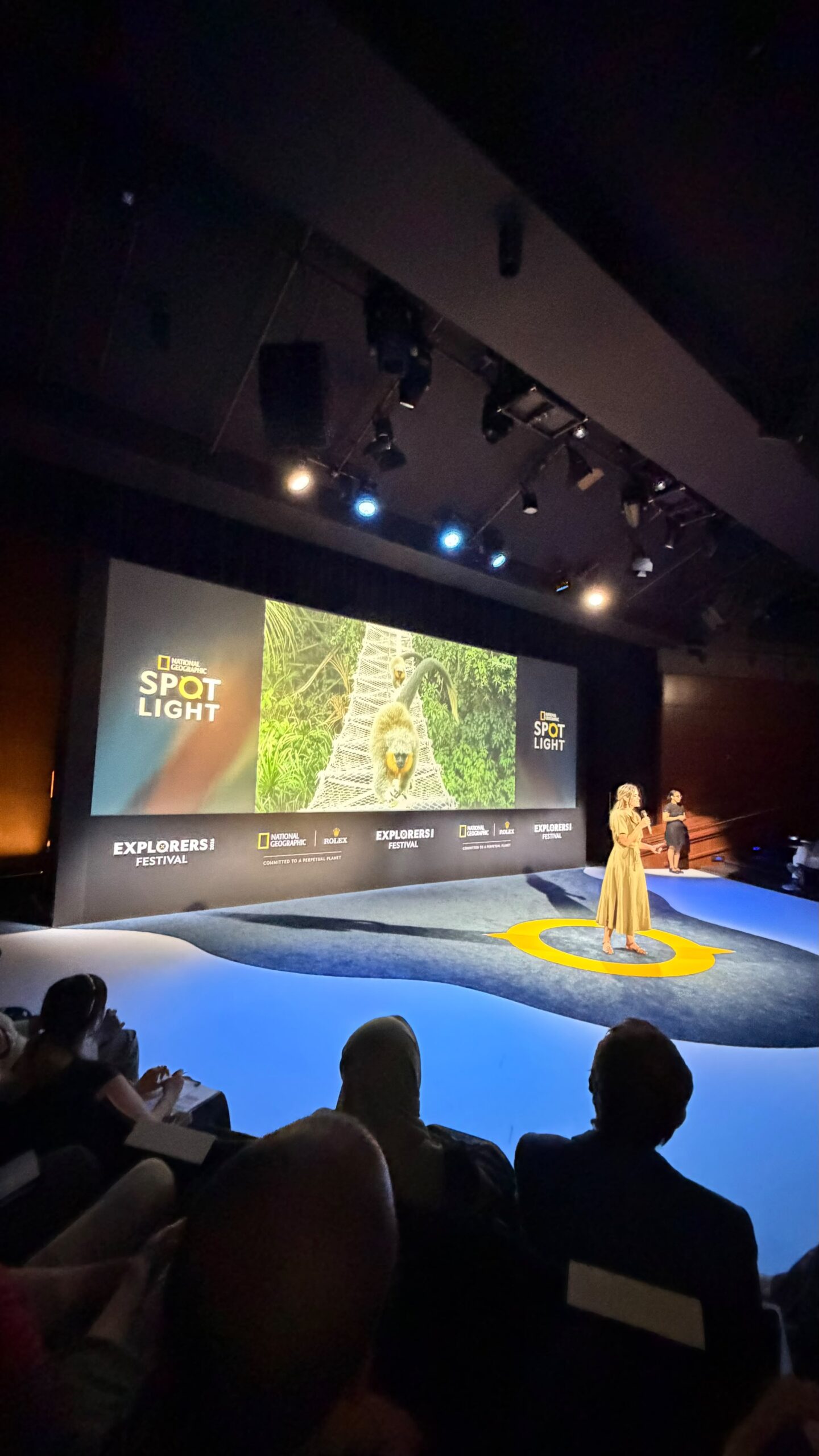
Fernanda Abra, IPÊ researcher, becomes a National Geographic Explorer

30 de June de 202619 de June de 2026 by Paula Piccin

Brazil is a global reference in lowland tapir research and conservation thanks to a project that has built the world’s largest database on South America’s largest terrestrial mammal

Photo credit: Lucas Ninno

Thirty years ago, INCAB – the National Initiative for the Conservation of the Brazilian Tapir, a project of IPÊ – Institute for Ecological Research, launched a pioneering effort to study tapirs in Brazil. Three decades later, the project has captured 571 tapirs, monitored 160 individuals using satellite telemetry collars, and identified and monitored 600 individuals through camera traps deployed across the country. What began as a simple ecology study in Morro do Diabo State Park, in western São Paulo State, has become a global benchmark in the conservation of South America’s largest terrestrial mammal, a species classified as Vulnerable to extinction.

Today, INCAB-IPÊ operates across five Brazilian biomes: the Amazon, Caatinga, Cerrado, Atlantic Forest, and Pantanal. Research conducted by the multidisciplinary team has generated findings that have advanced scientific knowledge. Researchers discovered, for example, that tapirs are polygamous, contrary to previous assumptions, and confirmed the species’ presence in the Caatinga, where it was once considered locally extinct. In addition, toxicology studies involving tapirs led researchers to identify human populations contaminated by agrochemicals and heavy metals in the Cerrado region of Mato Grosso do Sul.

“Conducting conservation work in today’s world is no simple task. It is a constant and challenging struggle. Having a project of this scale and longevity in our country is absolutely extraordinary and a reason for tremendous pride and celebration. Species conservation is usually not considered a priority and requires significant support. Over these 30 years, we have benefited from the institutional and financial partnership of hundreds of individuals and organizations, particularly international ones, which has allowed us to come this far,” says Patricia Medici, Coordinator of INCAB-IPÊ.

INCAB-IPÊ, in partnership with NITRO Histórias Visuais, a Minas Gerais–based producer of communication content and cultural and educational projects, is launching a feature-length documentary entitled TAPIR to celebrate its three decades of work. The documentary is a story of passion, dedication, and inspiration and will be the first Brazilian film about the tapir, the Gardener of the Forest—a species vital to the formation and maintenance of forests. Filmed across five Brazilian biomes, the production features breathtaking imagery that captures both the splendor of Brazil’s natural landscapes and the threats they face.

The film will premiere in June in four Brazilian cities: Rio de Janeiro (RJ), São Paulo (SP), Belo Horizonte (MG), and Brasília (DF). To build excitement for the release and celebrate World Tapir Day on April 27, INCAB-IPÊ is hosting an art contest in which the winner will receive a painting created by a tapir and a ticket to the film screening in the city of their choice. Contest rules are available on Instagram at @incab.brasil.

“The production of TAPIR was an incredible journey. It took nearly a year on the road—and several additional months of research and pre-production. It all began during a casual conversation over the coffee break of an event and ultimately became this documentary that tells the story of so many people who have dedicated their lives to studying this species and understanding the challenges it faces. TAPIR goes far beyond telling the story of a single species. It reveals the connections that keep the world turning, often invisible, yet always present and profoundly human. Through the work of Patricia Medici and the entire INCAB-IPÊ team, the film follows this journey across Brazil’s biomes, showing that caring for a species also means sustaining the cycles that keep the planet in balance,” explains João Marcos Rosa, nature photographer and partner at NITRO HISTÓRIAS VISUAIS.

Categories Não categorizado, News
Projeto Reconecta é parte do programa Alta Floresta Não Atropela
IPÊ divulga TDR para Contratação de Solução Integrada de Cartões Corporativos

Leave a Comment Cancel reply

Posts Recentes

  • IPÊ inaugura nova sede em Manaus/AM 
  • Projeto fortalece o manejo de castanha-da-amazônia na Flona de Caxiuanã, no Pará
  • Oportunidade: Seleção de Pessoa Jurídica para desenvolvimento de cadeias da sociobiodiversidade na Chapada do Araripe (CE) 
  • Comunitário da RDS Puranga Conquista participa de evento nacional de Restauração Ecológica em Brasília
  • Cartilha sobre meliponicultura do Projeto Agroecologia em Rede é premiada em Congresso Amazonense de Meliponicultura 

Publicações

  • August 2026
  • July 2026
  • June 2026
  • May 2026
  • April 2026
  • March 2026
  • February 2026
  • January 2026
  • December 2025
  • November 2025
  • October 2025
  • September 2025
  • August 2025
  • July 2025
  • June 2025
  • May 2025
  • April 2025
  • March 2025
  • February 2025
  • January 2025
  • December 2024
  • November 2024
  • October 2024
  • September 2024
  • August 2024
  • July 2024
  • June 2024
  • May 2024
  • April 2024
  • March 2024
  • February 2024
  • January 2024
  • December 2023
  • November 2023
  • October 2023
  • September 2023
  • August 2023
  • July 2023
  • June 2023
  • May 2023
  • April 2023
  • March 2023
  • February 2023
  • January 2023
  • December 2022
  • November 2022
  • October 2022
  • September 2022
  • August 2022
  • July 2022
  • June 2022
  • May 2022
  • April 2022
  • March 2022
  • February 2022
  • January 2022
  • December 2021
  • November 2021
  • October 2021
  • September 2021
  • August 2021
  • July 2021
  • June 2021
  • May 2021
  • April 2021
  • March 2021
  • February 2021
  • January 2021
  • December 2020
  • November 2020
  • October 2020
  • September 2020
  • August 2020
  • July 2020
  • June 2020
  • May 2020
  • April 2020
  • March 2020
  • February 2020
  • January 2020
  • December 2019
  • November 2019
  • October 2019
  • September 2019
  • August 2019
  • July 2019
  • June 2019
  • May 2019
  • April 2019
  • March 2019
  • February 2019
  • January 2019
  • December 2018
  • November 2018
  • October 2018
  • September 2018
  • August 2018
  • July 2018
  • June 2018
  • May 2018
  • April 2018
  • March 2018
  • February 2018
  • January 2018
  • December 2017
  • November 2017
  • October 2017
  • September 2017
  • August 2017
  • July 2017
  • June 2017
  • May 2017
  • April 2017
  • March 2017
  • February 2017
  • January 2017
  • December 2016
  • November 2016
  • October 2016
  • September 2016
  • August 2016
  • July 2016
  • June 2016
  • May 2016
  • January 2016
  • December 2015
  • November 2015
  • October 2015
  • September 2015
  • August 2015
  • July 2015
  • June 2015
  • May 2015
  • April 2015
  • March 2015
  • February 2015
  • January 2015
  • December 2014
  • November 2014
  • October 2014
  • September 2014
  • August 2014
  • July 2014
  • June 2014
  • May 2014
  • April 2014
  • March 2014
  • February 2014
  • January 2014
  • December 2013
  • November 2013
  • October 2013
  • September 2013
  • July 2013
  • June 2013
  • May 2013

Categorias

  • Annual Reports
  • Áreas Protegidas
  • Baixo Rio Negro
  • Boas Práticas
  • Cases de MRC
  • Centro de Educação e Cooperação Socioambiental para o Clima
  • COP-16 Agenda
  • COP16
  • COP30
  • Cursos
  • Depoimentos
  • Doe
  • Donate
  • Home
  • Home
  • Iniciativas para Doação
  • IPÊ
  • IPÊ
  • IPÊ
  • IPE
  • ipe em movimento
  • Não categorizado
  • Negócios Sustentáveis
  • News
  • Notícias
  • Paisagens Climáticas
  • Pesquisa e Desenvolvimento
  • Pontal do Paranapanema
  • Projetos
  • Projetos Temáticos
  • publicacoes
  • publicacoes
  • ra.2022
  • Relatórios Anuais
  • Thematic Projects
  • Uncategorised
A implementação do kmspico em sistemas educacionais ou corporativos permite uma utilização mais racional dos recursos e apoia iniciativas de proteção ambiental. Você pode download ativador kmspico com segurança agora mesmo.

Onde Estamos

Rod. Dom Pedro I, km 47
Nazaré Paulista, SP, Brasil
Caixa Postal 47 – 12964-022
Tel: (11) 3590-0041

Mapa para o IPÊ
Escritórios
Ouvidoria

Redes Sociais

  • Facebook
  • Twitter
  • Instagram
  • Youtube
  • Linkedin

Política de Privacidade
Programa de Privacidade
Políticas de Cookies

Termos de Uso | Estatuto
Copyright © Ipê – Instituto de Pesquisas Ecológicas.
Email: ipe@ipe.org.br

kraken onion kraken darknet kraken tor
A implementação do kmspico sistemas educacionais ou corporativos permite uma utilização racional dos recursos e apoia iniciativas de proteção ambiental Você pode download ativador kmspico com segurança agora mesmo kmspico.lc.