
 ::cck::153::/cck::
::introtext::
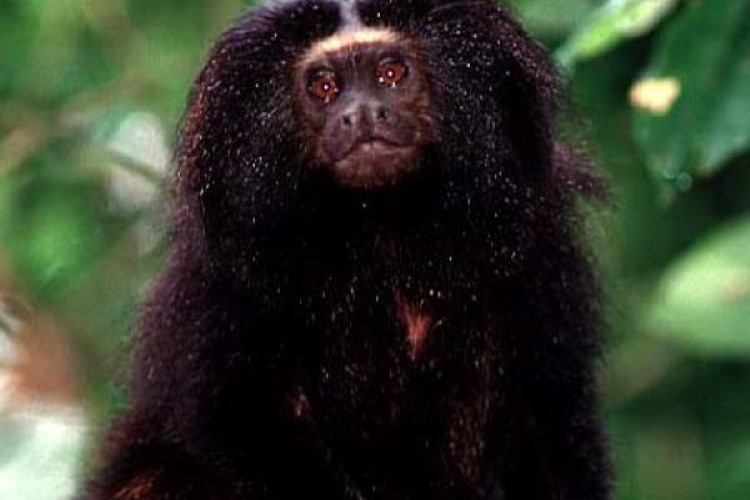
The black lion tamarin, scientifically known as Leontopithecus chrysopygus, is one of the rarest and most threatened primate species in the world. It was for many years considered extinct in the wild. Today, the species remains in a precarious state and is listed in the Red List of Threatened Species (IUCN) as endangered (EN). The main threat to its survival is forest fragmentation and habitat degradation, which leads to population isolation and decline.
::/introtext::
::fulltext::
Black Lion Tamarin Conservation
::/fulltext::
::ac_acordeon::6::/ac_acordeon::
::cck_ac_acordeon::acordeon::/cck_ac_acordeon::
::ac_titulo_acordeon|0|ac_acordeon::Description of the Program::/ac_titulo_acordeon|0|ac_acordeon::
::ac_texto_acordeon|0|ac_acordeon::
The Black Lion Tamarin Conservation Program was the impetus for IPÊ’s creation and for the Institute’s research and conservation model. Researchers and co-founders have worked for the conservation of tamarins in the Pontal do Paranapanema since 1984. In this manner, the BLTCP completed 30 years of continuous work in 2014, in the same year that the black lion tamarin was decreed the São Paulo state symbol species for biodiversity conservation.
Since the beginning of IPÊ’s activities, many initiatives have been undertaken, including basic research on the black lion tamarin biology and ecology, environmental education and long-term management for the species. The management plan treats populations that are currently isolated (subpopulations) as a single large population (metapopulation) that is maintained using strategies that promote connectivity, such as forest corridors planted between fragments, translocations and reintroductions of BLT groups. This management also includes captive tamarins kept in Brazilian and international zoos.
The Black Lion Tamarin Conservation Program seeks to preserve both the black lion tamarins and their ecosystem. These primates are thus a flagship species for the conservation of priority areas, where IPÊ researchers recover degraded forests and create corridors that connect fragments bearing isolated tamarin populations.
Many of these initiatives depend on efficient environmental education activities that convey scientific results in an accessible manner and sensitize the public to the importance of preservation efforts. The BLTCP also aims to establish sustainable development alternatives that generate income for the community and value the local biodiversity, thereby contributing to an improved livelihood of local communities and turning them into additional partners in conservation. IPÊ has also worked closely with the Brazilian federal government and the São Paulo state government, to influence public policies for environmental
::/ac_texto_acordeon|0|ac_acordeon::
::cckend_ac_acordeon::::/cckend_ac_acordeon::
::cck_ac_acordeon::acordeon::/cck_ac_acordeon::
::ac_titulo_acordeon|1|ac_acordeon::Key Accomplishments::/ac_titulo_acordeon|1|ac_acordeon::
::ac_texto_acordeon|1|ac_acordeon::
- Upgraded the black lion tamarin in the IUCN Red List in 2008 and in the Brazilian Red List in 2014 from “Critically Endangered” (CR) to the status of “Endangered” (EN);
- Directly approached more than 8,000 people per year through community outreach efforts, for the last 20 years;
- Supported the nomination of the black lion tamarin as the São Paulo state symbol species for biodiversity conservation and a Natural Heritage Species;
- Generated new information on the biology and ecology of the species and its distribution;
- Discovered new subpopulations and updated population estimates, which increased the known number of wild tamarins by 1,500%;
- Through translocation, established a new population of the black lion tamarin in a fragment uninhabited by the species—a component of the Metapopulation Management Plan;
- Averted the invasion by squatters (the “Landless Movement”) of the main protected area for the species (the Morro do Diabo State Park), through negotiation and actions aimed at improving the livelihoods of the local rural communities;
- Promoted the creation of the Black Lion Tamarin Ecological Station, more than 6,000ha of utmost importance for the inland Atlantic Forest and the species;
- Drew up the “Dream Map of Pontal do Paranapanema”, which indicates the priority areas for forest restoration within the region—vital to reconnect isolated black lion tamarin populations;
- Restored the largest planted forest-corridor in Brazil, a 1,000-ha link between the two main remnants of Atlantic Forest in the Pontal do Paranapanema (the Black Lion Tamarin Ecological Station and the Morro do Diabo State Park);
- Produced more than ten theses (Master’s and Ph.D.) based on original research with the species.
::/ac_texto_acordeon|1|ac_acordeon::
::cckend_ac_acordeon::::/cckend_ac_acordeon::
::cck_ac_acordeon::acordeon::/cck_ac_acordeon::
::ac_titulo_acordeon|2|ac_acordeon::Goal and Objectives::/ac_titulo_acordeon|2|ac_acordeon::
::ac_texto_acordeon|2|ac_acordeon::
The scenario we want to achieve is of more self-sustaining and viable populations of BLTs living in a wider, connected and protected habitat, and having the communities involved in the species conservation. For this purpose, the program has set some objectives:
Metapopulation management
- Monitoring demographic and ecological aspects of wild BLT populations;
- Analyzing the viability of isolated subpopulations, through health and genetics assessments;
- Carrying out genetic and demographic management of small isolated populations through translocations of groups into protected forests;
- Developing ecological studies on the key resources needed for BLT survival and assessing the conservation status of forest fragments sheltering the species;
- Supporting captive breeding and the establishment of a safe captive population of black lion tamarins;
- Testing new conservation management techniques.
Environmental education and community involvement
- Incorporating environmental themes, with emphasis on the black lion tamarin conservation, in the educational processes of local schools;
- Developing outdoor activities in rural and urban communities to sensitize a broader public on conservation issues;
- Training teachers and other professionals to spread the word about conservation;
- Developing alternative sources of income generation for the local community.
Habitat protection and restoration
- Mapping the priority areas for the conservation of the species;
- Promoting the creation of protected areas along with the state and national governments;
- Designing and implementing habitat restoration projects to restore the landscape connectivity through forest corridors and “stepping stones”;
- Training and involving the local communities in the restoration projects’ implementation;
- Monitoring restored areas.
Other activities
- Producing publicity material to be released in the media;
- Analyzing data and preparing reports and scientific publications;
- Fundraising to guarantee the project’s sustainability.
::/ac_texto_acordeon|2|ac_acordeon::
::cckend_ac_acordeon::::/cckend_ac_acordeon::
::cck_ac_acordeon::acordeon::/cck_ac_acordeon::
::ac_titulo_acordeon|3|ac_acordeon::Team::/ac_titulo_acordeon|3|ac_acordeon::
::ac_texto_acordeon|3|ac_acordeon::
Gabriela Cabral Rezende, M.Sc. Project Coordinator – contact: gabriela@ipe.org.br
José Wilson Alves. Field Assistant.
André Pereira de Albuquerque. Field Assistant.
Mirela Alcolea. Trainee.
::/ac_texto_acordeon|3|ac_acordeon::
::cckend_ac_acordeon::::/cckend_ac_acordeon::
::cck_ac_acordeon::acordeon::/cck_ac_acordeon::
::ac_titulo_acordeon|4|ac_acordeon::Support::/ac_titulo_acordeon|4|ac_acordeon::
::ac_texto_acordeon|4|ac_acordeon::
Financial Support (2014-2016):
- Whitley Fund for Nature
- Disney Worldwide Conservation Fund
- Durrell Wildlife Conservation Trust
- Ecosystem Alliance
- Idea Wild
- Mohamed bin Zayed Species Conservation Fund
- Margot Marsh Biodiversity Foundation / Conservation International (CI)
Institutional Support:
- National Center for Brazilian Primate Research and Conservation – CPB/ICMBio
- Forestry Foundation of São Paulo state – Morro do Diabo State Park
- ICMBio – Black Lion Tamarin Ecological Station and Capão Bonito National Forest
- Department of the Environment of the State of São Paulo – SMA/SP
- IUCN/SSC Primate Specialist Group
- São Paulo Zoo
- Durrell Wildlife Park
::/ac_texto_acordeon|4|ac_acordeon::
::cckend_ac_acordeon::::/cckend_ac_acordeon::
::cck_ac_acordeon::acordeon::/cck_ac_acordeon::
::ac_titulo_acordeon|5|ac_acordeon::Importants Links::/ac_titulo_acordeon|5|ac_acordeon::
::ac_texto_acordeon|5|ac_acordeon::
IPÊ Projects in Pontal do Paranapanema: http://www.youtube.com/videosdoipe
IUCN Red List – Black Lion Tamarin: http://www.iucnredlist.org/details/11505/0
::/ac_texto_acordeon|5|ac_acordeon::
::cckend_ac_acordeon::::/cckend_ac_acordeon::
::ac_arquivos::1::/ac_arquivos::
::cck_ac_arquivos::arquivo::/cck_ac_arquivos::
::ac_titulo_arquivo|0|ac_arquivos::::/ac_titulo_arquivo|0|ac_arquivos::
::ac_arquivo|0|ac_arquivos::::/ac_arquivo|0|ac_arquivos::
::cckend_ac_arquivos::::/cckend_ac_arquivos::
::ac_galeria::5::/ac_galeria::
::cck_ac_galeria::galeria::/cck_ac_galeria::
::ac_foto_descricao|0|ac_galeria::::/ac_foto_descricao|0|ac_galeria::
::ac_foto|0|ac_galeria::images/artigo_completo/galeria/1270/131-cc4e5721dc.jpg::/ac_foto|0|ac_galeria::
::cckend_ac_galeria::::/cckend_ac_galeria::
::cck_ac_galeria::galeria::/cck_ac_galeria::
::ac_foto_descricao|1|ac_galeria::::/ac_foto_descricao|1|ac_galeria::
::ac_foto|1|ac_galeria::images/artigo_completo/galeria/1270/231-5f578314ee.jpg::/ac_foto|1|ac_galeria::
::cckend_ac_galeria::::/cckend_ac_galeria::
::cck_ac_galeria::galeria::/cck_ac_galeria::
::ac_foto_descricao|2|ac_galeria::::/ac_foto_descricao|2|ac_galeria::
::ac_foto|2|ac_galeria::images/artigo_completo/galeria/1270/328-1d74f5a627.jpg::/ac_foto|2|ac_galeria::
::cckend_ac_galeria::::/cckend_ac_galeria::
::cck_ac_galeria::galeria::/cck_ac_galeria::
::ac_foto_descricao|3|ac_galeria::::/ac_foto_descricao|3|ac_galeria::
::ac_foto|3|ac_galeria::images/artigo_completo/galeria/1270/422-dbd3a2aacd.jpg::/ac_foto|3|ac_galeria::
::cckend_ac_galeria::::/cckend_ac_galeria::
::cck_ac_galeria::galeria::/cck_ac_galeria::
::ac_foto_descricao|4|ac_galeria::::/ac_foto_descricao|4|ac_galeria::
::ac_foto|4|ac_galeria::images/artigo_completo/galeria/1270/516-8abb3aaed6.jpg::/ac_foto|4|ac_galeria::
::cckend_ac_galeria::::/cckend_ac_galeria::