
 ::cck::168::/cck::
::introtext::
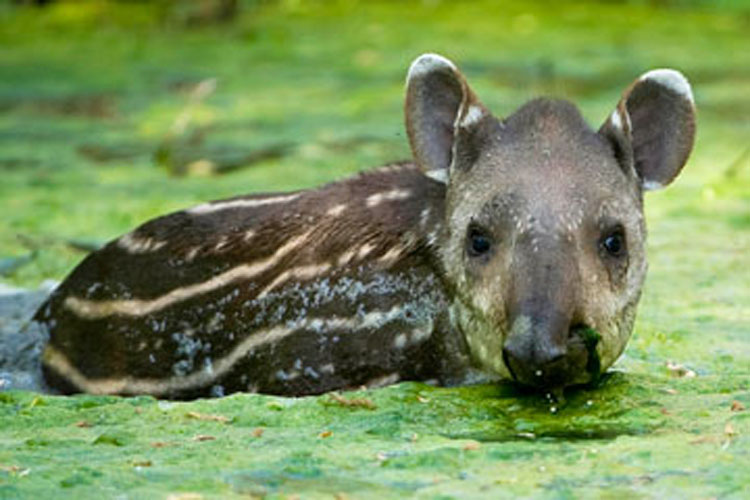
Patrícia Medici has created and has been leading since 1996 a long-term research and conservation program on lowland tapirs in the Atlantic Forests of the Pontal do Paranapanema Region, São Paulo, Brazil.
::/introtext::
::fulltext::
This program has included studies in basic ecology, population demography, population biology, epidemiology, genetics, habitat use and effects of habitat fragmentation, as well as promotion of community involvement through sustainable development, environmental education and habitat restoration efforts. Results of the project have been used to design a Regional Action Plan for Tapir Research and Conservation which is currently under implementation. Results and experiences of the Atlantic Forest Tapir Program have been widely distributed to the local conservation stakeholders in the Pontal do Paranapanema Region.
The Atlantic Forest Tapir Program has demonstrated that tapirs are a keystone species that play a critical role in shaping and maintaining biological diversity and forest structure, and are essential for key ecological processes such as seed dispersal and predation. To advance scientific knowledge and promote the conservation of this widely spread but seriously imperilled large mammal, in 2008 Patrícia Medici expanded the IPÊ’s efforts and launched a nation-wide Lowland Tapir Conservation Initiative that aims to establish tapir research and conservation programs in other key biomes of Brazil. The first of these was the Pantanal, where no tapir research has ever been conducted.
The Pantanal Tapir Program uses tapirs as ambassadors for conservation in the region, catalyzing habitat conservation efforts, environmental education and outreach, training and capacity-building, and scientific tourism initiatives. The project has been collecting ecological, demographic, epidemiological and genetic data to assess the conservation status and viability of tapir populations in the Pantanal. Results will, once again, substantiate the development and implementation of a specific set of conservation recommendations that will benefit tapirs, other wildlife and the Pantanal biome itself. The Pantanal Tapir Program is the first step in setting up the Lowland Tapir Conservation Initiative in which tapirs are used as catalysts for conservation of Brazilian biomes. The next biomes where the Initiative will be established are the Amazon and Cerrado.
For more information on the four tapir species, please visit the website of the Tapir Specialist Group of the Species Survival Commission, IUCN – International Union for Conservation of Nature: www.tapirs.org
Pantanal Tapir Program
tapirconservation.org.br
::/fulltext::
::ac_acordeon::5::/ac_acordeon::
::cck_ac_acordeon::acordeon::/cck_ac_acordeon::
::ac_titulo_acordeon|0|ac_acordeon::The Pantanal::/ac_titulo_acordeon|0|ac_acordeon::
::ac_texto_acordeon|0|ac_acordeon::
The Pantanal is an outstanding biome of great importance for biodiversity conservation. The Pantanal is the largest continuous freshwater wetland on the planet, covering approximately 160,000 km² of low elevation floodplains of the upper Rio Paraguay and its tributaries, in the center of the South American continent. The vegetation is influenced by four biomes: Amazon rainforest, Cerrado, Chaco, and Atlantic Forest.
The region is distinguished for its extraordinary concentration and abundance of wildlife. The Pantanal has been recognized as a “National Heritage” by the Brazilian Constitution of 1988, while several international conventions have recognized the biome as an important site (e.g. Ramsar, Convention on Biological Diversity, UN Framework Convention on Climate Change, Convention on Migratory Species, and World Heritage Convention).
Only 360,000 ha of the Pantanal are under protection, corresponding to only 2.6% of the biome. Historically, the Pantanal has not had much attention from the governments of Brazil, Bolivia, and Paraguay, the three countries in which it is located. However, during the past few decades, expanding agricultural frontiers along with economic and political changes have brought the region to the forefront of developmental planning. This is particularly evident in Brazil, which holds approximately 85% of the area. In the mid-1970s, the Brazilian government started several large programs to develop the Pantanal region aimed at intensifying the utilization of its natural resources, and integrating it into the national development plan through the construction of roads and power lines. Since then, nine hydroelectric plants have been built in the Pantanal; the project to establish the Bolivia-Brazil gas pipeline crossing the Pantanal is in progress; and there is considerable pressure to change the course of the Paraguay River in order to facilitate the inexpensive shipment of soybean and minerals to the Atlantic Ocean.
Another threat to the integrity of the Pantanal biome is that the traditional methods of low-intensity cattle ranching are rapidly being replaced by more intensive forms of exploitation. Over the past two centuries, the traditional cattle ranching practices have been the main economic activity in the Pantanal. Because it maintains the structure, function, biodiversity, and beauty of the landscape, it is considered a sustainable method of utilizing the Pantanal’s natural resources. Today, cattle-ranching still remains as the main economic activity in the region, with approximately 95% of the Pantanal being privately owned and fenced into large ranches averaging some 10,000 ha. However, increasing economic pressure has led traditional cattle ranchers to increase the number of animals per unit area in an attempt to increase the efficiency of beef production and the economic return of the ranches. The result has been overgrazing and an increased conversion of natural pastures into “artificial” pastures by introduction of exotic grasses (500,000 ha of deforested land over the past quarter of a century). In 2000, the total area of original vegetation that had been replaced with exotic grasses was estimated at 12,200 km². As a consequence, these activities are estimated to have affected 40% of the Brazilian Pantanal.
::/ac_texto_acordeon|0|ac_acordeon::
::cckend_ac_acordeon::::/cckend_ac_acordeon::
::cck_ac_acordeon::acordeon::/cck_ac_acordeon::
::ac_titulo_acordeon|1|ac_acordeon::Goals and Objectives of the Pantanal Tapir Program::/ac_titulo_acordeon|1|ac_acordeon::
::ac_texto_acordeon|1|ac_acordeon::
This project aims to establish a long-term monitoring program to investigate the ecology of the lowland tapir in the Brazilian Pantanal. Specifically, population demography, spatial ecology, habitat use, genetic and health status are being evaluated and monitored. The main goals of this project are to use the data collected to assess the conservation status and viability of the lowland tapir populations in the Brazilian Pantanal, and to design a specific set of recommendations for the conservation of this species in the region.
The Lowland Tapir Conservation Initiative includes SEVEN main components:
1. RESEARCH: Building a solid scientific basis for tapir conservation through research.
Design: Tapir captures (box traps, darting), chemical immobilization, radio-tagging (VHF/GPS telemetry); Geographical Information System (GIS) and satellite imagery are used to analyze data for spatial ecology, intra-specific interactions, habitat use/selection, activity patterns, and landscape movements; feeding ecology is analyzed through collection of fecal samples and analysis/identification of contents; seed dispersal is analyzed through seed germination experiments; population density will be estimated through telemetry and the Footprint Identification Technique (FIT); camera-traps are used to estimate parameters of tapir reproduction and social organization; genetics is analyzed through samples of feces, blood, and skin biopsies and DNA extraction in the laboratory; tapir and livestock health is analyzed through the collection of samples (feces, blood, swabs, ectoparasites, urine) and laboratory analyses.
2. POPULATION MODELING & ACTION PLANNING: Designing strategies for the conservation of tapirs and their remaining habitats in the Pantanal.
Design: Population Viability Analysis (PVA) will be carried out using VORTEX software; Tapir life table parameters have been compiled from the literature and estimated from the LTCI data; an Action Planning Working Group will formed including the LTCI staff and key stakeholders; an Action Planning Workshop will be held to develop the Regional Action Plan; Regional Action Plan will be widely distributed; action plan will be implemented as we move forward with the project, considerably increasing our ability to influence decision- and policy-makers to include tapir conservation strategies in their programs.
3. EDUCATION: Using tapirs as flagship species for the conservation of the Pantanal through the establishment of a flagship-based Environmental Education Program.
Educational materials such as brochures, flyers and posters have been designed and distributed. The Pantanal Tapir Program staff makes regular presentations to landowners and ranch employees (cowboys, women) and runs educational activities with children in rural schools. Teachers are constantly provided with educational materials and training.
4. CAMPAIGNS & ACTION: Translating research into conservation actions through providing data and information for tapir campaigns and new research and conservation projects.
Design: 4.1. Application of data: Research data has been applied to substantiate campaigns for tapir conservation. A national example includes the installation of speed radars and education signs in highways where tapirs were being hit by cars and killed in the Atlantic Forest. An international example includes the use of our data to substantiate the passing of a law in French Guiana to make the hunting and sale of lowland tapir meat illegal; 4.2. Captive management: Data from the LTCI has been used to improve the captive management of tapirs (e.g. results of the analysis of milk collected from wild tapirs have been used to prepare better formulas for tapirs calves in captivity); 4.3. Engaging other tapir conservationists: The LTCI stimulates new research and conservation programs for all four tapir species. Field methodologies developed by the researchers of the LTCI are disseminated to other tapir researchers in other countries.
5. OUTREACH & AWARENESS: Spreading the word about tapirs and their conservation issues through effective outreach and awareness initiatives.
Design: 5.1. Regular dissemination of tapir information and project results; 5.2. Engaging supporters: Through continuous communication of results, anecdotes and stories from the field and pictures to project donors and supporters; 5.3. Web presence: Maintenance of the LTCI website, Facebook, Twitter and YouTube; Regular updates of LTCI blog.
6. TRAINING & CAPACITY-BUILDING: Preparing the conservationists of the future and building capacity within Brazil for effective conservation.
Design: Internship opportunities for Brazilian and international students; short-term courses on different topics of conservation biology to local students and conservation professionals; short-term courses on different topics identified by demand to members of local communities (cowboys, women, landowners).
7. SCIENTIFIC TOURISM: Providing hands-on field experience to the general public through Scientific Tourism.
Design: Hosting of volunteers, groups of visitors, and eco-tours; participants are given the opportunity to participate in the Pantanal Tapir Program and experience field work and the routine of a field research team. The main goal of the Scientific Tourism component of the Pantanal Tapir Program is to provide visitors (project’s donors, staff from zoos, general public, national and international) with a clear understanding of the conservation challenges faced by tapirs and their remaining habitats in Brazil. Scientific Tourism provides education, training and awareness to participants, financial incentive to ranch owners to protect their land and help assure part of the financial sustainability of the project.
::/ac_texto_acordeon|1|ac_acordeon::
::cckend_ac_acordeon::::/cckend_ac_acordeon::
::cck_ac_acordeon::acordeon::/cck_ac_acordeon::
::ac_titulo_acordeon|2|ac_acordeon::Coordinator::/ac_titulo_acordeon|2|ac_acordeon::
::ac_texto_acordeon|2|ac_acordeon::
M.Sc. in Ecology, Conservation and Wildlife Management
Ph.D., Biodiversity Management, DICE, University of Kent, UK
Coordinator, National Initiative for the Conservation of the Brazilian Tapir
President, IUCN/SSC Tapir Specialist Group (TSG)
E-mail: epmedici@uol.com.br ; medici@ipe.org.br
::/ac_texto_acordeon|2|ac_acordeon::
::cckend_ac_acordeon::::/cckend_ac_acordeon::
::cck_ac_acordeon::acordeon::/cck_ac_acordeon::
::ac_titulo_acordeon|3|ac_acordeon::Partners(2008-2012)::/ac_titulo_acordeon|3|ac_acordeon::
::ac_texto_acordeon|3|ac_acordeon::
Institutional Support
- Association of Zoos and Aquariums (AZA) Tapir Taxon Advisory Group (TAG)
- Copenhagen Zoo, Dinamarca
- Edge Species Program, Zoological Society of London, Inglaterra
- European Association of Zoos & Aquaria (EAZA) Tapir Taxon Advisory Group (TAG)
- Faculdade de Veterinária, Universidade de São Paulo (USP), São Paulo, Brasil
- Hotel Fazenda Baía das Pedras, Pantanal, Brasil
- Houston Zoo Inc., EUA
- IBAMA SISBIO, Brasil
- Instituto Biológico de São Paulo, Brasil
- IUCN/SSC Tapir Specialist Group (TSG)
- IUCN/SSC Conservation Breeding Specialist Group (CBSG)
- Laboratório Renato Arruda, Campo Grande, MS, Brasil
- Whitley Fund for Nature (WFN), Inglaterra
- Wildlife Conservation Network (WCN), EUA
- WildTrack, Portugal
- World Association of Zoos and Aquariums (WAZA), Suíça
- Zoológico de Sorocaba, São Paulo, Brasil
- Zoológico de São Paulo, São Paulo, Brasil
Financial/In-Kind Support (2008-2012)
- AAZK – American Association of Zoo Keepers, Houston, EUA
- AAZK – American Association of Zoo Keepers, Puget Sound, EUA
- BBC Wildlife Fund, Inglaterra
- Brevard Zoo Conservation Fund, EUA
- Calviac Zoo, França
- Chester Zoo, North of England Zoological Society, Inglaterra
- Cleveland Metroparks Zoo, EUA
- Coins for Change Program, Disney Studios, Canadá
- Columbus Zoological Park Association Inc., EUA
- Connecticut’s Beardsley Zoo, EUA
- Disney Worldwide Conservation Fund, EUA
- Dutch Zoos Conservation Fund (DZCF), Holanda
- Elisabeth Giauque Trust, Inglaterra
- Emmen Zoo, Holanda
- Fresno Chaffee Zoo, EUA
- Givskud Zoo, Dinamarca
- Golden Ark Foundation & Golden Ark Awards 2008, Holanda
- Hotel Fazenda Baía das Pedras, Pantanal, Brasil
- Idea Wild, EUA
- Instituto Iamar, Brasil
- John Ball Zoo Society, Wildlife Conservation Fund, EUA
- Klabin SA, Brasil
- Mohammed bin Zayed Species Conservation Fund, Emirados Árabes
- Nashville Zoo at Grassmere, EUA
- Odense Zoo, Dinamarca
- Oregon Zoo Future for Nature Conservation Fund, EUA
- Parc Zoologique CERZA Lisieux, França
- Parc Zoologique d’Amnéville, França
- Prince Bernhard Fund for Nature, Holanda
- SeaWorld & Busch Gardens Conservation Fund, EUA
- Taronga Zoo Foundation, Austrália
- Tetra Pak Ltda. Desenvolvimento Ambiental, Brasil
- Vienna Zoo, Áustria
- Westminster Under School, Inglaterra
- Whitley Fund for Nature (WFN) & Whitley Awards 2008, Inglaterra
- Wildlife Conservation Network (WCN), EUA
- WWF INNO Fund, Holanda
- ZooParc de Beauval, França
Private Donations (2008-2012)
- Adriano Gambarini, Fotógrafo de Natureza, Brasil
- Alan Shoemaker, EUA
- Alice Pena, Brasil
- Amanda Daly, EUA
- Ângela Leite, Brasil
- Anita Ljung, Brasil
- Anthony B. Rylands, Inglaterra
- Bengt Holst, Dinamarca
- Byron Jorjorian, EUA
- Camila Doretto, Brasil
- Carla Caffé, Brasil
- Carol W. Tucker
- Charles Knowles, EUA
- Charles Perlitz, EUA
- Cynthia Manning, EUA
- Daniel de Granville, Fotógrafo de Natureza, Brasil
- Daniel Zupanc, Fotógrafo de Natureza, Áustria
- David and Patricia Beebe, EUA
- Dora Levi, Brasil
- Dorothée Ordonneau, França
- Eduardo Gaioto, Brasil
- Elaine Beckham, EUA
- Elise Smorczewski, EUA
- François Huyghe, França
- George Carver
- Guto Lacaz, Brasil
- Harmony Frazier and Michael Breen, EUA
- Herbert and Sylvia Gold
- Iaara Rosenthal, Brasil
- Ian and Carol Duncan
- Iris de Miranda, Brasil
- Jeffrey Flocken, EUA
- João Batista Cruz, Zoológico de São Paulo, Brasil
- Joseph and Alice Darling
- Judy Gold
- Juscelino Martins, Brasil
- Karen Johnson, EUA
- Keith Sproule, Namíbia
- Kelly Russo, EUA
- Kevin Schafer, Fotógrafo de Natureza, EUA
- Kristan and Peter Norvig, EUA
- Laura Mattera
- Letícia Moura, Brasil
- Liana John, Brasil
- Linda Alvarado, EUA
- Luccas Longo, Brasil
- Luciano Candisani, Fotógrafo de Natureza, Brasil
- Luiz Claudio Marigo, Fotógrafo de Natureza, Brasil
- Mara Cristina Marques, Zoológico de São Paulo, Brasil
- Marc Hoogeslag, Holanda
- Marcelo Labruna, Universidade de São Paulo, Brasil
- Marcos Pereida de Almeida, Brasil
- Margaret Ellis, EUA
- Maria Luíza Gonçalves, Zoológico de São Paulo, Brasil
- Marina Klink, Fotógrafa de Natureza, Brasil
- Mark Bowler, Fotógrafo de Natureza, EUA
- Mark McCollow, EUA
- Matheus Jeremias Fortunato, Brasil
- Melissa de Miranda, Brasil
- Michele Stancer, EUA
- Mitch Finnegan, EUA
- Nic Bishop, EUA
- Nicolas and Nathalie Giauque, Inglaterra
- Noelly Castro, Brasil
- Paulo Magalhães Bressan, Zoológico de São Paulo, Brasil
- Pete Puleston
- Peter Riger, EUA
- Philip and Janet Kelly
- Rich Zahren
- Richard Osterballe, Dinamarca
- Rick Barongi, EUA
- Rick Schwartz, EUA
- Rita & Carlos Jurgielewicz e Família, Brasil
- Rodrigo Pinho, Zoológico de São Paulo, Brasil
- Ronald Rosa, Brasil
- Rorian Guimarães, Brasil
- Rudy Rudran, EUA
- Sachin Shahria, EUA
- Stacey Iverson, EUA
- Steven and Florence Goldby, EUA
- Stewart Sher
- Susan & Curtis Comb, EUA
- Sy Montgomery, EUA
- Terry Gold
::/ac_texto_acordeon|3|ac_acordeon::
::cckend_ac_acordeon::::/cckend_ac_acordeon::
::cck_ac_acordeon::acordeon::/cck_ac_acordeon::
::ac_titulo_acordeon|4|ac_acordeon::Important Links::/ac_titulo_acordeon|4|ac_acordeon::
::ac_texto_acordeon|4|ac_acordeon::
Hotsite Anta:
www.tapirconservation.org.br
Facebook Patrícia Medici Personal Profile:
www.facebook.com/patricia.medici?ref=profile
Facebook Lowland Tapir Conservation Initiative CAUSE:
www.causes.com/causes/292707?m=0d43bb06
Canal You Tube Iniciativa Nacional para a Conservação da Anta Brasileira:
www.youtube.com/patriciamedici
IUCN/SSC Tapir Specialist Group (TSG):
www.tapirs.org
IUCN Red List Lowland Tapirs:
www.iucnredlist.org/apps/redlist/details/21474/0
WAZA Tapir Profile:
http://www.waza.org/en/site/conservation/waza-conservation-projects/lowland-tapir-conservation-initiative
::/ac_texto_acordeon|4|ac_acordeon::
::cckend_ac_acordeon::::/cckend_ac_acordeon::
::ac_arquivos::1::/ac_arquivos::
::cck_ac_arquivos::arquivo::/cck_ac_arquivos::
::ac_titulo_arquivo|0|ac_arquivos::::/ac_titulo_arquivo|0|ac_arquivos::
::ac_arquivo|0|ac_arquivos::::/ac_arquivo|0|ac_arquivos::
::cckend_ac_arquivos::::/cckend_ac_arquivos::
::ac_galeria::1::/ac_galeria::
::cck_ac_galeria::galeria::/cck_ac_galeria::
::ac_foto_descricao|0|ac_galeria::::/ac_foto_descricao|0|ac_galeria::
::ac_foto|0|ac_galeria::::/ac_foto|0|ac_galeria::
::cckend_ac_galeria::::/cckend_ac_galeria::