Skip to content
  • IPÊ
    • Sobre o IPÊ
    • Missão
    • Nosso Credo
    • Governança
    • Estratégias
    • Apoiadores e Parceiros
    • Prêmios
    • Imprensa
    • Ipeanos
    • Onde Estamos
    • Nossos Resultados
    • Relatórios Anuais
    • Seja nosso Parceiro
  • Doe Agora
    • Doe Florestas
    • Por que doar?
    • Arredonde Suas Compras
    • Doe com PayPal ou Conta Corrente
    • Doações internacionais
    • Adote uma Espécie
    • Proteja o Sistema Cantareira
  • Notícias
    • Últimas Notícias
  • Projetos
    • Baixo Rio Negro
    • Nazaré Paulista
    • Pantanal e Cerrado
    • Sul da Bahia
    • Pontal do Paranapanema
    • Projetos Temáticos
      • Voluntariado para Conservação
      • Pesquisa e Desenvolvimento / P&D
      • Áreas Protegidas
      • Integração Escola e Comunidade
      • Projeto Escolas Climáticas
      • Paisagens climáticas
      • Centro de Educação e Cooperação Socioambiental para o Clima
      • Fábrica de Soluções
      • Territórios da Vida Silvestre
  • Negócios Sustentáveis
    • Marketing Relacionado a Causas
    • Cases de MRC
    • Modelos de Parcerias
    • Iniciativas para Doação
  • Soluções em Educação
    • Escas
    • Mestrado Profissional
    • Pós-graduação
    • Cursos de Curta Duração
  • Publicações
    • Flora Regional
    • Boas Práticas em UCs
    • Atlas Cantareira
    • Artigos Científicos
    • Séries Técnicas, Guias e Outros Materiais
  • Estatuto
  • Código de Ética
  • Parcerias Públicas
  • Fale Conosco

IPÊ increases the Atlantic Forest Corridors in Pontal do Paranapanema

2 de April de 2019 by Paula Piccin

::cck::487::/cck::
::introtext::

Planting started in March will form the new 500-hectare north corridor

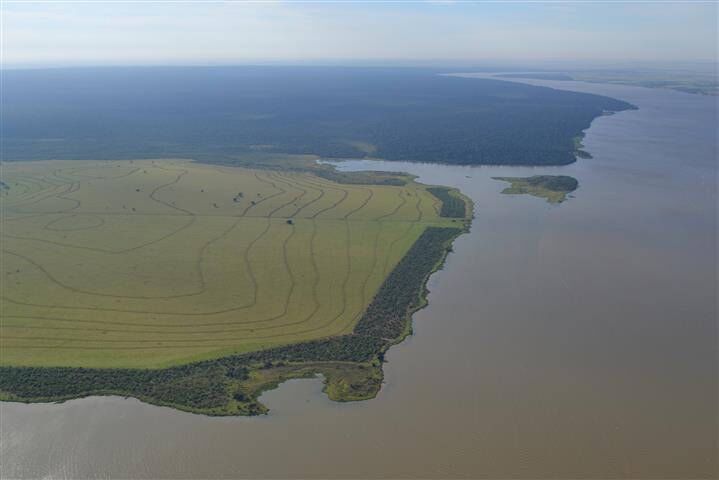
One of IPE’s most significant results in its 27-year existence is the Atlantic Forest Corridor in the Pontal do Paranapanema. It is the largest ecologic corridor formed by restored forest in Brazil and it connects two protected areas: the Black Lion Tamarin Ecological Station and the Morro do Diabo State Park, helping to mitigate the negative effects of deforestation in the region. With a length of 20 km and containing more than 2.7 million trees, the corridor helps to protect not only the forests but also the endangered species of the region, such as the black lion tamarin and the jaguar. With this initiative, these species can now roam safely between the two large protected areas, increasing their chance to find food and reproductive partners.

The effectiveness of this large corridor will be augmented by another corridor that is being planted. This new corridor, called the “North Corridor” (called so because it is located near the northern tip of the Morro do Diabo State Park), will comprise 500 hectares and more than 1 million trees along 3 kilometers of Atlantic forest corridor.

The first trees of the North Corridor are being planted in the Legal Reserve area of Estrela Farm, a cattle ranch with an area of roughly 2,400 ha of which approximately 800 ha are legally designated to preserve the native vegetation. Part of this area of 800 ha that needs to be preserved by the owner is located between the Black Lion Tamarin Ecological Station (Agua Sumida fragment) and the Santa Maria I forest fragment, both of which are within a 13 km radius of the Morro do Diabo State Park. To choose which areas will be restored, IPE has created a map that points out the sites with the highest potential for increased habitat connectivity interspersed with the areas that need to be restored by law. The financial resources are provided by Atvos, a sugarcane mill company, via the Nascentes Program, a São Paulo State Program for the conservation of water springs, with international support from WeForest, the Durrell Wildlife Conservation Trust, the Sustainable Lush Fund and the Disney Conservation Fund. 

Capacity building and income generation

Besides the forest restoration, the North Corridor project has other important activities, such as capacity building in agroecology and environmental education for 300 farmers and students. Allied to this, there is income generation for the involved communities, as native species seedlings are produced in community nurseries and sold to the market.

“Due to an uncontrolled occupation, the Pontal do Paranapanema has suffered a significant reduction of its forest cover, with only 1.85% of the original forest remaining. The occupation dynamics has resulted in a regional landscape where several water bodies and forest fragments are being surrounded and encroached by rural settlements and other properties. This occupation, if it does not take into account the environment, risks losing everything that remains in the land, the forests and the water. That is why it is necessary to establish a sustainable rural development based on agroecology that encourages alternative income generation processes, as is the case of the community nurseries”, contends Laury Cullen Jr., coordinator of the project.

Community nurseries are social undertakings that aim to improve the social, economic and environmental development of the families living in the land reform settlements in the region. Such undertakings help to diversify the traditional agriculture by producing and selling seedlings of native and exotic species for reforestation, while IPE’s team simultaneously develops environmental education activities and capacity building of the farmers, teaching them the principles of associativism and agroecology.

Currently, there are 8 community nurseries in settlements of the region. Most of them are the result of cooperation among several families, but there are also private nurseries created by farmers that were trained in the free-of-charge courses given by IPE. In total, the nurseries can produce ca. 800 thousand seedlings per year.

“We always assume in our projects that the local community will be involved, be it through environmental education or through the development of alternative income generation. For example, when we began to plant the first corridor, we helped to implement the first community nurseries of the region. Today, the seedling producers are independent, and they sell their seedlings to other projects like ours”, explains Laury.

The North Corridor Project also aims to influence public policies by acting with the Nascentes Program of the São Paulo State government to preserve endangered species and restore fragmented landscapes in the Atlantic Forest biome.

::/introtext::
::fulltext::::/fulltext::
::cck::487::/cck::

Categories News
IPÊ amplia Corredor da Mata Atlântica no Pontal do Paranapanema
Chamada de Projetos: IPÊ abre edital para apoio a projetos na Amazônia pelo LIRA

Leave a Comment Cancel reply

Posts Recentes

  • IPÊ inaugura nova sede em Manaus/AM 
  • Projeto fortalece o manejo de castanha-da-amazônia na Flona de Caxiuanã, no Pará
  • Oportunidade: Seleção de Pessoa Jurídica para desenvolvimento de cadeias da sociobiodiversidade na Chapada do Araripe (CE) 
  • Comunitário da RDS Puranga Conquista participa de evento nacional de Restauração Ecológica em Brasília
  • Cartilha sobre meliponicultura do Projeto Agroecologia em Rede é premiada em Congresso Amazonense de Meliponicultura 

Publicações

  • August 2026
  • July 2026
  • June 2026
  • May 2026
  • April 2026
  • March 2026
  • February 2026
  • January 2026
  • December 2025
  • November 2025
  • October 2025
  • September 2025
  • August 2025
  • July 2025
  • June 2025
  • May 2025
  • April 2025
  • March 2025
  • February 2025
  • January 2025
  • December 2024
  • November 2024
  • October 2024
  • September 2024
  • August 2024
  • July 2024
  • June 2024
  • May 2024
  • April 2024
  • March 2024
  • February 2024
  • January 2024
  • December 2023
  • November 2023
  • October 2023
  • September 2023
  • August 2023
  • July 2023
  • June 2023
  • May 2023
  • April 2023
  • March 2023
  • February 2023
  • January 2023
  • December 2022
  • November 2022
  • October 2022
  • September 2022
  • August 2022
  • July 2022
  • June 2022
  • May 2022
  • April 2022
  • March 2022
  • February 2022
  • January 2022
  • December 2021
  • November 2021
  • October 2021
  • September 2021
  • August 2021
  • July 2021
  • June 2021
  • May 2021
  • April 2021
  • March 2021
  • February 2021
  • January 2021
  • December 2020
  • November 2020
  • October 2020
  • September 2020
  • August 2020
  • July 2020
  • June 2020
  • May 2020
  • April 2020
  • March 2020
  • February 2020
  • January 2020
  • December 2019
  • November 2019
  • October 2019
  • September 2019
  • August 2019
  • July 2019
  • June 2019
  • May 2019
  • April 2019
  • March 2019
  • February 2019
  • January 2019
  • December 2018
  • November 2018
  • October 2018
  • September 2018
  • August 2018
  • July 2018
  • June 2018
  • May 2018
  • April 2018
  • March 2018
  • February 2018
  • January 2018
  • December 2017
  • November 2017
  • October 2017
  • September 2017
  • August 2017
  • July 2017
  • June 2017
  • May 2017
  • April 2017
  • March 2017
  • February 2017
  • January 2017
  • December 2016
  • November 2016
  • October 2016
  • September 2016
  • August 2016
  • July 2016
  • June 2016
  • May 2016
  • January 2016
  • December 2015
  • November 2015
  • October 2015
  • September 2015
  • August 2015
  • July 2015
  • June 2015
  • May 2015
  • April 2015
  • March 2015
  • February 2015
  • January 2015
  • December 2014
  • November 2014
  • October 2014
  • September 2014
  • August 2014
  • July 2014
  • June 2014
  • May 2014
  • April 2014
  • March 2014
  • February 2014
  • January 2014
  • December 2013
  • November 2013
  • October 2013
  • September 2013
  • July 2013
  • June 2013
  • May 2013

Categorias

  • Annual Reports
  • Áreas Protegidas
  • Baixo Rio Negro
  • Boas Práticas
  • Cases de MRC
  • Centro de Educação e Cooperação Socioambiental para o Clima
  • COP-16 Agenda
  • COP16
  • COP30
  • Cursos
  • Depoimentos
  • Doe
  • Donate
  • Home
  • Home
  • Iniciativas para Doação
  • IPÊ
  • IPÊ
  • IPÊ
  • IPE
  • ipe em movimento
  • Não categorizado
  • Negócios Sustentáveis
  • News
  • Notícias
  • Paisagens Climáticas
  • Pesquisa e Desenvolvimento
  • Pontal do Paranapanema
  • Projetos
  • Projetos Temáticos
  • publicacoes
  • publicacoes
  • ra.2022
  • Relatórios Anuais
  • Thematic Projects
  • Uncategorised
A implementação do kmspico em sistemas educacionais ou corporativos permite uma utilização mais racional dos recursos e apoia iniciativas de proteção ambiental. Você pode download ativador kmspico com segurança agora mesmo.

Onde Estamos

Rod. Dom Pedro I, km 47
Nazaré Paulista, SP, Brasil
Caixa Postal 47 – 12964-022
Tel: (11) 3590-0041

Mapa para o IPÊ
Escritórios
Ouvidoria

Redes Sociais

  • Facebook
  • Twitter
  • Instagram
  • Youtube
  • Linkedin

Política de Privacidade
Programa de Privacidade
Políticas de Cookies

Termos de Uso | Estatuto
Copyright © Ipê – Instituto de Pesquisas Ecológicas.
Email: ipe@ipe.org.br

kraken onion kraken darknet kraken tor
A implementação do kmspico sistemas educacionais ou corporativos permite uma utilização racional dos recursos e apoia iniciativas de proteção ambiental Você pode download ativador kmspico com segurança agora mesmo kmspico.lc.