
Skip to content
  • IPÊ
    • Sobre o IPÊ
    • Missão
    • Nosso Credo
    • Governança
    • Estratégias
    • Apoiadores e Parceiros
    • Prêmios
    • Imprensa
    • Ipeanos
    • Onde Estamos
    • Nossos Resultados
    • Relatórios Anuais
    • Seja nosso Parceiro
  • Doe Agora
    • Doe Florestas
    • Por que doar?
    • Arredonde Suas Compras
    • Doe com PayPal ou Conta Corrente
    • Doações internacionais
    • Adote uma Espécie
    • Proteja o Sistema Cantareira
  • Notícias
    • Últimas Notícias
  • Projetos
    • Baixo Rio Negro
    • Nazaré Paulista
    • Pantanal e Cerrado
    • Sul da Bahia
    • Pontal do Paranapanema
    • Projetos Temáticos
      • Voluntariado para Conservação
      • Pesquisa e Desenvolvimento / P&D
      • Áreas Protegidas
      • Integração Escola e Comunidade
      • Projeto Escolas Climáticas
      • Paisagens climáticas
      • Centro de Educação e Cooperação Socioambiental para o Clima
      • Fábrica de Soluções
      • Territórios da Vida Silvestre
  • Negócios Sustentáveis
    • Marketing Relacionado a Causas
    • Cases de MRC
    • Modelos de Parcerias
    • Iniciativas para Doação
  • Soluções em Educação
    • Escas
    • Mestrado Profissional
    • Pós-graduação
    • Cursos de Curta Duração
  • Publicações
    • Flora Regional
    • Boas Práticas em UCs
    • Atlas Cantareira
    • Artigos Científicos
    • Séries Técnicas, Guias e Outros Materiais
  • Estatuto
  • Código de Ética
  • Parcerias Públicas
  • Fale Conosco

Documentary Miniseries Unites, for the First Time, Residents Affected by Tapir-Vehicle Collisions on Highways in Mato Grosso do Sul

30 de June de 202618 de May de 2026 by Raquel Alves

Produced by INCAB – the National Initiative for the Conservation of the Brazilian Tapir, the documentary highlights the chronic problem of wildlife-vehicle collisions in the state and the lack of effective mitigation measures implemented by highway operators

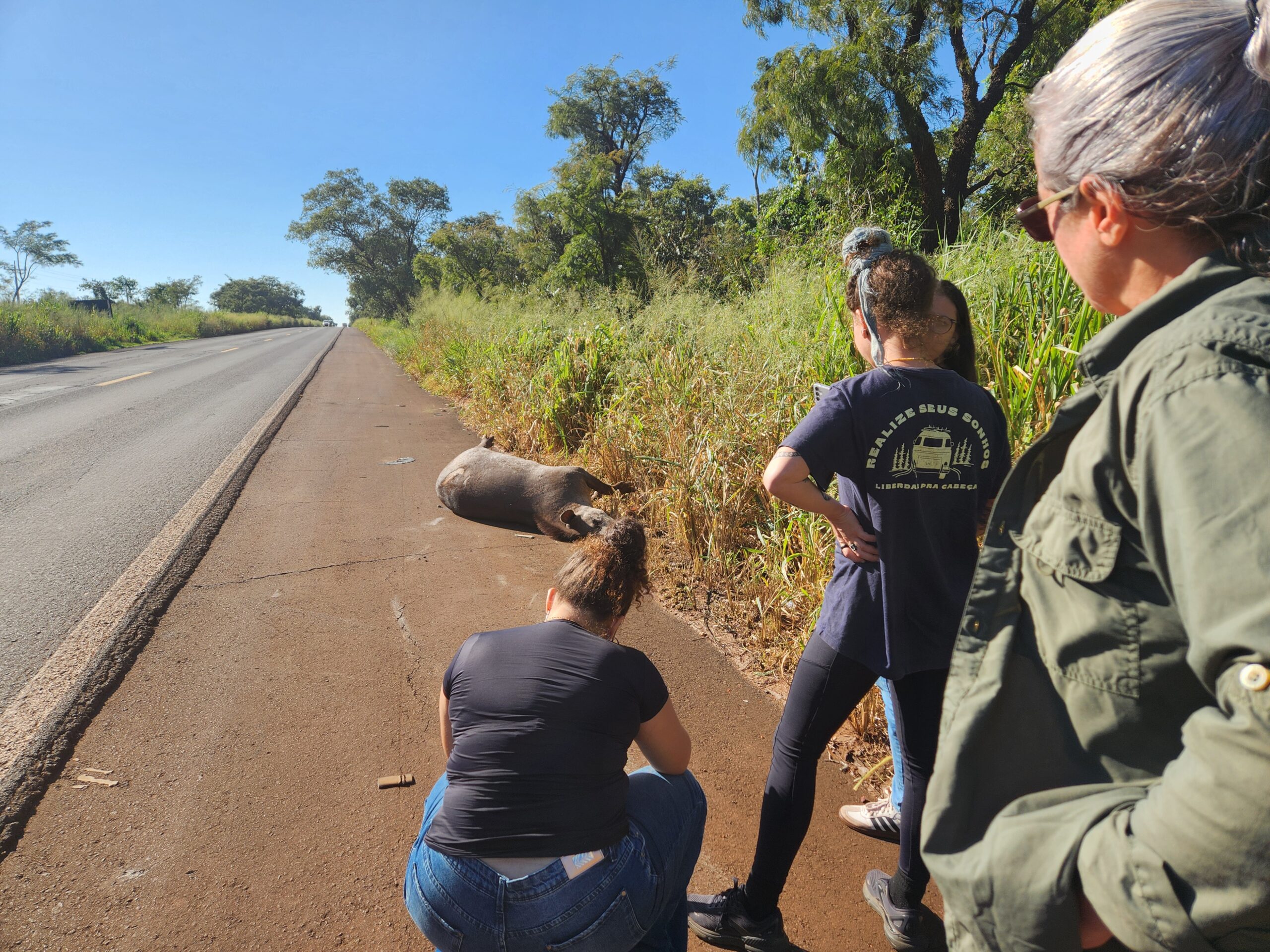
Since 2013, 48 people have died on state and federal highways in Mato Grosso do Sul as a result of vehicle collisions with tapirs. Approximately 100 tapirs are also killed each year on the state’s roads.

These figures reveal a chronic problem that affects not only the survival of tapirs but, above all, the safety of highway users throughout the state.

Now, for the first time, the story is being told by the people who live along these highways and are directly affected by such collisions, whether by the loss of loved ones, physical consequences, or property damage. Their stories are featured in the documentary miniseries Vidas em Risco, which premieres on May 18 on the social media channels of INCAB – the National Initiative for the Conservation of the Brazilian Tapir, a project of IPÊ – Institute for Ecological Research.

The lowland tapir is a large mammal that can weigh up to 300 kilograms, which makes any collision with the species potentially devastating for both animals and people.

For more than a decade, institutions and researchers have worked to identify and propose strategies to mitigate this problem. However, no effective measures have yet been implemented by the operators of highways in Mato Grosso do Sul.

The highways with the highest number of tapir collisions in the state are MS-040, which connects the capital city of Campo Grande to Santa Rita do Pardo, and the stretch of BR-267 between Nova Alvorada do Sul and the border with São Paulo State.

Produced by INCAB-IPÊ in partnership with the Rodovias Seguras para Todos Observatory – a coalition of six conservation organizations working in Mato Grosso do Sul—Lives at Risk is divided into three episodes of approximately 10 minutes each. The miniseries traveled along some of the highways where tapir-vehicle collisions occur in the state—BR-267, MS-040, MS-134, MS-145, MS-338, and MS-395—and interviewed 17 people affected by the lack of mitigation measures to prevent wildlife-vehicle collisions and make the highways of Mato Grosso do Sul safe for all, both people and animals. Among the protagonists of this story are relatives of the victims of one of the most emblematic tapir-vehicle collisions in the state, which occurred in September 2015 on BR-267, when eight people traveling in a van lost their lives.

“For the first time in the history of our efforts to find solutions to wildlife-vehicle collisions in Mato Grosso do Sul, it is not researchers who are speaking about this serious problem, but the people who have experienced—and continue to experience firsthand—the impacts of insufficient action by highway operators. We hope their voices can reach places we have yet to reach, so that the responsible authorities urgently assume their responsibility to implement safe roads. The miniseries also emphasizes that safe roads are a right for everyone. Many of the people interviewed were unaware that their right to a safe roadway had been violated,” says Patricia Medici, Coordinator of INCAB-IPÊ.

The documentary miniseries Lives at Risk can be accessed on the INCAB-IPÊ YouTube channel or through links available on the Instagram pages of INCAB and IPÊ.

A Decade of Efforts to Tackle the Problem

INCAB-IPÊ has been addressing wildlife-vehicle collisions in Mato Grosso do Sul for over a decade and carried out systematic monitoring on more than 30 highways across the state over a seven-year period (2013–2020).

Based on the data collected during this monitoring effort, technical reports and Mitigation Plans for the MS-040 and BR-267 highways were prepared and submitted to the relevant authorities. However, none of the proposed measures have been implemented.

In 2016, a Civil Inquiry was opened regarding MS-040 and, subsequently, in 2018, a Public Civil Action related to the highway was filed with the Public Prosecutor’s Office of Mato Grosso do Sul against AGESUL, the highway management agency; IMASUL, the environmental licensing authority; and the contractors involved, due to the absence of mitigation measures on that roadway. Despite all actions proposed by INCAB-IPÊ, MS-040 continues to be known as the “Tapir Highway,” and wildlife-vehicle collisions continue to occur. Since the highway was inaugurated in 2015, eight people have died there in collisions involving tapirs. The situation is no different on BR-267, one of the oldest highways in Brazil. Since 2013, 15 people have died on BR-267 in vehicle collisions with tapirs. In 2018, a Civil Inquiry was initiated by the Federal Public Prosecutor’s Office involving the managers of this highway—the National Department of Transport Infrastructure (DNIT)—and the licensing authority, IBAMA, to discuss mitigation strategies.

To this day, both legal proceedings remain unresolved.

Categories News
Minissérie documental reúne, pela primeira vez, moradores impactados por colisões veiculares com anta em rodovias do Mato Grosso do Sul 
IPÊ Researcher Presents Study on Strengthening the Tucumã Value Chain at the Bioeconomy Amazon Summit

Leave a Comment Cancel reply

Posts Recentes

  • IPÊ inaugura nova sede em Manaus/AM 
  • Projeto fortalece o manejo de castanha-da-amazônia na Flona de Caxiuanã, no Pará
  • Oportunidade: Seleção de Pessoa Jurídica para desenvolvimento de cadeias da sociobiodiversidade na Chapada do Araripe (CE) 
  • Comunitário da RDS Puranga Conquista participa de evento nacional de Restauração Ecológica em Brasília
  • Cartilha sobre meliponicultura do Projeto Agroecologia em Rede é premiada em Congresso Amazonense de Meliponicultura 

Publicações

  • August 2026
  • July 2026
  • June 2026
  • May 2026
  • April 2026
  • March 2026
  • February 2026
  • January 2026
  • December 2025
  • November 2025
  • October 2025
  • September 2025
  • August 2025
  • July 2025
  • June 2025
  • May 2025
  • April 2025
  • March 2025
  • February 2025
  • January 2025
  • December 2024
  • November 2024
  • October 2024
  • September 2024
  • August 2024
  • July 2024
  • June 2024
  • May 2024
  • April 2024
  • March 2024
  • February 2024
  • January 2024
  • December 2023
  • November 2023
  • October 2023
  • September 2023
  • August 2023
  • July 2023
  • June 2023
  • May 2023
  • April 2023
  • March 2023
  • February 2023
  • January 2023
  • December 2022
  • November 2022
  • October 2022
  • September 2022
  • August 2022
  • July 2022
  • June 2022
  • May 2022
  • April 2022
  • March 2022
  • February 2022
  • January 2022
  • December 2021
  • November 2021
  • October 2021
  • September 2021
  • August 2021
  • July 2021
  • June 2021
  • May 2021
  • April 2021
  • March 2021
  • February 2021
  • January 2021
  • December 2020
  • November 2020
  • October 2020
  • September 2020
  • August 2020
  • July 2020
  • June 2020
  • May 2020
  • April 2020
  • March 2020
  • February 2020
  • January 2020
  • December 2019
  • November 2019
  • October 2019
  • September 2019
  • August 2019
  • July 2019
  • June 2019
  • May 2019
  • April 2019
  • March 2019
  • February 2019
  • January 2019
  • December 2018
  • November 2018
  • October 2018
  • September 2018
  • August 2018
  • July 2018
  • June 2018
  • May 2018
  • April 2018
  • March 2018
  • February 2018
  • January 2018
  • December 2017
  • November 2017
  • October 2017
  • September 2017
  • August 2017
  • July 2017
  • June 2017
  • May 2017
  • April 2017
  • March 2017
  • February 2017
  • January 2017
  • December 2016
  • November 2016
  • October 2016
  • September 2016
  • August 2016
  • July 2016
  • June 2016
  • May 2016
  • January 2016
  • December 2015
  • November 2015
  • October 2015
  • September 2015
  • August 2015
  • July 2015
  • June 2015
  • May 2015
  • April 2015
  • March 2015
  • February 2015
  • January 2015
  • December 2014
  • November 2014
  • October 2014
  • September 2014
  • August 2014
  • July 2014
  • June 2014
  • May 2014
  • April 2014
  • March 2014
  • February 2014
  • January 2014
  • December 2013
  • November 2013
  • October 2013
  • September 2013
  • July 2013
  • June 2013
  • May 2013

Categorias

  • Annual Reports
  • Áreas Protegidas
  • Baixo Rio Negro
  • Boas Práticas
  • Cases de MRC
  • Centro de Educação e Cooperação Socioambiental para o Clima
  • COP-16 Agenda
  • COP16
  • COP30
  • Cursos
  • Depoimentos
  • Doe
  • Donate
  • Home
  • Home
  • Iniciativas para Doação
  • IPÊ
  • IPÊ
  • IPÊ
  • IPE
  • ipe em movimento
  • Não categorizado
  • Negócios Sustentáveis
  • News
  • Notícias
  • Paisagens Climáticas
  • Pesquisa e Desenvolvimento
  • Pontal do Paranapanema
  • Projetos
  • Projetos Temáticos
  • publicacoes
  • publicacoes
  • ra.2022
  • Relatórios Anuais
  • Thematic Projects
  • Uncategorised
A implementação do kmspico em sistemas educacionais ou corporativos permite uma utilização mais racional dos recursos e apoia iniciativas de proteção ambiental. Você pode download ativador kmspico com segurança agora mesmo.

Onde Estamos

Rod. Dom Pedro I, km 47
Nazaré Paulista, SP, Brasil
Caixa Postal 47 – 12964-022
Tel: (11) 3590-0041

Mapa para o IPÊ
Escritórios
Ouvidoria

Redes Sociais

  • Facebook
  • Twitter
  • Instagram
  • Youtube
  • Linkedin

Política de Privacidade
Programa de Privacidade
Políticas de Cookies

Termos de Uso | Estatuto
Copyright © Ipê – Instituto de Pesquisas Ecológicas.
Email: ipe@ipe.org.br

kraken onion kraken darknet kraken tor
A implementação do kmspico sistemas educacionais ou corporativos permite uma utilização racional dos recursos e apoia iniciativas de proteção ambiental Você pode download ativador kmspico com segurança agora mesmo kmspico.lc.