
Pular para o conteúdo
  • IPÊ
    • Sobre o IPÊ
    • Missão
    • Nosso Credo
    • Governança
    • Staff Senior
    • Ipeanos
    • Estratégias
    • Apoiadores e Parceiros
    • Prêmios
    • Imprensa
    • Onde Estamos
    • Nossos Resultados
    • Relatórios Anuais
    • Seja nosso Parceiro
  • Doe Agora
    • Doe Florestas
    • Por que doar?
    • Arredonde Suas Compras
    • Doe com PayPal ou Conta Corrente
    • Doações internacionais
    • Adote uma Espécie
    • Proteja o Sistema Cantareira
  • Notícias
    • Últimas Notícias
  • Projetos
    • Baixo Rio Negro
    • Nazaré Paulista
    • Pantanal e Cerrado
    • Sul da Bahia
    • Pontal do Paranapanema
    • Projetos Temáticos
      • Voluntariado para Conservação
      • Pesquisa e Desenvolvimento / P&D
      • Áreas Protegidas
      • Integração Escola e Comunidade
      • Projeto Escolas Climáticas
      • Paisagens climáticas
      • Centro de Educação e Cooperação Socioambiental para o Clima
  • Negócios Sustentáveis
    • Marketing Relacionado a Causas
    • Cases de MRC
    • Modelos de Parcerias
    • Iniciativas para Doação
  • Soluções em Educação
    • Escas
    • Mestrado Profissional
    • Pós-graduação
    • Cursos de Curta Duração
  • Publicações
    • Flora Regional
    • Boas Práticas em UCs
    • Atlas Cantareira
    • Artigos Científicos
    • Séries Técnicas, Guias e Outros Materiais
  • Estatuto
  • Código de Ética
  • Parcerias Públicas
  • Fale Conosco
  • Português

Studies show that the life of the black-lion-tamarin depends on the connection between forests and on 98% of genetic variability

30 de setembro de 2021 Por Paula Piccin

::cck::867::/cck::
::introtext::

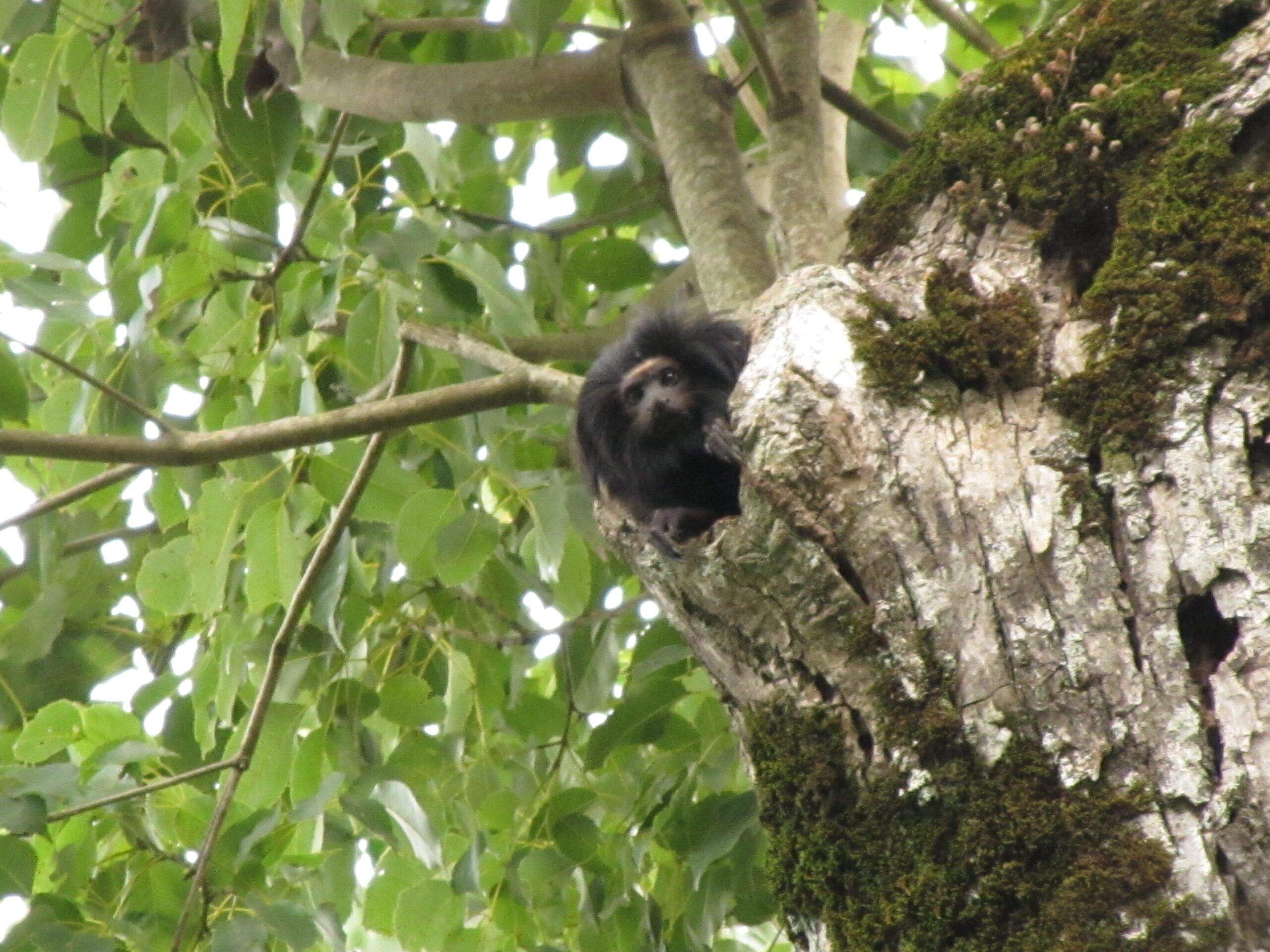
The black-lion-tamarin (Leontopithecus chrysopygus), an endangered species that only occurs in the interior of the state of São Paulo, was the subject of the first environmental conservation study by IPÊ – Institute for Ecological Research, which, thanks to research on the primate, expanded its actions with landscape restoration and environmental education projects.

Despite extensive research over 35 years, unprecedented data still emerges about the species. The most recent studies analyzed the influence of the structure of the forest– conserved or degraded – on the conservation of the black-lion-tamarin and were presented at the Virtual Meeting of the Association for Tropical Biology and Conservation (ATBC), from 21 to 23 July.

Gabriela Rezende, who is a Ph.D. candidate in Ecology, Evolution and Biodiversity (UNESP – Rio Claro) and also a Master from ESCAS-IPÊ leads the research. The study analyzed data from “backpacks” with GPS (small mechanism for monitoring animals) in four groups of tamarins in two different areas: in a very conserved area, the Ponte Branca fragment, from the Mico-leão-preto Ecological Station (ICMBio ), in the far west of São Paulo; and in an intensely fragmented area, in the municipality of Guareí (also in São Paulo).

The difference between these areas is also present in the dimensions. The area analyzed at the Ecological Station has 1,303 hectares, the equivalent of a little bit over 1,000 soccer fields. The area in Guareí is only 105 hectares – around 100 football fields. The groups were followed for 10 to 22 consecutive days, between September 2019 and February 2021. The original research data were presented at the Virtual Meeting of the Association for Tropical Biology and Conservation (ATBC), this week (July 21 to 23). ), in an online meeting.

“The data showed that the groups in the smaller fragment also have reduced home ranges, up to five times smaller than the home ranges used by the Ecological Station groups. In addition, in Guareí there was an overlap of up to 37% of these neighboring territories, whereas in Ponte Branca this was not observed. These results suggest a strong fragmentation effect in the use of space by the tamarins. The most interesting is that, despite this difference between the areas, the distance traveled by the tamarins per day is on average 2 .6 km in both areas”, reveals Gabriela Rezende, who signs the research together with Milene Alves-Eigenheer (UENF), Luca Börger (Swansea University – United Kingdom), Daniel Felippi (IPÊ), Gabriel P. Sabino (UNESP – Rio Claro) and Laurence Culot (UNESP – Rio Claro).

In the next phase of the research, the goal is to quantify the energy expenditure of animals in these areas and integrate information about the structure of the vegetation in the analyzes to understand what may cause these variations.

High risk of extinction

          Francy Forero Sanchez, a researcher at IPÊ’s Black-Lion-Tamarin Conservation Program, sought to estimate whether known populations will continue to resist in the long run. To obtain this data, Francy used the Population Viability Analysis (PVA) methodology, through software that aligned these variables to the threats present in each region.

“The viability and health of the tamarin population demand at least 98% genetic diversity in the population. This makes the species more resistant to disease, for example. The risk of extinction threat must be less than or at most equal to 2%, the smallest possible. What we saw is that in this scenario, among the 17 populations analyzed, only two are viable in the long term (100 years, equivalent to 13 generations), especially due to the number of individuals. Six populations can become extinct on average in 25 years due to a combination of factors involving: isolation, low genetic variability, and threats. Based on the analysis of all these variables, the minimum population to guarantee the species’ viability is 800 individuals”, he highlights.

In Francy’s opinion, the study reinforces the importance of the continuity of IPÊ’s actions, both related to habitat recovery and the management of small groups. “The smaller the tamarin populations and the more isolated due to the fragmentation of the landscape, the greater the risks. Long-term conservation of the species is related to increased connectivity between fragments. This action has the potential to contribute to gene flow. In the same measure, we need to implement effective management strategies involving individuals, especially small populations isolated in small fragments”. Francy is also a Master in Biodiversity Conservation and Sustainable Development, by ESCAS/IPÊ – School of Environmental Conservation and Sustainability.

Francy is co-authored by Gabriela Rezende (UNESP/IPÊ), Kathy Traylor-Holzer (CPSG/UICN), Cláudio Valladares Padua (ESCAS) and Arnaud Desbiez (ICAS/IPÊ).

::/introtext::
::fulltext::::/fulltext::
::cck::867::/cck::

Categorias News
Rural women: Agroforestry systems benefit farmers in Pontal do Paranapanema
Action capacitates community in favor of biodiversity in Amazon

Deixe um comentário Cancelar resposta

Posts Recentes

  • Em conjunto com organizações e população local, projeto promove discussões para avançar na construção de Plano de Convivência entre Humanos e Fauna no Pontal do Paranapanema  
  • Programe-se para curso 100% online Sistemas produtivos para restauração de paisagens florestais 
  • Iniciativas do Centro de Educação e Cooperação Socioambiental pelo Clima participam de treinamento para captação de recursos 
  • Já estão abertas as inscrições para a 1ª Corrida do Mico-leão-preto 
  • Ecoswim 2025 registra recorde de público em edição no Pacaembu 

Publicações

  • dezembro 2025
  • novembro 2025
  • outubro 2025
  • setembro 2025
  • agosto 2025
  • julho 2025
  • junho 2025
  • maio 2025
  • abril 2025
  • março 2025
  • fevereiro 2025
  • janeiro 2025
  • dezembro 2024
  • novembro 2024
  • outubro 2024
  • setembro 2024
  • agosto 2024
  • julho 2024
  • junho 2024
  • maio 2024
  • abril 2024
  • março 2024
  • fevereiro 2024
  • janeiro 2024
  • dezembro 2023
  • novembro 2023
  • outubro 2023
  • setembro 2023
  • agosto 2023
  • julho 2023
  • junho 2023
  • maio 2023
  • abril 2023
  • março 2023
  • fevereiro 2023
  • janeiro 2023
  • dezembro 2022
  • novembro 2022
  • outubro 2022
  • setembro 2022
  • agosto 2022
  • julho 2022
  • junho 2022
  • maio 2022
  • abril 2022
  • março 2022
  • fevereiro 2022
  • janeiro 2022
  • dezembro 2021
  • novembro 2021
  • outubro 2021
  • setembro 2021
  • agosto 2021
  • julho 2021
  • junho 2021
  • maio 2021
  • abril 2021
  • março 2021
  • fevereiro 2021
  • janeiro 2021
  • dezembro 2020
  • novembro 2020
  • outubro 2020
  • setembro 2020
  • agosto 2020
  • julho 2020
  • junho 2020
  • maio 2020
  • abril 2020
  • março 2020
  • fevereiro 2020
  • janeiro 2020
  • dezembro 2019
  • novembro 2019
  • outubro 2019
  • setembro 2019
  • agosto 2019
  • julho 2019
  • junho 2019
  • maio 2019
  • abril 2019
  • março 2019
  • fevereiro 2019
  • janeiro 2019
  • dezembro 2018
  • novembro 2018
  • outubro 2018
  • setembro 2018
  • agosto 2018
  • julho 2018
  • junho 2018
  • maio 2018
  • abril 2018
  • março 2018
  • fevereiro 2018
  • janeiro 2018
  • dezembro 2017
  • novembro 2017
  • outubro 2017
  • setembro 2017
  • agosto 2017
  • julho 2017
  • junho 2017
  • maio 2017
  • abril 2017
  • março 2017
  • fevereiro 2017
  • janeiro 2017
  • dezembro 2016
  • novembro 2016
  • outubro 2016
  • setembro 2016
  • agosto 2016
  • julho 2016
  • junho 2016
  • maio 2016
  • janeiro 2016
  • dezembro 2015
  • novembro 2015
  • outubro 2015
  • setembro 2015
  • agosto 2015
  • julho 2015
  • junho 2015
  • maio 2015
  • abril 2015
  • março 2015
  • fevereiro 2015
  • janeiro 2015
  • dezembro 2014
  • novembro 2014
  • outubro 2014
  • setembro 2014
  • agosto 2014
  • julho 2014
  • junho 2014
  • maio 2014
  • abril 2014
  • março 2014
  • fevereiro 2014
  • janeiro 2014
  • dezembro 2013
  • novembro 2013
  • outubro 2013
  • setembro 2013
  • julho 2013
  • junho 2013
  • maio 2013

Categorias

  • Áreas Protegidas
  • Baixo Rio Negro
  • Boas Práticas
  • Cases de MRC
  • Centro de Educação e Cooperação Socioambiental para o Clima
  • COP-16 Agenda
  • COP16
  • COP30
  • Cursos
  • Depoimentos
  • Doe
  • Home
  • Iniciativas para Doação
  • IPÊ
  • IPÊ
  • ipe em movimento
  • Não categorizado
  • Negócios Sustentáveis
  • Notícias
  • Paisagens Climáticas
  • Pesquisa e Desenvolvimento
  • Pontal do Paranapanema
  • Projetos
  • Projetos Temáticos
  • publicacoes
  • ra.2022
  • Relatórios Anuais
  • Uncategorised
A implementação do kmspico em sistemas educacionais ou corporativos permite uma utilização mais racional dos recursos e apoia iniciativas de proteção ambiental. Você pode download ativador kmspico com segurança agora mesmo.

Onde Estamos

Rod. Dom Pedro I, km 47
Nazaré Paulista, SP, Brasil
Caixa Postal 47 – 12960-000
Tel: (11) 3590-0041

Mapa para o IPÊ
Escritórios
Ouvidoria

Redes Sociais

  • Facebook
  • Twitter
  • Instagram
  • Youtube
  • Linkedin

Política de Privacidade
Programa de Privacidade
Políticas de Cookies

Termos de Uso | Estatuto
Copyright © Ipê – Instituto de Pesquisas Ecológicas.
Email: ipe@ipe.org.br

  • Português
kraken onion kraken darknet kraken tor
A implementação do kmspico em sistemas educacionais ou corporativos permite uma utilização mais racional dos recursos e apoia iniciativas de proteção ambiental. Você pode download ativador kmspico com segurança agora mesmo.