
Pular para o conteúdo
  • IPÊ
    • Sobre o IPÊ
    • Missão
    • Nosso Credo
    • Governança
    • Staff Senior
    • Ipeanos
    • Estratégias
    • Apoiadores e Parceiros
    • Prêmios
    • Imprensa
    • Onde Estamos
    • Nossos Resultados
    • Relatórios Anuais
    • Seja nosso Parceiro
  • Doe Agora
    • Doe Florestas
    • Por que doar?
    • Arredonde Suas Compras
    • Doe com PayPal ou Conta Corrente
    • Doações internacionais
    • Adote uma Espécie
    • Proteja o Sistema Cantareira
  • Notícias
    • Últimas Notícias
  • Projetos
    • Baixo Rio Negro
    • Nazaré Paulista
    • Pantanal e Cerrado
    • Sul da Bahia
    • Pontal do Paranapanema
    • Projetos Temáticos
      • Voluntariado para Conservação
      • Pesquisa e Desenvolvimento / P&D
      • Áreas Protegidas
      • Integração Escola e Comunidade
      • Projeto Escolas Climáticas
      • Paisagens climáticas
      • Centro de Educação e Cooperação Socioambiental para o Clima
  • Negócios Sustentáveis
    • Marketing Relacionado a Causas
    • Cases de MRC
    • Modelos de Parcerias
    • Iniciativas para Doação
  • Soluções em Educação
    • Escas
    • Mestrado Profissional
    • Pós-graduação
    • Cursos de Curta Duração
  • Publicações
    • Flora Regional
    • Boas Práticas em UCs
    • Atlas Cantareira
    • Artigos Científicos
    • Séries Técnicas, Guias e Outros Materiais
  • Estatuto
  • Código de Ética
  • Parcerias Públicas
  • Fale Conosco
  • Português

Gabriela Cabral Rezende wins the Whitley Award for her efforts in the conservation of the black lion tamarin

29 de abril de 2020 Por Paula Piccin

::cck::609::/cck::
::introtext::


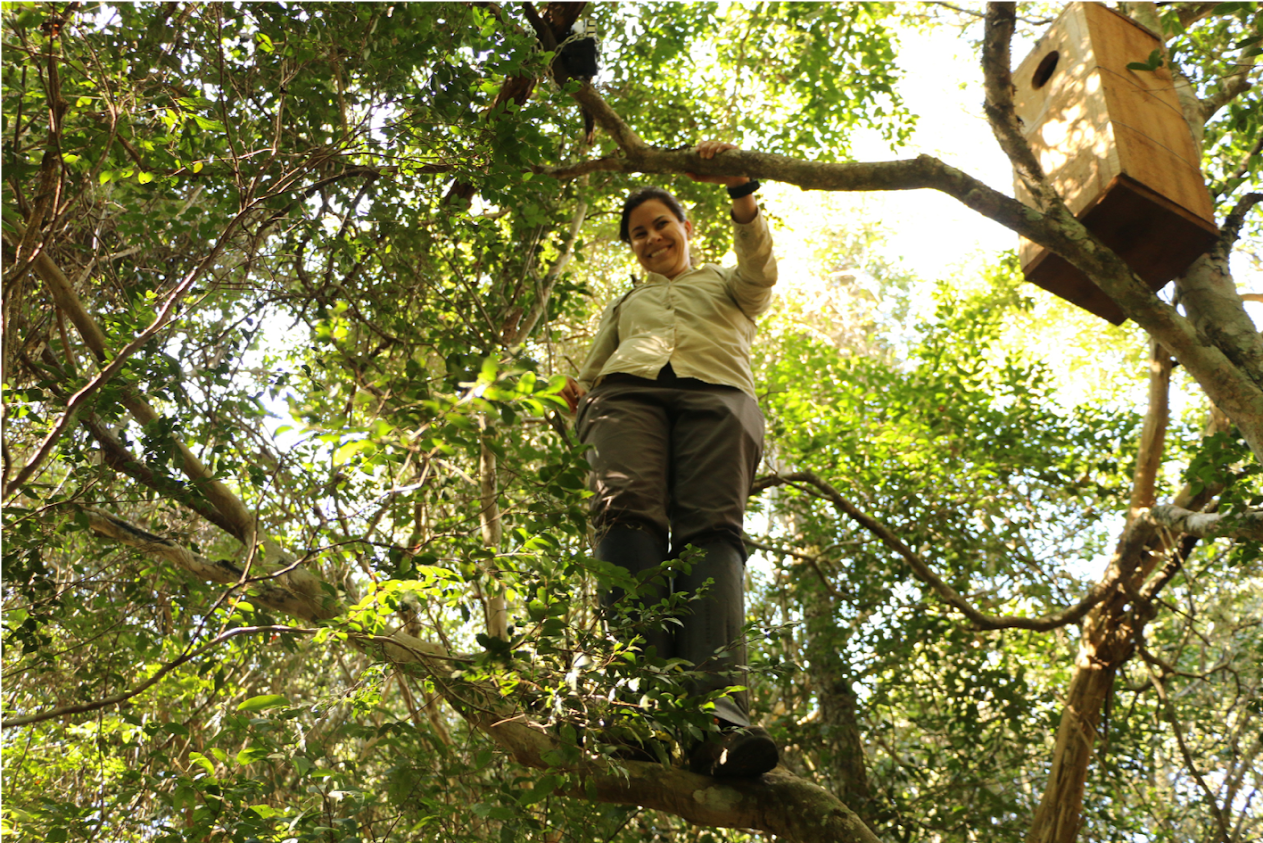
Biologist Gabriela Cabral Rezende coordinates the Black Lion Tamarin Conservation Program of IPE, one of the longest-living conservation programs in Brazil, and that recently completed 35 years of uninterrupted activities. Among more than 100 applications, the researcher and other five scientists from different countries won the 2020 Whitley Awards. Each prize is worth £40,000, which will be used in the respective projects.

Nine years ago, Gabriela inherited the program coordination from primatologist Claudio Padua, one of the founders of IPE and the first Brazilian to win the Whitey Award, in 1999. In the extreme west of São Paulo state, the main headquarters of the program is in the Pontal do Paranapanema region, where is located the largest forest remnant of Atlantic Forest in the interior of São Paulo state – one of the last hotspots of global biodiversity.

With an original area of 1.3 million square kilometers, only 14% of the Atlantic Forest remains, as much of it was cut for sugarcane plantation and cattle ranching. With only 1,800 black lion tamarins in the wild, its remaining habitat is highly fragmented, with small and isolated populations.

“The black lion tamarin exists only in the state of São Paulo. For this reason, it is the official state mammal symbol. We are responsible for guaranteeing its existence. I am extremely grateful for the award, that will help us to continue a conservation work that needs to be carried out for the long term, in order for us to see its results” stated Gabriela.

Gabriela and her team work to protect the black lion tamarins by carrying out scientific research, environmental education, and forest restoration. With the collaboration with local communities, IPE restores forest corridors that connect several native forest fragments. The action generates capacity building and improves the income of the population: nine community nurseries and agroforestry plantations help to implement the corridors. The largest of them is also the largest in Brazil, with more than 20 kilometers long and 2.5 million of trees planted.

To know more: https://www.youtube.com/watch?v=wGnWKzzYVD4&t=

Funding from the Whitley Award will enable the plantation of more corridors by Gabriela and her team. The goal is to connect every population of black lion tamarin in the region, with the establishment of a continuous forest area of approximately 45,000 hectares (45,000 soccer fields). Besides reforestation, the research plans to transfer groups of black lion tamarins to forest patches currently uninhabited by the species, to guarantee their presence in a wide forested area. This is part of a plan to avoid genetic consanguinity and to assure that these small monkeys have enough resources to survive. The environmental education activities promoted by IPE will also continue in the region.


::/introtext::
::fulltext::::/fulltext::
::cck::609::/cck::

Categorias News
Patrícia Medici, IPE researcher, wins the main Environmental Conservation Award
ARTIGO – O dilema do coronavírus: da tragédia à solução

Deixe um comentário Cancelar resposta

Posts Recentes

  • Multilateralismo na sociobioeconomia foi tema de debate na Casa IPÊ durante a COP30 
  • COP30: Três pontos relevantes da Bioeconomia e Sociobioeconomia para acompanhar 
  • Projeto Escolas Climáticas lança plataforma com metodologia sistematizada que possibilita dar escala à iniciativa  
  • Como é planejado um corredor ecológico? 
  • Projeto Corredores de Vida formaliza grupo de trabalho para fortalecer protagonismo feminino na restauração florestal  

Publicações

  • dezembro 2025
  • novembro 2025
  • outubro 2025
  • setembro 2025
  • agosto 2025
  • julho 2025
  • junho 2025
  • maio 2025
  • abril 2025
  • março 2025
  • fevereiro 2025
  • janeiro 2025
  • dezembro 2024
  • novembro 2024
  • outubro 2024
  • setembro 2024
  • agosto 2024
  • julho 2024
  • junho 2024
  • maio 2024
  • abril 2024
  • março 2024
  • fevereiro 2024
  • janeiro 2024
  • dezembro 2023
  • novembro 2023
  • outubro 2023
  • setembro 2023
  • agosto 2023
  • julho 2023
  • junho 2023
  • maio 2023
  • abril 2023
  • março 2023
  • fevereiro 2023
  • janeiro 2023
  • dezembro 2022
  • novembro 2022
  • outubro 2022
  • setembro 2022
  • agosto 2022
  • julho 2022
  • junho 2022
  • maio 2022
  • abril 2022
  • março 2022
  • fevereiro 2022
  • janeiro 2022
  • dezembro 2021
  • novembro 2021
  • outubro 2021
  • setembro 2021
  • agosto 2021
  • julho 2021
  • junho 2021
  • maio 2021
  • abril 2021
  • março 2021
  • fevereiro 2021
  • janeiro 2021
  • dezembro 2020
  • novembro 2020
  • outubro 2020
  • setembro 2020
  • agosto 2020
  • julho 2020
  • junho 2020
  • maio 2020
  • abril 2020
  • março 2020
  • fevereiro 2020
  • janeiro 2020
  • dezembro 2019
  • novembro 2019
  • outubro 2019
  • setembro 2019
  • agosto 2019
  • julho 2019
  • junho 2019
  • maio 2019
  • abril 2019
  • março 2019
  • fevereiro 2019
  • janeiro 2019
  • dezembro 2018
  • novembro 2018
  • outubro 2018
  • setembro 2018
  • agosto 2018
  • julho 2018
  • junho 2018
  • maio 2018
  • abril 2018
  • março 2018
  • fevereiro 2018
  • janeiro 2018
  • dezembro 2017
  • novembro 2017
  • outubro 2017
  • setembro 2017
  • agosto 2017
  • julho 2017
  • junho 2017
  • maio 2017
  • abril 2017
  • março 2017
  • fevereiro 2017
  • janeiro 2017
  • dezembro 2016
  • novembro 2016
  • outubro 2016
  • setembro 2016
  • agosto 2016
  • julho 2016
  • junho 2016
  • maio 2016
  • janeiro 2016
  • dezembro 2015
  • novembro 2015
  • outubro 2015
  • setembro 2015
  • agosto 2015
  • julho 2015
  • junho 2015
  • maio 2015
  • abril 2015
  • março 2015
  • fevereiro 2015
  • janeiro 2015
  • dezembro 2014
  • novembro 2014
  • outubro 2014
  • setembro 2014
  • agosto 2014
  • julho 2014
  • junho 2014
  • maio 2014
  • abril 2014
  • março 2014
  • fevereiro 2014
  • janeiro 2014
  • dezembro 2013
  • novembro 2013
  • outubro 2013
  • setembro 2013
  • julho 2013
  • junho 2013
  • maio 2013

Categorias

  • Áreas Protegidas
  • Baixo Rio Negro
  • Boas Práticas
  • Cases de MRC
  • Centro de Educação e Cooperação Socioambiental para o Clima
  • COP-16 Agenda
  • COP16
  • COP30
  • Cursos
  • Depoimentos
  • Doe
  • Home
  • Iniciativas para Doação
  • IPÊ
  • IPÊ
  • ipe em movimento
  • Não categorizado
  • Negócios Sustentáveis
  • Notícias
  • Paisagens Climáticas
  • Pesquisa e Desenvolvimento
  • Pontal do Paranapanema
  • Projetos
  • Projetos Temáticos
  • publicacoes
  • ra.2022
  • Relatórios Anuais
  • Uncategorised
A implementação do kmspico em sistemas educacionais ou corporativos permite uma utilização mais racional dos recursos e apoia iniciativas de proteção ambiental. Você pode download ativador kmspico com segurança agora mesmo.

Onde Estamos

Rod. Dom Pedro I, km 47
Nazaré Paulista, SP, Brasil
Caixa Postal 47 – 12960-000
Tel: (11) 3590-0041

Mapa para o IPÊ
Escritórios
Ouvidoria

Redes Sociais

  • Facebook
  • Twitter
  • Instagram
  • Youtube
  • Linkedin

Política de Privacidade
Programa de Privacidade
Políticas de Cookies

Termos de Uso | Estatuto
Copyright © Ipê – Instituto de Pesquisas Ecológicas.
Email: ipe@ipe.org.br

  • Português
kraken onion kraken darknet kraken tor
A implementação do kmspico em sistemas educacionais ou corporativos permite uma utilização mais racional dos recursos e apoia iniciativas de proteção ambiental. Você pode download ativador kmspico com segurança agora mesmo.