

 ::cck::157::/cck::
::introtext::
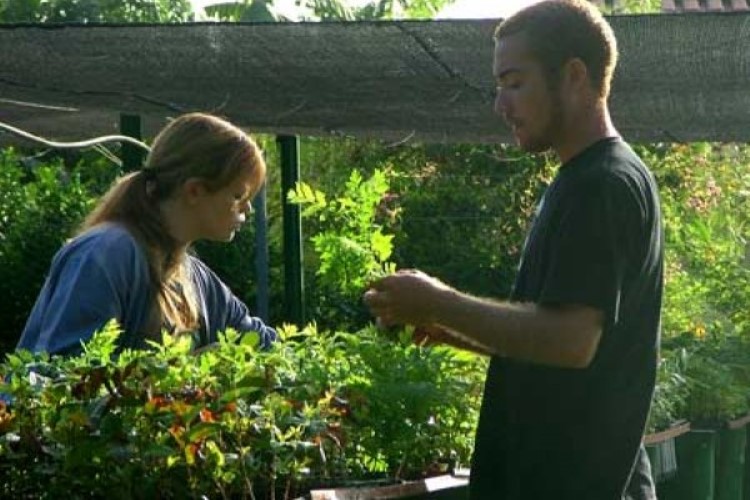
Community nurseries produce saplings of forest tree species used by agrarian reform settlers on their properties and demonstrate techniques for nursery operation in settlements. The nurseries also provide assistance to settlers in planning their properties by emphasizing agroforestry and silvopastoral practices. This stimulates the creation of agroforestry lots that form forested ‘islands’ that serve as stepping stones or refuges for regional fauna.
::/introtext::
::fulltext::
There are currently 21 community nurseries that directly and indirectly benefit 262 families. These are located on ten agrarian reform settlements and produce an average of 500 thousand forest saplings annually. The sale of saplings grown in community nurseries are also an important additional income for many families that participate in the project.
Six families benefit directly from the sale of tree saplings, contributing on average 35%, of the total family income. More than 225 families benefit indirectly from the sale of saplings because profits are reinvested within respective agrarian settlements..
Community nurseries integrate and train settled families in agroforestry techniques. This results in higher output from properties and provides a relatively cheap means of environmental conservation. IPÊ carries out periodic technical assistance and rural outreach to the nurseries and provides basic maintenance products, including soil and seeds.
Teaching Nursery
The concept of teaching nurseries is the product of a partnership between IPÊ and COCAMP/MST. The program is headquartered in the COCAMP/MST industrial park and has an average annual production of 150 thousand saplings, including wood trees such as glassywood (Astronium graveolen), Aspidosperma polyneuron, Balfourodendron riedelianum, Cedrela fissillis, diesel tree (Copaifera langsdorffii), fruit species such as cashew (Anacardium occidentale), jackfruit (Artocarpus heterophylus), Brazilian cherry (Eugenia uniflora), Brazilian guava (Psidium araça), and exotic species with commercial value such as teak (Tectonia grandis), eucalyptus (Eucalyptus spp.) and acacia (Acacia manjium).
A large proportion of saplings is planted through agro-forestry projects managed by IPÊ and COCAMP/MST in agrarian reform settlements. The teaching nurseries also provide training to residents in agricultural and environmental technology. This provides important additional employment opportunities for the region.
The community nurseries receive approximately 300 interns each year under a program created through a partnership between IPÊ and five regional technical universities. Students learn techniques for sapling production and rural extension through field research undertaken with IPÊ researchers.
::/fulltext::
::ac_acordeon::1::/ac_acordeon::
::cck_ac_acordeon::acordeon::/cck_ac_acordeon::
::ac_titulo_acordeon|0|ac_acordeon::::/ac_titulo_acordeon|0|ac_acordeon::
::ac_texto_acordeon|0|ac_acordeon::::/ac_texto_acordeon|0|ac_acordeon::
::cckend_ac_acordeon::::/cckend_ac_acordeon::
::ac_arquivos::1::/ac_arquivos::
::cck_ac_arquivos::arquivo::/cck_ac_arquivos::
::ac_titulo_arquivo|0|ac_arquivos::::/ac_titulo_arquivo|0|ac_arquivos::
::ac_arquivo|0|ac_arquivos::::/ac_arquivo|0|ac_arquivos::
::cckend_ac_arquivos::::/cckend_ac_arquivos::
::ac_galeria::7::/ac_galeria::
::cck_ac_galeria::galeria::/cck_ac_galeria::
::ac_foto_descricao|0|ac_galeria::::/ac_foto_descricao|0|ac_galeria::
::ac_foto|0|ac_galeria::images/artigo_completo/galeria/1274/68-53099b2c79.jpg::/ac_foto|0|ac_galeria::
::cckend_ac_galeria::::/cckend_ac_galeria::
::cck_ac_galeria::galeria::/cck_ac_galeria::
::ac_foto_descricao|1|ac_galeria::::/ac_foto_descricao|1|ac_galeria::
::ac_foto|1|ac_galeria::images/artigo_completo/galeria/1274/69-2e7fcf4311.jpg::/ac_foto|1|ac_galeria::
::cckend_ac_galeria::::/cckend_ac_galeria::
::cck_ac_galeria::galeria::/cck_ac_galeria::
::ac_foto_descricao|2|ac_galeria::::/ac_foto_descricao|2|ac_galeria::
::ac_foto|2|ac_galeria::images/artigo_completo/galeria/1274/125-becbc812dd.jpg::/ac_foto|2|ac_galeria::
::cckend_ac_galeria::::/cckend_ac_galeria::
::cck_ac_galeria::galeria::/cck_ac_galeria::
::ac_foto_descricao|3|ac_galeria::::/ac_foto_descricao|3|ac_galeria::
::ac_foto|3|ac_galeria::images/artigo_completo/galeria/1274/225-994169e7eb.jpg::/ac_foto|3|ac_galeria::
::cckend_ac_galeria::::/cckend_ac_galeria::
::cck_ac_galeria::galeria::/cck_ac_galeria::
::ac_foto_descricao|4|ac_galeria::::/ac_foto_descricao|4|ac_galeria::
::ac_foto|4|ac_galeria::images/artigo_completo/galeria/1274/322-644d474703.jpg::/ac_foto|4|ac_galeria::
::cckend_ac_galeria::::/cckend_ac_galeria::
::cck_ac_galeria::galeria::/cck_ac_galeria::
::ac_foto_descricao|5|ac_galeria::::/ac_foto_descricao|5|ac_galeria::
::ac_foto|5|ac_galeria::images/artigo_completo/galeria/1274/417-e91fee8856.jpg::/ac_foto|5|ac_galeria::
::cckend_ac_galeria::::/cckend_ac_galeria::
::cck_ac_galeria::galeria::/cck_ac_galeria::
::ac_foto_descricao|6|ac_galeria::::/ac_foto_descricao|6|ac_galeria::
::ac_foto|6|ac_galeria::images/artigo_completo/galeria/1274/511-255fde75ff.jpg::/ac_foto|6|ac_galeria::
::cckend_ac_galeria::::/cckend_ac_galeria::