

::cck::710::/cck::
::introtext::
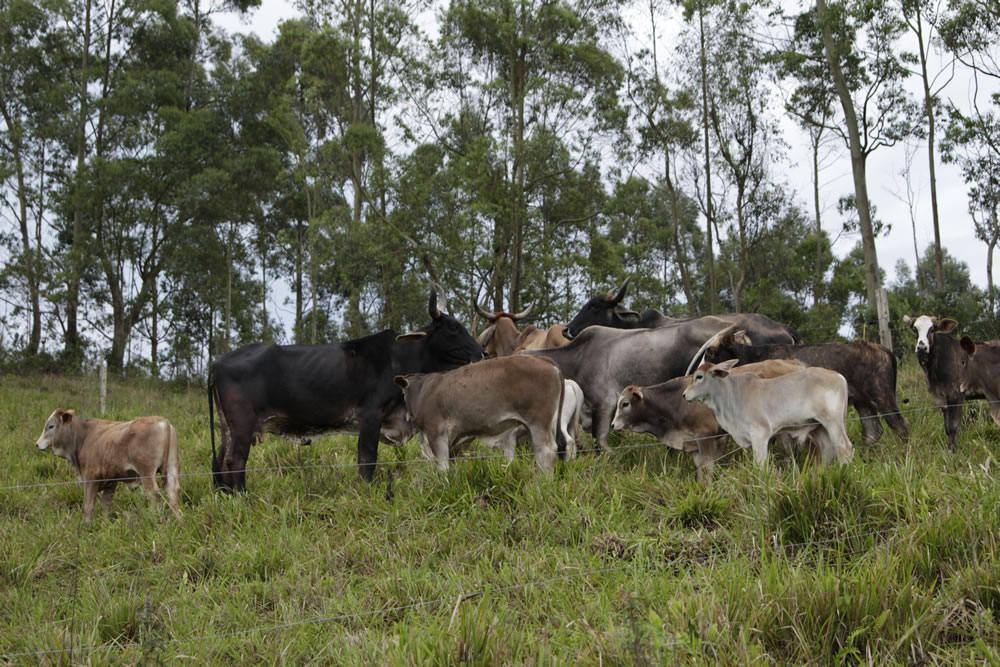
In Brazil, where cattle occupy 3/4 of the agricultural land, conventional cattle raising poses challenges in degrading the soil and reducing the quality of pastures, generating a great impact on productivity (about 80% of pastures show some degree of degradation), in environment and animal welfare. Climate change and the growing demand for high quality products indicate that we urgently need to build a future for sustainable livestock. This livestock model must be capable of simultaneously:
– increase the productivity and profitability of the systems;
– generate animal welfare;
– increase the generation of environmental goods and ecosystem services; and
– facilitate the release of fragile and marginal lands for ecological restoration.
To achieve these objectives, it is necessary to accelerate the transition from conventional unsustainable livestock to more environmentally friendly systems, for example, with silvopastoral systems (SPS).
Project Accelerating the Adoption of Sustainable Livestock with Specialized Training in Brazil
The pilot project is a collaboration between IPÊ, the School of Forestry and Environmental Studies at Yale University and its Leadership and Environmental Training Initiative (Yale ELTI) and the Research Center on Sustainable Agricultural Production Systems (CIPAV), Colombia .
Find out how it happens.
::/introtext::
::fulltext::::/fulltext::
::ac_acordeon::4::/ac_acordeon::
::cck_ac_acordeon::acordeon::/cck_ac_acordeon::
::ac_titulo_acordeon|0|ac_acordeon::Why sustainable livestock? ::/ac_titulo_acordeon|0|ac_acordeon::
::ac_texto_acordeon|0|ac_acordeon::
In Brazil, where cattle occupy 3/4 of the agricultural land, conventional cattle raising poses challenges in degrading the soil and reducing the quality of pastures, generating a great impact on productivity (about 80% of pastures show some degree of degradation), in environment and animal welfare. Climate change and the growing demand for high quality products indicate that we urgently need to build a future for sustainable livestock. This livestock model must be capable of simultaneously: – increasing the productivity and profitability of the systems – generating animal welfare – increasing the generation of environmental goods and ecosystem services; and – facilitate the release of fragile and marginal lands for ecological restoration. To achieve these objectives, it is necessary to accelerate the transition from conventional unsustainable livestock to more environmentally friendly systems, such as silvopastoral systems (SPS). These systems integrate trees, fodder, grasses and other forage resources in a single use of the soil that favors animal welfare, promotes the efficient use of water and the sequestration of atmospheric carbon, respects nature and biodiversity and produces healthy food in abundance for people. Unfortunately, the cost of implementation is still a barrier to the massive adoption of this system. However, once implemented, its performance, in terms of meat and milk production per hectare, goes beyond comparisons with conventional livestock based on pasture monocultures.
::/ac_texto_acordeon|0|ac_acordeon::
::cckend_ac_acordeon::::/cckend_ac_acordeon::
::cck_ac_acordeon::acordeon::/cck_ac_acordeon::
::ac_titulo_acordeon|1|ac_acordeon::Project’s goal ::/ac_titulo_acordeon|1|ac_acordeon::
::ac_texto_acordeon|1|ac_acordeon::
Support a traditional rancher in the process of transforming his conventional farm into a pilot unit of a silvopastoral system, where other farmers can learn the principles and technical details to implement and operate their own sustainable dairy farms. The project will be monitored for a minimum of three years.
::/ac_texto_acordeon|1|ac_acordeon::
::cckend_ac_acordeon::::/cckend_ac_acordeon::
::cck_ac_acordeon::acordeon::/cck_ac_acordeon::
::ac_titulo_acordeon|2|ac_acordeon::Development ::/ac_titulo_acordeon|2|ac_acordeon::
::ac_texto_acordeon|2|ac_acordeon::
The project has the following steps:
Mapping of the property in collaboration with the producer and his family for zoning of productive, restoration and conservation activities in order to increase productivity, sustainability and the resilience of the farm.
Selection of species of trees, shrubs and pastures that best suit the climate and bring greater
productivity, improve soil conditions and ecosystem services and promote animal welfare and
benefits for local biodiversity.
Implementation of SPS.
Conducting a workshop with practical experience on sustainable livestock on the property.
Monitoring and evaluation of results in terms of increased productivity, organic carbon in the soil and ecosystem services. In addition to monitoring for the production of:
Milk – The evaluation of milk quality carried out by comparing the results before and after the implementation of the system. An increase in the percentage of total solids is expected.
Soil – Assessment of changes in the composition of nutrients and organic carbon. Soil samples are collected previously and periodically during the entire SPS implantation process. As a reference, samples will also be collected in the remaining forest areas. One idea is to involve young people and children from the local community in this process through a program of “child researchers”, where they can carry out some scientific collections and measures and thereby also be made aware of environmental issues.
Production costs – Cost analysis of milk production before / after the implementation of the SPS.
::/ac_texto_acordeon|2|ac_acordeon::
::cckend_ac_acordeon::::/cckend_ac_acordeon::
::cck_ac_acordeon::acordeon::/cck_ac_acordeon::
::ac_titulo_acordeon|3|ac_acordeon::More about the ELTI and IPÊ partnership::/ac_titulo_acordeon|3|ac_acordeon::
::ac_texto_acordeon|3|ac_acordeon::
Taking practical information to rural producers in areas of tropical forests, so that they are able to implement the lessons presented in the courses on their properties is among the main objectives of ELTI – Environmental Leadership & Training Initiative, the School’s Environmental
Leadership and Training initiative Forestry and Environmental Studies, Yale University.
In Brazil, ELTI carries out these actions in partnership with projects from IPÊ – Institute for Ecological Research and ESCAS – Superior School of Environmental Conservation and Sustainability. The actions started in 2018, in the regions of the Cantareira System and in the Pontal do Paranapanema, and in 2019, through the pilot project Accelerating the Adoption of Sustainable Livestock with Specialized Training in Brazil.
In the Cantareira System (SP), ELTI has already developed training courses for rural producers in order to contribute through sustainable practices in the field with the increase of water security. In Pontal do Paranapanema (SP), the course aimed to stimulate sustainable productive systems that protect the remaining biodiversity of the interior Atlantic Forest, support ecosystem services and support social well-being in this landscape.
The pilot project, in partnership with Danone, aimed to support a traditional rancher in the process of transforming his conventional farm into a demonstrative unit (model) of a silvopastoral system, where other farmers can learn the principles and technical details to implement and operate their own sustainable dairy farms.
::/ac_texto_acordeon|3|ac_acordeon::
::cckend_ac_acordeon::::/cckend_ac_acordeon::
::ac_arquivos::1::/ac_arquivos::
::cck_ac_arquivos::arquivo::/cck_ac_arquivos::
::ac_titulo_arquivo|0|ac_arquivos::::/ac_titulo_arquivo|0|ac_arquivos::
::ac_arquivo|0|ac_arquivos::::/ac_arquivo|0|ac_arquivos::
::cckend_ac_arquivos::::/cckend_ac_arquivos::
::ac_galeria::1::/ac_galeria::
::cck_ac_galeria::galeria::/cck_ac_galeria::
::ac_foto_descricao|0|ac_galeria::::/ac_foto_descricao|0|ac_galeria::
::ac_foto|0|ac_galeria::::/ac_foto|0|ac_galeria::
::cckend_ac_galeria::::/cckend_ac_galeria::