MESSAGES
Photo: Ilana Bar/ Estúdio Garagem
Dialogue and collaborative work to find innovative solutions
The socio-environmental challenges we currently face are severe and are related to several problems, including economic ones. Solutions to overcome them must consider all factors. Thus, our projects do not simply work to conserve a species, but consider the whole, such as the climate issue.
EDUARDO DITT,
IPÊ’s executive director
Read the full message here.

Photo: Ilana Bar/ Estúdio Garagem
Education as a means of socio-environmental transformation in a megadiverse country
A country with megadiversity like Brazil needs competent and well-prepared professionals to protect its immense natural wealth. We, human beings, are degrading the environment and it is up to us to do something different!
SUZANA PADUA,
IPÊ’s founder and president
Read the full message here.
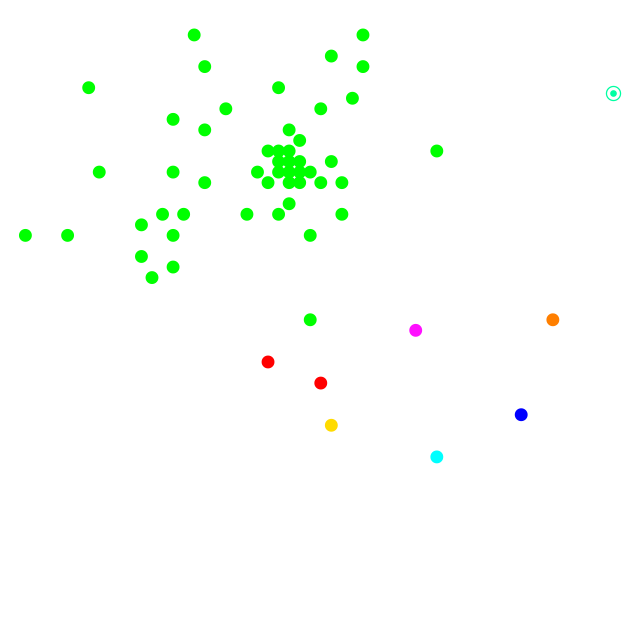
OUR LOCATIONS
Click and see where our initiatives are located
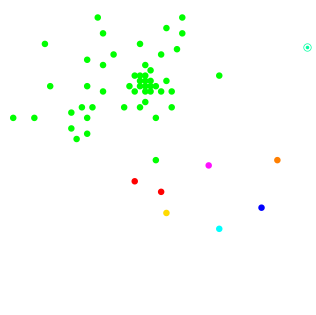
IN THE AMAZON RAINFOREST, WE WORK WITH INTEGRATED SOLUTIONS TO CONSERVE THE BIOME, INCLUDING EDUCATION AND FOREST RESTORATION ACTIONS. WE ALSO ENCOURAGE ENTREPRENEURSHIP AND PROMOTE THE MONITORING OF BIODIVERSITY IN PROTECTED AREAS WITH FOREST CONCESSIONS.
Immersions (Lower Rio Negro)
LEARN +
LIRA - Integrated Legacy of the Amazon Region
LEARN +
Monitoring Biodiversity in a Protected Area with Forest Concession
LEARN +
Navigating Entrepreneurial Education (Lower Rio Negro)
LEARN +
Reflora – Ecological Recovery and Implementation of Multifunctional Agroforestry Systems (Lower Rio Negro)
LEARN +
Network Agroecology (Lower Rio Negro)
LEARN +
IN THE SOUTH OF BAHIA STATE, ESCAS PROFESSIONAL MASTER'S DEGREE IS HELD EXTRA-CAMPUS. WE ALSO WORK WITH PROJECTS AIMED AT SMALL PRODUCERS AND FAMILY FARMERS THROUGH THE IMPLEMENTATION OF SUSTAINABLE PRODUCTION SYSTEMS AND ECOLOGICAL CORRIDORS FOR THE CONNECTIVITY OF CONSERVATION UNITS AND INDIGENOUS LANDS.
ESCAS – School of Environmental Conservation and Sustainability
LEARN +
Environmental Leadership Training and Development Initiative
LEARN +
Prospera – Oriented and Sustainable Restoration Project for Ecological Production, Environmental Regeneration and Increased Income
LEARN +
IN ESPÍRITO SANTO STATE, WE PROMOTE EDUCATION ACTIONS AND TECHNICAL TRAINING TO RESTORE THE LANDSCAPE IN DEGRADED AREAS AND GENERATE INCOME FOR RURAL SETTLERS AND SMALL FARMERS.
Education, Landscape and Community
LEARN +
CECSA-Climate – Center for Education and Socio-Environmental Cooperation for Climate
LEARN +
Climate Landscapes
LEARN +
Third Bank of Rio Doce
LEARN +
IN THE PANTANAL AND CERRADO, WE WORK TO CONSERVE ENDANGERED SPECIES AND FOSTER DIALOGUE BETWEEN DIFFERENT SECTORS THROUGH ACTIONS THAT FAVOR SUSTAINABILITY.
Brazilian Tapir
LEARN +
Giant Armadillo
LEARN +
Pontes Pantaneiras Coalition
LEARN +
AT PONTAL DO PARANAPANEMA (SÃO PAULO STATE), THROUGH FOREST RESTORATION, POPULATION INVOLVEMENT, ENVIRONMENTAL EDUCATION AND RESEARCH INTO SPECIES AS THE BLACK LION TAMARIN, WE GENERATE BENEFITS SUCH AS IMPROVING POPULATIONAL INCOME, FIGHTING CLIMATE CHANGE AND CONSERVING THE REGION’S BIODIVERSITY.
Corridors for Life
LEARN +
Community Nurseries
LEARN +
Black Lion Tamarin Conservation Program
LEARN +
Agroforestry Coffee
LEARN +
AT NAZARÉ PAULISTA (SÃO PAULO STATE), WE PERFORM FOREST RESTORATION ACTIONS AND, TOGETHER WITH RURAL LANDOWNERS, IMPLEMENT SUSTAINABLE PRODUCTION SYSTEMS FOCUSED ON INCREASING THE RESILIENCE OF THE CANTAREIRA SYSTEM TO CONTRIBUTE TO THE WATER SECURITY OF 7.5 MILLION PEOPLE. THROUGH CLIMATE SCHOOLS AND VOLUNTEER PROGRAMS, WE ENCOURAGE PEOPLE TO BECOME AGENTS OF CHANGE FOR THE CLIMATE. IPÊ AND ESCAS HEADQUARTERS ARE LOCATED HERE, AS WELL AS IPÊ'S PHYSICAL STORE.
ESCAS – School of Environmental Conservation and Sustainability
LEARN +
Climate Schools
LEARN +
Sowing Water
LEARN +
Volunteering for Biodiversity Conservation
LEARN +
IPÊ Store
LEARN +
OUR REGIONAL OFFICE IN BRASÍLIA.
THROUGHOUT THE COUNTRY, WE WORK ON THE CONSTRUCTION AND REGULATION OF THE FEDERAL VOLUNTEER STRATEGY IN INTEGRATED FIRE MANAGEMENT, TOGETHER WITH VOLUNTEER AND COMMUNITY BRIGADES, PUBLIC AUTHORITIES AND CIVIL SOCIETY.
Volunteering in Integrated Fire Management
LEARN +
GREAT NUMBERS FOR 2024
+ 2.8
million
tree seedlings planted
+ 19
thousand
people benefited from sustainable productive activities
+ 13
thousand
people benefited from training and environmental education actions
+ 10
thousand
people benefited directly from territorial management
6 fauna
species
on research for conservation
361
people
attended ESCAS courses /
28 scholarships
YEAR HIGHLIGHTS
Check our outstanding actions in 2024



OUR PROJECTS
IPÊ's initiatives are divided into four pillars that guide the organization of the content of this Report: practical scientific research oriented towards solutions, promotion of articulation between sectors, education for a fairer and more sustainable world and strengthening of sustainable businesses.
CLICK ON THE PILLARS TO SEE THE PROJECTS AND THEIR PROGRESS
APPLIED RESEARCH, SCIENCE AND INNOVATION
We apply the knowledge generated by our species research projects, forest restoration and sustainable production models to solutions for biodiversity conservation in a practical way. Community participation and the appreciation of traditional wisdom are fundamental to the process. For us, this is a path to innovation through sustainable development.
CORRIDORS FOR LIFE
In 2025, we will complete 25 years of activities dedicated to forest restoration in the Pontal do Paranapanema region, in the west of the state of São Paulo. We are working to make our “Dream Map” a reality, which defines priority areas for planting corridors, groves and protection zones around remaining native forests of the Atlantic Forest. Since 2021, we have been working on a larger scale, expanding our area of operation with the ARR Corridors of Life, an initiative that aims to restore 75 thousand hectares by 2041, in collaboration with Ambipar.
The project is a reference not only for the area restored with the planting of 9.5 million trees – more than 5,000 hectares – but also for the mobilization and engagement of local communities, who work in businesses focused on planting and maintaining seedlings. We highlight, in this trajectory, the creation of the largest corridor ever restored in the Atlantic Forest biome – with 12 km and 2.4 million trees – that connects the Morro do Diabo State Park (PEMD) to the Mico-Leão-Preto Ecological Station.
Community participation is essential to the project. In at least four official meetings per year, known as Fridays with Science (Sextas ConsCiência), the IPÊ team shares with the community the challenges, advances and lessons learned from research. They include technicians, owners and collaborators from the forest restoration chain, professors, students and representatives of private and public institutions at federal, state and municipal levels interested in learning about the actions developed in the region. Friday with Science is inspired by the Science Mornings (Manhãs com Ciência) organized by IPÊ since 2004.

KEY RESULTS IN 2024:
Over 2.7 million native tree seedlings planted on 1,709 hectares.
We reached 18 local companies for planting and maintaining seedlings supported by the project, an increase of 63% compared to the previous year.
Workshop on Human Rights in the forest restoration chain, held with nurserymen and service providers.
4 editions of Friday with Science held, on topics such as restoration, conservation of the black lion tamarin and climate emergency.
2 scientific papers published.
147 people benefited from the work of companies that plant and maintain seedlings.
4 scholarships, 3 linked to the ESCAS Master's degree and 1 post-doctorate at Unesp Rio Claro.
CONTRIBUTIONS TO CLIMATE AND BIODIVERSITY:
Restored corridors bring back the forest and enable the genetic flow of both plants and animals, which is strategic to continue existing in the long term. Climate regulation and greater absorption of rainwater by the soil are among the services provided by nature related to the project.
In addition, the restoration of 75 thousand hectares by 2041, through the ARR Corridors of Life, a partnership between IPÊ and Ambipar, has the potential to capture 29 million tons of CO2eq in 50 years.
NEXT STEPS:
Increase the forest area in the region, through the connectivity of ecological corridors, in addition to promoting new companies that provide local services related to the restoration chain, contributing to the increase in the income of people in the region. We will also keep training professionals on the team and partners in restoration, monitoring and research.
BLACK LION TAMARIN CONSERVATION PROGRAM
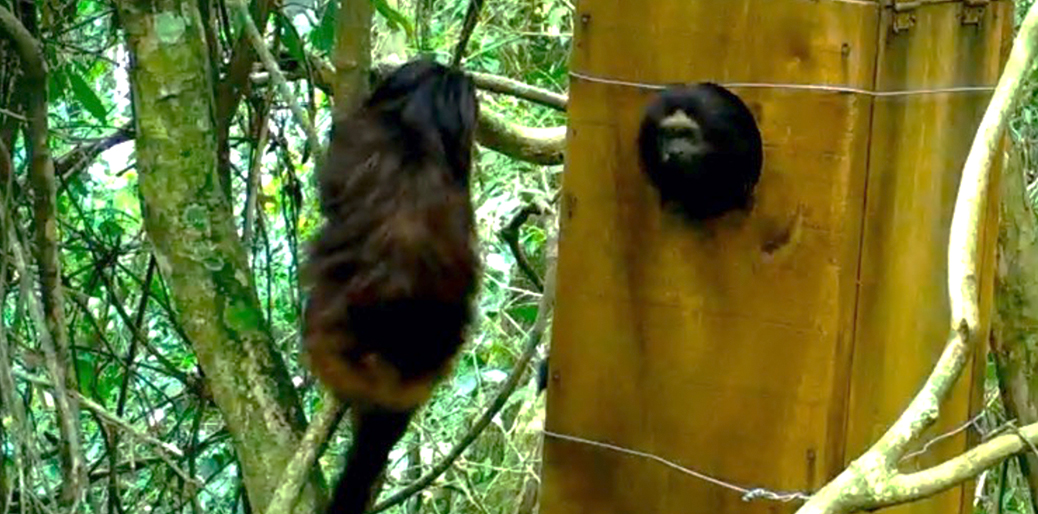
The conservation of the black lion tamarin (Leontopithecus chrysopygus) in the Pontal do Paranapanema region of São Paulo state was the starting point for creating IPÊ. In 40 years, we have identified more than 10 populations of tamarins and, in order to establish new groups and supplement others that are threatened with extinction, we have translocated 27 individuals. Our efforts have changed the conservation status of the tamarin from “critically endangered” to “endangered” on the IUCN Red List. Our work has also supported the creation of the Black Lion Tamarin Ecological Station and the Black Lion Tamarin Special Protection Area (Fundação Florestal/SP/Brazil).

KEY RESULTS IN 2024:
First group (5 black lion tamarins) translocated from Morro do Diabo State Park to the Santa Maria Farm Legal Reserve fragment, to supplement and prevent the extinction of the local population.
We started pre-translocation monitoring of the second group to be moved in 2025.
2 scientific papers published.
Implementation of the Pedagogical Support Manual for Elementary School Teachers in 3 state schools and one municipal school in Teodoro Sampaio, serving 583 students and 23 teachers.
Development of research on the implementation of remote monitoring (autonomous recorders and camera traps) in various areas of the project's activity.
CONTRIBUTIONS TO CLIMATE AND BIODIVERSITY:
Black lion tamarins are important seed dispersers, which help restore and maintain the areas where they are present. In this way, they contribute to the quality of the environment and the maintenance of ecosystem services provided by forests, including carbon storage.
NEXT STEPS:
Apply the Rapid Population Assessment Protocol and assess management actions related to resource use, population health and genetics, habitat use and occupation, movement and energy expenditure. Continue with population management, which includes translocation and reintroduction of tamarins into protected areas. Keep habitat management actions, such as planting to enrich fragments, wildlife passages and installing artificial roosts for this primate. In terms of environmental education, we aim to continue with the Teodoro Sampaio Pedagogical Support Manual for Elementary School Educators and training for teachers in the region. We will also promote the creation of conservation units in the Pontal do Paranapanema region.
LTCI - LOWLAND TAPIR CONSERVATION INITIATIVE
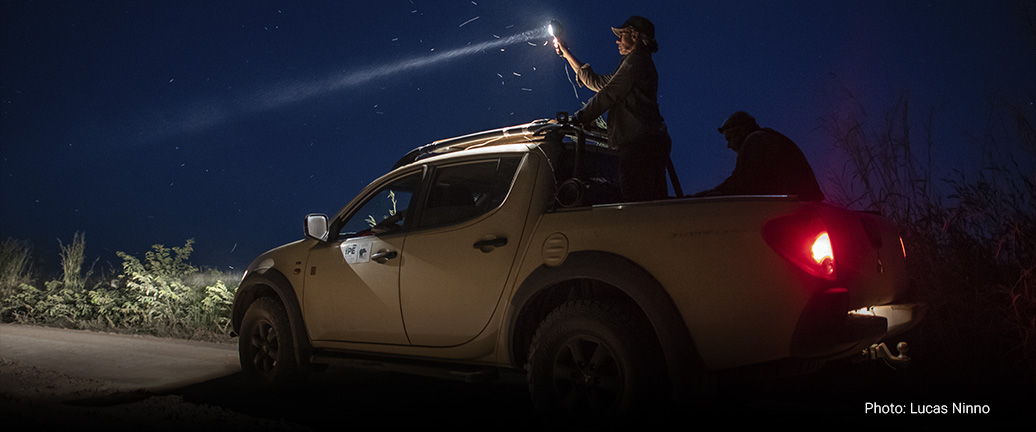
Over the course of its 28 years of operation, celebrated in 2024, LTCI-IPÊ (Lowland Tapir Conservation Initiative) has built the world's largest database on the Brazilian lowland tapir (Tapirus terrestris). This resource and research methodologies contribute to understanding the animal and thus devising conservation strategies, in addition to supporting work in other countries where different species of tapir exist.
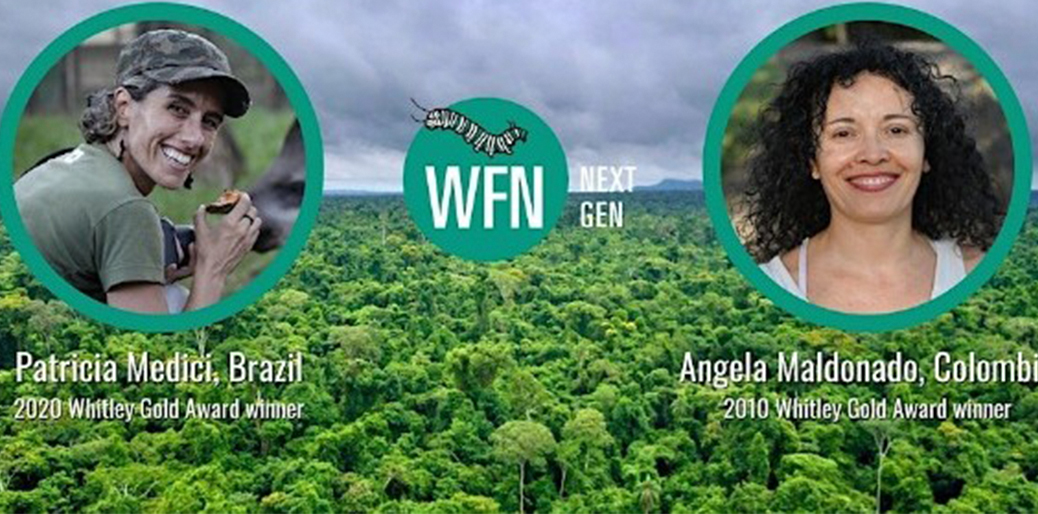
LTCI currently conducts research in the Atlantic Forest, Pantanal, Cerrado, Amazon and Caatinga, and has already identified 613 individuals through camera traps. Eight international awards, including the Whitley Gold Award, the “Oscar” of global conservation, reinforce the importance of this initiative. LTCI’s areas of focus include Scientific Research, Population Modeling and Action Planning, Environmental Education, Campaigns and Actions, Training and Qualifications, Scientific Tourism and Communication.
KEY RESULTS IN 2024:
The milestone of
300 anesthetic procedures on wild tapirs was reached which reinforces the project's success in capturing individuals for health assessment.
The Caatinga 2024 Expedition proved that the species is not extinct in this biome.
4 chapters published in the book Tapirs of the World, edited by Patrícia Medici, coordinator of LTCI-IPÊ, and two scientists.
4 scientific papers published.
9 professionals trained through volunteering or internship.
CONTRIBUTIONS TO CLIMATE AND BIODIVERSITY:
The Brazilian lowland tapir is known as the gardener of the forest, as the seed is ready to germinate as soon as it passes through the animal's digestive tract. For this reason, the species plays a fundamental role in preventing the loss of biodiversity. Protecting the tapir contributes to the maintenance of forests and their ecological functioning and, consequently, to climate balance.
NEXT STEPS:
Carry out another expedition through the Caatinga to complete the overview of the current occurrence of the species in the biome. Continue studies on contamination of animals by agrochemicals and metals and expand efforts to communicate messages about the conservation of the species. We will also establish a data management and analysis system to facilitate its application in the design of conservation strategies and production of publications.
GIANT ARMADILLO PROJECT
Research on the giant armadillo (Priodonte maximus) performed by the project, a partnership between IPÊ and ICAS - Institute for Wildlife Conservation, was fundamental for the creation of protected areas and conservation corridors in Mato Grosso do Sul state. The initiative also formed community firefighting brigades in Nhecolândia, covering an area of 1,600 km² and 23 farms in the Pantanal. The Baskets and Beehives (Canastras e Colmeias) project eliminated retaliation by beekeepers against armadillos in the Cerrado region of Mato Grosso do Sul, and is currently expanding: in 2024, it started operating in the Xingu Indigenous Park.

KEY RESULTS IN 2024:
Eight more giant armadillos were monitored in the Pantanal, including the recapture of an individual captured 11 years ago.
A total of 46 giant armadillos are monitored in the Pantanal.
In its first operation, the Nhecolândia Community Brigade successfully put out a large fire.
More than 100 beekeepers certified as “friends of the giant armadillo”;
260 queen bees distributed to 12 beekeepers.
19 researchers (3 undergraduates, 7 masters, 7 doctoral and 2 post-doctoral students) benefited from ICAS with funding, supervision or access to data.
8 scientific papers published.
CONTRIBUTIONS TO CLIMATE AND BIODIVERSITY:
Known as nature's engineer, the giant armadillo builds burrows that maintain an average internal temperature of 24ºC, creating a stable environment. Other animals use these burrows, which help them survive climate variations and extreme temperatures.
NEXT STEPS:
Develop a strategic plan for the Pombo Municipal Natural Park in Três Lagoas, which is the only protected area of the Cerrado in the state of Mato Grosso do Sul where the giant armadillo exists. Expand the scope of the Baskets and Beehives project to the entire national territory and complete the training of Xingu beekeepers. We also aim to consolidate our training center for young conservationists.
MONITORING BIODIVERSITY IN A PROTECTED AREA WITH FOREST CONCESSION
This project supports the implementation of the National Biodiversity Monitoring Program (Monitora), of ICMBio - responsible for the management of protected areas in Brazil-, in the Caxiuanã National Forest (Flona) in Pará state, where conserved areas (control) and forest concession areas operated by Benevides Madeiras are monitored. We currently have 10 biodiversity monitors working in an activity that helps guide conservation actions in these areas of sustainable production of timber and non-timber products. We are supported by the United States Forest Service (USFS) and in partnership with ICMBio - Chico Mendes Institute for Biodiversity Conservation, Ibama - Brazilian Institute of Environment and Renewable Natural Resources, Brazilian Forest Service (SFB), Museu Paraense Emílio Goeldi (MPEG), Rio de Janeiro Botanical Garden (JBRJ), New York Botanical Garden (NYBG) and Benevides. The initiative is linked to the Volunteering in Integrated Fire Management project, coordinated by IPÊ.

KEY RESULTS IN 2024:
2nd edition of the Biodiversity Monitoring Course integrated with the collection of protocol data, which enabled the training of new monitors and the improvement and updating of the ones already working with us.
Implementation of a pilot action to apply the timber protocol in managed areas, in partnership with the Brazilian Forest Service, the New York Botanical Garden and the Rio de Janeiro Botanical Garden, supported by the United States Forest Service.
107 attendees (28% young people and
41% women) at the Knowledge Meeting (Encontro dos Saberes) at Flona de Caxiuanã.
6 monitoring trails implemented in conserved and managed areas.
25 people trained as monitors, 27% of women; 5 employees of the Benevides company received training to carry out the wood protocol.
1 scientific paper published.
A tripartite cooperation agreement was signed, with support from IPÊ, between ICMBio, SFB and JBRJ, aiming at carrying out research, monitoring biodiversity, conservation and enhancement of flora in federal Conservation Units.
CONTRIBUTIONS TO CLIMATE AND BIODIVERSITY:
Continuous monitoring of areas with forest concessions is essential in the long term, as it assesses the impact of the activity on biodiversity conservation. This allows us to promote joint work to define intersectoral arrangements to articulate efforts and information and thus optimize resources for convergent decision-making that strengthens biodiversity conservation. With the wood protocol, for example, it is possible to both identify the potential for carbon absorption and trace the wood that comes from this Conservation Unit and thus recognize it anywhere in the world as wood from the Caxiuanã National Forest harvested in a sustainable manner.
NEXT STEPS:
The United States government decree suspending activities supported by US cooperation agencies made it impossible to carry out some activities planned for that year.
However, the coordination mobilized institutional partners to take on these activities within their possibilities, to minimize the impact.
Thus, Benevides will send wood samples collected under the Wood Protocol for analysis; ICMBio will take on the data analysis and the organization of the Meeting of Knowledge; and the New York Botanical Garden, Rio de Janeiro Botanical Garden (JBRJ), the Emílio Goeldi Museum of Pará and ICMBio will hold the course and the collection of the Advanced Plant Protocol, a new development for the UC, further expanding the monitoring of biodiversity.
PROSPERA
In 2024, we started in southern Bahia state, Prospera – Oriented and Sustainable Restoration Project for Ecological Production, Environmental Regeneration and Increased Income, for the restoration of a section of the Central Corridor of the Atlantic Forest, covering the municipalities of Prado, Porto Seguro and Itamaraju. The initiative supports rural producers in land use planning, aiming to increase productivity, soil quality and water availability. All of this will be achieved through restoration and productive recovery in Permanent Preservation Areas and Legal Reserves, creating reconnection corridors between Conservation Units and Indigenous Lands. The project is financed by Procter & Gamble, Suzano Papel e Celulose, and Sol de Janeiro.

KEY RESULTS IN 2024:
11 producers mobilized to implement the corridor.
Socio-environmental diagnosis of 2 farms with areas that will be part of the corridor, totaling 35 hectares of Permanent Preservation Areas restoration.
Planning a new biodiversity corridor from Serra da Gaturama.
Expansion and articulation of partnerships for engagement with local civil society organizations.
CONTRIBUTIONS TO CLIMATE AND BIODIVERSITY:
Ecological corridors that connect fragments of the Atlantic Forest are essential to enable safe crossings for species, balance ecosystems and improve the provision of environmental services, also contributing to increasing resilience and mitigating the impact of climate change and human activities.
NEXT STEPS:
By 2028, the goal is to restore 91 hectares of forests and recover 20 hectares of sustainable production with Agroforestry and Silvopastoral Systems (SPS). With these restored areas, we will promote the connection of 58 thousand hectares, which include two important Conservation Units and two Indigenous Lands.
SOWING WATER
The Cantareira System supplies water to more than 7.5 million people in the metropolitan region of São Paulo, in addition to the municipalities of Campinas and Piracicaba. With this project, we contribute to increasing the system's resilience and water security, which benefits both residents of the Cantareira region and those who, even living far away, use the resource. We work on 17 rural properties considered Demonstration Units, since through the project's actions they have become environmentally suitable, increasing soil infiltration of rainwater. Throughout our history, we have trained more than 600 people in sustainable rural production practices. We generate scientific knowledge about the region, which is used in conservation strategies and academic studies. We also influence local public policies and encourage the formation of Socio-Environmental Groups for actions to mitigate and achieve resilience to climate change, through the Climate Schools project.

KEY RESULTS IN 2024:
Creation of the Agroecological Association of Water Sowers,
to promote agroecological agriculture, bioeconomy and environmental conservation, among other actions.
More than 33 hectares under forest restoration and sustainable production systems implementation.
50 families totaling 200 people, received technical assistance and their properties underwent environmental adaptation.
32,000 trees planted
on 25.3 hectares of ecological restoration.
4,000 seedlings of native fruit trees from the Atlantic Forest and more than 1,000 coffee seedlings planted on 8 hectares of sustainable production systems.
46 people, including rural producers, attended courses and workshops on sustainable production practices, such as multifunctional forests and meliponiculture.
Support through scholarships for 1 Master's student from Unifesp with financial assistance, field and laboratory materials.
CONTRIBUTIONS TO CLIMATE AND BIODIVERSITY:
In the forest restoration areas alone, totaling 65.73 hectares, we have contributed to the removal of more than 3,000 tons of CO2eq. These areas, which are 1 to 8 years old, are in full development and continue to move in this direction. By implementing sustainable production systems on rural properties, we are also promoting measures to reduce the impacts of climate change. Through restoration, we contribute to the planting and monitoring of endangered species of Atlantic Forest flora, such as araucaria (Araucaria angustifolia), jequitibá-rosa (Cariniana legalis) and juçara (Euterpe edulis).
NEXT STEPS:
We will expand our operations to the Piracicaba, Capivari and Jundiaí (PCJ) basin region, implement carbon projects that can remunerate small rural landowners and study strategic partnerships that can financially make the increase in the scale of land use change viable.
THIRD BANK OF THE DOCE: PATHS OF SOCIOBIODIVERSITY
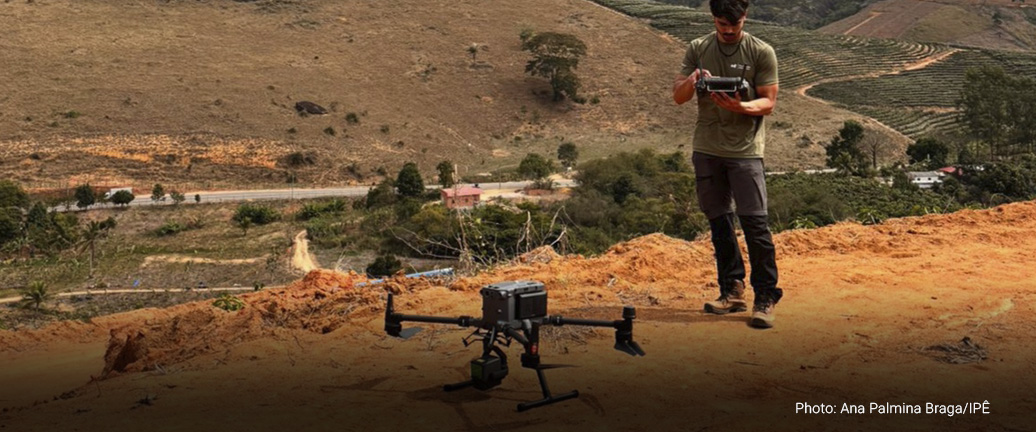
In this Research and Development (R&D) project, we mapped, identified and analyzed the vulnerability of species targeted by illegal extraction in the Doce River basin, from the Fundão dam in Mariana (Minas Gerais state) to its mouth in the Atlantic Ocean in Linhares, Espírito Santo state. Following the results, actions are proposed to discourage the activity, as well as opportunities for sustainable development based on the use and proper management of natural resources, including the strengthening of socio-biodiversity chains. The results will contribute to the objectives of the Action Plan for the Conservation of Terrestrial Biodiversity of the Rio Doce, of the Renova Foundation (in liquidation), currently managed by the institution Rio Doce Basin Recovery (Recuperação Bacia do Rio Doce).
KEY RESULTS IN 2024:
225 interviews on the use of biodiversity, conducted with rural producers, managers of Conservation Units, public agencies, companies, civil society organizations and community leaders.
3 scholarships linked to ESCAS.
Field surveys using drones, high-quality images and remote sensing (LiDAR) to provide information on the structure of forests in 2 areas with the highest risk of extractivism.
CONTRIBUTIONS TO CLIMATE AND BIODIVERSITY:
One of the project’s fronts is to identify key species for forest restoration with the potential to strengthen sociobiodiversity chains. By doing so, we help conserve and enhance biodiversity and consequently maintain the forest standing, which contributes to climate regulation. This also promotes the generation of income and economic opportunities for the local population.
NEXT STEPS:
We will interview rural producers, traditional communities and community leaders to complete data collection on biodiversity uses. Continue field surveys on forest structure in the 6 areas at risk of illegal extraction. Formulate proposals for the development of socio-biodiversity chains, forest restoration and mitigation of the impacts of predatory extraction along the Rio Doce basin.
ARTICULATION AND NETWORKS
Complex and broad challenges, such as climate and biodiversity, require shared and integrated efforts, knowledge and experiences to be addressed. For this reason, we promote networking actions, participate in strategic groups and encourage articulation and cooperation between communities, civil society institutions, companies and governments in our projects.
LIRA – INTEGRATED LEGACY OF THE AMAZON REGION
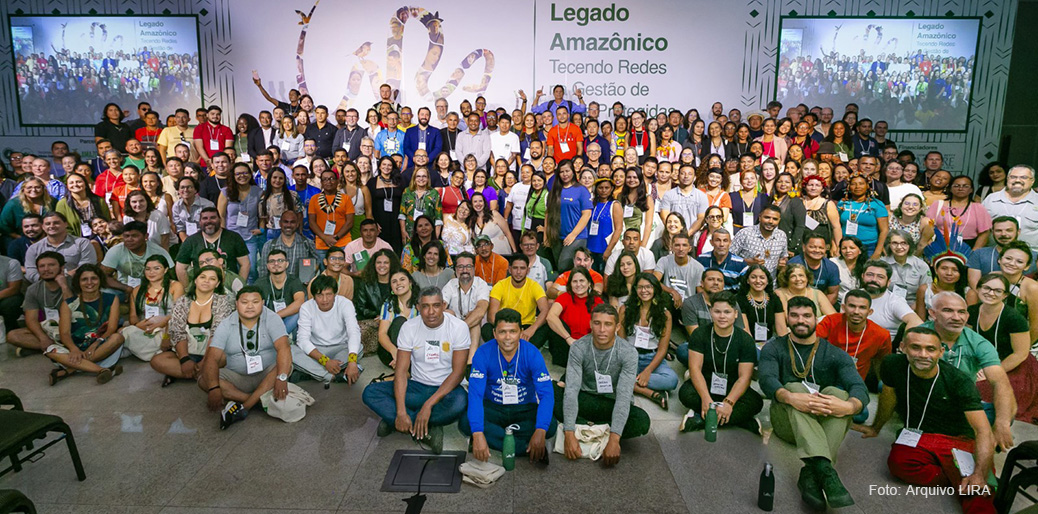
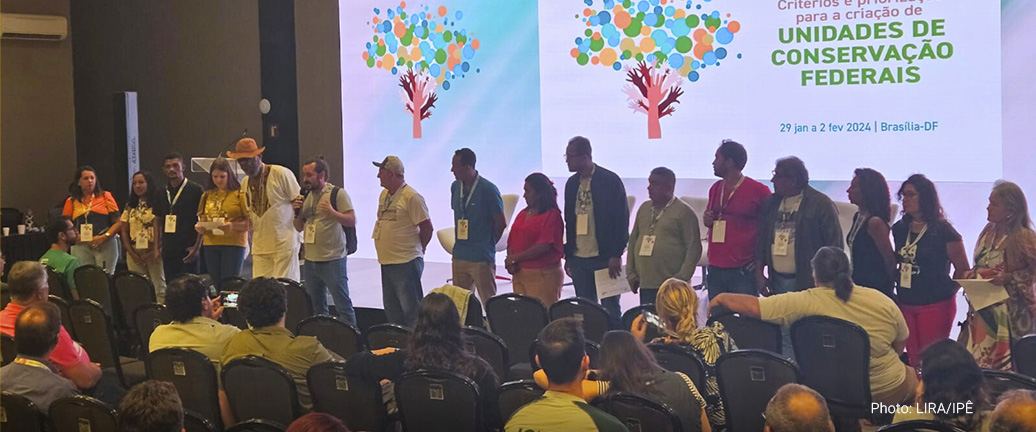
In 2024, LIRA concluded the 1st cycle of supported projects in the Amazon. The initiative promotes articulation between multiple stakeholders to generate solutions to the challenges of environmental issues in the biome. To this end, three components are worked on: 1) LIRA Fund, offers technical and financial support for projects; 2) Knowledge and Innovation Management, provides learning environments and creating innovation; e 3) Public Policies works on political advocacy and climate resilience.
In 2024, there was action in 59 protected areas (58 million hectares) in 62 municipalities in five states, in which 36 indigenous peoples and 50 extractive communities participated. 50 projects were supported, involving more than 120 multisectoral organizations, with capacity expansion, local infrastructure and implementation of the bioeconomy.
KEY RESULTS IN 2024:
We completed the management and consultancy of 37 projects with the LIRA Fund and the result was
44 socio-productive community businesses that worked
in 12 bioeconomy production chains, 200 rural properties receiving technical assistance and 28,300 people directly benefiting.
In the Knowledge Management and Innovation area, we discussed topics such as bioeconomy, climate change, territorial management and protected areas, and produced:
2 scientific articles;
9 technical-pedagogical publications, 25 policy briefs, 112 local events and 2 courses for
140 public servants, such as the Ministry of the Environment.
In partnership with ICMBio (responsible for the management of protected areas in Brazil) on the Public Policy front, we created management councils in 3 Extractive Reserves, encouraged the development and implementation of "SISFamília" with
9,355 families registered and eligible to access the federal government's Bolsa Verde Program (Green Grant - social security programme) and collaborated to the elaboration of the “Plan for Strengthening Social Biodiversity Economies in Federal Conservation Units”.
CONTRIBUTIONS TO CLIMATE AND BIODIVERSITY:
The actions promoted by LIRA contribute to keeping the forest standing, increasing the effectiveness of management of protected territories with inclusive governance of indigenous peoples and traditional communities, which also strengthens the local economy, ecosystem services and adaptation to the effects of climate change.
NEXT STEPS:
The second cycle of LIRA will be held from 2025 to 2029 and calls for proposals via the LIRA Fund to support projects focused on the protection of Indigenous Lands, Conservation Units, Quilombola Territories and Rural Settlements will be opened. Focus funding on strengthening: 1) community-based organizations, cooperatives and community brigades; 2) promoting research and innovation; and 3) political advocacy for young people.
We will work on public policies related to the bioeconomy, territorial development and climate adaptation plans. We will also create learning environments and encourage innovation.
PONTES PANTANEIRAS COALITION
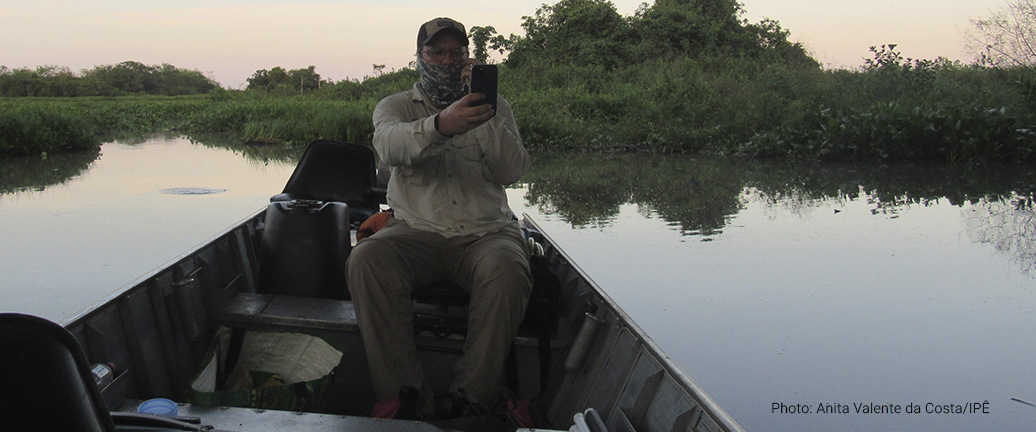
Pontes Pantaneiras: Connecting people, culture and biodiversity for sustainability promotes multi-sector dialogues to identify strategies for sustainability and conservation of the Pantanal in a participatory manner, valuing its people, culture and natural capital. This coalition between IPÊ, Embrapa Pantanal, Smithsonian Institution and University College London (UCL) has financial support from The Pew Charitable Trusts. The initiative is in partnership with Fazenda Barranco Alto, Ágora Strategic Communication and Public Affairs, Panthera and the Ministry of Environment and Climate Change, and collaboration with Pantanal institutions from various sectors of society.
KEY RESULTS IN 2024:
1st Pontes Pantaneiras Lab with panels to seek synergies between science and the practice of sustainability in the Pantanal.
3 workshops on sustainable livestock farming, which brought together 85 representatives of Pantanal livestock farming to build a plan to promote sustainable livestock farming in the Pantanal.
Diagnosis of land use and natural resources in Baíazinha-Piúva, Pantanal de Cáceres (Mato Grosso state), with information that guides the definition of boundaries and categories of Conservation Units.
In partnership with ICMBio (Chico Mendes Institute for Biodiversity Conservation) and local partners, to reestablish the Management Council of the Pantanal Mato-Grossense National Park.
3 scientific papers published.
143 people benefited from participating in the project's actions (27% young people and
33% women).
30 students and teachers attended the project activities.
CONTRIBUTIONS TO CLIMATE AND BIODIVERSITY:
In the medium and long term, we will contribute to the conservation of biodiversity, the adoption of sustainable practices and the consequent mitigation of the impacts of climate change in the Pantanal. We will do this by promoting integrated strategies involving different actors in the following areas: sustainable livestock farming, conservation areas and Pantanal Dialogues.
NEXT STEPS:
Hold the 2nd Pontes Pantaneiras Forum and the 2nd Pontes Pantaneiras Lab, in addition to the Workshops on Sustainable Livestock Farming in the Pantanal, to advance the plan to promote sustainable livestock farming in the Pantanal. Support the implementation of the Sustainable Pantanal Farm Program, developed by Embrapa Pantanal, on 8 rural properties in Mato Grosso do Sul state. Also prepare the land use and natural resources diagnosis of the Salobra Delta region (Mato Grosso do Sul state), to support the creation of a Conservation Unit in the region. Actions will be taken to restructure and reactivate the management board of the Pantanal Mato Grosso National Park.
VOLUNTEERING FOR BIODIVERSITY CONSERVATION
IPÊ encourages volunteering, often in partnership with the private sector, as this type of initiative brings society closer to protected areas and promotes effective nature conservation. More than 20 companies have already participated in actions such as planting trees in the Cantareira System region. We also work in partnership with the Brazilian Center for Corporate Volunteering (CBVE) and in the implementation of the Volunteer Program for Conservation and Climate Action in Conservation Units.
KEY RESULTS IN 2024:
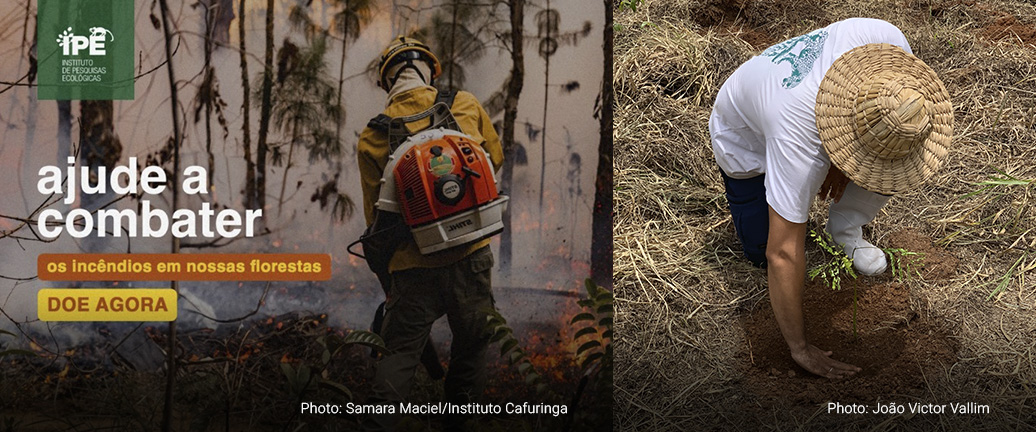
13 thousand brazilian reais raised in the “Help fight fires in our forests” campaign, to reinforce the work of 2 volunteer and community brigades in the Amazon, 1 in the Atlantic Forest and 1 in the Cerrado.
30 CHEP professionals planted crops around the Atibainha reservoir, in Nazaré Paulista (São Paulo state).
Of the amount raised, 62% were donations from individuals,
24% from Café por Elas and 14% from Care Natural Beauty, which jointly promoted a charity weekend at this café, donating 15% of the profits to the campaign.
CONTRIBUTIONS TO CLIMATE AND BIODIVERSITY:
Working directly on forest restoration is a concrete way for a company to contribute to tackling the effects of climate change. The seedlings planted by employees help restore degraded areas and contribute to the conservation of biodiversity and water production in the Cantareira System.
NEXT STEPS:
Mobilize more company leaders to integrate corporate volunteering by employees and partners into the organization's calendar. We will also think of ways to attract the interest of this public in volunteering in partner Conservation Units.
VOLUNTEERING IN INTEGRATED FIRE MANAGEMENT
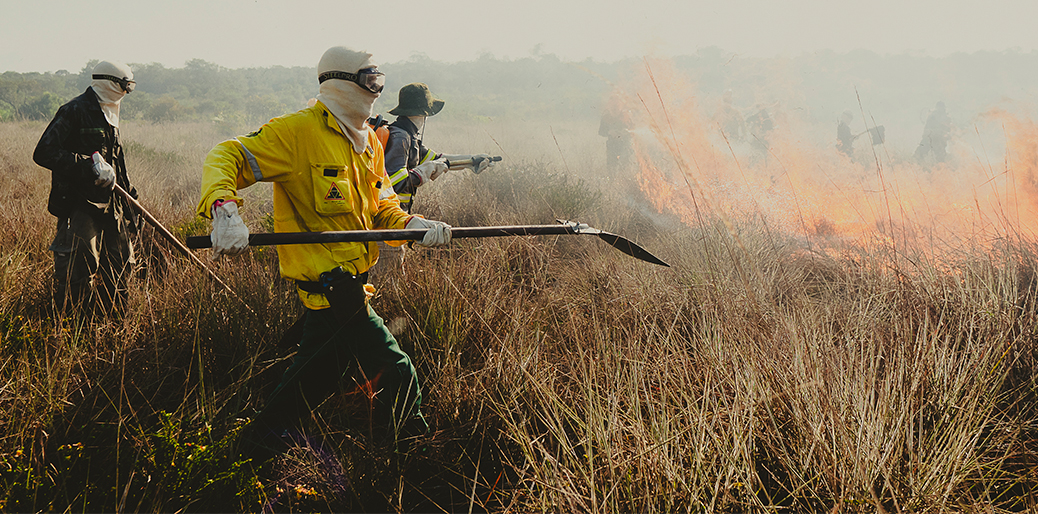
With this initiative, we structured the Federal Strategy for Volunteering in Integrated Fire Management, contributing to the regulation of the National Policy for Integrated Fire Management (Law Nº. 14,944/2024). We aim to increase integration between volunteer and community brigades, government and civil society, making actions safer and more effective, in addition to increasing visibility for these groups. We gather territorial information, technical, legal and financial sustainability information about volunteer and community forest brigades. This data also supports decisions related to implementation, fundraising and partnerships. Our workshops and meetings promote the exchange of knowledge and strengthen a sense of identity for volunteers and brigades as relevant actors in integrated fire management.

KEY RESULTS IN 2024:
Completion of the Federal Strategy for Volunteers in Integrated Fire Management and draft regulations, which were awaiting publication by the Ministry of Environment and Climate Change at the end of 2024.
Preparation of a Communication Plan and Political Pedagogical Project focused on the Federal Strategy.
Testing of the Federal Strategy in Baixo Tapajós (Pará state), to evaluate guidelines and develop protocols for joint action by the public authorities with volunteer and community brigades and with the support of civil society organizations.
13 community brigades and
1 volunteer brigade benefited from actions in the territory that directly involved 74 volunteers, bringing benefits, such as greater protection, to communities in the Baixo Tapajós.
CONTRIBUTIONS TO CLIMATE AND BIODIVERSITY:
By expanding, strengthening and guiding society’s participation in volunteering in integrated fire management, we value the contribution of different sectors to the protection of landscapes, territories and local ways of life. This helps to reduce the number and intensity of forest fires and minimize the negative impacts on climate and biodiversity.
NEXT STEPS:
Support the implementation of the Federal Strategy for Volunteering in Integrated Fire Management, which will be published by the Ministry of the Environment, and the strengthening of volunteer and community brigades. We will also test the strategy in the Pantanal of Mato Grosso do Sul, involving the network of local community brigades and in partnership with public institutions and civil society that operate in the territory.
AGROECOLOGY NETWORK
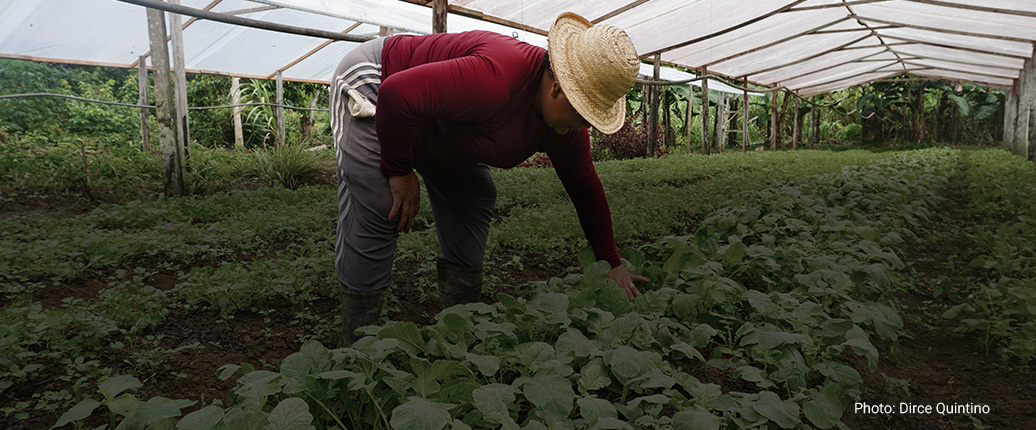
In 2024, this work will begin to strengthen agroecology and organic production in the state of Amazonas, improving the quality of life of family farmers, riverside communities, extractivists, indigenous peoples and agrarian reform settlers. To this end, technical advice, training and strengthening of local organizations will be provided. The project will help to structure production units, organic certification and support will be provided for the marketing of products such as fruits, vegetables, seedlings, honey and poultry farming, as well as community-based tourism.
The activities are developed with seven local associations in 220 rural properties and 900 families, benefiting 3,200 people from five municipalities: Manaus, Rio Preto da Eva, Careiro da Várzea, Iranduba and Itacoatiara.
CONTRIBUTIONS TO CLIMATE AND BIODIVERSITY:
Promoting sustainable productive activities is a good strategy to combat deforestation. They have the potential to transform the pattern of occupation of the Amazon, which is still heavily based on the conversion of forests for extensive livestock farming and monocultures, with negative impacts on biodiversity and climate change. Sustainable productive activities have the potential to align forest conservation with productivity in the short, medium and long term.
NEXT STEPS:
Expand organic production and good agroecological practices in family farming, diversifying production, improving infrastructure and offering training, technical assistance and contributing to the implementation of public policies through the strengthening of community associations. Obtaining participatory organic certification will also be encouraged.
EDUCATION
Through educational initiatives, we promote the transformation of production models and behaviors into multiple proposals for a fairer and more sustainable world. Our actions include public schools and communities in the territories we operate, professionals working with education in the country, volunteers and our postgraduate school, ESCAS.
ESCAS – SCHOOL OF ENVIRONMENTAL CONSERVATION AND SUSTAINABILITY
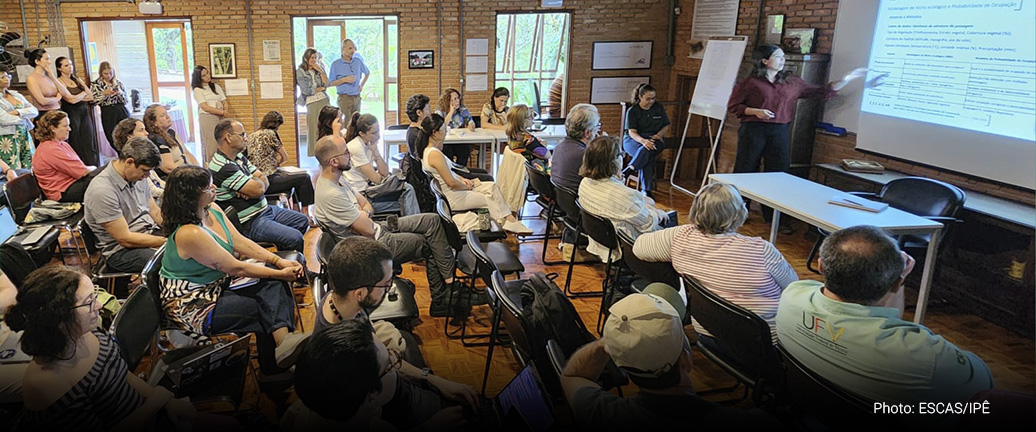
ESCAS has been working for over 25 years to train leaders who work with biodiversity conservation, sustainability and climate. Between the Professional Master's Degree in Biodiversity Conservation and Sustainable Development, the Postgraduate Degree in Sustainable Business Management, short courses, and in-company classes, over 8,500 people have already completed our training. We have already graduated 219 masters. Our master's degree, rated 4 out of 5 by Capes, registered a record number of 41 students in 2024, proving the school's consolidation in sustainability and bringing advances in topics such as sociobiodiversity, bioeconomy, nature-based solutions, landscapes and socio-environmental impact. The School also develops projects under the Integration, School and Community concept, such as Education, Landscape and Community (Educação, Paisagem e Comunidade) in Espírito Santo state.
KEY RESULTS IN 2024:
362 students chose ESCAS:
98 for the Professional Master's degree, 15 for the Postgraduate degree and 211 for the short courses, in addition to 38 students in the courses for international students.
22 masters degrees.
50 scientific papers published.
Awarding of 28 scholarships,
26 for the Master's Degree in Nazaré Paulista (SP) and 2 for Postgraduate studies.
Acquisition of 65 new scholarships for the Professional Master's Degree through IPÊ Sustainable Business Unit, in partnership with the Sol de Janeiro Foundation, that will be presented from 2025.
CONTRIBUTIONS TO CLIMATE AND BIODIVERSITY:
We work with the themes of climate change, biodiversity and sustainability directly or transversally in all courses and, thus, train professionals with the potential to contribute to such challenges. Since the beginning of our history, we have been committed to constant learning, the exchange of experiences and respect for the different cultures of which students, teachers and other ESCAS employees are a part of.
NEXT STEPS:
Expand our role as a leading school in sustainability, promote new educational products and develop the international arm of ESCAS. We will also expand the offering of courses for the Professional Master's Degree in the Amazon and launch the Doctorate program.
CLIMATE SCHOOLS
This initiative implements sustainability actions in public schools that also benefit their respective communities. A systemic view of the causes and effects of climate change and knowledge about the landscape, biodiversity and local economy are essential to define actions in the present and for the future. We address these and other topics through the formation of Socio-Environmental Groups, which encourage youth protagonism: decision-making takes place democratically in each school unit. The project currently has five Climate Schools in Nazaré Paulista linked to the Sowing Water project.

KEY RESULTS IN 2024:
Advances in the systematization of the Climate Schools methodology into social technology that can be replicated and scaled, in partnership with the Alair Martins Institute.
Agroforestry system implemented by IPÊ Branco Collective, from Profª Maria Eloiza Pinheiro Ramos State School, in Nazaré Paulista (São Paulo state), in a 2,000 m2 area.
The Nazaré Paulista Climate Schools have started collecting electronic waste and the items are sent to recyclable material collectors.
922 people benefited
from workshops and technical assistance actions for the initiatives of the Socio-Environmental Groups.
76 seedlings of native
Atlantic Forest trees planted.
CONTRIBUTIONS TO CLIMATE AND BIODIVERSITY:
With the project, we have helped prepare school communities for climate challenges in a democratic and resilient way. Young people are encouraged to learn about the local reality, the climate risks they are exposed to, the strategies available to alert communities and what still needs to be done to protect lives in the face of extreme climate events.
NEXT STEPS:
Insert the content and methodology of Climate Schools into a gamified online platform, to give more autonomy to the collectives and so that more schools benefit and can exchange experiences.
IMMERSIONS
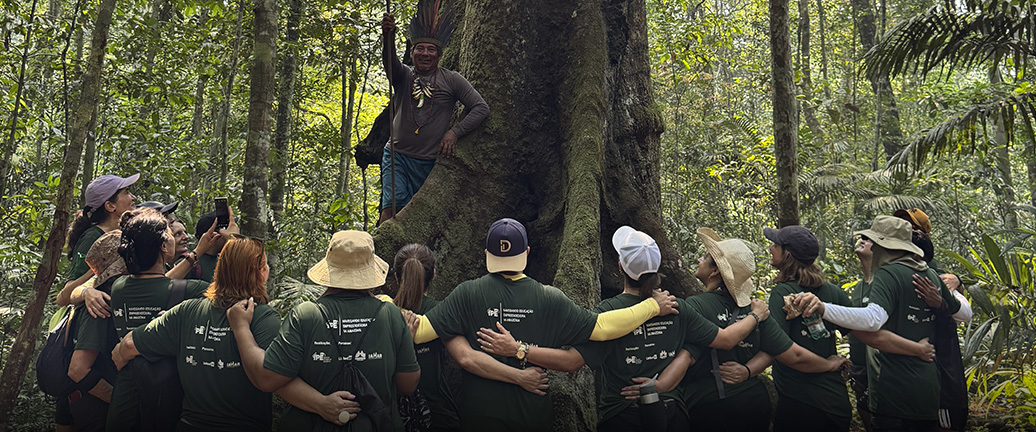
In this initiative, students and professionals from different organizations, universities and companies travel aboard the Maíra I boat to the areas where we develop projects, in the Lower Rio Negro (AM). In a responsible and sustainable immersion that benefits and respects local communities, these visitors can expand their knowledge about this part of the Amazon territory and the solutions we implement by combining conservation of the standing forest with sustainable businesses, such as tourism, for example. In this way, we promote experience, education and exchange of regional, national and international knowledge in the initiatives we develop.
KEY RESULTS IN 2024:
4 immersion trips with
88 foreign and Brazilian students and institutional partners.
Support for the Amazonas State Department of the Environment in conducting a census of the communities in the Puranga Conquista Sustainable Development Reserve.
Support for the activities of project Navigating Entrepreneurial Education in the Amazon, since access to the communities benefiting from the project is done by boat Maíra I.
Participation in a chapter in the book “Responsible Tourism: results that inspire!” (Turismo Responsável: resultados que inspiram!).
41 families and 182 people benefited from the tourism promoted by the project.
CONTRIBUTIONS TO CLIMATE AND BIODIVERSITY:
Actions that combine education, conservation and sustainable tourism reinforce the concept that keeping forests standing is essential for the development of activities that generate income for communities in the short, medium and long term. Conserving native vegetation and biodiversity also contributes to the provision of ecosystem services, especially climate regulation.
NEXT STEPS:
Increase the number of trips and expand the number of families involved in the project. Invest more in advertising to generate more direct and indirect benefits for the communities of the Lower Rio Negro.
ENVIRONMENTAL LEADERSHIP TRAINING AND
DEVELOPMENT INITIATIVE
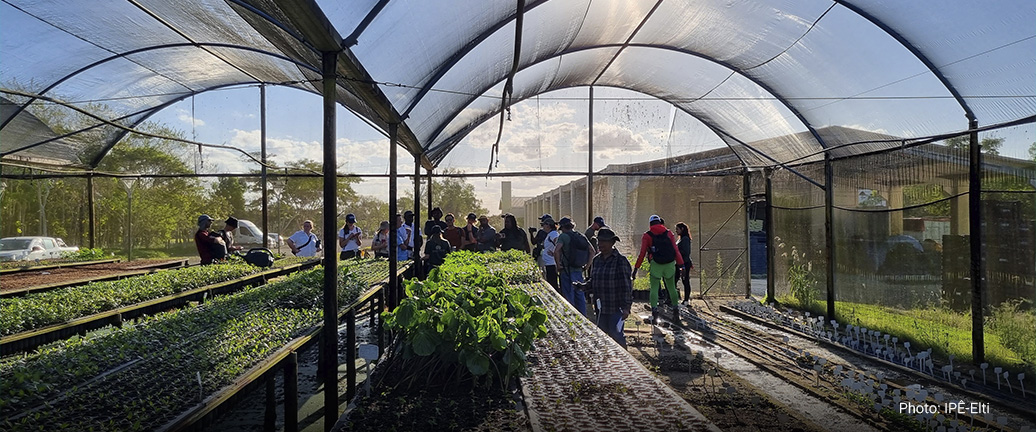
The initiative made possible by a partnership between IPÊ and Forest School at the Yale University's School of the Environment provides training in biodiversity conservation and sustainable land use for farmers, students, rural extension workers, restoration professionals, and others interested in these topics. The project also provides resources and mentoring to environmental leaders in the execution of their projects. Since the beginning of its activities in the Cantareira System region (São Paulo state) in 2018 and in southern Bahia state, where it has been operating since 2021, 19 courses and events have been held, benefiting 500 participants by the end of 2024.
KEY RESULTS IN 2024:
8 events totaling 167 hours of courses offered to 281 small family farmers, young people, extension technicians, third sector and government professionals, on topics such as management of agroforestry systems and production of essential oils.
2 publications published: one on the certification of organic products and another on the use of drones in socio-environmental monitoring.
12 people from 3 farming families were awarded ELTI scholarships to implement agroforestry projects in demonstration units.
74 people attended field courses for rural producers, extension technicians and university students from southern Bahia state.
2 former students awarded scholarships to support projects related to the ecological corridor in the South of Bahia.
CONTRIBUTIONS TO CLIMATE AND BIODIVERSITY:
We contribute to the transformation of rural and peri-urban landscapes into potential biodiversity corridors that restore ecosystem services, such as climate regulation. This implementation is done by promoting sustainable production systems, such as native species silviculture, Agroforestry Systems and Silvopastoral Systems (SPS).
NEXT STEPS:
Offer courses on productive recovery, ecological restoration and monitoring by 2025. Holding a workshop on biodiversity corridors in southern Bahia, in partnership with the Prospera project, and a field course with a week of visits to projects in the region (TFL Online Certificate Program, from ELTI).
EDUCATION, LANDSCAPE AND COMMUNITY
This project took the social technology developed with farmers from Pontal do Paranapanema, São Paulo state, to four rural settlements in Espírito Santo state, in the municipalities of Alto Rio Novo and Águia Branca. The land involved can respond to the Program for the Recovery of Permanent Preservation Areas and Water Recharge of the Rio Doce (Programa de Recuperação de Áreas de Preservação Permanente e Recarga Hídrica do Rio Doce). Through environmental education, training and rural extension, we promote the forest restoration of rural landscapes and sustainable production in family farming. The initiative is financed by the Renova Foundation (in liquidation), currently managed by the institution Rio Doce Basin Recovery (Recuperação Bacia do Rio Doce) and is part of the School and Community Integration project line, carried out by IPÊ and its educational front, ESCAS.

KEY RESULTS IN 2024:
Approximately 80 families of producers had their property planning completed.
Application of a new strategy for specific and individualized training.
Continue fencing to protect the
45 hectares of areas to be restored, as a way of preventing access by cattle.
Start planting restoration areas planned in a participatory manner.
Around 35 families involved in the collection and selling of seeds from native forest species of the Atlantic Forest.
Support the development of new conservation and sustainable production projects for the region, allowing the expansion and continuity of actions.
CONTRIBUTIONS TO CLIMATE AND BIODIVERSITY:
The protection of spring areas and the conservation of Permanent Preservation Areas (APPs) and Legal Reserves were promoted through the planting of native trees, as well as the implementation of Agroforestry Systems, which are essential to address climate change and conserve biodiversity. Involving family farmers and other local agents emphasizes the sense of belonging and ensures the perpetuity of these contributions.
NEXT STEPS:
Prioritize the integration of rural producers and other local stakeholders to implement SAFs and forest restoration in common APP areas. Expand actions to small properties neighboring settlements and begin planning forest corridors. Our priority is to complete the implementation of participatory planning in settlements by the end of 2026. Also, continue technical training for families participating in the project.
CECSA-CLIMATE - CENTER FOR EDUCATION AND SOCIO-ENVIRONMENTAL COOPERATION FOR CLIMATE
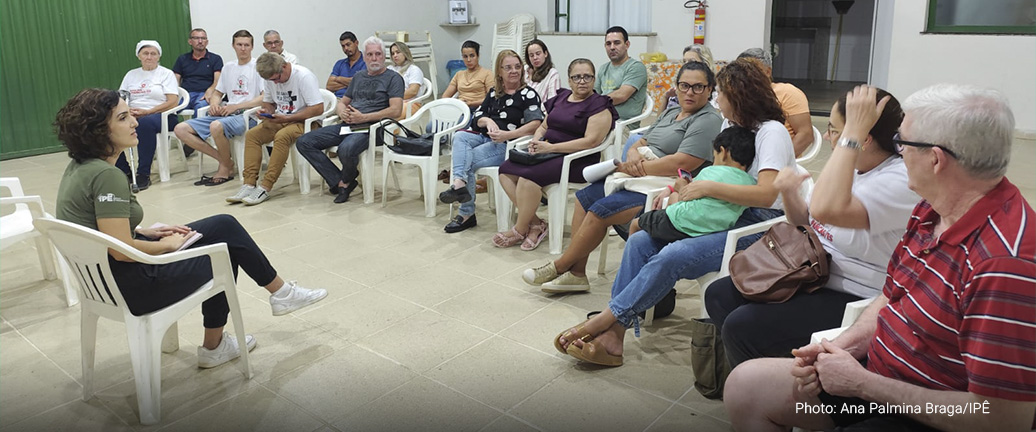
Launched in 2024, this project strengthens educational initiatives aimed at managing and improving socio-environmental conditions in the Pontões Capixabas region (Espírito Santo state). The area is at risk of desertification and faces the challenge of the exodus of rural youth due to the lack of prospects. CECSA-Climate activities – such as environmental education, agroecology, forest restoration, biodiversity conservation and sustainable development – are aimed at educators and students from municipal and state public schools, family farmers, extractivists and community leaders, among others.
KEY RESULTS IN 2024:
2 participatory diagnostic workshops held with more than 28 local institutions, which mapped out challenges and opportunities in the region while discussing joint actions.
Articulation with over 35 local and regional organizations to strengthen actions that improve land use in the region.
Professionals from
3 organizations attended the ESCAS Master's Seminar to improve the training of transformative agents.
26 teachers, through workshops and training, became multipliers of topics such as education for climate change and sustainable production systems.
112 students attended environmental climate education actions and are now recognized as multipliers of this knowledge.
CONTRIBUTIONS TO CLIMATE AND BIODIVERSITY:
Reducing the risk of desertification in the Pontões Capixabas region (Espírito Santo state) will be the project's main contribution, based on the creation of a climate environmental education network that will strengthen the work of local stakeholders. The project hopes to influence land use in the region, mapping and strengthening socio-environmental initiatives in the territory.
NEXT STEPS:
Develop a strategic sustainability plan, which will be assembled based on the formation of the “public policy panel” and participatory workshops. Structure a cooperation plan in the territory to reduce the impacts of climate change and strengthen the center, with the commitment of agents, initiatives and organizations mapped with the objective of promoting the creation of sustainable multifunctional landscapes, in ecological corridors in the region.
CLIMATE LANDSCAPES
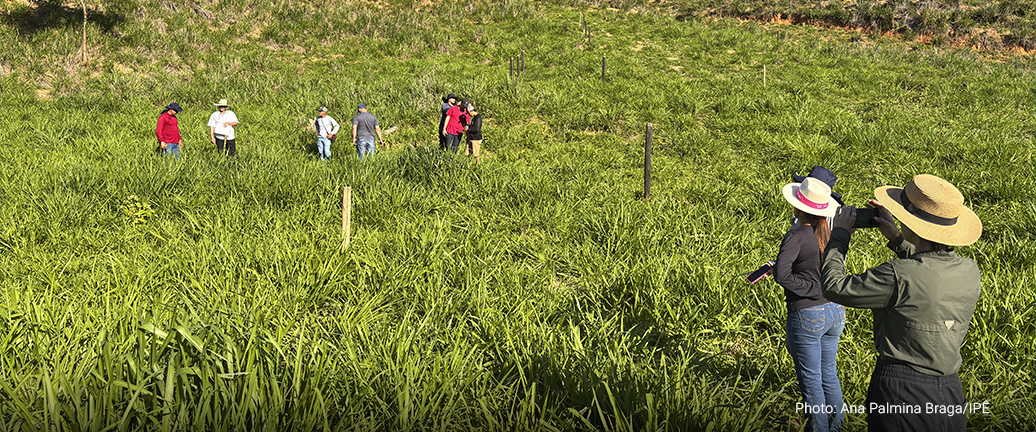
Project to create sustainable multifunctional landscapes that contribute to reducing the impacts of climate change in the Pontões Capixabas region (Espírito Santo state). To achieve this, it is necessary to provide technical training for family farmers, agrarian reform settlers and extractivists located in this region that is at high risk of desertification caused by environmental degradation. The proposal is to encourage integration between production, conservation and landscape connectivity through land use, which has already demonstrated promising results in transforming landscapes. Specific actions are developed for young people and women in the countryside. We also work with modeling ecological corridors to connect fragments of native vegetation. The implementation of productive systems with Nature-Based Solutions (NBS) has begun on rural properties that are demonstration units of the project.
KEY RESULTS IN 2024:
2 workshops on participatory planning of rural properties and silvopastoral systems held with
40 people, including teachers and students, small farmers, settlers, technicians and representatives of institutions in the region.
4 hectares of Silvopastoral System implemented with 11 species of native trees from the Atlantic Forest.
In the development of ecological corridor modeling, priority areas for conservation and selection of
120 properties with Legal Reserve liabilities for environmental diagnosis were defined.
70 people benefited from technical training, agroecological technical assistance, rural property planning and environmental adaptation.
760 trees planted between production systems and forest restoration.
CONTRIBUTIONS TO CLIMATE AND BIODIVERSITY:
The target audience includes rural women and youth who live in areas that are more vulnerable to climate change, particularly at risk of desertification. On a local scale, we provide technical advice and environmental adaptations for soil and water conservation, restoration of native vegetation and sustainable production. On a landscape scale, we promote connectivity of native vegetation fragments in priority areas for conservation and the formation of ecological corridors.
NEXT STEPS:
Implement an additional six hectares of sustainable production systems in Demonstration Units. A socio-environmental diagnosis will be performed for 120 families along the ecological corridors modeled in the territory. We will also organize the selection and planning of 60 properties for environmental adaptation and implementation of production systems with nature-based solutions.
SUSTAINABLE BUSINESS
By associating economic benefits with conservation actions, we promote initiatives that value forests, such as the bioeconomy. In this way, communities take on a greater role in the conservation of biodiversity. In different regions of Brazil, we encourage socio-environmental entrepreneurship with sustainable businesses.
ACTIONS IN THE LOWER RIO NEGRO WILL COMPLETE 25 YEARS
For over two decades, we have been developing actions in the Lower Rio Negro (Amazonas state) to promote environmental conservation combined with economic opportunities and well-being for local communities. Over the years, we have managed to perform manatee conservation projects, education and entrepreneurship focused on sustainable activities. We present current projects that promote the development of sustainable businesses, including community-based tourism and the recovery chain, in immersion trips focused on education and in the articulation between networks of family farmers and rural settlers.
NAVIGATING ENTREPRENEURIAL EDUCATION IN THE AMAZON
With this project, we foster socio-environmental entrepreneurship in the communities of the Puranga Conquista Sustainable Development Reserve (RDS) in Manaus (Amazonas state), in the Lower Rio Negro region. On the Maíra I boat, we visited initiatives related especially to tourism, such as crafts, accommodation and trail services. Over the years, six entrepreneurs have formalized themselves as individual microentrepreneurs (MEI) and four have registered with Cadastur, part of the Ministry of the Environment. Community decision-making has also been strengthened. The project is a collaboration between IPÊ's Sustainable Business Unit and LinkedIn, supported by LIRA.

KEY RESULTS IN 2024:
Assessment of the development of the enterprises before and after the project, including financial management, strategic planning, community, and environmental impact.
Casa de Lanches Musapirí Amum grew by 99% from 2023 to 2024, using local food inputs and promoting short production chains.
Grupo de Artesãos Surisawa’s income increased by 40% from 2023 to 2024, strengthening the sustainable use of local resources.
Pousada Familiar Taína Kirimbawa strengthens sustainable community tourism and showed 6% growth from 2023 to 2024.
More than R$150,000 raised
to be invested in community ventures.
Mentoring for social media promotion and logo creation.
88 community members attended training on sustainable business management.
65 people benefited
from the creation of new jobs by 10 community enterprises.
CONTRIBUTIONS TO CLIMATE AND BIODIVERSITY:
Sustainable businesses with a positive socio-environmental impact in the Amazon contribute to the conservation of the forest and the responsible use of its resources. This, in turn, helps to ensure the provision of ecosystem services, such as climate regulation and carbon absorption.
NEXT STEPS:
Strengthen the participation of young community members, something essential to promote economic, social and personal development in vulnerable communities. To this end, we aim to support young people in developing businesses within their communities and encourage their creativity and energy to propose solutions to local problems.
REFLORA – ECOLOGICAL RECOVERY AND IMPLEMENTATION OF MULTIFUNCTIONAL AGROFORESTRY SYSTEMS
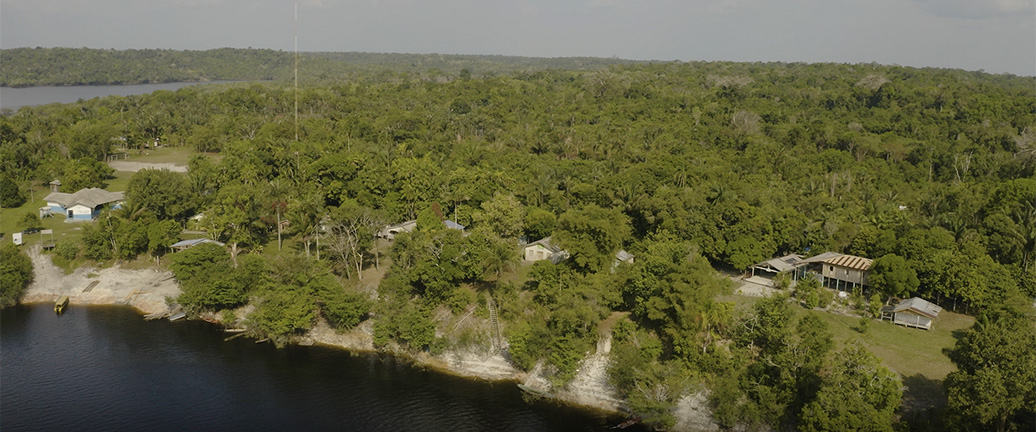
The project restores degraded areas in the Puranga Conquista Sustainable Development Reserve (RDS), in the Lower Rio Negro region of Manaus (Amazonas state). Five hectares of ecological restoration have already been implemented – as a pilot area – in agroforestry systems with native Amazonian species, in addition to a community nursery. One of our strategies is to promote the restoration chain, including training people to collect seeds and promoting new nurseries in partnership with communities. In this way, in addition to conserving biodiversity, we also contribute to food security and income generation. The project is an initiative of Floresta Viva Amazonas, of the Brazilian Biodiversity Fund (Funbio).
KEY RESULTS IN 2024:
Coordination with institutions and universities to hold 2 events on the ecological restoration chain, focusing on local communities.
Prospecting and participatory planning for 80 hectares of areas that will be restored from 2025 onwards.
Ecological Restoration Plan for implementation of actions in the approved RDS.
10 families benefited, totaling 40 people, with actions for the production of seedlings and seeds.
1st Amazonas – Floresta Viva training, a collaboration between IPÊ, Idesam, INPA and UFAM to train seed collectors and strengthen restoration actions.
CONTRIBUTIONS TO CLIMATE AND BIODIVERSITY:
Integrating the traditional knowledge of the region's communities with agroforestry practices contributes to the management and appreciation of the standing forest, which, in turn, promotes the regulation of the local microclimate and the balance of ecosystems, benefiting biodiversity.
NEXT STEPS:
Restore 200 hectares using different techniques, encouraging the creation of a network of seed collectors and strengthening community associations. Establish partnerships with other institutions in the state of Amazonas, which is essential to expand the scale of actions and foster the restoration chain.
AGROFORESTRY COFFEE
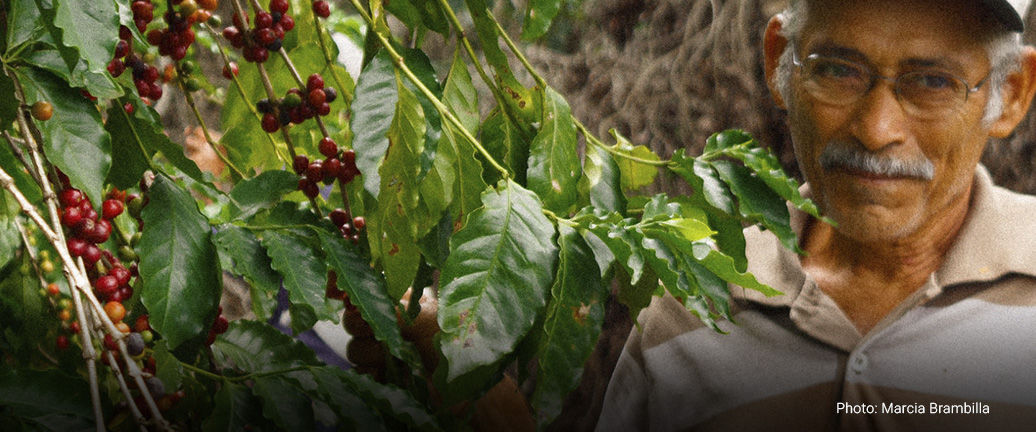
At Pontal do Paranapanema, western part of the state of São Paulo, we have implemented Agroforestry Systems (SAFs) that directly benefit 51 families involved in small-scale farming. Agroforestry coffee production stands out, cultivated in the shade of native trees and fruit trees, such as Tahiti lime and sweet orange. This provides farmers with a variety of food, improved quality of life with more shaded areas at work and a reduced use of pesticides, in addition to the possibility of increasing their income with the surplus. It is also important that native trees form forests used by fauna species, contributing to local biodiversity.
KEY RESULTS IN 2024:
1.600 kg of coffee processed
and transformed into 1,340 packages of 500 grams of the product Café Agroflorestal do Pontal.
Acquisition of an additional 800 kg of coffee by IPÊ, which will be processed and sold at the Institute's Pontal unit and at fairs in the region.
CONTRIBUTIONS TO CLIMATE AND BIODIVERSITY:
Agroforests act as ecological “stepping stones” that contribute to the connectivity of forest fragments in the region. Trees increase soil fertility and protect it from erosion, in addition to promoting the absorption of water and nutrients. It should also be considered that agroforests mitigate extreme heat.
NEXT STEPS:
Work to raise funds to increase the number of SAFs in the project and continue to buy, process and sell coffee grown in agroforests.
COMMUNITY NURSERIES
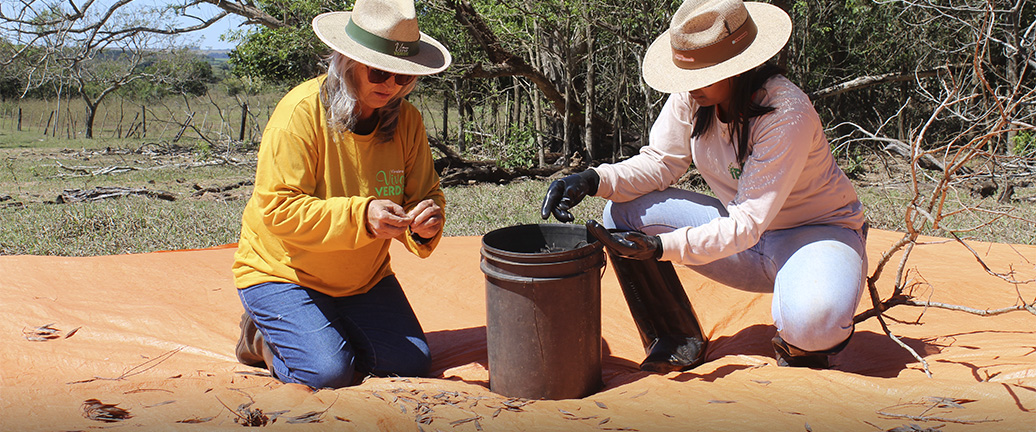
Nurseries that grow seedlings of native Brazilian species are a key part of the restoration chain, as they form the link between seed collection and planting. In the Pontal do Paranapanema region, in the west of the state of São Paulo, we encourage the creation of community nurseries, contributing, among other actions, to the training of professionals in the sector. In 2024, IPÊ acquired 3.3 million seedlings from community nurseries.
Our project includes the Campos da Alvorada nursery school, where training, courses and experience sharing are held for nurserymen and collaborators. The nursery also welcomes students and educators for a practical experience full of meaning, in the face of challenges such as climate change.
KEY RESULTS IN 2024:
Integration of women, who represent approximately 50% of the professionals working in the production of native seedlings for forest restoration.
A 63% increase, from 8 to 13 community nurseries, which supply seedlings to IPÊ, due to the boom in the forest restoration market.
Regional development promotion, with increased acquisition of inputs for seedling production and hiring of regional labor.
3,384,555 seedlings acquired by IPÊ, an increase of 206% compared to the previous year.
Nurseries have already transitioned 25% of their plastic tubes to biodegradable ones.
61 people, including leaders and nursery professionals, benefited.
CONTRIBUTIONS TO CLIMATE AND BIODIVERSITY:
The production of native seedlings promotes forest restoration. Trees reduce temperatures, sequester carbon from the atmosphere, protect the soil and create corridors for fauna and flora.
NEXT STEPS:
Continue the transition from plastic to biodegradable tubes, adapt production to the increased demand for forest restoration and promote ongoing training for nursery workers and their employees.
SUSTAINABLE BUSINESS UNIT
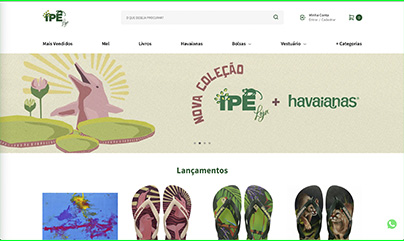
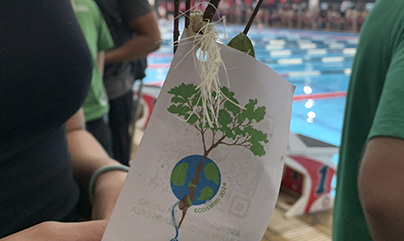
With the Sustainable Business Unit (Unidade de Negócios Sustentáveis – UNS), IPÊ has become a reference in collaboration with the private sector, especially through Cause-Related Marketing, a strategy to disseminate socio-environmental causes, giving visibility to the Institute's actions and promoting engagement of the public with the socio-environmental cause in a challenging context. There is also an effort, which dates back to the origin of UNS, to raise funds in the institutional sphere, which strengthens IPÊ's organizational development.
KEY RESULTS IN 2024:





CONTRIBUTIONS TO CLIMATE AND BIODIVERSITY:
The Sustainable Business Unit plays a strategic role in coordinating with the private sector, which brings direct and indirect benefits to the climate and biodiversity. CRM actions often value Brazilian biodiversity as a common heritage and thus provoke a new perspective and positioning, especially in the context of the effects of climate change. Warnings about the risk of extinction faced by several species also reinforce the urgency of a new commitment to our biodiversity and the planet we share.
Forest restoration carried out with native seedlings from the Atlantic Forest in particular, financed by companies, contributes to the absorption of carbon from the atmosphere and greater infiltration of rain into the soil in a key region for the supply of water to 7.5 million people in the metropolitan region of São Paulo.
NEXT STEPS:
Develop new strategic collaborations with companies (national and international) to promote the socio-environmental cause, grant visibility to IPÊ and expand our impact.
IPÊ STORE
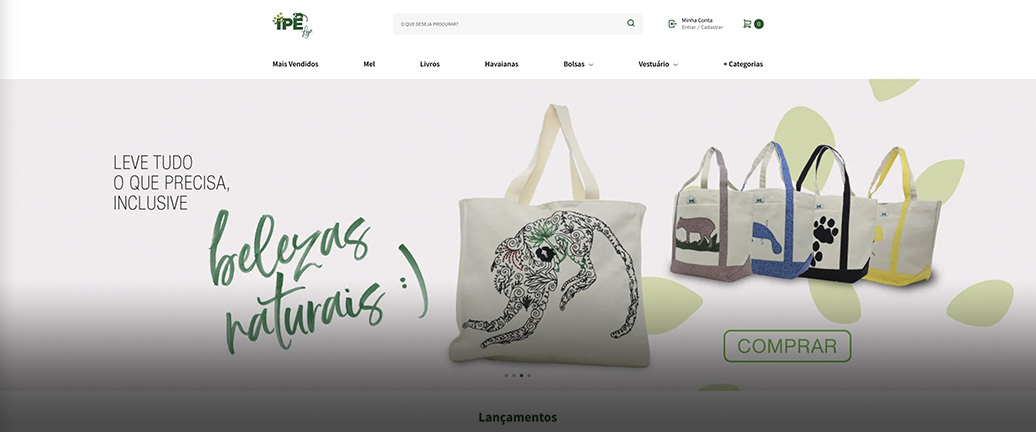
For over 20 years, the IPÊ Store has been a sales channel for products that combine biodiversity conservation with income generation for communities, providing visibility to small producers, indigenous people and artisans. It also sells cause-related marketing products, the result of IPÊ's partnerships with companies. The store is currently present in physical locations, such as our headquarters in Nazaré Paulista and at Uniluz, in the same city. With our online store, we make our products accessible to an even wider audience. Learn more.
KEY RESULTS IN 2024:
1,924 items sold, and
R$ 127.778,60 in gross sales.
Of all the products sold this year, 664 were made in the Sewing the Future (Costurando o Futuro) project, which benefits
7 embroiderer women.
Another 12 items are manufactured by 2 producers supported by the Sowing Water Project.
We participated in the Biomas a um Clique Program, by Mercado Livre.
CONTRIBUTIONS TO CLIMATE AND BIODIVERSITY:
By supporting entrepreneurs of socio-environmental projects, our store helps to strengthen fairer trade. Most of the products are manufactured in IPÊ projects focused on biodiversity conservation and sustainable development in the Atlantic Forest, Amazon and Cerrado, and therefore contribute to tackling the effects of climate change. At the same time, we promote a review of excessive consumption and encourage people to rethink their habits and environmental impact.
NEXT STEPS:
Continue to expand the store by expanding our digital presence, establishing more physical sale points and looking for new products, always focusing on sustainability and strengthening the communities involved.